Why choosing the right tennis necklace matters for your look and comfort
You may love the sparkle of a tennis necklace, but the wrong length or stones can make a timeless piece feel out of place. A tennis necklace is meant to sit gracefully around your neck, complement your neckline, and match your lifestyle. When you think about length and stones together, you balance aesthetics, wearability, and long-term care.
This section helps you understand the core decisions you’ll face: how different lengths sit, how your clothing affects appearance, and how stone choice changes look and maintenance. With this foundation, you’ll be better prepared to try on styles and make a confident purchase.
How to pick the right length: fit, neck size, and clothing coordination
Common tennis necklace lengths and how they sit
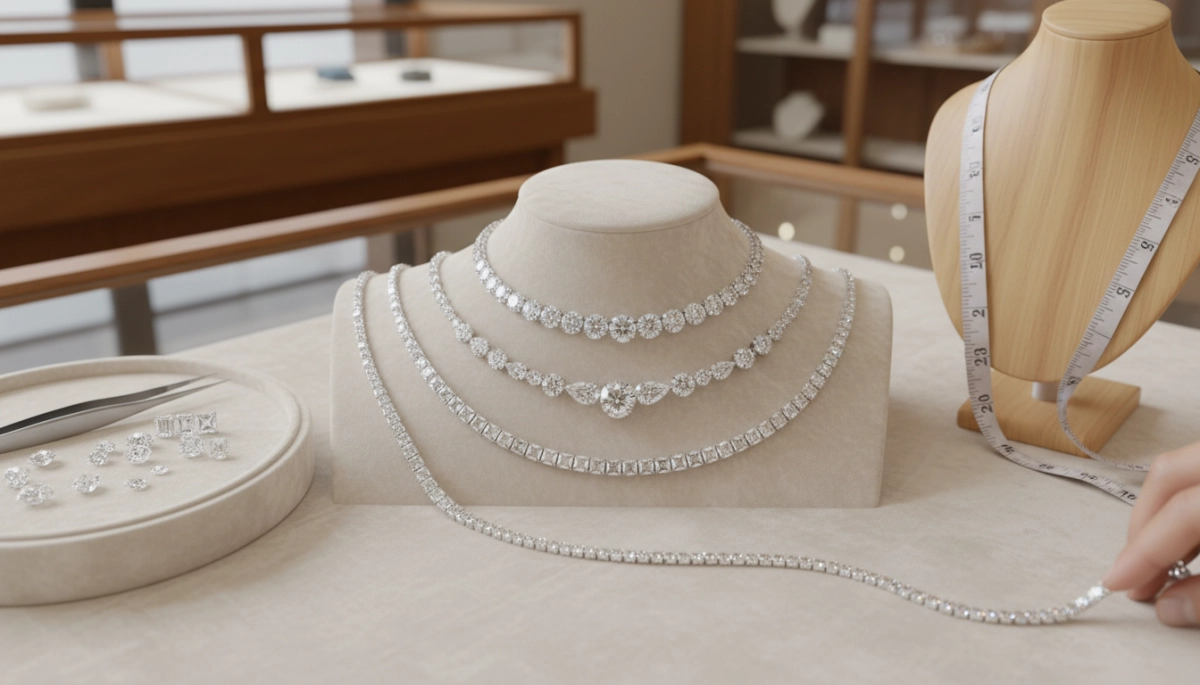
- Choker (14–16 inches): Sits high on the neck for a bold, contemporary look. Works well with off-the-shoulder and V-neck tops.
- Princess (17–19 inches): The most versatile length; it usually rests at the collarbone and pairs with most necklines.
- Matinee (20–24 inches): Falls below the collarbone for a more relaxed, elegant appearance—good with higher necklines and layering.
- Opera and longer (28+ inches): Creates a dramatic, draped effect and can be doubled for two-strand styling.
Match length to your neck and outfits
Start by measuring your neck with a soft tape measure and then consider how much of the collarbone you want the necklace to cover. If you have a shorter neck, very short chokers can feel tight—opt for a princess length instead. For broader shoulders or taller frames, matinee or opera lengths often provide better proportion.
Think about the clothes you wear most: if you favor crew necks or turtlenecks, a longer tennis necklace will show more. If your wardrobe is full of open necklines, a princess or choker style draws attention to the face.
How stone choices influence sparkle, color, and care
Diamond vs. colored stones
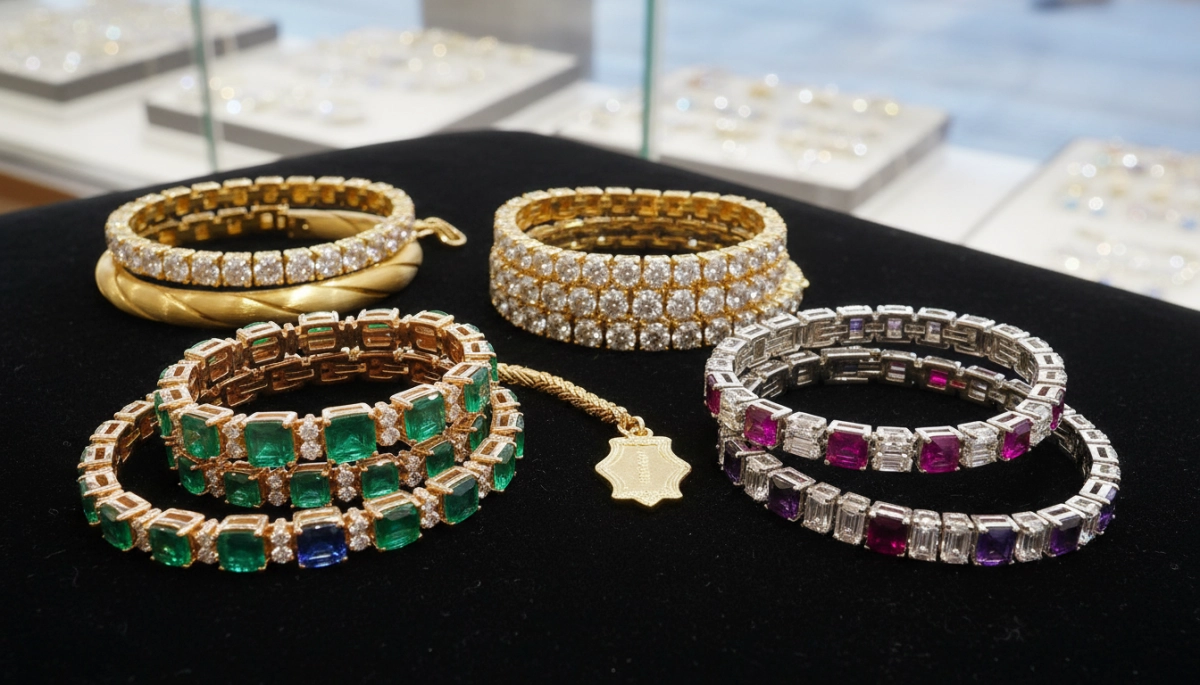
Diamonds remain the classic choice for tennis necklaces because of their light performance and durability. Colored gemstones—sapphires, emeralds, rubies, and even treated stones—offer personality and can match your wardrobe or skin tone. Remember that colored stones might require more protective settings or occasional professional care.
Cut, carat weight, and setting considerations
- Cut: Brilliant cuts maximize brilliance; step cuts create a sophisticated, understated flash.
- Total carat weight: Higher total carat weight increases presence but also weight on the clasp—consider comfort for daily wear.
- Settings: Prong settings show more stone and sparkle but can catch on fabric; bezel or channel settings protect stones better for active use.
With these basics on length and stone types in mind, the next step is practical: how to measure your neck accurately, try on different lengths, and test settings so you can choose a tennis necklace that fits both your style and daily life.
How to measure, try on, and find the perfect fit
Begin by measuring your neck accurately: sit or stand relaxed, wrap a soft tape measure where the necklace will sit (just above the collarbone for a princess length, higher for a choker). If you don’t have a tape, use a piece of string and mark it, then measure the string with a ruler. Add a half- to one-inch allowance if you prefer a looser fit or expect the chain to expand slightly with wear.
When trying on tennis necklaces, replicate real-life conditions. Wear the same top you plan to pair with the necklace (a crew neck, V-neck, or off-the-shoulder) so you can see how it frames your neckline. Move through a few common motions: tilt your head, raise your arms, and turn from side to side. A good tennis necklace should sit comfortably without feeling restrictive, not flip forward when you move, and maintain even spacing of stones around the neck.
- Bring a mirror and check the necklace both straight-on and at a 45-degree angle to judge how the stones catch light.
- Test for pinching or rubbing—especially near the clasp or at the nape.
- If layering, try the actual combinations to ensure lengths don’t tangle and that each strand sits independently.
If you’re between standard lengths, opt for the longer size for comfort or ask about removable links or adjustable extenders. Many jewelers can add or remove links to tailor the fit precisely.
Inspecting settings, clasp, and overall craftsmanship
Close inspection will tell you whether a tennis necklace is built to last. Look for uniform prong heights and consistent spacing—uneven settings can signal rushed workmanship or higher risk of stone loss. For colored gemstones, check that the settings protect vulnerable edges (bezel or channel settings are ideal for active wear).
Pay particular attention to the clasp and safety features. A secure box clasp with a figure-eight safety or a secondary latch reduces the chance of accidental loss—this is especially important for heavier, higher-carat pieces. Test the clasp repeatedly to ensure it snaps closed securely and doesn’t wiggle loose.
- Examine solder joints near the clasp and any connectors; they should be smooth and strong.
- Feel the chain’s flexibility—tight links should move fluidly and return to shape without kinks.
- Ask for certification or a detailed stone report for higher-value diamonds or gemstones.
Finally, request to see the necklace under different lights if possible: natural daylight, incandescent, and LED. This quick test reveals how stones perform and whether the overall finish complements your expectations.
Smart buying tips: online purchases, budgets, and post-purchase adjustments
When buying online, confirm exact length measurements, high-resolution photos, and a clear return policy. Look for sellers who offer complimentary resizing or an affordable local jeweler network. Set a realistic budget that balances total carat weight, stone quality, and metal—sometimes slightly reducing carat weight in favor of better cut or setting yields a more wearable, sparkly result.
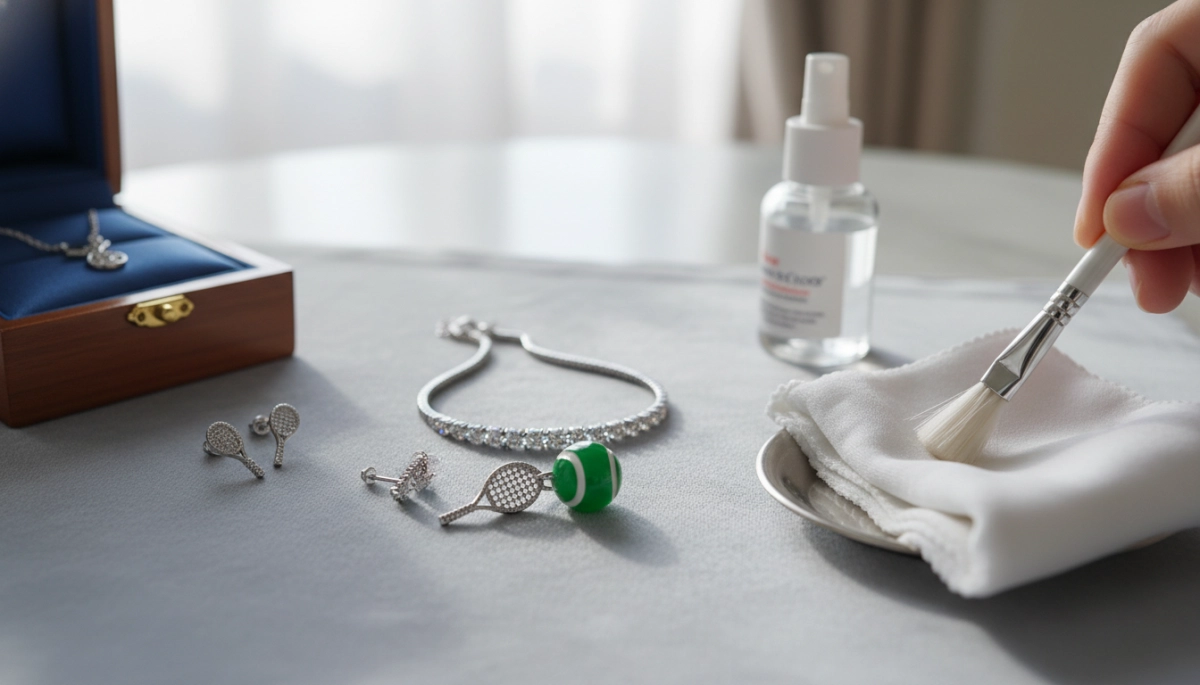
Plan for maintenance: ask about warranty, recommended cleaning intervals, and whether the piece can be re-tipped or re-clasped locally. Small adjustments—adding an extra link, reinforcing a prong, or shortening a strand—are common and worthwhile to ensure your tennis necklace becomes a comfortable, long-lasting staple.
Making the choice: next steps
Now that you know how length, stones, and construction affect style and wearability, take a few deliberate steps before purchasing. Try necklaces on with the types of tops you wear most, test movement and clasp security, and consider how often you’ll wear the piece daily versus for special occasions. If buying online, verify measurements, return policy, and ask for close-up photos or a video of the piece moving.
Talk with the jeweler about adjustments and aftercare—many issues are easily fixed with a link added, a reinforced prong, or an upgraded safety clasp. Consider insuring higher-value pieces and scheduling periodic professional cleanings to keep stones secure and brilliant.
For guidance on diamond grading and certification that can help you evaluate quality objectively, see the Gemological Institute of America’s resources: GIA – Gemological Institute of America. Armed with a clear sense of fit, setting, and maintenance, you’ll be ready to choose a tennis necklace that sparkles and suits your life.
Key Takeaways
- Pick a length that flatters your neckline and sits comfortably with the clothes you wear most.
- Choose stone type and setting based on desired look, durability, and maintenance needs.
- Inspect clasp, craftsmanship, and certification; plan for adjustments and routine care.