Why certified and ethical diamonds matter when you shop for a tennis bracelet
You want a tennis bracelet that looks timeless and withstands daily wear, and you also want the confidence that the diamonds you’re buying are genuine, fairly sourced, and accurately described. Certification verifies the technical quality of the stones, while ethical sourcing addresses how those stones were mined, handled, and traded. When you prioritize both, you protect your purchase value, reduce the risk of misrepresented goods, and align your jewelry with responsible practices.
For a bracelet composed of many small, matched stones, small differences add up. Certification and transparent supply chains make it easier to compare pieces, insure them, and resell them if you ever choose to. Knowing how to read documentation and what questions to ask will help you buy a tennis bracelet that meets your standards for beauty, durability, and ethics.
Key practical factors to evaluate before you commit
Use this checklist to evaluate options and to talk with reputable retailers. These factors are especially important for tennis bracelets because the design relies on repeatability and secure settings so the bracelet functions as a single, elegant piece.
- Certification type: Ask for independent laboratory reports (for example GIA or AGS) for representative stones or a diamond grading summary for the set. Certification confirms the 4Cs and ensures the stones match the seller’s description.
- Ethical sourcing & provenance: Request information about chain-of-custody, conflict-free declarations, and whether the dealer participates in responsible-sourcing programs. Consider lab-grown diamonds if you want lower environmental and social risk.
- Matching and total carat weight (CTW): Tennis bracelets rely on matched stones. Check how closely the diamonds match in color and clarity and whether the CTW is clearly stated.
- Cut and sparkle: Prioritize cut and polish quality; well-cut smaller stones produce consistent brilliance across the bracelet and hide slight color or clarity differences.
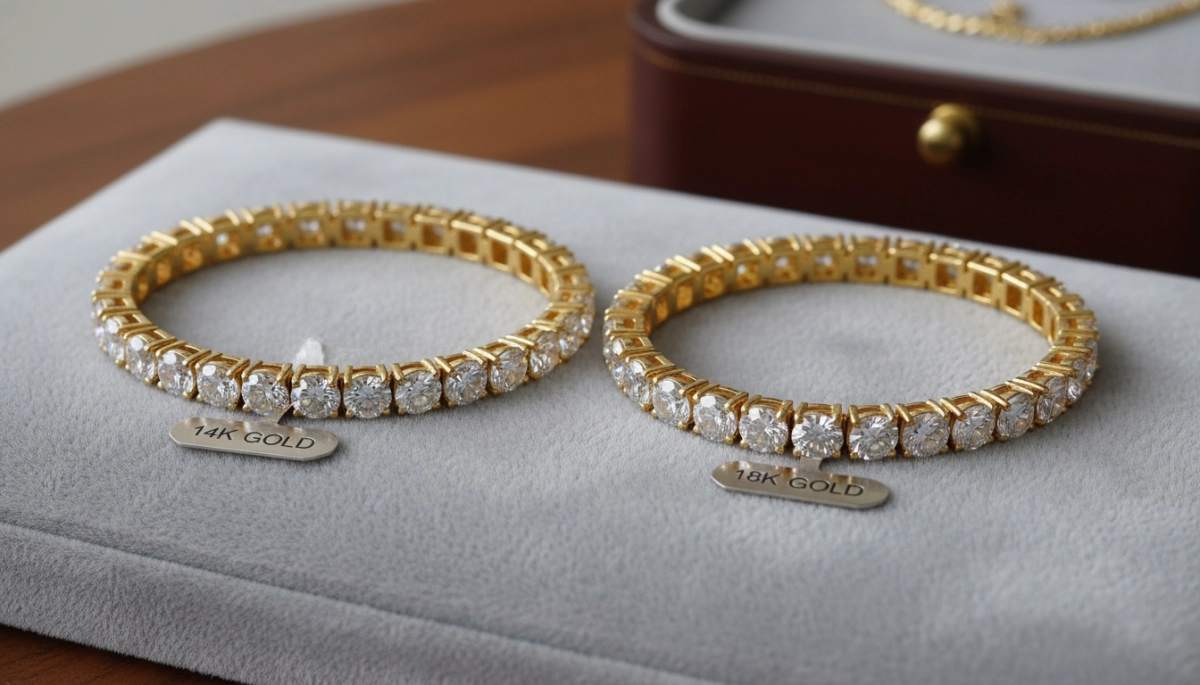
- Setting type and metal: Shared-prong, bezel, and channel settings each affect durability and appearance. Choose metals (14k/18k gold, rose gold, or platinum) based on your lifestyle, sensitivity to metals, and maintenance expectations.
- Clasp security and repairability: Look for a reliable box clasp with safety latches and consider how easy it will be to replace stones or repair settings if needed.
- Budget vs. priorities: Decide whether you value larger individual stones, higher color/clarity, or a more ethically sourced option; adjusting one factor can help you stay within budget without compromising overall quality.
How certification and sourcing affect price, insurance, and long-term value
Certified stones typically command a premium because they reduce uncertainty. Ethically sourced and documented pieces may also cost more but can be easier to insure and appraise. Lab-grown diamonds often cost less than equivalent natural stones and can offer a clear ethical profile; however, resale value and market perceptions differ between lab-grown and natural diamonds. When you insure a bracelet, appraisals that reference lab reports and provenance documentation streamline claims and valuations.
Next, you’ll learn how to identify trustworthy certification documents and which questions to ask retailers to verify both diamond quality and ethical sourcing.
How to read and verify diamond certification documents
When a retailer hands you a grading report, know what to look for so the document actually supports the seller’s claims. For single larger stones, full GIA or AGS reports are the gold standard; for melee used in tennis bracelets you’re more likely to see a diamond grading summary, a melee report, or a representative-stone certificate. Regardless of format, confirm these essentials:
- Lab name and report number: Confirm the issuing laboratory (GIA, AGS, IGI, HRD, etc.) and check the unique report number. Use the lab’s online verification tool to match the number to the stone description—never rely solely on a printed copy.
- Stone measurements and carat weight: For bracelets this helps verify total carat weight (CTW) and whether stones are uniform. Look for tolerances in size and a documented CTW for the entire piece or a sample set.
- Cut, color, clarity and polish/symmetry: These attributes explain why stones appear consistent. For melee, expect a grading range rather than exact matches; ask how the dealer ensures visual uniformity within that range.
- Plotting and comments: A plotted diagram or remarks section flags treatments, indications of clarity characteristics, or enhancements. Any treatment (e.g., fracture filling) should be explicitly disclosed.
- Laser inscriptions or serials: Representative stones may be laser-inscribed with report numbers to aid identification. If present, verify the inscription with a loupe or microscope and match it to the certificate.
If the bracelet is composed of many melee diamonds, request a melee report or a written grading summary that describes the matching process (color/clarity ranges, how stones were sorted) and any independent testing performed. When a seller cannot produce verifiable documentation or discourages online certificate checks, treat that as a red flag.
Essential questions to ask retailers about ethics, provenance, and aftercare
Beyond documents, a trustworthy seller should answer clear questions about provenance and ongoing care. Use this checklist during your visit or phone conversation:
- Do you provide chain-of-custody or provenance documentation for these diamonds? Can you show supplier declarations or membership in responsible-sourcing programs (e.g., Responsible Jewellery Council)?
- Are these natural or lab-grown diamonds, and how is that disclosed on the certificate and sales receipt?
- Do you follow recognized due-diligence standards (Kimberley Process, OECD Guidance) or third-party audits? Ask for evidence of compliance.
- For melee: how were the stones matched and tested? Is there an independent melee report or appraisal that covers the set?
- What is your warranty, repair policy, and process for replacing lost stones? Is routine maintenance (cleaning, tightening) included or available?
- Can I have the piece appraised independently before finalizing the purchase?
Watch for evasive answers, missing paperwork, or pressure to skip verification. A reputable jeweler will welcome independent checks, provide transparent provenance information, and outline long-term care and insurance recommendations so your tennis bracelet remains both beautiful and responsibly sourced.
Before you finalize your purchase
When you’re ready to buy, take a moment to pause and confirm the essentials: that documentation is verifiable, the seller welcomes independent appraisal, and aftercare (warranty, repairs, insurance) is clearly described. Trust your inspection—if the piece, paperwork, or answers feel incomplete, walk away. For quick, authoritative background on lab reports and what they mean, see the GIA website.
Key Takeaways
- Certified, well-documented diamonds and transparent sourcing protect both the beauty and value of a tennis bracelet.
- Ask for verifiable reports, provenance details, and clear aftercare and repair policies before purchasing.
- Work with reputable retailers, request independent appraisal when needed, and prioritize long-term confidence over a rushed sale.