Why a bold gemstone tennis set upgrades your wardrobe
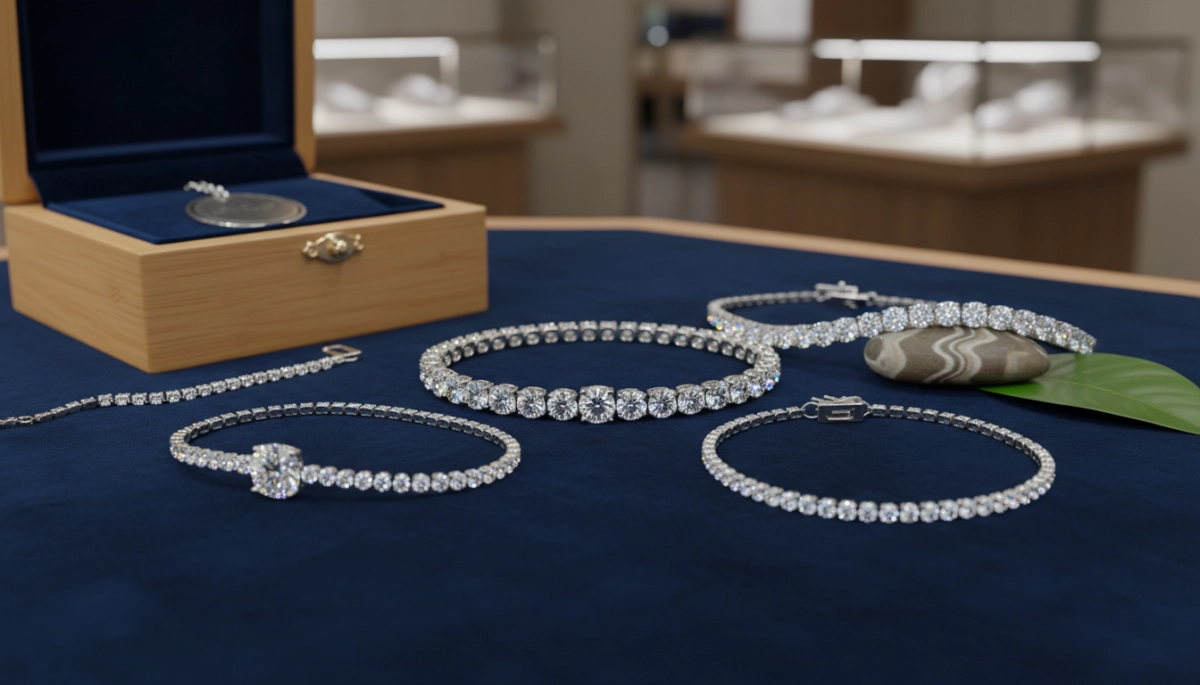
You already know that a tennis necklace or bracelet offers clean lines and continuous sparkle. When you replace colorless stones with vivid gemstones, you transform a classic into a statement-making ensemble. A gemstone tennis necklace paired with a matching bracelet creates visual continuity across your neckline and wrist, making it easier for you to anchor outfits and express personality without over-accessorizing.
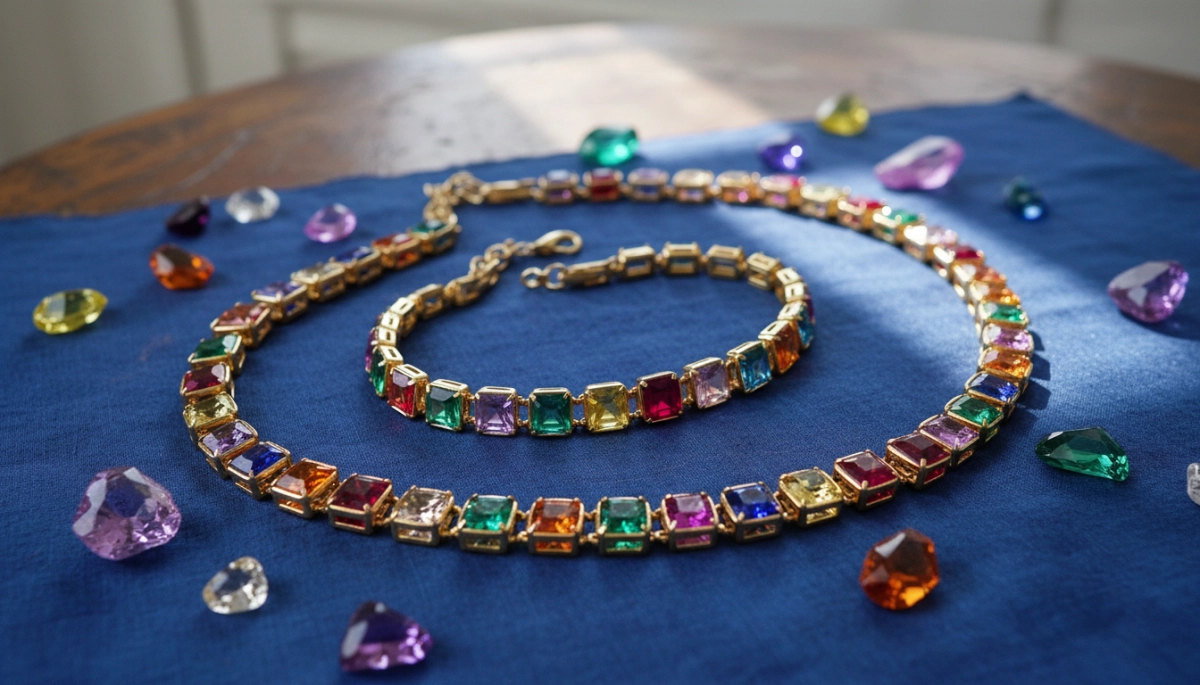
Think of the set as a color story: coordinated hues make casual looks feel polished and formal looks feel modern. Whether you favor saturated blues, lively greens, or warm pinks and oranges, a matched pair balances proportion and draws the eye along natural lines of the body.
Key design elements that define a bold gemstone tennis set
Stone selection and color impact
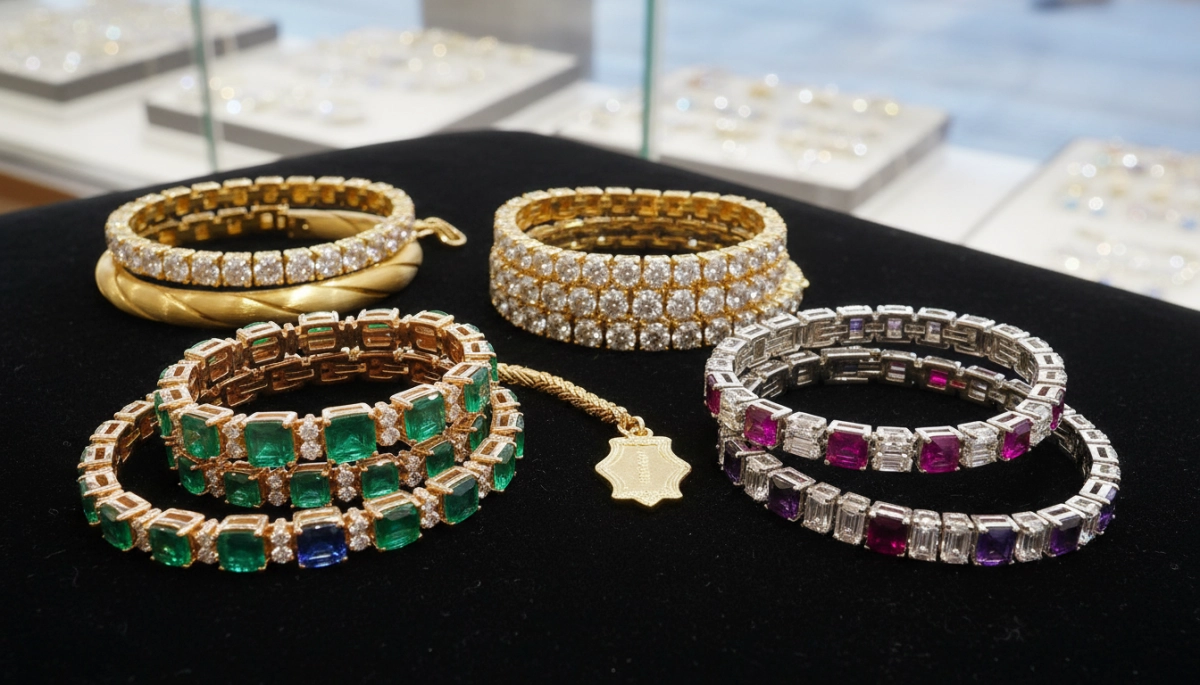
When choosing gemstones, you’ll want to consider hue, saturation, and size. High-saturation gemstones (sapphires, emeralds, rubies, tsavorites) read as vivid from a distance, while softer stones (amide, morganite, aquamarine) give a pastel, romantic effect. Uniform facet cuts and matching sizes are critical in a tennis set so that the color flows evenly around your neck and wrist.
- Single-gemstone sets: one color for a refined, cohesive look.
- Multi-gemstone sets: alternating or graduated colors for playful, contemporary impact.
- Mixed-cut decisions: round brilliants maximize sparkle; ovals and cushion cuts emphasize color depth.
Metal settings and construction basics
The metal you choose affects both the color contrast and longevity of the set. Yellow gold warms colorful stones and highlights warmer tones; white gold or platinum enhances cooler hues and makes stones appear more vivid. You’ll want secure prong or bezel settings that protect softer gems while allowing light to enter for brilliance.
- Prong settings: maximize light and sparkle but check prong durability regularly.
- Bezel settings: offer stronger protection and a modern silhouette with slightly reduced sparkle.
- Hidden or box clasps with safety catches: essential for continuous-strand pieces to prevent loss.
Quality indicators to inspect before you buy
As you evaluate sets, focus on uniformity and craftsmanship. Look for consistent color across stones, tight, even settings, and secure clasp mechanisms. If possible, request a gem report for rare or high-value stones and confirm metal purity (14k, 18k, or platinum) for long-term wear.
Next, you’ll learn practical styling strategies, gemstone pairings by skin tone, and a buying checklist to help you select a bold, colorful tennis set with confidence.
How to style a gemstone tennis set for different occasions
A gemstone tennis necklace and bracelet are versatile—but styling them well makes the difference between decorative and deliberate. Think about scale, color intensity, and what else you’re wearing. For daytime and work, smaller-stone necklaces (2–3 mm) with a single-color palette read refined and office-appropriate. Pair with a tailored blouse, simple stud earrings, and a slim watch to keep the look professional without feeling muted.
For evenings and events, increase the impact: larger stones, higher saturation, or a graduated multi-gem design elevate a simple dress into a showpiece. A monochrome slip dress or a little black dress becomes a runway when framed by a saturated sapphire or ruby tennis set. Let the set be the focal point—opt for minimal rings and small hoops or studs so the eye is guided along your neckline and wrist.
Casual outfits benefit from contrast. A bold, colorful tennis set over a crewneck tee or chunky knit adds polish and unexpected glamour. Mixing metals is also fair game: wear a yellow-gold tennis set against a denim jacket for warm contrast; pair a white-gold or platinum set with silvery hardware for a cool, modern edit. When stacking bracelets, keep the tennis bracelet closest to the hand for balance, then layer thinner bangles or chain bracelets above it—avoid heavy cuffs on the same wrist that would compete with the continuous line of gems.
Gemstone pairings by skin tone and undertone
Choosing the right gemstone color and metal finish can enhance your natural complexion. Use undertone as your guide more than surface color.
- Warm undertones: Yellow, peach, or golden skin tones harmonize with warmer gems and metals. Think citrine, fire opal, garnet, warm pink sapphires, and peridot set in yellow or rose gold. These combinations bring warmth to the face and feel cohesive with sun-kissed skin.
- Cool undertones: Pink or blue-leaning skin looks luminous with cooler stones and white metals. Sapphires (royal and cornflower), tanzanite, aquamarine, amethyst, and even vivid emeralds often pop against platinum or white gold.
- Neutral undertones: If your veins are neither strongly blue nor green and you can wear both silver and gold, you’re lucky—most gemstone colors will work. For a modern twist, try two-tone settings (white and yellow gold) or mixed-gem sets that play up both warm and cool facets.
Remember: contrast can be flattering. A strong, saturated color that’s not a direct match to your undertone can still be striking—especially when you intentionally use the set as a focal point rather than trying to blend it into your overall palette.
Buying checklist: what to confirm before you commit
- Inspect color consistency under natural light—stones should match closely around the strand.
- Ask for gem reports or certificates for high-value stones; confirm treatments (heat, fracture filling) and clarity expectations for the gem type.
- Verify metal purity (14k vs 18k or platinum) and confirm the setting style—prong vs bezel—for protection and aesthetic preference.
- Test the clasp and safety catches; continuous-strand pieces should have a secure box clasp with at least one safety latch.
- Check return policy, warranty, and repair services; ask about resizing options for necklaces and refurbishment for bracelets.
- Request a professional appraisal for insurance, and ask about recommended cleaning and storage practices to protect softer gems.
With these styling tips, color guidelines, and a practical purchase checklist, you’ll be prepared to choose a gemstone tennis set that feels both boldly colorful and effortlessly wearable.
Care and maintenance for lasting brilliance
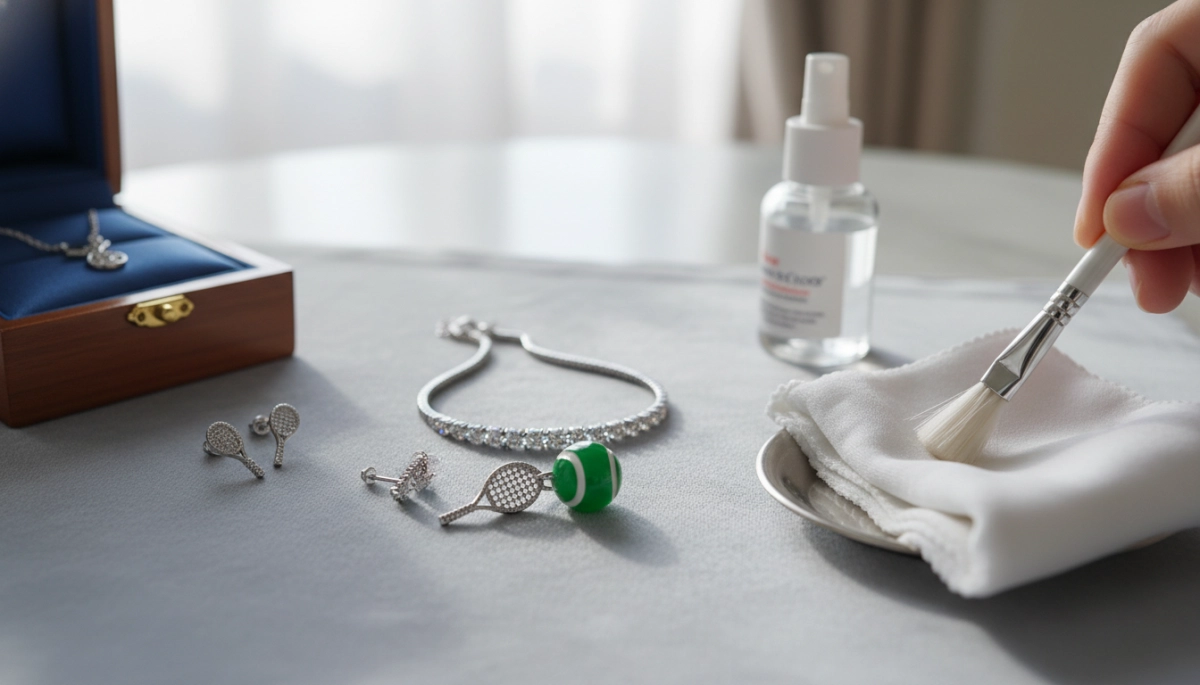
To keep a gemstone tennis necklace and bracelet looking their best, follow simple maintenance habits: remove them for heavy activities, avoid exposure to harsh chemicals (including household cleaners and chlorinated pools), and store pieces flat in a soft pouch or lined box to prevent kinking and scratching. Clean regularly with a soft brush and mild soap and water, and dry thoroughly before storing. For softer gems (opal, pearl, emerald with oil treatments) or stones with known treatments, consult a professional jeweler before using ultrasonic or steam cleaning.
Have your set inspected by a jeweler at least once a year to check prongs and clasps; replace or tighten settings promptly to avoid loose stones. For deeper questions about treatments, durability, and care recommendations by gem type, refer to resources from the Gemological Institute of America: GIA.
Final styling encouragement
Bold, colorful gemstone tennis sets are more than accessories—they’re a way to define your look and make color a consistent signature across your outfits. Whether you collect one standout set or rotate several by season and mood, prioritize pieces that feel intentional and that you’ll reach for because they elevate your wardrobe effortlessly. Invest in quality, care for your gems, and let a gemstone tennis necklace and bracelet be the colorful punctuation your style deserves.
Key Takeaways
- A matched gemstone tennis necklace and bracelet create a cohesive, statement-making color story that elevates both casual and formal looks.
- Choose stones and settings based on color saturation, durability, and your undertone; verify consistency and certifications before buying.
- Protect your investment with regular cleaning, annual inspections, proper storage, and professional care for treated or softer gems.