Why the Tennis Bracelet Is a Timeless Jewelry Choice
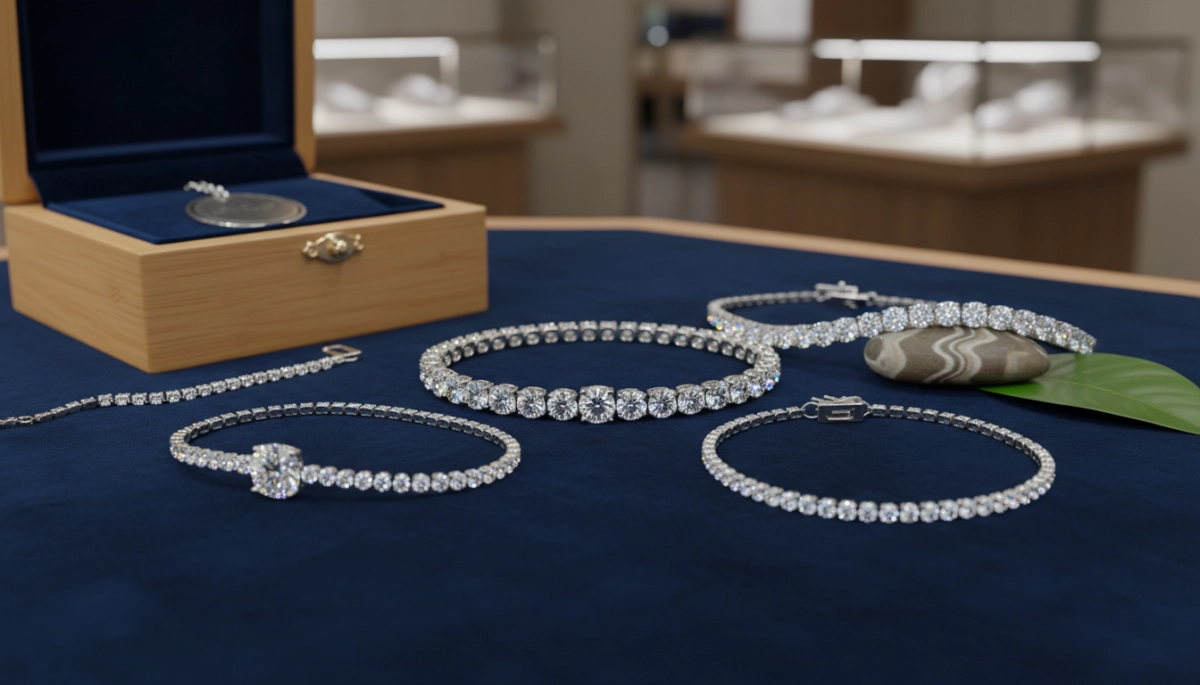
You may have seen a delicate line of diamonds catching light on a wrist and wondered what makes that look so instantly elegant. The tennis bracelet combines simplicity with technical precision: a continuous row of diamonds set in a flexible chain that hugs your wrist. Its name entered popular vocabulary in the 1980s, but the basic design has roots in earlier line bracelets that prioritized symmetry, mobility, and a secure clasp.
Understanding this essential form will help you recognize how different styles are created from the same basic structure. Whether you want something understated for daily wear or a show-stopping piece for special occasions, the core attributes — the setting, metal, clasp, and diamond cuts — determine comfort, durability, and visual impact.
What defines a tennis bracelet and why it matters to you
At its simplest, a tennis bracelet is defined by three features: a continuous row of gemstones (commonly diamonds), a flexible link or setting that allows the bracelet to drape, and a reliable clasp to keep it secure. For you, these translate into practical benefits:
- Versatility: The slim, linear design works with casual and formal looks alike.
- Comfort: The flexible construction sits naturally on the wrist without pinching or rotating.
- Security: Quality clasps and safety catches minimize the risk of loss.
Classic Design Elements to Know Before You Buy
Before comparing modern reinterpretations, get familiar with classic elements that define the most enduring tennis bracelets. When you can name the settings and materials, you’ll be better equipped to evaluate value and style.
Common settings and how they change the look
- Prong (classic): Individual prongs expose more diamond surface, maximizing sparkle and a refined, airy appearance.
- Shared prong: Adjacent diamonds share prongs for a continuous, seamless line with slightly lower metal visibility.
- Bezel: Metal rims encase each stone for a modern, protective silhouette with less exposed brilliance but greater durability.
- Channel: Stones sit flush within a metal channel for a sleek, uninterrupted shine that’s excellent for active wear.
Metals, clasp types, and diamond shapes you’ll encounter
Most classic tennis bracelets use yellow gold, white gold, rose gold, or platinum. Platinum and white gold are popular for maximizing diamond brilliance; yellow and rose gold add warmth and a vintage sensibility. Pay attention to the clasp — box clasps with side safety catches are standard for secure, everyday wear.
Diamonds are most commonly round brilliant for maximum sparkle, but baguette, princess, and mixed cuts are also classic choices that alter the bracelet’s visual rhythm. Carat total and stone size affect both presence and price, so decide whether you want a delicate, low-profile line or a bold, statement string.
With these foundational points clear, you’re ready to explore how designers have reimagined the tennis bracelet form — from bold modern variations to hybrid styles and practical styling tips in the next section.
Modern Reinterpretations: From Minimalist Lines to Architectural Statements
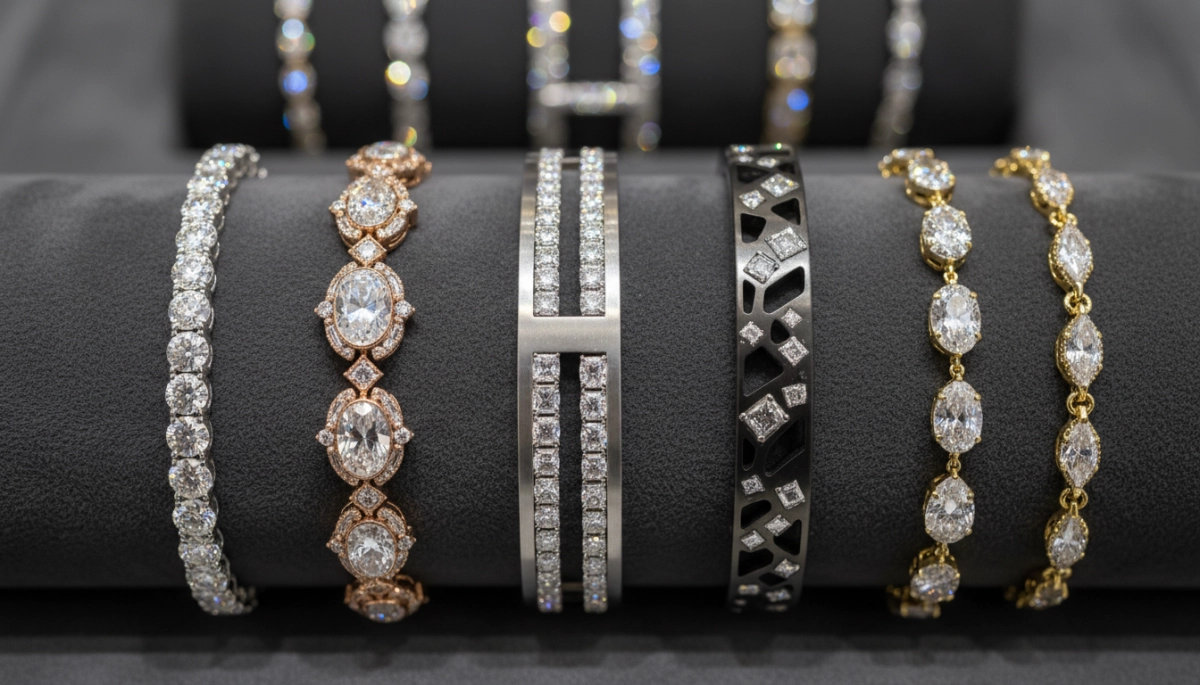
Designers have pushed the tennis bracelet away from a single, uniform silhouette into an array of contemporary looks that retain the bracelet’s core — a linear sequence of stones — while altering proportion, rhythm, and negative space. Minimalist takes pare down metal to whisper-thin frames and micro-pavé rows that read like a fine ribbon of light, ideal for understated daily wear. At the opposite end, architectural designs use mixed stone sizes, staggered links, or openwork metal to create movement and visual depth; these pieces read more like sculptural cuffs than simple chains.
Technical innovations have also influenced style. Invisible settings and low-profile bezels deliver a seamless, uninterrupted line; tension and channel variants emphasize durability for active lifestyles without sacrificing sparkle. Designers experiment with asymmetry (a cluster here, a single larger stone there) to introduce focal points, and with negative space to make the bracelet look lighter on broader wrists. If you want modernity without losing the classic essence, look for pieces that reinterpret continuity and flexibility rather than abandoning them.
Hybrid and Personalized Tennis Bracelets: Mixes, Colors, and Heirloom Potential
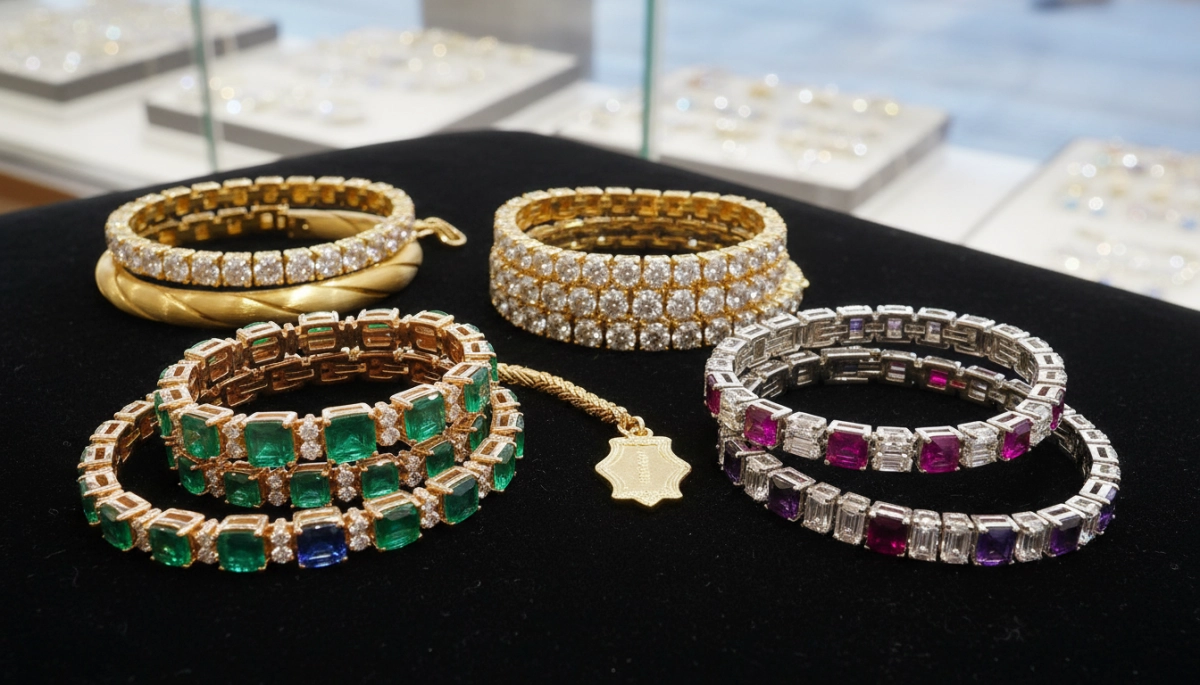
Hybrid tennis bracelets blend the line-bracelet concept with other jewelry categories to produce hybrid aesthetics and greater personalization. Popular hybrids swap in colored gemstones — sapphires, emeralds, or fancy-color diamonds — either in repeating patterns or as accent stations. Another common approach pairs baguette and round cuts in alternating sequences to create a rhythmic, vintage-meets-contemporary effect. Charm stations, engraved links, or a single signet-style motif can turn a tennis bracelet into a highly personal keepsake.
Customization extends beyond decoration: bespoke lengths, custom clasps (double-safety or hidden box clasps), and matched sets that mirror an engagement ring or pendant are common requests. For heirloom pieces, consider removable sections or modular designs so stones can be repurposed later. When commissioning a hybrid piece, discuss metallurgy (mixed metals for contrast), stone sourcing, and the long-term plan for maintenance and resizing — good planning preserves both value and sentiment.
How to Style, Layer, and Care for Your Tennis Bracelet
Styling a tennis bracelet depends on scale and context. A delicate line of small stones is perfect for stacking with slim bangles or a slim watch; a heavier, higher-carat bracelet stands alone as a statement and pairs best with minimal surrounding pieces. Aim for balance: if your bracelet is wide or high-profile, keep other wrist adornments understated. For mixed-metal looks, repeat the same metal tones elsewhere in your outfit (belt hardware, watch case) to create cohesion.
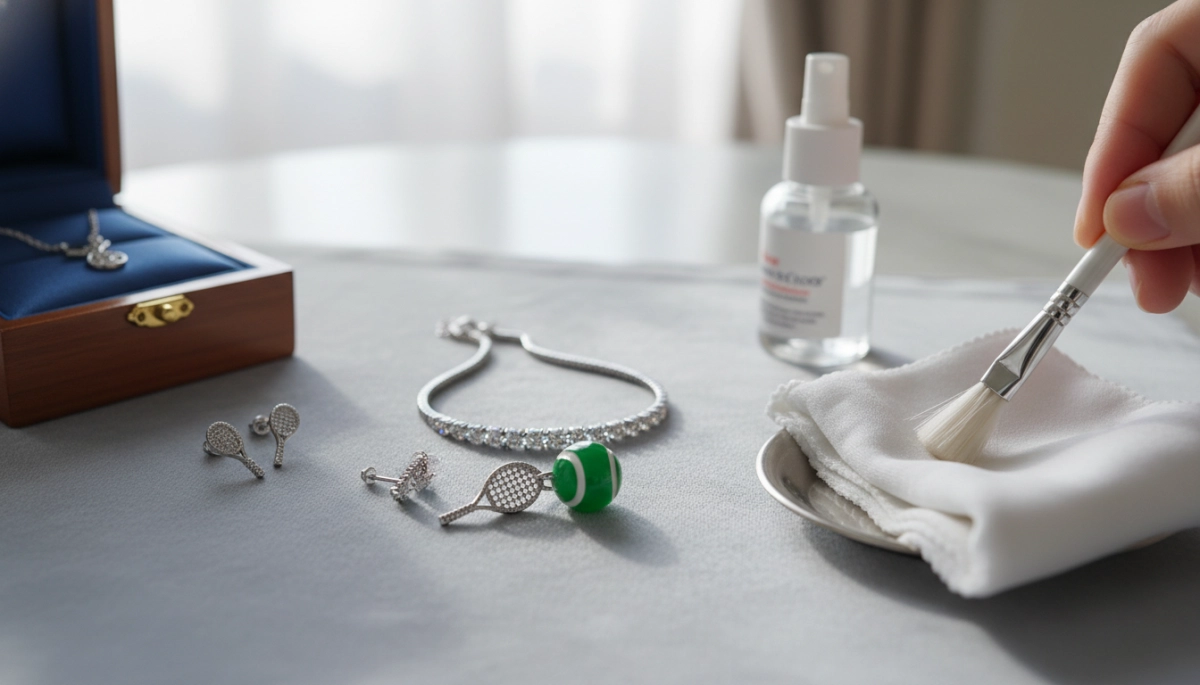
Care and longevity are practical considerations. Clean gently with a soft brush and mild detergent, inspect the clasp and prongs regularly, and have a jeweler check settings annually. Choose channel or bezel variants for everyday or active wear; reserve high-prong, delicate styles for occasional use. Finally, insure valuable pieces, store them flat or in individual pouches to avoid tangling, and consider professional resizing rather than DIY adjustments to maintain workmanship and resale value.
Choosing the Right Tennis Bracelet for Your Style
Deciding on a tennis bracelet is as much about lifestyle and sentiment as it is about aesthetics. When shopping, prioritize comfort, clasp security, and the setting that fits your daily routine; try pieces on to check drape and balance with other wristwear. If you’re unsure about stone quality or care, start with reputable educational resources like GIA diamond basics, and ask your jeweler about warranties, maintenance plans, and insurance options. A thoughtful purchase becomes both a wearable expression and a lasting keepsake when you plan for fit, function, and future care.
Key Takeaways
- Choose settings and metals that reflect your lifestyle—durable styles for daily wear, delicate designs for occasional use.
- Match scale and sparkle to other wristwear for a balanced, cohesive look.
- Regularly inspect settings, photograph and document the piece, and insure valuable bracelets for long-term protection.