How gold purity shapes the look and longevity of your tennis bracelet
When you’re choosing a gold tennis bracelet, the karat—14k or 18k—determines more than just the price tag. Karat measures the proportion of pure gold in the alloy. Pure gold is 24k, which is too soft for most jewelry, so jewelers mix it with other metals to improve strength and change color. Understanding those practical effects helps you pick a bracelet that matches how often you’ll wear it and how much care you want to give it.
What 14k and 18k really mean for you
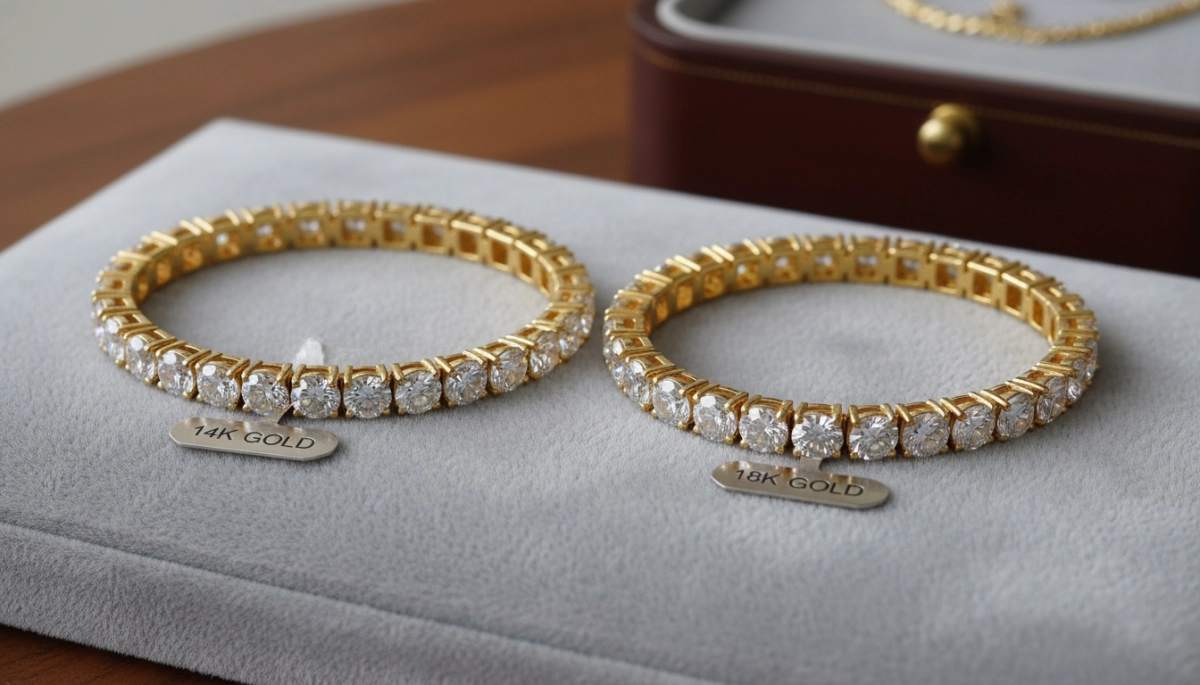
- 14k gold contains about 58.3% pure gold and 41.7% alloy metals (usually copper, silver, or zinc). It’s the harder, more scratch-resistant option, so it’s ideal if you plan to wear your bracelet daily.
- 18k gold contains about 75% pure gold and 25% alloy metals. It offers a richer, warmer tone and a higher perceived luxury but is softer and more prone to denting or bending under heavy wear.
Durability and maintenance: matching the bracelet to your lifestyle
You should think about how you’ll use the bracelet. If you’re active or plan to wear the piece every day, durability becomes a top priority because a tennis bracelet’s small links and gemstone settings can be vulnerable to knocks and catches.
Practical differences you’ll notice
- Scratch resistance: 14k resists scratching and deformation better than 18k. If you work with your hands or rarely remove jewelry, 14k will hold up longer with less visible wear.
- Repairs and resizing: 18k is easier to solder smoothly because of its higher gold content, but it also requires more careful handling. 14k may require more frequent touch-ups over a lifetime if it’s subjected to constant stress.
- Tarnishing and patina: Both finishes can develop a patina, but 14k alloys with higher copper content may show slightly more color change over time. Regular professional cleaning will keep either karat looking its best.
Color, shine, and cost: what impacts your decision now
If appearance and budget hover high on your list, here’s what to expect: 18k displays a deeper, more saturated yellow that many associate with luxury. 14k looks slightly paler because of the higher percentage of non-gold metals, but it still offers excellent luster and sparkle—especially when paired with well-cut diamonds or gemstones.
- Price per gram: 18k is more expensive because it contains more pure gold.
- Perceived value: 18k often feels more premium, but 14k can deliver better long-term value if durability matters to you.
Now that you understand the basic trade-offs between hardness, color, and cost, the next section will walk you through how stone settings, clasp types, and real-world wear tests influence whether 14k or 18k is the smarter pick for your specific tennis bracelet.
How stone settings and clasp choices change the karat you should pick
The way diamonds or gemstones are set and the type of clasp you choose have a big influence on whether 14k or 18k is the smarter option. Settings concentrate stress at tiny points—prongs, bezels, channels—so the metal’s resistance to bending and wear matters as much as its color.
- Prong settings: Prongs hold stones with small tips that can wear down or break. Because 14k is harder, its prongs hold up better to day-to-day knocks and keep stones secure longer without frequent retipping. If your bracelet uses delicate single-prong cups or very small claws, 14k is the safer, lower-maintenance choice.
- Channel and bezel settings: These styles use continuous metal edges against the stones. They benefit aesthetically from the richer tone of 18k, and when well designed they distribute stress more evenly. That said, deep dents or repeated compression can deform 18k sooner, so if you prefer 18k in a channel or bezel, look for slightly thicker walls or reinforcement at the joins.
- Tension settings and pavé: Pavé and tension setups place extra demand on metal precision. 14k’s greater strength helps maintain tight, secure settings without losing shape; 18k can still be used but typically requires larger, more conservative mounting to avoid gaps forming over time.
- Clasps and safety features: Clasps are the first line of defense against losing your bracelet. Box clasps with safety latches and double-snap mechanisms are best regardless of karat. However, small lobster or spring-ring clasps made in 18k can deform more easily under stress; for daily wear, choose a robust clasp design—ideally in 14k—or ask the jeweler to reinforce the clasp area with a backing plate or soldered safety latch.
Real-world wear tests and practical buying tips
Manufacturers and independent labs use simple tests—bend/flex cycles, abrasion, and drop impacts—to compare performance. In practice, those tests show predictable differences: under repeated flexing, 14k tolerates more cycles before showing cracks; under abrasive wear, 18k scuffs more noticeably. That doesn’t mean 18k fails catastrophically—proper design, thicker links, and quality craftsmanship can make an 18k tennis bracelet last for decades.
- Consider link thickness and construction: A 14k bracelet with thin, delicate links can still be fragile, while an 18k bracelet with solid, wider links will be relatively durable. Inspect the join points and stone settings—reinforced bezels, welded jump rings, and secure box clasps prolong life.
- Ask for wear-oriented customizations: If you love 18k’s color but need durability, request stronger prongs, thicker bezels, or a double-safety clasp. Many jewelers will adjust alloy composition slightly (within karat limits) to increase hardness without losing color tone.
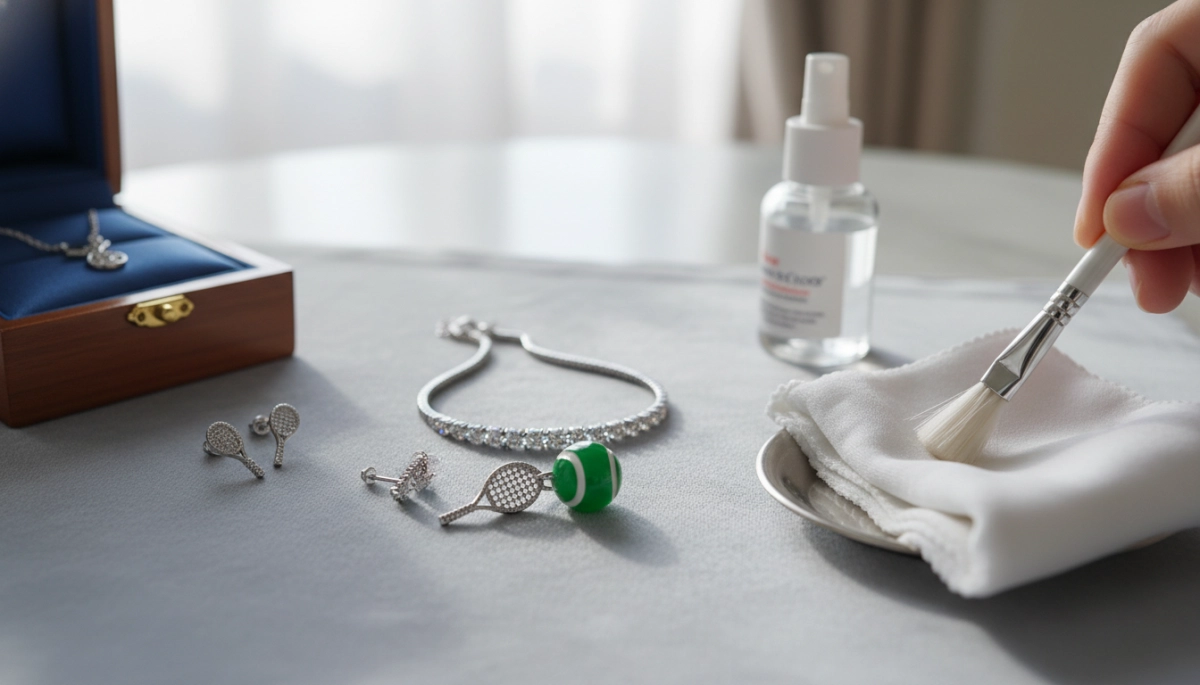
- Routine checks and insurance: Whatever karat you choose, schedule professional inspections every 6–12 months for daily-wear bracelets. Insurance or a jewelry warranty is especially worth it for 18k pieces or bracelets with high-value stones—repairs are more frequent but usually straightforward.
Next, we’ll look at how personal style, budget, and long-term value intersect—so you can decide which karat truly fits your lifestyle and expectations.
Choosing your next step
Ready to pick a bracelet? Start by trying examples in both karats at a trusted jeweler so you can see color, feel the weight, and test clasps and links in person. Ask the jeweler to explain the specific alloy used, any reinforcements they recommend, and what warranty or repair services are offered. If you plan to customize—thicker bezels, reinforced prongs, or an upgraded clasp—get a written estimate and timeline before work begins.
Before you buy, consider professional appraisal and insurance for higher-value pieces, and schedule routine inspections (every 6–12 months for everyday wear). For technical background on gold karats and care, see GIA on gold.
Key Takeaways
- Try both 14k and 18k in person and inspect construction—karat choice matters less than design quality for longevity.
- Request reinforcements (thicker settings, robust clasps) and regular professional checks to extend the life of any gold tennis bracelet.
- Get an appraisal and appropriate insurance or warranty for high-value or frequently worn pieces.