Choosing tennis earrings that complement your diamond bracelet with confidence
You likely already love the clean, continuous sparkle of a diamond tennis bracelet. When you add tennis earrings, you want harmony rather than competition. In this section you’ll learn the practical rules and visual principles that help you select earrings that enhance your bracelet, flatter your face, and suit the occasions you’ll wear them for.
Match metal and setting for a cohesive look
The simplest way to achieve a polished pairing is to match the metal and the setting style. If your bracelet is set in platinum with a prong or shared-prong setting, choose earrings in the same metal and a similar setting. That consistency keeps attention on the diamonds rather than interrupting the visual line with clashing metal tones or different textures.
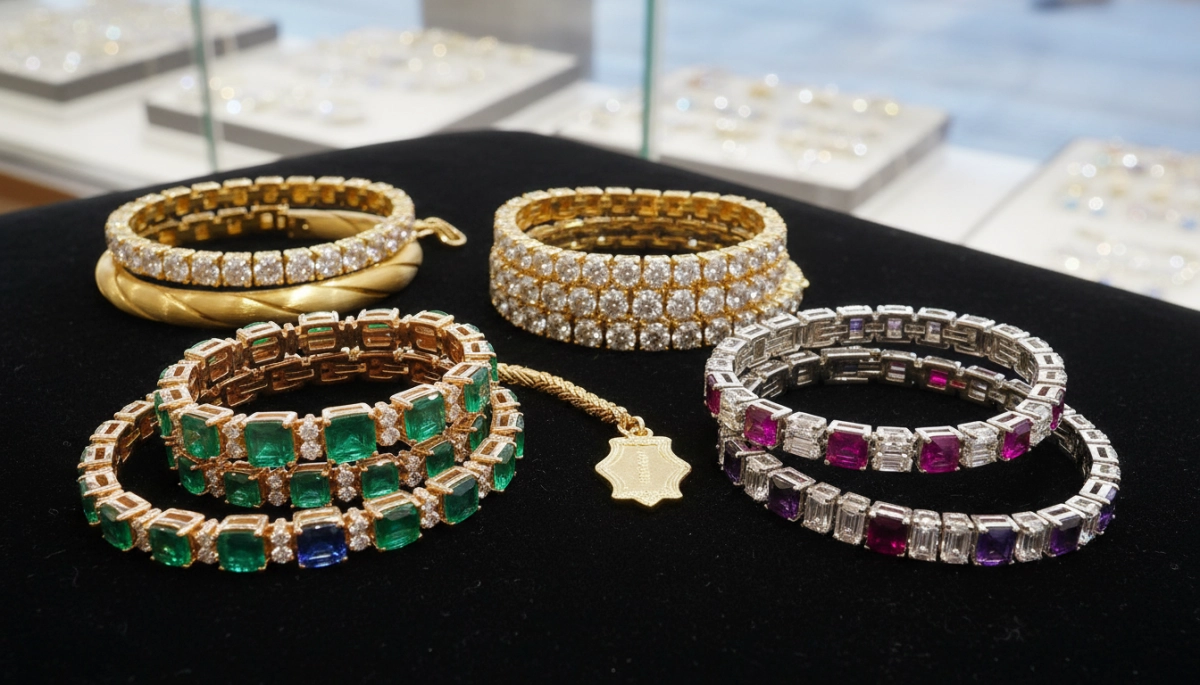
- Metal: Match yellow gold with yellow gold, white gold or platinum with white metals. Mixed-metal looks are trendy, but they require deliberate styling to avoid a mismatched feel.
- Setting: Shared-prong, bezel, and pavé settings each reflect light differently. Pair a bracelet’s prong-set stones with prong-set earrings for comparable sparkle and profile.
- Closure & durability: Choose secure earring backs (screw-backs or locking closures) if you regularly wear both pieces daily to prevent loss.
Selecting the right earring style and scale for your wrist and face
Scale matters: the size of the diamonds and the visual weight of the bracelet should coordinate with the earrings so neither piece overwhelms the other. Use these guidelines to choose the appropriate earring silhouette and carat distribution for your look.
Styles that pair especially well with a tennis bracelet
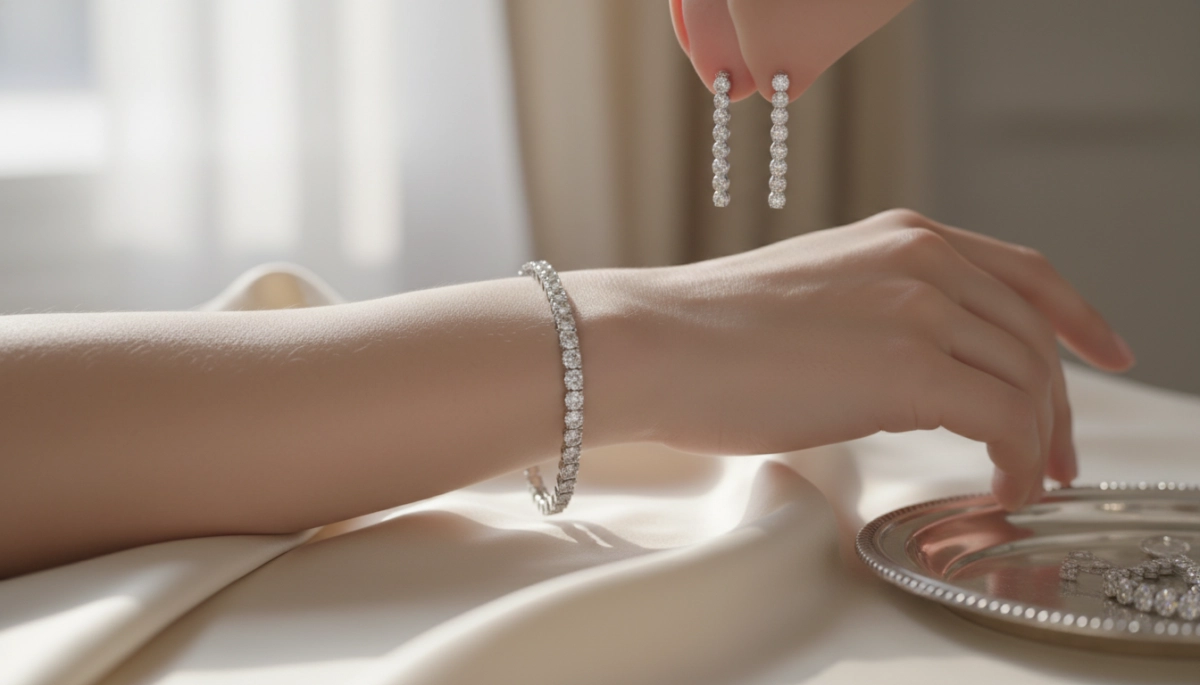
- Classic tennis drop or linear hoops: Earrings that echo the continuous row of stones in your bracelet—such as straight-line drops or slim diamond hoops—create an elegant mirror effect.
- Single-row studs (mini tennis studs): If your bracelet features modest-size stones, matching it with single-row or cluster-style studs keeps the ensemble delicate and balanced.
- Huggie hoops with pavé diamonds: For a modern, less formal pairing, huggies sit close to the ear and carry a row of small diamonds that harmonize with the bracelet’s rhythm without adding length.
- Drop earrings with matched center stones: If your bracelet has larger center stones or a mix of sizes, consider drops that echo the focal carat weight to maintain proportionality.
Practical proportion tips
- Match overall carat weight: If your bracelet is high-carat and bold, choose earrings with comparable total carat weight to keep the look balanced.
- Consider face shape and hair: Longer drops lengthen the face; studs flatter round faces. If you wear your hair up frequently, slightly longer earrings can read better visually against the bracelet.
- Think about movement: Bracelets catch light when you move your wrist; choose earrings that also move subtly to create coordinated sparkle.
With these principles in mind, you can narrow choices to styles that naturally complement your bracelet. In the next section you’ll get specific recommendations and examples of the best tennis earring designs for different bracelet types and occasions.
Best tennis earring designs for specific bracelet types and occasions
Now that you understand the visual rules, here are concrete pairings that work especially well with common tennis bracelet styles.
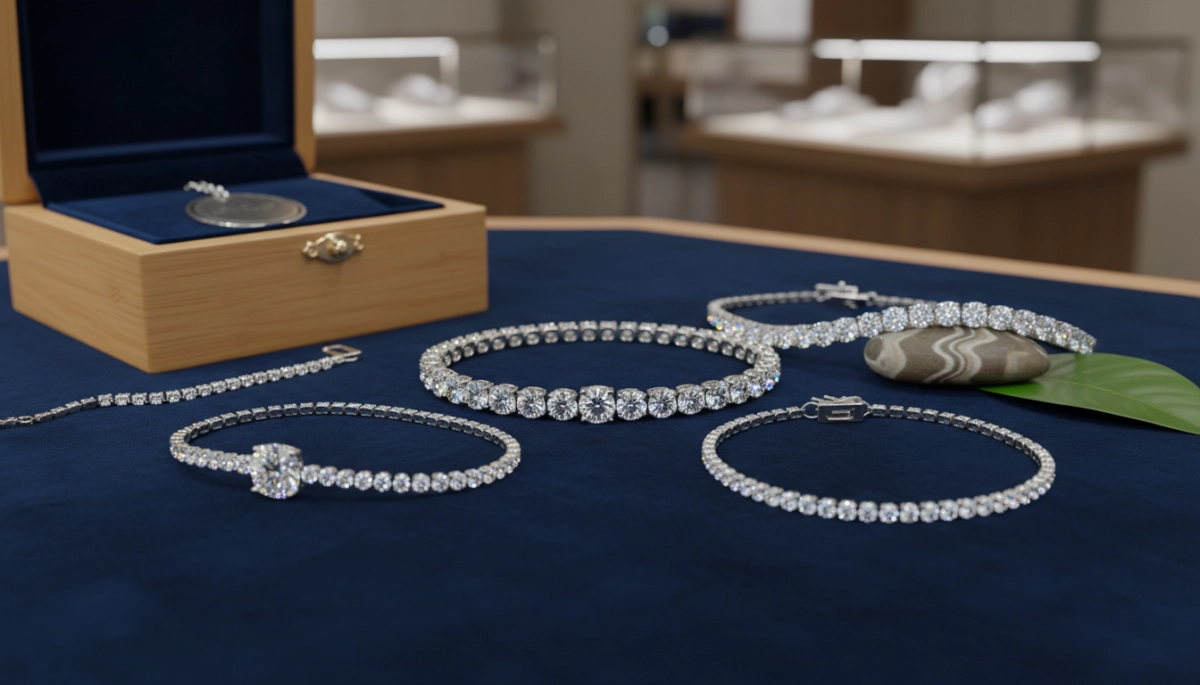
- Delicate single-row bracelet: Match with small single-row studs, tiny linear drops or slim huggie hoops. These options preserve the understated rhythm of the bracelet without adding visual heft—ideal for daytime, office wear, and minimalist wardrobes.
- High-carat, bold tennis bracelet: Choose earrings with comparable presence: longer linear drops, medium-sized hoops set with a continuous row of stones, or larger clustered studs that echo the bracelet’s carat weight. These read as a coordinated set at formal events and black-tie occasions.
- Pavé or micro-pavé bracelet: Pavé works beautifully with pavé huggies or pavé-set drop earrings because the texture and sparkle density are consistent. Avoid overly large solitaire studs that will look visually disjointed beside the fine pavé texture.
- Mixed-size or station bracelet: When the bracelet alternates stone sizes or features focal stations, pick drop earrings with a similarly scaled focal stone or graduated linear earrings that reflect the bracelet’s rhythm.
- Vintage-inspired bracelet: Complement antique cuts and milgrain detailing with bezel-set studs, halo-accented drops, or delicate cluster earrings that echo the bracelet’s period details without competing.
How to style your tennis earrings for different looks and events
Think beyond matching metal and carat: consider hairstyle, neckline, and the mood you want to create.
- Everyday elegance: Opt for low-profile huggies or small studs with locking backs. They’re secure, comfortable and provide a subtle shimmer that complements wrist movement without drawing excessive attention.
- Work and daytime events: Keep proportions modest—studs or short drops that don’t interfere with scarves or collars look polished and professional.
- Evening and formal wear: Embrace length and movement. Straight-line drops, elongated hoops or matched drop-and-bracelet sets amplify sparkle under evening lights and create a cohesive, glamorous silhouette.
- Layered or stacked jewelry looks: If you’re wearing multiple bracelets or mixed rings, choose simpler tennis earrings (studs or thin huggies) to avoid visual overload. Conversely, if the wrist is the focal point, let the earrings stay quietly supportive.
Shopping and care: practical tips to ensure a lasting pairing
Buying and maintaining earrings that truly complement your bracelet involves technical details as much as aesthetics.
- Prioritize cut and proportion over carat: A well-cut smaller stone can sparkle more harmoniously beside a bracelet than a poorly cut larger stone. For matching pieces, try to match color and cut grades first, clarity second.
- Certification and matching: Look for diamonds with reliable certification (GIA, AGS). When possible, source earrings and bracelets from the same maker or request a color-match—slight color differences are noticeable in close pairings.
- Secure fittings: Choose sturdy posts and locking backs for frequent wear. For drops and hoops, check hinge integrity and soldered joins.
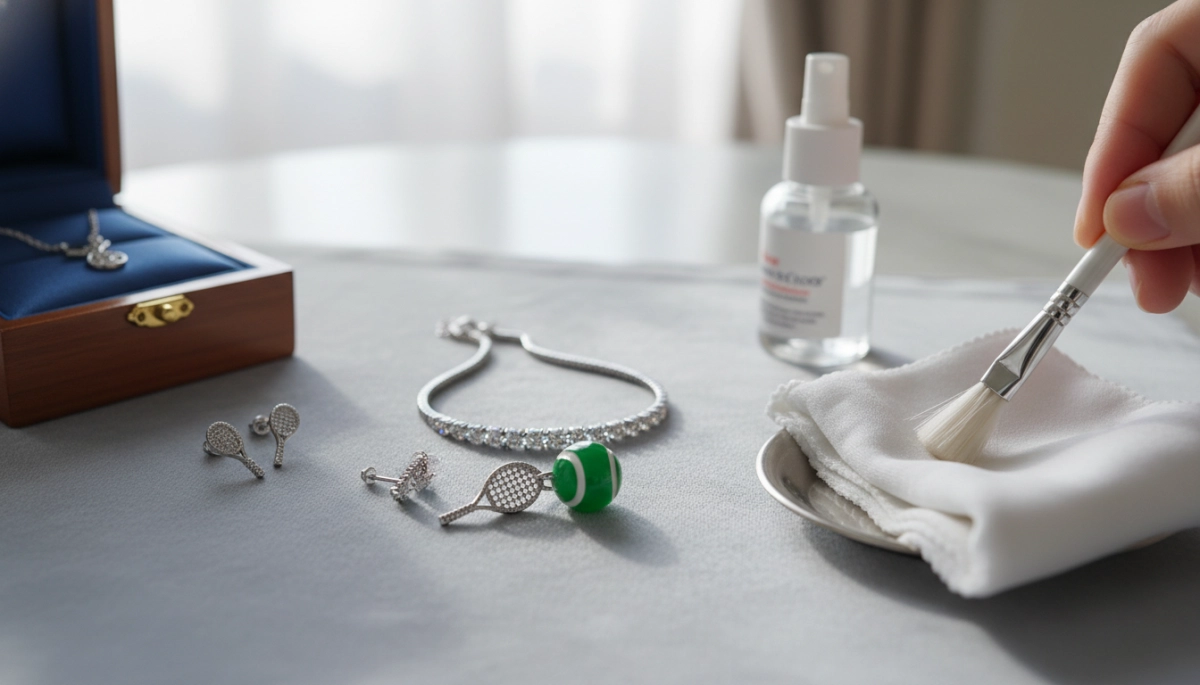
- Care and maintenance: Clean regularly with a gentle jewelry cleaner, inspect prongs every 6–12 months, and insure high-value pieces. Proper storage—individual compartments or soft pouches—prevents tangling and scratching when you’re not wearing them.
Finishing touches and next steps
Now that you know how to pair tennis earrings with your diamond bracelet, take a moment to try combinations in natural light and in motion—what looks balanced on the table can read differently on your wrist and face. If you’re investing in high-value pieces, request certification and a color match from your jeweler to ensure harmony; for guidance on grading standards see GIA diamond grading. Consider practicalities like secure closures and everyday comfort as seriously as aesthetics, and when in doubt, ask a trusted jeweler to view the pieces together or to create a custom pairing that’s uniquely yours.
Key Takeaways
- Match metal, setting style, and proportion to create a cohesive look between earrings and bracelet.
- Choose earring scale based on bracelet carat weight, face shape, and occasion for balanced visual harmony.
- Prioritize cut, certification, secure fittings, and regular maintenance for lasting wear and sparkle.