How eras, equipment, and surfaces shape the way you judge tennis greatness
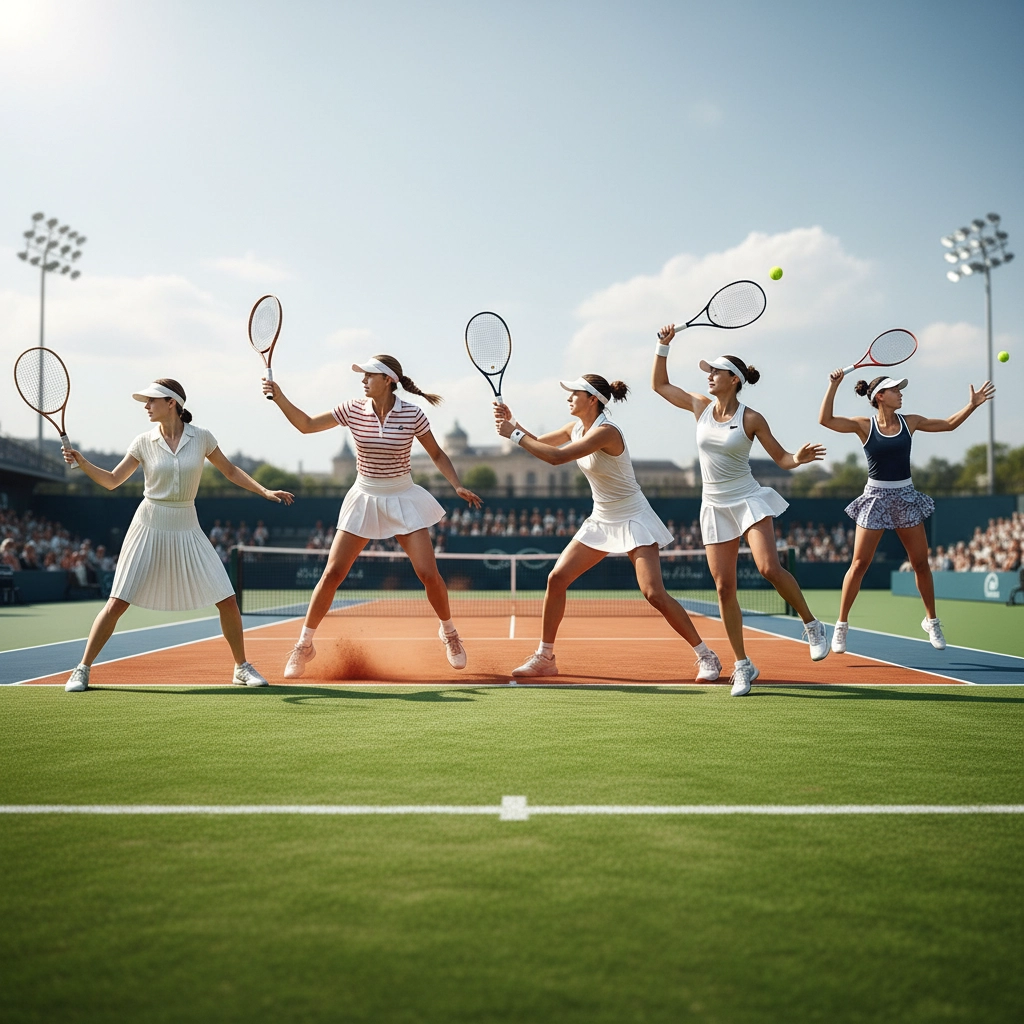
You’ll find that measuring “greatness” in women’s tennis isn’t a single number — it’s a mix of Grand Slam titles, head-to-head records, adaptability across surfaces, and impact on the sport. When you look at champions from different decades, you must account for rule changes (the Open Era began in 1968), equipment evolution (wooden rackets to modern graphite), and the shifting calendar of tournaments. Those factors influence how players performed on grass, clay, hard courts and indoors, so comparing legends requires context as much as statistics.
As you read, focus on three lenses that will help you appreciate these champions: the era in which they played, the surfaces where they excelled, and how they influenced playing style and opportunity for the next generation. This part introduces the themes and profiles the foundational champions whose achievements set the standards you still use to evaluate players today.
Why surface specialization and era context matter for your comparisons
Surfaces accentuate different skills. Grass rewards fast serves and quick net play, clay rewards patience and heavy topspin, and hard courts demand an all-around game with consistent movement. You should also keep in mind that travel, prize money, and access to coaching changed dramatically across the 20th century and into the 21st. A dominant player in the 1920s or 1950s often faced a very different competitive landscape than one in the 1990s or 2010s.
Foundational champions you should know from the early decades
These early legends laid the technical and cultural groundwork for modern women’s tennis. Learn their key accomplishments and the surfaces where they left the biggest mark so you can better understand how later stars built on their legacies.
- Suzanne Lenglen (France, 1920s) — A trailblazer in style and dominance, Lenglen revolutionized women’s tennis with aggressive shotmaking and athleticism. She dominated both grass and clay at a time when international competition was growing.
- Helen Wills Moody (USA, 1920s–30s) — Known for her steely baseline game and mental toughness, Wills Moody won multiple Wimbledon and U.S. Championships, showing early evidence that baseline consistency could conquer grass as well.
- Althea Gibson (USA, 1950s) — The first Black player to win Grand Slam singles titles (Wimbledon and the U.S. Championships), Gibson broke racial barriers and proved adaptability across grass and hard-packed surfaces.
- Maureen “Little Mo” Connolly (USA, 1953) — The first woman to complete a calendar-year Grand Slam, Connolly’s aggressive groundstrokes and determination signaled the rising standard for consistency across all major events.
- Margaret Court (Australia, 1960s–70s) — With a record number of major singles titles, Court combined power and versatility, winning across grass, clay and hard-like surfaces both before and after the start of the Open Era.
How the earliest champions influenced playing styles and tournament growth
Beyond trophies, these players influenced coaching methods, encouraged international competition, and helped transform public perception of women’s sport. You’ll notice threads — such as the move from serve-and-volley grass dominance to more varied baseline exchanges — that continue through later eras.
Next, you’ll move into the Open Era and examine the players who defined modern professional tennis, including those who became surface specialists and those whose careers spanned multiple playing conditions.

Open Era pioneers who professionalized women’s tennis
The transition to the Open Era turned tennis into a true professional sport, and a handful of players not only dominated on court but also shaped the modern tour off it. Billie Jean King stands foremost here: her aggressive net play and doubles expertise translated into singles success on grass and indoor courts, but her lasting legacy is institutional. King helped secure better prize money, organized competition, and broader media attention for women’s tennis — factors that allowed later champions to pursue tennis as a viable career across surfaces and continents.
Contemporaries like Evonne Goolagong Cawley and Virginia Wade helped illustrate how charisma and touch could thrive even as power and athleticism increased. Goolagong’s elegant movement and deft finishing made her a formidable opponent on grass and slower surfaces, while Wade’s serve-and-volley accuracy delivered clutch performances at Wimbledon. These players proved that technical refinement and strategic variety remained essential as rackets and training evolved.
Serve-and-volley vs. baseline endurance: Navratilova and Evert reframed excellence
Few rivalries define an era’s stylistic divide as clearly as Martina Navratilova versus Chris Evert in the 1970s and ’80s. Navratilova’s athleticism, left-handed slice and relentless net charging revitalized serve-and-volley for women, producing dominance on grass and faster indoor courts. Evert, with ironclad consistency, pinpoint groundstrokes and superior footwork, turned clay-court patience into a tactical blueprint that translated to hard courts as well.
What matters for your comparisons is how their rivalry forced adaptation: Navratilova added baseline depth, Evert sharpened her offense — and both expanded conditioning standards. Their head-to-head is more than a statistic; it’s evidence of a period when surface-specific strengths were being blended into true all-court skills. For later generations, the lesson was clear: to be counted among the greats you needed both a signature style and the capacity to evolve it.
The power baseline and all-surface titans who rewrote records
From the late 1980s through the 2010s, a new breed of players combined unprecedented power with relentless athleticism, aided by graphite rackets and scientific training. Steffi Graf epitomized this shift: a devastating forehand, explosive movement, and the only Golden Slam (all four majors plus Olympic gold in one year) showcase not just surface versatility but dominance across conditions. Monica Seles briefly interrupted that momentum with her two-handed power from both wings — a style that forced opponents to recalibrate return strategies on clay and hard courts.
More recently, Serena Williams and, to a lesser extent, Venus Williams brought unmatched serve power and competitive longevity. Serena’s ability to win on grass, hard and occasionally clay, while maintaining top physical condition into her 30s, makes her a benchmark for modern greatness. These champions illustrate how equipment, fitness, and mental resilience combined to reward players who could impose pace and control across surfaces — shifting the criteria you use when ranking legends across eras.
Enduring themes and what to watch next
Tennis greatness will continue to be defined by a mix of adaptability, innovation and impact — not just trophies. As equipment, sports science and global competition keep advancing, the next wave of champions will be those who can translate elite skills across surfaces, adapt their games to changing conditions, and use their platform to shape the sport off court as well.
To follow how those dynamics play out, keep an eye on emerging players at Grand Slams and major lead-up events on each surface, and consult authoritative coverage such as the WTA official site for rankings, match reports and player development stories.
Frequently Asked Questions
How do different court surfaces change which players succeed?
Surfaces emphasize different strengths: grass favors fast serves and net play, clay rewards patience and heavy topspin, and hard courts demand all-around movement and consistency. A player’s technique, footwork and tactical choices interact with surface speed and bounce, so some players naturally excel on one surface while others translate skills across all three.
Why is it hard to compare players from different eras fairly?
Comparisons are complicated by changes in equipment (wood to graphite rackets), training, sports medicine, tournament schedules and the professional landscape (pre- vs. post-Open Era). These factors affect style, longevity and opportunities, so historical context matters when assessing records and legacy.
Which factors matter most when judging a player as an all-surface great?
Key indicators are Grand Slam success across multiple surfaces, consistent deep runs at varied major events, head-to-head results against top opponents, adaptability in playing style, and sustained excellence over time. Off-court influence and contributions to the sport can also shape a player’s standing among legends.