How the 21st century transformed men’s tennis and what you should notice
You’ve seen tennis evolve from serve-and-volley skirmishes to baseline epics driven by relentless athleticism, tactical variety, and advances in racquet technology. The 21st century amplified prize money, global reach, and year-round training, creating a stage where a few extraordinary players could establish long-lasting legacies. When you study this era, you’ll notice longer rallies, more physically demanding matches, and rivalries that captured casual fans and purists alike.
Beyond match results, the modern legend is defined by consistency across surfaces, adaptability to new playing conditions, and the ability to elevate the sport commercially and culturally. You’ll also observe how sports science, improved surfaces, and data analytics changed preparation and recovery — factors that allowed top players to extend peak performance across many seasons.
How you can judge a modern legend and which early figures signaled the new era
Key criteria you can use to evaluate greatness
- Grand Slam and major-event success: You’ll look at how often a player won the sport’s biggest tournaments and whether success spanned different courts (hard, clay, grass).
- Sustained dominance: True legends don’t just peak for a season; they maintain elite play, often returning to the top over many years.
- Rivalries and head-to-head impact: You should weigh how matchups against fellow greats shaped the sport and drove public interest.
- Technical and tactical innovation: Consider whether a player introduced or perfected shots, strategies, or patterns that influenced how others play.
- Off-court influence: Legacy extends to how a player grew tennis’ popularity, inspired the next generation, and maintained professionalism.
Early 21st-century standouts you’ll want to remember
-
Roger Federer — You’ll recognize Federer for his grace, fluid technique, and consistency through the 2000s. He brought a new aesthetic to the game and set standards for all-court mastery that many tried to emulate.
-
Rafael Nadal — Known for ferocious competitiveness and clay-court supremacy, Nadal introduced an intensity and physicality that redefined resilience on court. His style emphasized topspin, footwork, and mental toughness.
-
Novak Djokovic — You’ll note Djokovic’s return game, movement, and flexibility. He raised the bar for defensive-to-offensive transitions and displayed a capacity to dominate across surfaces and eras.
-
Lleyton Hewitt, Marat Safin, and Andy Roddick — These players bridged the late 1990s and early 2000s, producing memorable matches and momentary reigns at the top. They helped clear the path for the sustained rivalries you’ll read about next.
Now that you understand the context, the measures of greatness, and the early figures who signaled a new era, you’re ready to dive deeper into the careers, rivalries, and records of the players who defined the century — starting with a close look at the three who dominated headline after headline.
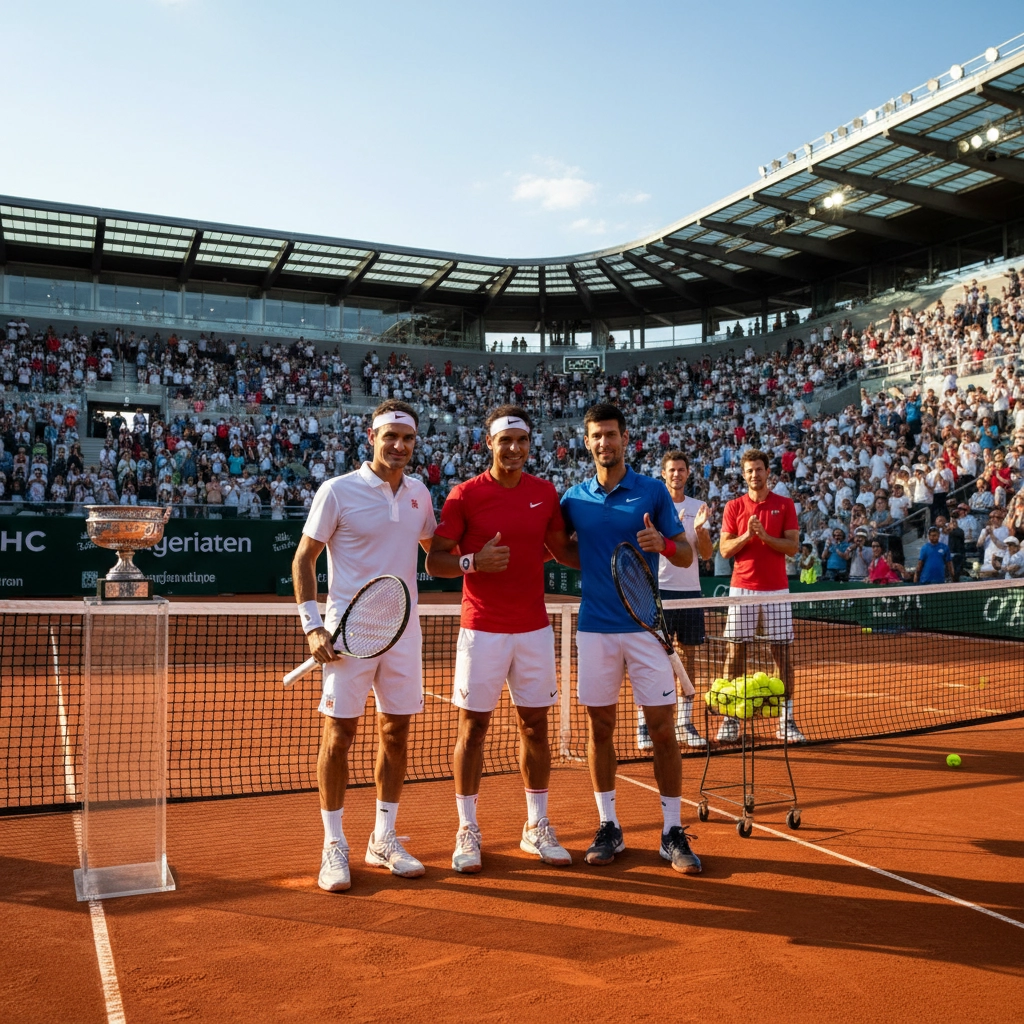
Roger Federer — artistry, records, and the evolution of all‑court play
You’ll remember Federer as the player who made elite tennis look effortless. His early-to-mid 2000s run reshaped expectations for shotmaking and timing: a seamless one‑handed backhand, a textbook serve, and an uncanny ability to move forward without sacrificing rhythm. Beyond trophies, Federer changed how players and fans thought about variety — transitioning from baseline to net with fluidity, mixing slices, drops, and blistering forehands in a way that inspired coaches to teach greater shot repertoire at younger ages.
Federer’s legacy is also cultural. He was the face of tennis’ globalization, raising broadcast appeal and sponsorships, and his philanthropic work and on‑court demeanor set standards for sportsmanship. Even as rivals began to eclipse him in later years, his role in popularizing the modern, athletic, attack‑oriented all‑court game remained foundational — a bridge between classical technique and 21st‑century power tennis.
Rafael Nadal — clay supremacy, physicality, and the mental code
When you think of Nadal, think of force multiplied by precision. His forehand heavy with topspin redefined how to construct rallies on slower surfaces, turning extreme angles into consistent winners. Nadal’s approach emphasized relentless court coverage, explosive first steps, and a refusal to yield the point — traits that altered training methods across academies worldwide, with greater emphasis on endurance and recovery.
Nadal’s imprint goes beyond clay. His tenacity produced matchups that tested opponents’ resolve and reintroduced the idea that sheer will could tilt any contest. Off court, his humility and perseverance — battling injuries yet returning to top form repeatedly — created a narrative of resilience that rejuvenated fan interest whenever he staged comebacks. You’ll also see his tactical evolution: smarter shot selection, improved serve placement, and adaptions on faster surfaces that extended his competitiveness beyond the red dirt.
Novak Djokovic — defensive genius, adaptability, and rewriting modern baseline play
Djokovic represents a synthesis of the modern baseline athlete: extraordinary flexibility, an almost preternatural return game, and a tactical mind that neutralizes opponents’ strengths. His ability to turn defense into offense — with deep, penetrating groundstrokes off seemingly impossible positions — forced rivals to invent new ways to generate free points. Coaches and players studied his movement patterns and nutrition/conditioning regimen as a blueprint for longevity in an era of grinding rallies.
Strategically, Djokovic brought unparalleled consistency across all surfaces, combining baseline depth, mental focus in big moments, and ruthless efficiency in break‑point conversion. His rivalries with Federer and Nadal produced many of the century’s defining matches, and his presence pushed the other two into higher gear — a cyclical uplift that elevated the sport. Off court, Djokovic’s professionalism, training innovations, and advocacy for player welfare broadened his influence beyond mere results, making him a central architect of modern men’s tennis.
Looking ahead: legacy, influence, and where the sport goes from here
What matters most is that the era defined by Federer, Nadal, and Djokovic — and the generation that framed their rivalries — changed how you experience professional tennis: tougher matches, deeper narratives, and a higher bar for athletic preparation. Their legacies are active ingredients in coaching philosophies, tournament presentation, and how young players set career goals. As the sport continues to evolve, those influences will show up in unexpected champions, fresh tactical trends, and new rivalries that echo the past while carving their own identities.
If you follow current tours, notice how training, scheduling, and technology are being refined in response to those careers; for up-to-date rankings and event information, check the ATP Tour.
Frequently Asked Questions
Who are widely regarded as the top three male tennis legends of the 21st century?
Roger Federer, Rafael Nadal, and Novak Djokovic are most commonly cited because of their Grand Slam records, longevity, cross‑surface success, and outsized influence on playing styles, training, and the sport’s global profile.
What criteria should I use to judge greatness in modern men’s tennis?
Key measures include Grand Slam and major-event success across surfaces, sustained dominance over multiple seasons, impact in major rivalries, tactical or technical innovation, and off‑court influence on the sport’s growth and professionalism.
How have equipment and training changes affected player longevity and style since 2000?
Advances in racquet technology, sports science, recovery protocols, and data analytics have enabled players to sustain higher physical intensity and extend peak years. Those changes also encouraged baseline power and endurance play, while improving injury prevention and comeback prospects.