
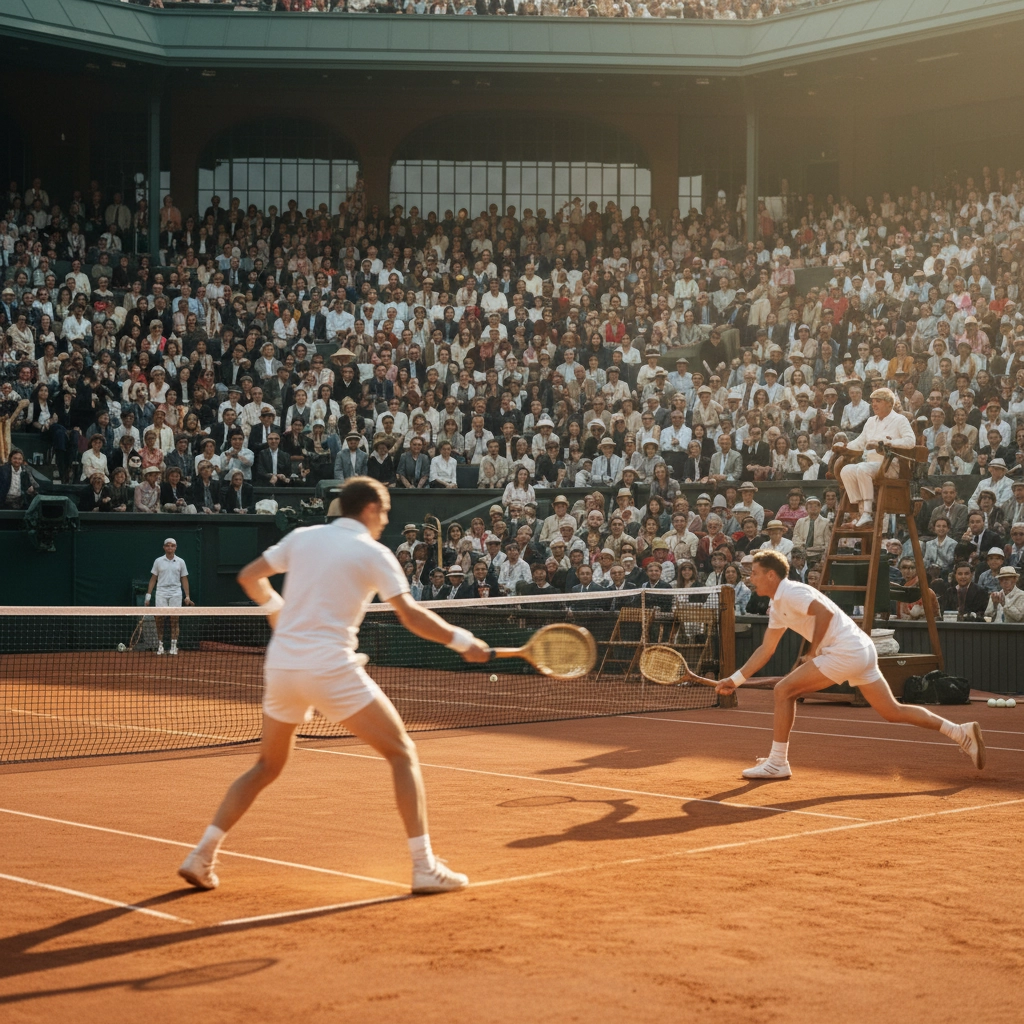
Why you should revisit these Open Era matches and what they teach you
When you watch a classic tennis match from the Open Era, you’re not just seeing two players compete—you’re witnessing a chapter in the sport’s evolution. These matches reveal how styles shifted, how rivalries pushed players beyond perceived limits, and how moments of pressure produced lasting drama. As you approach these contests, you’ll learn to spot tactical adjustments, momentum swings, and psychological turning points that define great competition.
Viewing with context transforms enjoyment into education. Rather than treating matches as isolated highlights, you can track service patterns, court positioning, and how champions manage crucial points. This first part introduces the significance of the classics and profiles a few seminal matches you should prioritize; later sections will give you frame-by-frame moments to watch and practical tips for streaming archived footage.
Seminal matches to start with and the key moments to watch
Below are three hallmark matches from different eras that illustrate why the Open Era produces so many enduring contests. For each, focus on one or two defining elements—momentum shifts, iconic tiebreaks, or cultural impact—that you can study and enjoy.
-
1973 — Battle of the Sexes: Billie Jean King vs. Bobby Riggs
This match transcends sport. When you watch King dismantle Riggs’s showmanship and power, pay attention to how she controls the rally tempo, minimizes unforced errors, and uses variety to disrupt his rhythm. The contest impacted tennis’ place in society and shows you how a single match can carry political and cultural significance alongside athletic excellence.
-
1980 Wimbledon Final — Björn Borg vs. John McEnroe
The Borg–McEnroe final is required viewing for anyone studying pressure and ice-cold nerve. You’ll want to watch the fourth-set tiebreak—18–16—observe how both players manage nerves, and note the tactical changes across sets. Borg’s steady baseline game contrasts with McEnroe’s net artistry; studying their point construction teaches you the value of tactical diversity under pressure.
-
2008 Wimbledon Final — Rafael Nadal vs. Roger Federer
This five-set epic is often cited as one of the greatest matches ever played. When you watch it, focus on shifting momentum across sets, Nadal’s heavy topspin and physical retrieval, and Federer’s exquisite offense in tight moments. The match also demonstrates how external factors—light, crowd intensity, and fatigue—affect decision-making in the final set.
As you begin watching these matches, take notes on turning points—breaks of serve, long rallies that flip momentum, and tactical tweaks at set boundaries. Those observations will prepare you to appreciate the nuance in the next batch of classics, where we’ll break down pivotal games and show you exactly when to pause and rewatch to learn from the pros.

Exactly when to pause: frame-by-frame moments that teach strategy
When you want to learn from a classic match, the single most valuable habit is disciplined pausing. Not every point deserves the rewind button — focus on the incidents that reveal decisions under pressure. Here are the specific moments to stop, what to look for, and what those moments teach.
– Break points and game-clinching points: Pause immediately after the point and study court positioning. Who is anticipating? Where is the server setting up their second shot after the return? These moments expose intent — aggressive serve-and-volley, neutralizing slice, or setting up a favored wing. Notice the hitter’s first three steps after contact and the returner’s recovery pattern.
– Tiebreak sequences (especially momentum swings): Break a tiebreak into two- or three-point blocks. Watch how players vary serve placement, whether they take risks or retreat to safety, and how they manage body language. Tiebreaks reveal psychological management: short, efficient routines between points and decisive use of patterns.
– Long rallies that change a set: Rewind the rally to the penultimate exchange. Trace how players constructed the point — who consistently went crosscourt to open the court, who mixed depth and angles, and when someone attempted a winner. Pay attention to balance and preparation on the final few strokes.
– Net approaches and passing-shot points: Pause at the instant of approach to evaluate footwork, grip, and split-step timing. When watching the passing shot, freeze-frame at the hitter’s last stride to learn how body-line and racket-face orientation create angles.
– Tactical adjustments at set boundaries: After a set ends, watch the first two service games of the next set closely. Players often test a new return position or change serve patterns here. Note any increase in aggression, more second-serve kicks, or a shift from one wing to the other.
How to study these pauses practically: use a notebook or timestamp list (minute:second) and write three observations: positioning, shot selection, and outcome. Rewatch the same point twice: once for movement and court geometry, a second time for stroke mechanics and deception. Over several matches you’ll recognize repeated tactics and begin to anticipate decisions before they happen.
Where to find and how to stream classic matches without losing the learning value
Access matters: picture clarity, reliable audio, and legal sources determine whether a match is watchable and studyable. Here are trusted places and playback tips.
– Official archives and broadcasters: Check Grand Slam archives (Wimbledon, Australian Open, Roland Garros, US Open) and the ATP/WTA websites for remastered classics. Tennis Channel and ESPN+ maintain curated libraries, and many tournaments post full matches or extended highlights on their official YouTube channels. These sources are legal and often include match metadata (scorelines, match length, surface).
– Specialized services and libraries: Tennis-specific platforms (e.g., Tennis TV’s classic sections) and sports documentary services sometimes offer higher-quality transfers and extras like commentary. University libraries and national archives occasionally hold restored broadcasts for public viewing.
– Playback settings and tools: Always choose the highest available resolution — grainy video obscures footwork. Use variable-speed playback (0.75x–0.5x) to study stroke mechanics, and frame-advance for critical contact moments. If the player audio matters, use good headphones; crowd noise can mask grunt patterns that reveal rhythm.
– Practical workarounds: Keep a timestamped note file while watching; most streaming players let you copy current time. Use screen-capture or still images for side-by-side comparisons (observe how a player’s stance changes across matches). Avoid illegal streams — lower quality and unreliable timing make detailed study frustrating and often inaccurate.
Pairing disciplined pause points with high-quality footage fast-tracks learning. In the next part we’ll walk through specific match clips and provide exact timestamps and study assignments so you can apply these techniques immediately.

Ready to Replay the Classics
When you press play on a classic match, treat it like a short course: pick one clear learning aim, keep a timestamped notebook, and use the pause points described earlier to turn spectacle into skill. Start with a single match, watch it straight through to feel the momentum, then replay targeted sequences at reduced speed. If you want reliable, high-quality sources for full matches and archival material, check official tournament libraries such as the Wimbledon Official Site.
- Choose one match and one study focus (serve patterns, return positioning, or rally construction).
- Watch once for enjoyment, then rewatch with timestamps and 0.75x–0.5x speed for technique.
- Share clips and questions with a coach or online community to accelerate learning.
Frequently Asked Questions
Where can I legally stream full classic matches from the Open Era?
Look first to official tournament archives (Wimbledon, the Australian Open, Roland Garros, US Open), the ATP/WTA sites, and rights-holding broadcasters like Tennis Channel or ESPN+. Many tournaments also post remastered matches or extended highlights on their official YouTube channels. Paid services such as TennisTV and some network subscription libraries offer curated classic collections with higher-quality transfers.
How should I structure a viewing session if my goal is to learn, not just watch?
Begin with an uninterrupted full viewing to absorb flow. Then replay selected points using the pause/rewind checklist from this article: break points, tiebreak blocks, decisive long rallies, net approaches, and opening games after a set change. Take three observations per paused point (positioning, shot choice, outcome), timestamp them, and rewatch at slower speeds to study mechanics.
Which classic matches are best for someone new to studying historic tennis matches?
Start with matches that are both pivotal and instructive: Billie Jean King vs. Bobby Riggs (1973) for tactical variety and cultural context; Björn Borg vs. John McEnroe (1980 Wimbledon final) for pressure handling and tiebreak study; and Rafael Nadal vs. Roger Federer (2008 Wimbledon final) for momentum shifts and contrasting styles over five sets. These provide clear, teachable moments for beginners.