
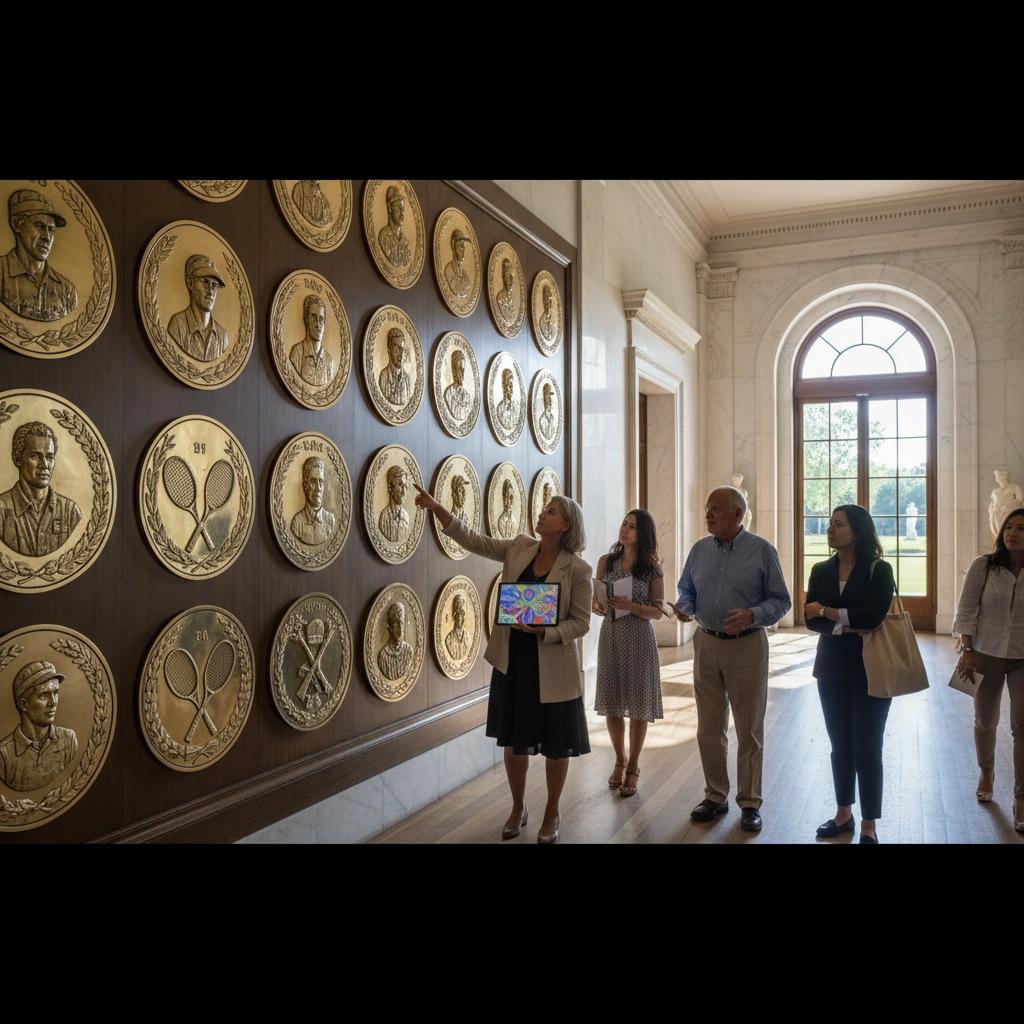
Why the Hall of Fame Plaques Matter More Than Match Records
You probably know plaques as neat brass or bronze markers listing names and dates, but in the Tennis Hall of Fame each plaque acts as a compact biography. When you stand in front of a plaque, you don’t just see titles and years — you see choices about legacy. Those choices shape how future fans, players, and historians understand the sport. This section helps you read those plaques with context so you can appreciate the stories they compress.
As you move through the museum or browse images online, notice how plaques balance statistics with narrative. Some emphasize Grand Slam totals; others highlight pioneering achievements, barriers broken, or contributions to coaching and governance. Understanding why certain facts are foregrounded will change how you perceive the player’s importance and the era they represent.
- Statistical emphasis: Total titles, Grand Slams, and win-loss records often anchor a plaque for players best known for competitive dominance.
- Cultural milestones: Plaques sometimes underline firsts — first champion from a country, first to use a new technique, or first to integrate the tour.
- Post-career impact: Contributions as a coach, administrator, or ambassador can be as central as on-court success.
How Inductees Are Selected and Early Legends Whose Plaques Still Speak
To appreciate the plaques you’ll encounter, it helps to know the selection process behind them. The International Tennis Hall of Fame uses a nomination and voting system that combines peer review with historical perspective. You’ll find that players, contributors, and builders are evaluated not only on statistics but also on character, influence, and legacy. That evaluative mix is why some plaques feel more like a celebration of cultural change than purely athletic achievement.
Many of the earliest inductees set precedents that the Hall’s plaques now reference. When you read those plaques, you’re seeing condensed histories of technique evolution, internationalization of the sport, and struggles for access. Below are examples of early figures whose plaques invite you to read between the lines.
Notable early inductees and the stories their plaques tell
- Maud Watson: Her plaque highlights being the first ladies’ singles champion at Wimbledon — a marker of women’s competitive entry into a public sporting arena.
- Bill Tilden: Tilden’s plaque reflects dominance in the 1920s but also hints at complex personal and cultural legacies, prompting you to consider how off-court life affects historical memory.
- Suzanne Lenglen: Lenglen’s inscription often emphasizes stylistic revolution — she made tennis theatrical and helped popularize the sport for mass audiences.
- Fred Perry: Perry’s plaque captures both his titles and his role in the sport’s professionalization, showing how individual success can shift institutional structures.
As you study these early plaques, pay attention to wording choices: which achievements are named, what adjectives are used, and whether social context is acknowledged. Those elements reveal how the Hall frames the early decades of tennis and prepare you to explore personal anecdotes and lesser-known moments behind more recent inductees’ plaques.
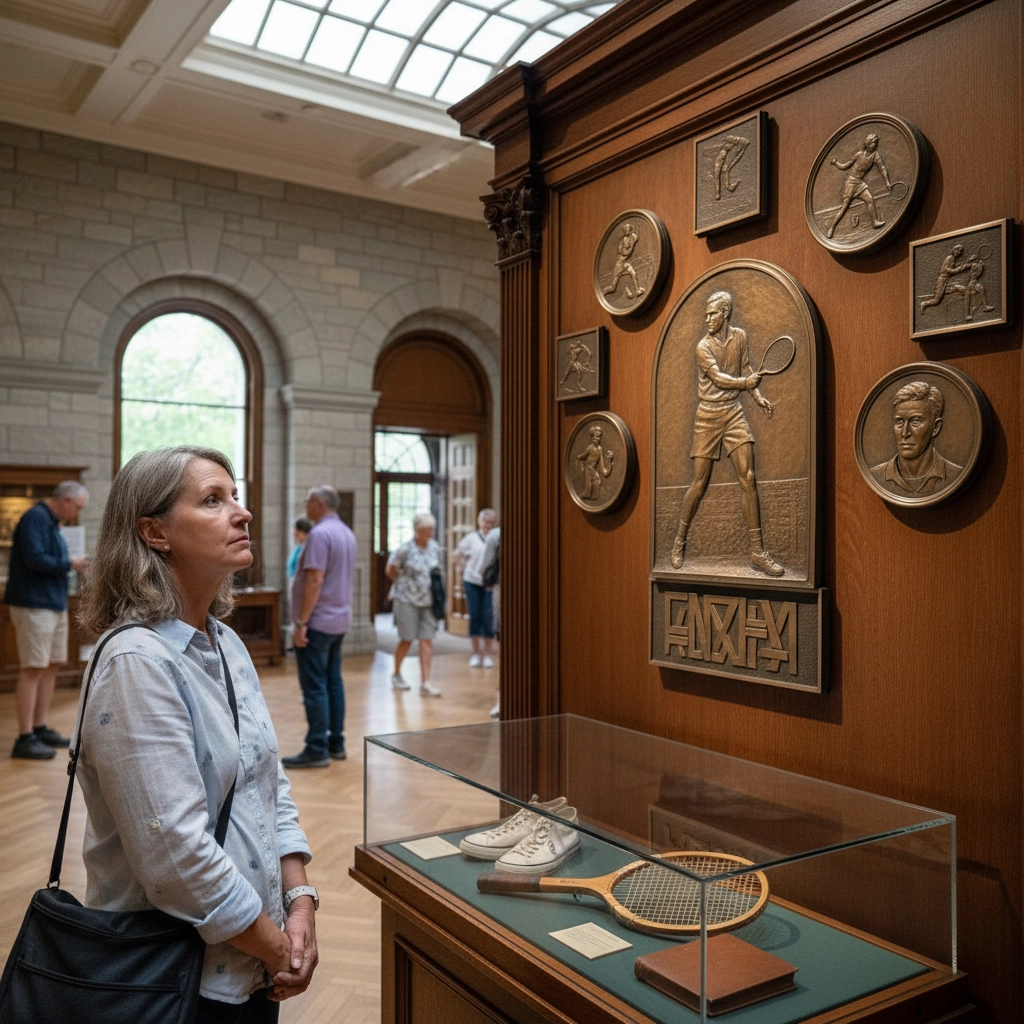
Modern Inductees Whose Plaques Double as Cultural Statements
In more recent decades, plaques have moved beyond chronicling match wins to articulating larger cultural footprints. When you encounter a plaque for someone like Billie Jean King, its language often threads together competitive dominance with activism — the pitch is as much about social change as it is about titles. Arthur Ashe’s inscription similarly bridges sport and civic engagement; you’re invited to see him not only as a Grand Slam champion but as a figure whose off-court work reshaped public conversation about race, health, and access to opportunity.
Look for how modern plaques compress complex public personas. Martina Navratilova’s reads as a portrait of technical mastery and longevity, but it also nods to her role in expanding conversations around athlete identity and equality. Roger Federer’s plaque (and those of his contemporaries who transcended national fanbases) incorporates language about global ambassadorship and stylistic influence, signaling a new criterion for “impact”: the ability to turn a personal brand into a vehicle for the sport’s growth worldwide. These choices reflect a Hall that recognizes influence produced outside the lines of a court — philanthropic work, media presence, and the creation of enduring images that draw new audiences.
Reading these plaques with an eye for cultural framing reveals shifts in what the Hall deems essential. Where early plaques spotlighted technical firsts or championship counts, modern inscriptions increasingly catalogue narrative arcs: pioneers of inclusion, masters of reinvention, and athletes who converted personal platforms into public goods.
Behind the Plaque: Personal Turning Points and Lesser‑Known Anecdotes
A plaque rarely has room for the private turning points that made a career possible — the injury that forced a technique change, the coach who retooled a serve, the season of doubt that preceded a renaissance. Yet many inductees’ legacies are built on those smaller, human episodes. For instance, comebacks are a recurring subtext: the player who returns from a slump to redefine their game, or the professional who reimagines their role as a mentor and thereby extends their influence beyond personal results.
When you study plaques alongside biographies or oral histories, look for hints of these backstories. References to “resilience,” “reinvention,” or “mentorship” are often shorthand for lengthy personal battles: rehab after a career‑threatening injury, the cultural adjustments of emigrating to compete, or the late-career shift from singles star to doubles strategist and coach. The plaque’s economy forces curators to encode these arcs in single phrases — and those phrases, once unpacked, lead to rich narratives that humanize legends.
Pay attention, too, to the quiet acknowledgments: a mention of “founding programs” or “community initiatives” will point you toward philanthropic ventures; a nod to “technical innovation” often signals someone who changed how the game is played. These hints are invitations to look deeper, to pair the plaque with interviews, memoirs, and archival footage that illuminate the real, sometimes surprising, lives behind the metal.
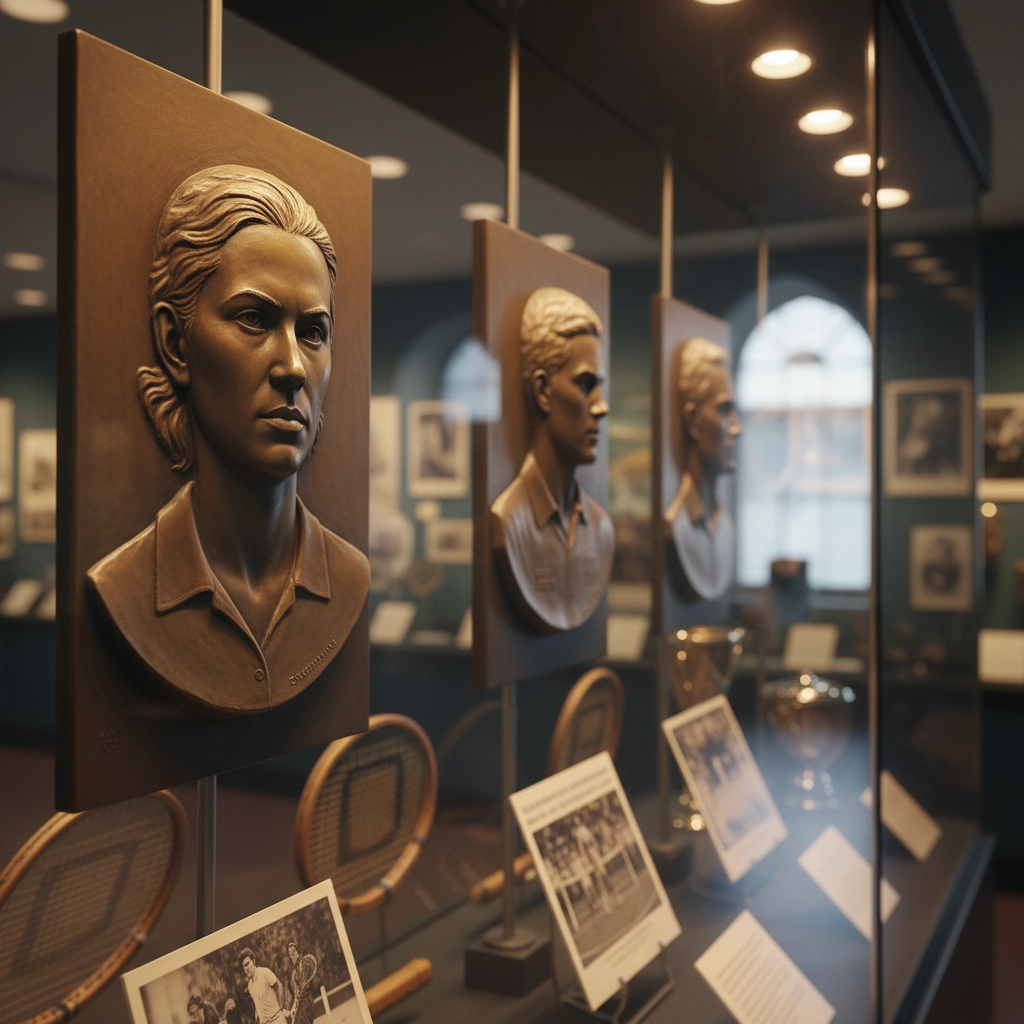
Carrying the Plaques Beyond the Museum
Plaques are invitations—condensed prompts that point to larger lives, choices, and cultures. Standing before one, you decide whether to accept the prompt as an endpoint or a beginning. Let the wording tempt you into further reading, into tracking down interviews, match footage, or contemporaneous reporting that will fill in the silences. Paying attention to what a plaque foregrounds and what it omits trains you to read history with both curiosity and skepticism.
As the sport and its public narratives continue to change, so too will the language the Hall uses to honor players and contributors. That evolution is part of the story: which achievements we celebrate, which contexts we name, and how inclusive our commemorations become are all decisions reflected in that small rectangle of metal. If you want to explore those decisions further, start with the institution itself and then branch outward—oral histories, archival collections, and biographies will deepen the brief account a plaque provides. A good first stop is the International Tennis Hall of Fame, which links to inductee bios, nomination procedures, and visiting information.
Whatever your level of familiarity with tennis, treat plaques as entry points rather than verdicts: they tell you where to look next and remind you that legacy is an ongoing conversation, not a finished sentence.
Frequently Asked Questions
What information is typically included on a Tennis Hall of Fame plaque?
Plaques generally list the inductee’s name and active years, notable titles or milestones, and a brief phrase about broader contributions—such as pioneering techniques, advocacy, coaching, or administrative roles. Because space is limited, curators choose wording that highlights what they consider the most defining aspects of the person’s legacy.
How are inductees selected for the International Tennis Hall of Fame?
Selection involves nominations followed by voting from a committee that includes peers, historians, and tennis officials. The process evaluates on-court achievements alongside character, sportsmanship, and contributions to the sport’s growth, which is why plaques often balance statistics with cultural or institutional impact.
Where can I find the fuller stories behind a plaque’s brief inscription?
Use a combination of sources: the Hall of Fame’s official biographies and archives, player autobiographies, contemporary news coverage, recorded interviews, and match footage. Those materials will unpack the personal turning points, controversies, and community work that a plaque can only hint at.