
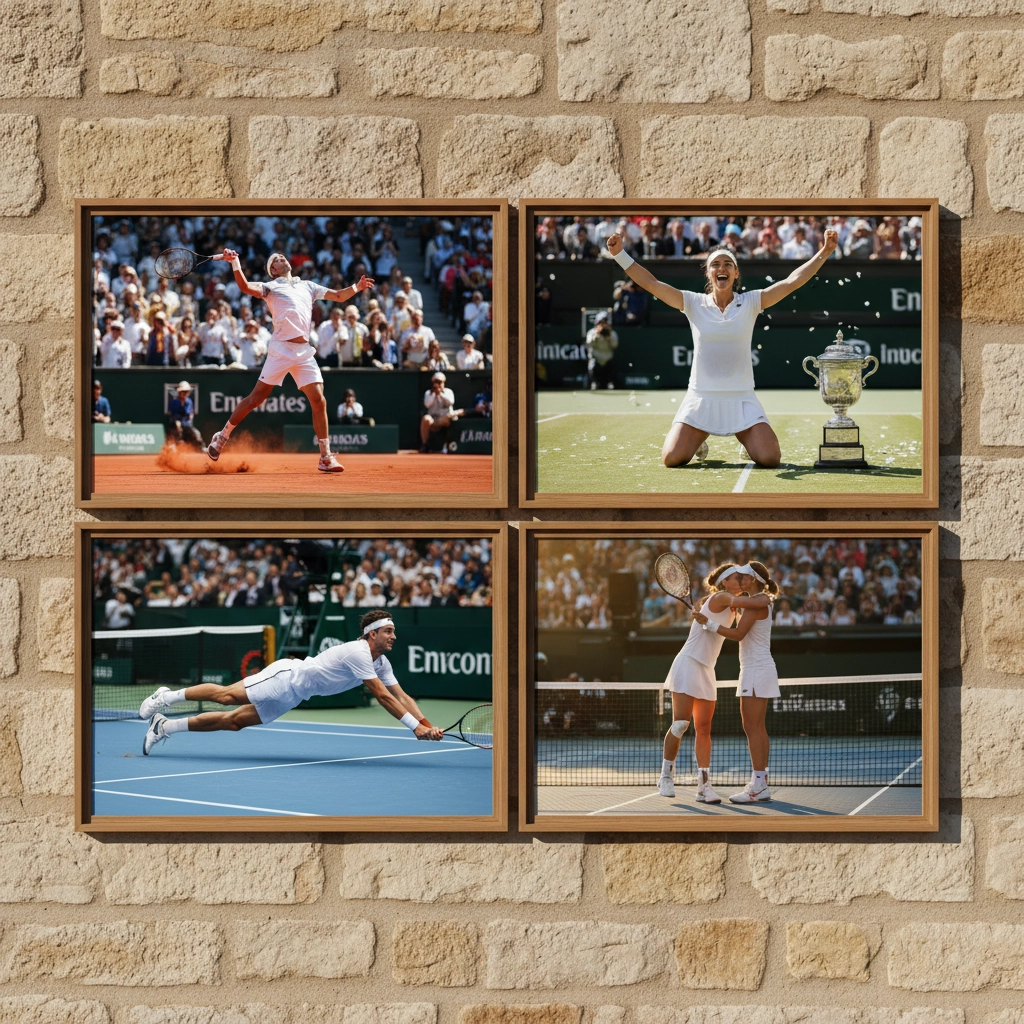
The Power of a Single Frame: Why Tennis Photos Matter
You’ve likely seen images of tennis legends that linger in your mind long after the match ended: a fist pump at match point, a falling champion, or a ball suspended mid-flight. Photographs do more than record a scoreline; they translate motion into memory and emotion into a permanent record. In this section you’ll learn how photographs became essential to tennis storytelling and why a single frame can define a career.
Photography compresses narrative. Where broadcast video offers time-based context, a photograph asks you to stop, examine, and interpret. That pause creates meaning: the angle of a racket, the tension in a player’s jaw, or the crowd’s reaction all invite you to read backstories about training, rivalry, and triumph. As you follow this retrospective, you’ll begin to see patterns in how photographers capture decisive moments and how those moments shape public perception of the sport.
How Early Tennis Photographs Shaped Public Perception
From glass-plate negatives to early press prints, the techniques available to photographers influenced what you and earlier audiences saw. Long before high-speed digital cameras, photographers relied on composition, timing, and an understanding of the game to create memorable images. Here are a few recurring themes you should notice when evaluating early tennis photography:
- Focus on Form: Early images emphasize posture and stroke mechanics because motion had to be implied within a static frame. You can trace technique evolution by comparing these photos across decades.
- Moment of Peak Drama: Photographers learned to anticipate decisive gestures—racket follow-through, leap, or expression—so you could feel the climax just by looking.
- Contextual Clues: Court surfaces, attire, and surrounding architecture in old photos tell you about the era’s culture and technology, from wooden rackets to the dress codes of major tournaments.
Notable Early Frames You Should Recognize
While this part won’t catalog every famous image, you’ll benefit from recognizing a few archetypal scenes that recur in tennis archives:
- Portrait-style victory shots that cemented players’ public images and marketability.
- Action stills that revealed previously unseen athleticism—helping change coaching and training methods.
- Candid moments off-court that humanized champions and broadened tennis’s cultural reach.
As you examine these early photographs, pay attention to how photographers balanced technical limitations with creative framing—strategies that still influence sports photography today. In the next section, you’ll move from early images to the mid-20th century, where faster film, better lenses, and emerging broadcast culture transformed the visual record of tennis and produced some of the most iconic images you recognize today.
Mid-Century Shifts: Speed, Style, and the Rise of the Candid Shot
By the mid-20th century, the photographic toolkit had changed enough to alter what you saw in tennis pages and magazines. Faster film stocks, improved lenses, and more portable 35mm cameras let photographers chase movement rather than merely imply it. That technical freedom shifted aesthetic priorities: freezing a serve’s racquet-head blur became feasible, and photographers began privileging split-second gestures over static formality.
What you should notice in images from this period is a move toward intimacy and immediacy. Photographers began to use motor drives to capture rapid-fire sequences—multiple frames that, when viewed side by side, reveal the arc of a stroke or the exact instant a player’s expression cracks. These sequences invited new narrative readings: a single image selected from a burst could amplify drama or soften it, depending on timing and crop.
At the same time, candid off-court shots grew more prominent. The camera followed players between matches, into locker rooms, and into press conferences, producing humanizing portraits that broadened tennis’s appeal beyond technique and titles. Fashion, hairstyles, and sponsor logos increasingly appeared in photographs, signaling that the sport had become not just athletic competition but a cultural spectacle.
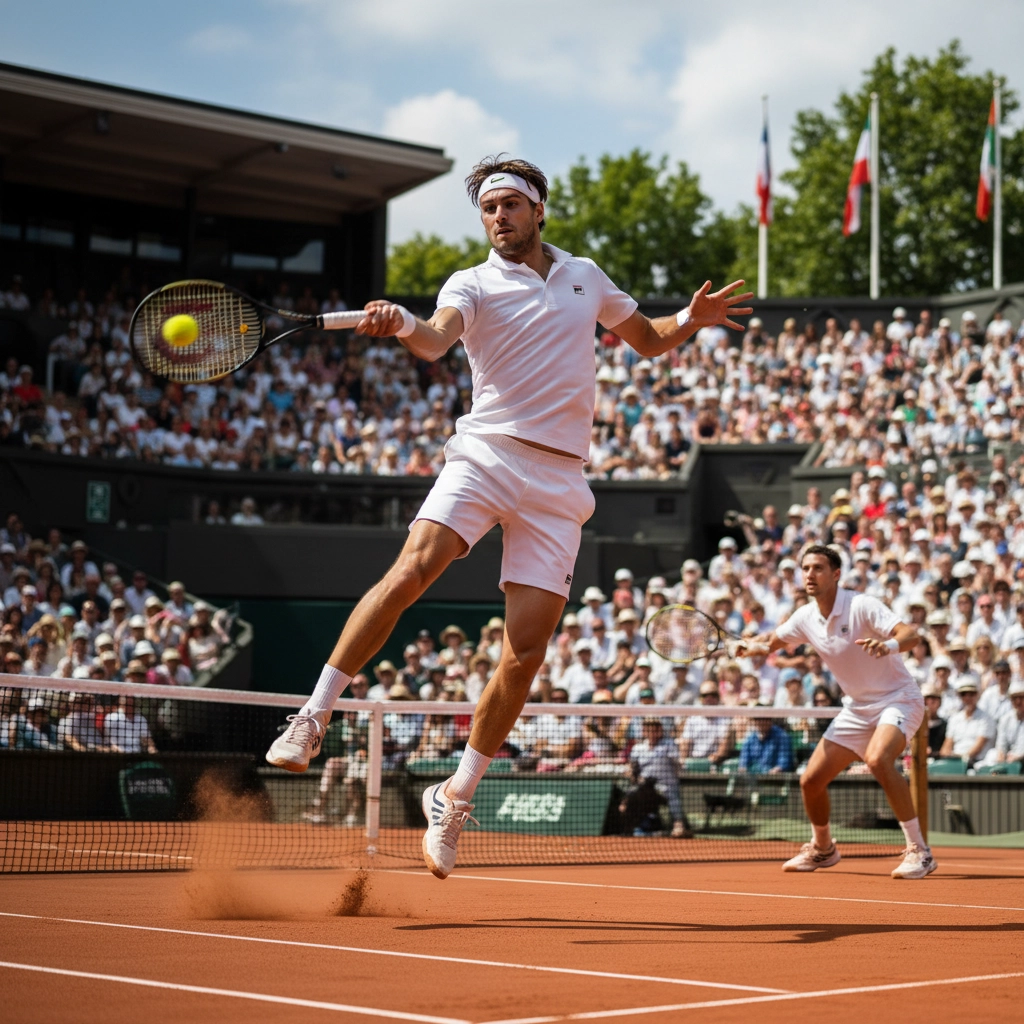
Open Era and the Rise of Color: Court Fashion Meets Celebrity
The 1968 Open Era was as much a visual turning point as a competitive one. With professionals entering the traditional tournaments and broader media interest, magazines and wire services invested in color film and full-page spreads. Color photography did more than reproduce uniforms; it contextualized tennis within a moment—in fashion, advertising, and leisure culture. A player’s headband, the bright vinyl of synthetic courts, or the palette of a sponsor’s logo now carried as much communicative weight as a forehand.
You’ll also find that the commercialization of the sport nudged photographers to think like publicists. Portraits were composed to communicate marketability: approachable smiles for endorsements, athletic grit for magazine covers, and stylized action shots for promotional posters. The camera’s role expanded from documentarian to collaborator in brand-building—photographs helped create images of stars that salt your long-term memory: their signature gestures, signature looks, and the public narratives that followed them.
Iconic Frames That Captured Rivalry, Reform, and Resilience
From the 1960s through the 1980s, several recurring visual motifs defined a generation of tennis photography. Rivalries—calm versus fury, classical form versus flamboyance—gave photographers iconic contrasts to exploit. Consider the visual shorthand that emerges when calm, methodical players are shot against temperamental antagonists: one photo can sum up an entire sporting personality.
Some images transcended sport to become cultural touchstones. Matches that intersected with wider social movements drew photographers who knew they were photographing history as well as a match; those frames were widely syndicated and replayed in print, teaching viewers how to read the sport in political and cultural terms. Other frames, simply of raw human emotion—joy, anguish, defiance—became the images used repeatedly to tell the sport’s stories in textbooks, documentaries, and retrospectives.
As you move into the next era, keep an eye on how the tools and institutions of photography—faster shutters, color chemistry, wire services, and magazine spreads—continued to shape which moments were preserved and which were forgotten. The images that survived were rarely just about the point won or lost; they were about timing, access, and the photographer’s ability to translate a live event into an enduring sign.

The Digital Age: From Frames to Feeds
As cameras moved from film to digital and then into nearly every pocket, the visual record of tennis expanded exponentially. High-speed sensors and mirrorless systems made it easier than ever to freeze micro-expressions and explosive motion; smartphones and social media turned spectators into contributors, sending frames around the world within seconds. That immediacy changed the role of the photograph: it is now both historical artifact and a piece of real-time storytelling.
With that expansion came new responsibilities. Photographers balance the pursuit of the decisive shot with concerns about consent, image manipulation, and the context in which images circulate. Metadata, copyright management, and archival practices have become vital to preserving authenticity and crediting creators. At the same time, algorithmic feeds favor certain kinds of images—high-contrast emotion, dramatic motion, and strong branding—which influences what gets seen and remembered.
- Split-second athleticism captured with precision thanks to burst modes and high ISO performance.
- Intimate, behind-the-scenes access made possible by press openness and social platforms.
- Visual branding—attire, court design, sponsor placement—playing an ever-larger role in composition.
- Ethical and archival concerns: attribution, manipulation, and long-term preservation.
Looking Forward: The Next Iconic Shot
Images will continue to shape how future generations understand tennis—its triumphs, controversies, and cultural turns. Each new technological advance and storytelling platform offers photographers fresh tools and new ethical questions. If you care about the sport’s visual history, pay attention to who takes the photo, how it’s used, and where it’s preserved. For deeper exploration of historic photography and curated collections, the International Tennis Hall of Fame archives is a useful starting point.
Frequently Asked Questions
How did photography change public perception of tennis?
Photography translated on-court action and off-court personalities into widely shared images, helping create narratives about players’ styles, rivalries, and marketability. Iconic frames condensed complex stories—athleticism, emotion, cultural context—into single, memorable visuals that shaped public memory.
What was the visual impact of the Open Era and the shift to color photography?
The Open Era and color photography amplified tennis’s cultural presence. Color images conveyed fashion, sponsorship, and court surfaces more vividly, making photographs a tool for branding and bringing a new visual richness that helped popularize the modern professional game.
Where can I find authentic archives of iconic tennis photographs?
Look to institutional archives, museum collections, and reputable wire services for authenticated images. Major organizations, sport museums, and press agencies maintain searchable collections and often provide context about photographers, dates, and usage rights—important for research or reproduction.