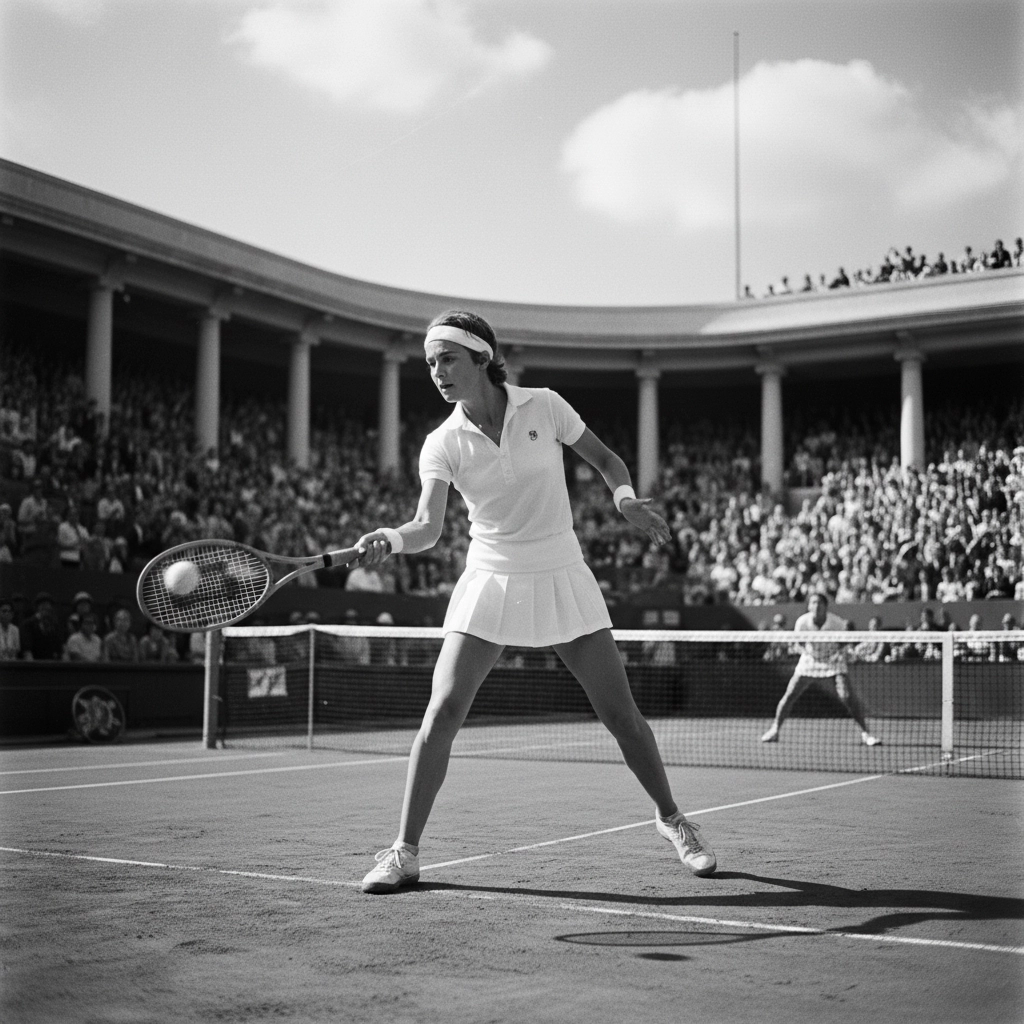

How female champions reshaped tennis on and off the court
You may think of tennis as a game of serves, volleys, and footwork, but the sport’s history is also a story of social change, fashion revolutions, and battles for fairness. From its early lawn-club roots to packed stadiums and televised finals, women’s tennis evolved because a handful of extraordinary players refused to accept the status quo. In this part, you’ll examine the origins of that transformation: the pioneers who expanded athletic possibility for women and the early champions who set new standards of excellence.
Trailblazers who rewrote expectations: Lenglen, Wills Moody, and early icons
When you look back to the early 20th century, several names stand out for redefining how women played and how the public viewed them. These players combined technical innovation, competitive intensity, and public charisma to create the first female sporting celebrities.
- Suzanne Lenglen — A French star of the 1910s and 1920s, Lenglen introduced aggressive stroke-making and athletic footwork at a time when women were expected to be demure on court. You can credit her for accelerating a shift toward a more dynamic, expressive style of play.
- Helen Wills Moody — Dominant in the 1920s and 1930s, Wills Moody’s steadiness and powerful baseline game helped you understand how consistency could overwhelm flair. Her mental toughness became a template for champions to come.
- Multiple regional champions and early influencers — While legends like Lenglen and Wills Moody captured headlines, countless regional champions pushed standards in technique and training; they helped establish organized coaching and competitive circuits that you benefit from today.
Breaking color and class barriers: Althea Gibson and the path to inclusion
If you want to see how tennis began to reflect wider social change, examine the story of Althea Gibson. In the 1950s she broke racial barriers at the sport’s highest levels, becoming the first Black player to win Grand Slam singles titles. Gibson’s success challenged institutional exclusion and inspired generations of players who followed.
Her impact went beyond titles. By confronting segregated club systems and limited access to training facilities, Gibson made visible the inequalities that many players faced. As a result, coaches, promoters, and governing bodies slowly began to rethink access and opportunity—changes that would accelerate in the following decades.
From amateur spectacle to the beginnings of professional competition
Before the Open Era, tennis was largely amateur in name if not in practice; national championships often excluded professionals and prize money was minimal. You should understand how this amateur-professional divide shaped athletes’ careers and limited who could train full-time. Early champions were competing under different pressures—social expectations, financial constraints, and limited travel—that shaped their legacies in unique ways.
- Restricted prize money and amateur status influenced who could pursue tennis full-time.
- Media exposure remained limited, so many pioneers relied on exhibitions and local fame.
- Early coaching methods emphasized etiquette and form as much as athleticism, a contrast to later fitness-focused regimes.
Having explored these early architects of the women’s game and the structural limits they confronted, you’re ready to follow how the sport exploded in popularity and professional opportunity—next, you’ll meet the champions and activists of the Open Era who accelerated that transformation.

Open Era trailblazers: Billie Jean King and the fight to make tennis fair
When the Open Era began in 1968, the game you watch on TV was suddenly open to professionals, prize money, and a growing commercial engine. But access and respect lagged behind publicity. That’s where Billie Jean King comes in: she didn’t just win—she organized, negotiated, and litigated so that women could be paid and treated as true professionals. King helped found the Women’s Tennis Association in 1973 and was the public face of the “Battle of the Sexes,” a 1973 match that captured global attention and reframed tennis as a stage for social debate as well as sport.
Her activism had concrete results. The US Open became the first Grand Slam to award equal prize money in 1973, and the WTA created a unified tour that allowed players to earn stable incomes, attract sponsors, and travel the world. You should understand that these institutional changes shifted tennis from an amateur pastime into a viable professional career for women—opening paths for coaching teams, endorsements, and the media exposure that would sustain later generations.
Rivalries, training revolutions, and the new athletic standard: Evert, Navratilova, Graf, and Seles
Once the tour stabilized, the game itself transformed. Chris Evert and Martina Navratilova defined two contrasting, yet equally dominant templates: Evert’s implacable baseline consistency versus Navratilova’s athletic serve-and-volley and relentless commitment to fitness. Their rivalry pushed coaching, sports science, and year-round conditioning into the mainstream of women’s tennis.
Technological and tactical shifts followed. Graphite rackets and improved string technology amplified power; players refined footwork, nutrition, and weight training. Steffi Graf’s 1988 “Golden Slam” (all four majors plus Olympic gold) showed how speed, a lethal forehand, and versatility could dominate across surfaces. Monica Seles exploded onto the scene with two-handed power off both wings, only to have her career derailed by violence and to stage a courageous comeback—reminding you that athletes’ lives can shape the sport as much as their strokes.

Power, presence, and global expansion: the Williams effect and a new era
By the late 1990s, a new set of champions reshaped expectations about athleticism and representation. Venus and Serena Williams brought unprecedented power, athletic training, and cultural impact. Their combination of dominance on court and visibility off it accelerated tennis’s globalization and commercial appeal. You can trace the sport’s rising television audiences, fashion statements, and debates about body image and race back to their influence.
At the same time, tennis became more international than ever—talent poured in from Eastern Europe, Asia, and Latin America—so the WTA tour broadened its footprint. The result: a sport that is faster, stronger, more diverse, and more commercially sophisticated than earlier generations could have imagined. These developments set the stage for the contemporary era, where athletic excellence and social influence walk hand in hand.
Carrying the torch into the next era
Champions do more than collect trophies: they reshape expectations, open doors, and expand what the sport can mean to millions. That influence continues today as players, coaches, and fans respond to new challenges—technological change, demands for greater equity, and the quest to balance tradition with innovation. Supporting equitable opportunities, attending matches, and following rising talent are small but meaningful ways to keep the momentum alive. For official tour schedules, player profiles, and ways to engage with the sport, visit the WTA Official Site.
Whether you’re a longtime follower or newly curious, the story of women’s tennis remains unfinished. Each generation adds fresh chapters—on court, in locker rooms, and across broader culture—so the best way to honor the legends is to watch how today’s players build on their work and to insist that the sport remain open, competitive, and inclusive for all.
Frequently Asked Questions
What role did Billie Jean King play in advancing women’s tennis?
Billie Jean King was instrumental in organizing the professional women’s tour, founding the Women’s Tennis Association, and campaigning for equal prize money and greater respect for female athletes. Her activism, including the high-profile “Battle of the Sexes,” helped shift public opinion and institutional policies.
Why are Venus and Serena Williams often called game-changers?
Venus and Serena introduced unprecedented power, athletic training standards, and global visibility to the women’s game. Beyond performance, their presence influenced fashion, sponsorship, and conversations about race and body image, inspiring a more diverse generation of players.
What was the Open Era and why does it matter?
The Open Era began in 1968 and allowed professional players to compete in Grand Slam tournaments. This change professionalized the sport, increased prize money and global competition, and set the stage for the modern tour structure that supports full-time athletes.