
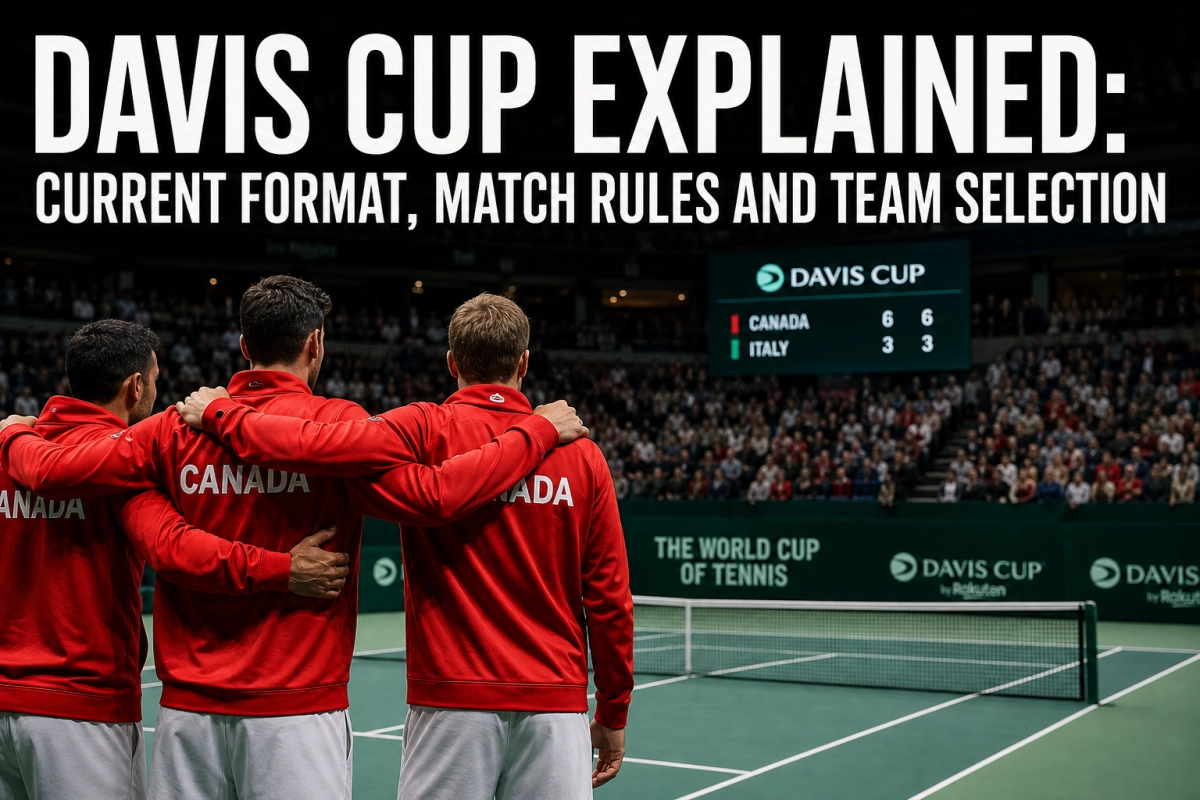
How the Davis Cup currently works: format, match rules and team roles
The Davis Cup is the premier men’s national team event in tennis. This article explains the modern format and match rules—tie-breaks, the typical order of singles and doubles rubbers, serving and substitutions—and how teams and captains are selected. Readers who follow Serbia and the Balkan region will find practical definitions (for example, tie break, service game and break point) and guidance on tactical and ranking implications.
From traditional five‑rubber ties to the modern Finals structure
Historically, Davis Cup ties used a five‑rubber format over three days: two singles on day one, doubles on day two, and reverse singles on day three, often over best‑of‑five sets. Recent reforms introduced condensed Finals-style events and shortened ties in many rounds: rubbers are usually best‑of‑three sets and ties can be completed in a day or a short window. Exact details (teams, groups and qualification paths) vary by season and are set by the ITF and national federations for each cycle.
What a typical Davis Cup tie looks like today
Most modern ties feature two singles rubbers and one doubles rubber, each typically best‑of‑three sets with standard tie‑breaks at 6‑6. The compressed format makes every game and point more decisive.
- Tie break: played at 6‑6 in a set, commonly a 7‑point tie‑break (first to 7, win by 2).
- Break point: the returner’s chance to win the server’s service game—key under short formats.
- Service game and return game: strong serving protects players in pressure moments; a good return game creates break opportunities and can swing short ties.
Team selection, captain’s responsibilities and match day substitutions
A national team is managed by a captain (often non‑playing) who, with the federation, names the squad for each tie based on ATP rankings, form, surface preference and availability. Federations frequently name broader squads and submit final match‑day lineups under the competition rules for that season.
Captains choose the playing surface when the host has discretion, select singles players and the doubles pairing, manage player workload, and make strategic substitutions between rubbers. Once a rubber starts there are no mid‑match player changes except for medical retirement. Captains also handle on‑court coaching where permitted and set orders to exploit favorable head‑to‑head matchups.
How Davis Cup results affect ATP rankings, ITF nation points and Olympic qualification
Two ranking systems interact with Davis Cup: ATP (individual) and the ITF Davis Cup Nations Ranking (team). Whether ATP points are awarded for Davis Cup matches depends on agreements between the ITF and ATP for each season; players should consult the current ATP/ITF bulletin for precise point tables before a given cycle.
The ITF Nations Ranking consistently matters: every tie result contributes to national seedings in future draws and often plays a role in Olympic qualification pathways. Strong Davis Cup performances help countries secure favorable seeds and can be a formal element of Olympic team selection. Even without ATP points, Davis Cup wins provide match sharpness, confidence and selection leverage for players.
Tactical strategies by surface: adapting selection and match plans
Surface choice is one of the captain’s most potent tools. Match player profiles to court characteristics:
- Clay: slower, higher bounce—favors baseline retrievers and heavy‑topspin hitters; patience and point construction matter.
- Hard courts: medium speed—advantage to versatile players with big serves and solid returns; balanced singles and aggressive doubles tactics work well.
- Indoor hard: faster, no wind—serving and taking the ball early are decisive; big servers are valued.
- Grass: fastest, low bounce—rewards slice, serve‑and‑volley and net play; doubles pairs that handle low balls excel.
Captains also weigh match timing, recovery and head‑to‑head records. Some teams front‑load top singles to apply pressure, others target doubles as the likely decider. Adapting tactics mid‑tie—changing return aggression or point construction—can flip momentum in close contests.
Doubles selection and on‑court tactical nuances
Doubles is often the swing factor. Successful pairings combine complementary skills (server/net player mix, left‑right handedness) and experience in tie‑break pressure. Captains may nominate a doubles specialist even if that player is not a top singles option.
Tactics include targeted serve placement, I‑formation/Australian formation to disrupt returns, aggressive poaching and planned movements on second serves. Communication and familiarity—shared signals, practiced routines—help pairs convert tight break points. Captains must decide whether to use fresh legs for doubles or conserve players for singles, as each choice affects the remainder of the tie.
Historical highlights and Serbia’s Davis Cup story
The Davis Cup blends sporting excellence with national pride, producing moments that resonate beyond sport. Serbia has been prominent in modern Davis Cup history: the national team won its first title in 2010, driven by world‑class singles players and strong doubles specialists. Stars such as Novak Djokovic and experienced partners have been central to Serbia’s success, and ties are occasions of intense home support and memorable drama for Serbian fans.
Practical tips for fans: attending ties or following the action
Going to the match
- Check the order of play and session tickets in advance; start times can shift.
- Arrive early to follow warm‑ups and capture pre‑match atmosphere.
- Dress for the venue and weather; indoor and outdoor arenas differ in acoustics.
- Respect etiquette: quiet during rallies, applaud great points, and keep banners within stadium rules.
Watching on TV or streaming
- Verify local start times and time‑zone differences; formats can affect session length.
- Listen to commentators for tactical context—surface choice and pairings often decide outcomes.
- Use live stats (serve percentages, breakpoint conversion) to follow momentum, and monitor official feeds for line‑up changes or injury updates.
Supporting Serbia (or any team) respectfully
- Cheer passionately but avoid personal abuse of opponents; tradition prizes respectful support.
- Join coordinated cheering when appropriate; it amplifies home advantage.
- Celebrate wins and accept defeats graciously—players carry heavy national expectations.
Final thoughts
The Davis Cup remains a unique blend of individual skill and collective endeavour. Whether formats change or new stars emerge, the core experience—players wearing national colours, captains making tactical calls, and fans rallying behind their country—continues to produce unforgettable moments. For anyone who follows Serbian tennis or national team tennis more broadly, Davis Cup ties offer drama, strategy and a chance to witness the sport’s emotional highs in a distinctly team‑centred setting. Engage, enjoy, and respect the tradition—these ties are as much about heritage and pride as they are about tennis.