
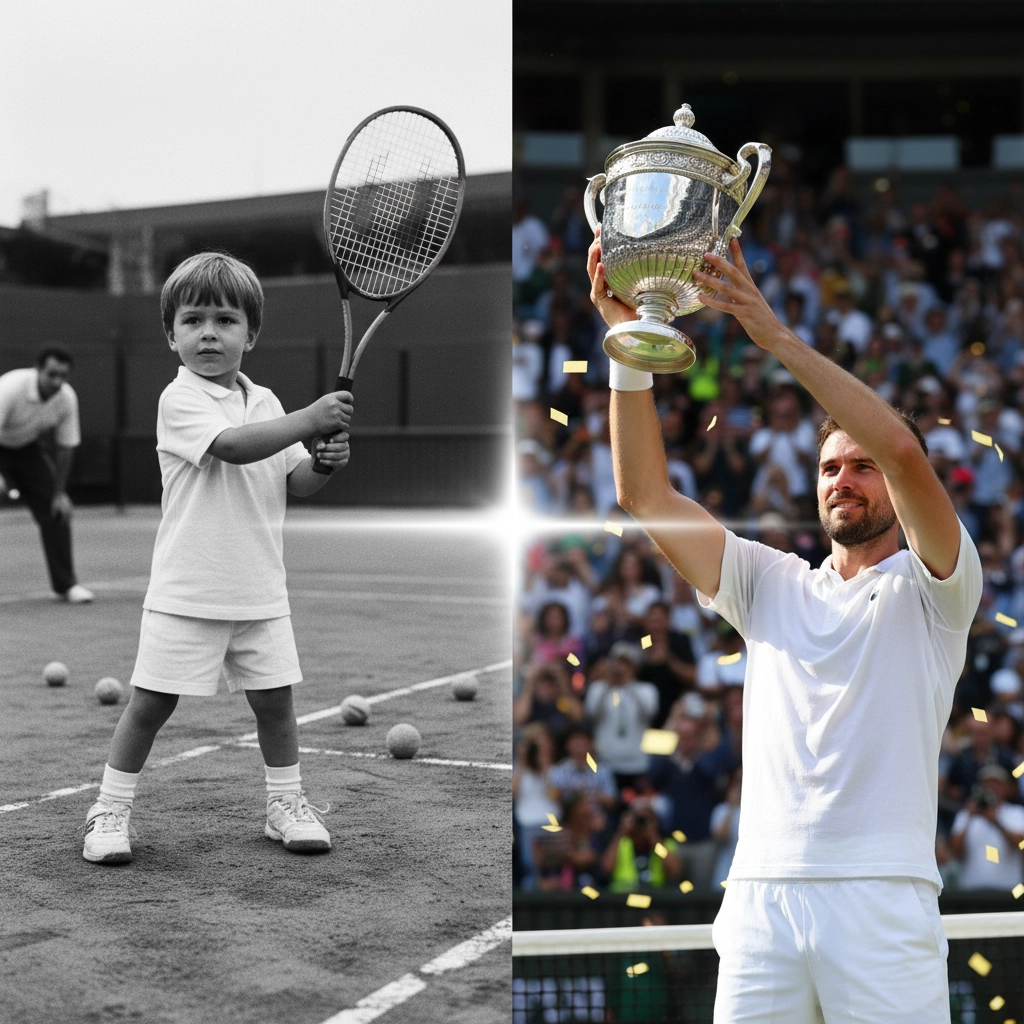
How early life sets the stage for future tennis champions
You’ll often find that the path from a backyard racket to a Grand Slam final begins long before a player turns professional. The childhood environment, access to facilities, and the attitudes modeled by parents or guardians create a framework that either supports or hinders athletic potential. In this section you’ll learn what common elements appear in the biographies of tennis legends and how those elements work together to produce elite athletes.
Family influence, access, and the social context of starting tennis
The families of many tennis greats provide early introductions to the sport, whether through a parent who played recreationally or by enrolling a child in lessons. But it’s not only about being present at the courts; it’s about the expectations and resources available to you as a young player. Consider these recurring factors:
- Parental encouragement: Parents who prioritize practice, but balance it with emotional support, create resilient players.
- Access to courts and clubs: Proximity to facilities and quality practice partners accelerates development.
- Financial and logistical support: Travel for tournaments, equipment, and coaching matter more than raw talent alone.
- Role models and local culture: Growing up in a community that values tennis makes consistent practice feel normal.
When you map these factors across multiple champion biographies, patterns emerge. Early exposure plus stable support systems are frequently present in the childhood chapters of top players.
First coaches, training habits, and the formation of fundamentals
Your first serious coach shapes more than technique — they influence your approach to practice, competition, and improvement. At an early age, the emphasis is on fundamentals: footwork, grip, stroke mechanics, and consistency. These basics serve as the foundation for everything that comes later. In memorably successful cases, coaches also teach mental habits: focus, dealing with loss, and goal-setting.
- Technique before power: Legends often spent years refining strokes before adding aggressive tactics.
- Deliberate repetition: Repetitive, purposeful drills were prioritized over random play.
- Early competition exposure: Local and regional junior tournaments introduce you to pressure and match play.
- Multisport backgrounds: Many champions played other sports young, helping coordination and injury prevention.
Notable early milestones and the role of setbacks
As a young player, you’ll hit visible milestones that hint at future success: winning age-group titles, beating older opponents, or earning selection to development squads. Equally important are setbacks — injuries, losing streaks, or family disruptions — which help you build resilience. The biographies of tennis legends routinely highlight a mix of early triumphs and obstacles that tested their commitment.
Having covered how childhood context, coaching, practice habits, and early competitions shape future champions, you’ll be ready to follow how those foundations translate into breakthrough junior years, professional debuts, and the first major titles in the next section.

Junior breakthroughs: scaling from local promise to global contender
After a childhood shaped by steady coaching and family support, the next phase tests whether potential can survive the jump to wider competition. Junior tournaments — national age-group events, ITF junior circuits, and junior Grand Slams — are where raw ability meets scouting, ranking systems, and the practical realities of travel. Success here isn’t just about winning trophies; it’s about adapting to new opponents, surfaces, and the logistics of life on the road.
Common elements in this stage of a legend’s biography include:
- Exposure to varied conditions: Playing clay, grass and hard courts at competitive levels disciplines footwork and shot selection.
- Incremental schedule expansion: Moving from weekend events to week-long international tournaments builds physical and mental endurance.
- Performance under scrutiny: Scouts, national programs, and sponsors begin to evaluate not just results but temperament and coachability.
- Refinement of a signature style: Juniors who become pros often start to develop clear strengths — a dominant serve, lethal backhand, or exceptional court sense — around which a professional game will be constructed.
Importantly, junior success can be misleading if not contextualized by development. Some players peak early and burn out; others grow quietly and explode later. Management of workload, strategic tournament selection, and the psychological framing of wins and losses determine who scales successfully.
Making the leap: early professional years and the grind of the tour
Turning pro converts routine practice into a business. The early professional years are a grind of qualifying rounds, Futures and Challenger events, and occasional main-draw appearances. Rankings, prize money, and the composition of a team become central concerns. This period separates those who can sustain a full-time career from those who return to reassess.
Typical transitions and adjustments include:
- Adapting to match density: Back-to-back matches, travel across time zones, and minimal recovery windows force attention to fitness, nutrition, and injury prevention.
- Expanding the team: A coach is often joined by a physio, strength & conditioning coach, and later a sports psychologist or data analyst.
- Financial realities: Early-career budgets shape choices — which tournaments to enter, whether to hire full-time staff, and when to accept wildcards.
- Learning from losses: The scoreline becomes a feedback loop; champions use early setbacks to recalibrate tactics, not as proof of permanent limitation.
At this stage, resilience and adaptability become as valuable as technique. Players who handle the solitude, travel stress, and inconsistency of results are often the ones who climb the rankings steadily. Coaching changes frequently occur here, as players look for a voice or methodology that fits the demands of the pro tour.

First major titles: transformation, expectation, and the path forward
Winning a first major is a watershed event in a tennis biography. The title validates years of sacrifice and elevates a player’s status overnight — but it also alters the pressures and priorities around their career. Media attention intensifies, sponsorship deals expand, and opponents begin to prepare specifically for them.
The immediate and long-term consequences often documented in champions’ stories include:
- Confidence and tactical boldness: A major gives players license to take more calculated risks and expand their repertoire.
- Schedule and workload changes: With higher expectations come denser obligations — exhibitions, sponsor appearances, and the need to defend ranking points.
- Opposition focus: Rivals study the champion’s game in depth, forcing continual evolution to stay ahead.
- Psychological recalibration: Managing the “what now?” question becomes crucial; some players press to cement a dynasty, others struggle under renewed scrutiny.
How champions respond after that first major often defines their legacy. Some harness the momentum to build multiple titles; others must reinvent themselves to remain at the top. In both cases, the win marks the end of one chapter and the beginning of another — where strategy, support systems, and sustained hunger determine whether a single triumph becomes a career of greatness.
Legacy, lessons, and the next serve
Tennis legends’ stories are more than a record of matches won and trophies lifted; they are living guides for players, coaches, and fans who care about growth, resilience, and craft. The arc from early practice to major triumph shows how environment, coaching, adaptation, and mindset interact over years — and it also reminds us that greatness is rarely instantaneous. Whether you’re a young player, a mentor, or someone fascinated by sport, these biographies offer practical patterns to study and apply.
If you want to explore pathways, tournaments, and development programs referenced across many of these stories, official resources such as ITF Tennis provide current information on juniors, rankings, and international competition.
Frequently Asked Questions
At what age do most tennis legends begin serious training?
Many champions began regular training in early childhood, often between 4 and 8 years old. That said, there is variation: the key is consistent, progressive practice and quality coaching rather than a single “right” starting age.
How much influence do early coaches have on a player’s eventual success?
Early coaches shape fundamentals, practice habits, and mental approaches that persist long into a career. While players often change staff as pros, the technical and psychological foundations laid early are frequently decisive.
Do junior titles reliably predict professional success?
Junior success can indicate potential but is not a guarantee. Some top juniors plateau or burn out, while others develop later. Factors such as workload management, coaching transitions, injury prevention, and mental resilience matter greatly when converting junior achievements into pro-level consistency.