Arriving at Melbourne Park for the Australian Open 2026
You’re heading to one of the world’s biggest tennis events — exciting, but large crowds and multiple venues mean a little planning goes a long way. Melbourne Park sits in the heart of Melbourne’s sporting precinct, and on match days it becomes a tightly scheduled, high-traffic environment. Expect queues at entry gates, security screening, and plenty of foot traffic between courts, screens and food outlets. Knowing when to arrive, which gates to use, and what to bring will save you time and make your day more enjoyable.
Ticket type shapes your experience. If you have a Ground Pass, you’ll be moving between outer courts and fan zones; a reserved court ticket will direct you to a specific venue and often faster entry lanes. Hospitality and member areas have separate entry points and additional perks like dedicated food outlets and lounges. Whatever your ticket, carry a valid photo ID, a printed or mobile ticket, and any accreditation you’ve been issued.
Getting to Melbourne Park: transport options, timing and tips
Public transport: trains, trams and trams to the door
Public transport is the simplest and most reliable way to reach Melbourne Park on Australian Open days. The precinct is served by several tram routes — notably the 70 and 75 — which stop close to the main entries. Flinders Street Station and Southern Cross are the nearest major train hubs; from there a short tram or walk will bring you to the venue. On peak days, extra services are usually scheduled, but trams and trains will be crowded. Plan to arrive at least 45–60 minutes before your session time to allow for travel and security checks.
Driving and parking: what to expect if you take a car
Driving is an option but not the most convenient. On-street parking near the precinct is limited and often subject to event-day restrictions. There are paid car parks within walking distance, but prices rise on tournament days and spaces fill quickly. If you must drive, pre-book an official event car park where available and allocate extra time for exit queues after the day’s final matches. Rideshare drop-off and pick-up zones are usually available — use designated zones to avoid fines and heavy traffic.
Walking and cycling: practical alternatives
If you’re staying in the CBD or nearby suburbs, walking or cycling can be faster than public transport during peak periods. Melbourne Park has secured bike parking and pedestrian pathways; however, expect congestion on main routes between major courts and food plazas. Bring comfortable shoes and a light rain jacket — Melbourne weather can change quickly during the tournament.
- Tip: Download the official Australian Open app for live transport updates and suggested entry gates.
- Tip: Check your ticket for the recommended gate and entry time to avoid last-minute re-routing.
- Tip: Pack small — clear-bag policies and security screenings are enforced to keep entry smooth.
With transport and entry logistics sorted, you’ll be ready to enjoy the atmosphere and matches — next, you’ll learn where to eat within Melbourne Park, the best food stalls for different budgets, and how the courts are laid out so you can plan your movements between matches.
Eating at Melbourne Park: options for every budget
Food at the Australian Open ranges from quick stadium staples to sit-down hospitality experiences, so you can plan around time, taste and budget. Around the main plazas you’ll find lots of grab-and-go choices — hot chips, pies, burgers, wraps and pizza are available from kiosks and food trucks for roughly AUD 10–20. If you want a heartier meal, casual counters and pop-up eateries typically offer bowls, wood-fired pizzas, BBQ plates and Asian street-food for about AUD 20–40. Hospitality suites, member lounges and premium restaurants inside the precinct provide a finer dining experience with multi-course options and cocktails, generally at higher price points and often bookable in advance.
Dietary requirements are well catered for. Vegetarian, vegan and gluten-free options are increasingly common across outlets, and there are dedicated stalls for sushi, salads and lighter fare. Coffee carts and juice stands are dotted throughout the precinct so you won’t be short of caffeine. Note that some specialty vendors can have long queues at peak times (between sessions and at lunch), so allow extra time if you’re on a schedule to get back to a match.
Practical food tips:
– Check the Australian Open app or venue map for up-to-the-minute outlet locations and opening times — some kiosks switch menus between sessions.
– Payments are largely cashless; bring a card or set up your mobile wallet. A few smaller vendors may accept cash but contactless is faster.
– Water refill stations are available in several areas; bringing an empty reusable bottle to fill after security saves money and queues.
– Outside food is generally restricted (exceptions for medical and infant needs); check the AO entry policy before bringing snacks.
How the courts are laid out and smart ways to move between matches
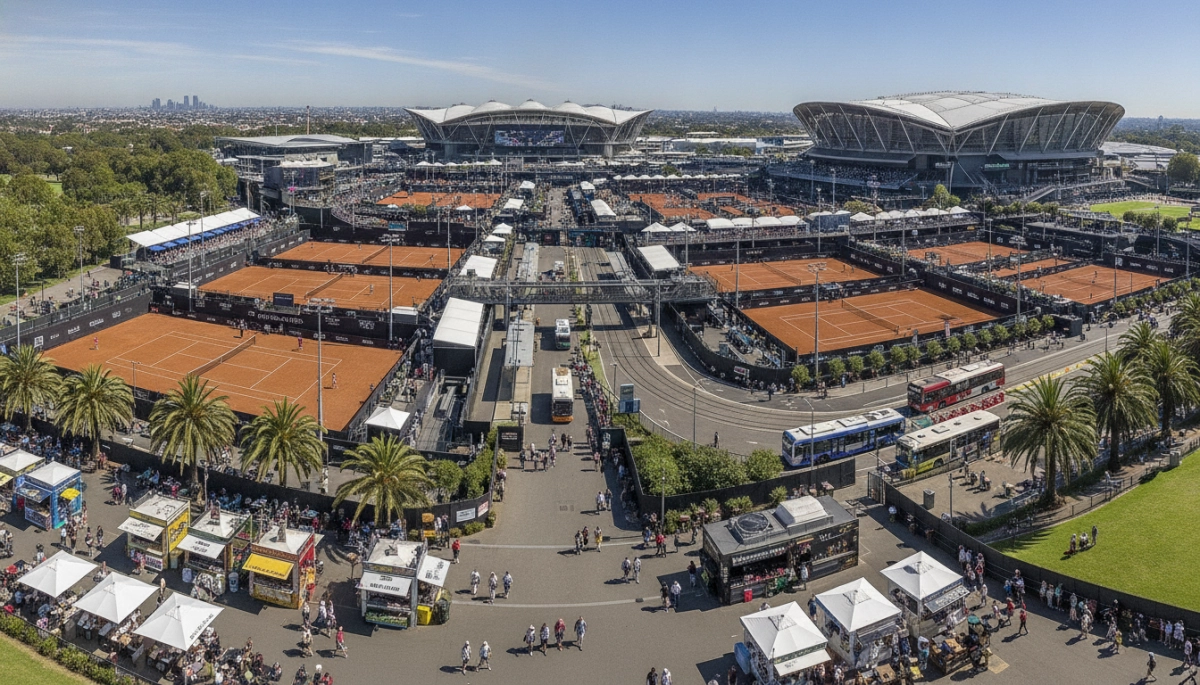
Melbourne Park groups its show courts and outer courts so you can hop between matches without getting lost. The three major showcourts — Rod Laver Arena, John Cain Arena and Margaret Court Arena — sit closest to the main plaza and are clearly signposted; adjacent to them are clusters of outer courts and practice courts. Ground Pass holders can roam the outer courts and fan zones, while reserved-seat tickets direct you straight to a specific court and typically have priority entry lanes.
Walking times are short but queues and crowd flows can add minutes. A brisk walk between Rod Laver and John Cain rarely takes more than 5–10 minutes when crowds are light, but factor 15–25 minutes during session changeovers or when a big match ends. If you want the best chance to see a particular match, arrive 20–30 minutes early — seating queues form quickly for popular matches.
Navigation and match-hopping strategy:
– Use the AO app for live court schedules and score updates to avoid unnecessary walks.
– If you have a Ground Pass, start at the outer courts in the morning (good for seeing emerging players) and move into a showcourt for the headline matches later.
– For re-entry: keep your ticket accessible — re-entry rules vary by ticket type and gate, so check signage when you enter.
– If a match overruns, don’t panic: there are big screens and comfortable fan zones where you can catch the finish and plan your next move.
Accessibility, safety and essentials
Melbourne Park is well equipped for accessibility needs, with ramps, accessible seating and dedicated entry points. If you require assistance, check the venue map or speak to staff at information booths on arrival. First-aid stations and lost-property desks are located around the precinct — note their locations on the AO app when you enter. Keep medications and any personal medical documentation with you, and use the clear-bag policy to speed through security.
- Essentials to carry: ticket (digital or printed), photo ID, modest cashless payment method, reusable water bottle, sunscreen and a compact umbrella.
- Know your meeting point: pick a recognizable spot in the main plaza in case you lose your group in the crowds.
- Stay informed: follow live updates on transport and court schedules via the Australian Open app or the official website.
Make the most of your day
The Australian Open is as much about atmosphere as it is about the tennis. Plan ahead, leave some flexibility in your schedule, and prioritise what matters most to you — whether that’s catching a headline match in a showcourt, exploring food stalls, or discovering rising talents on the outer courts. Remember to stay hydrated, be patient during busy periods, and soak up the unique energy of Melbourne Park.
For the latest ticketing, schedule and on-site information, visit the Australian Open official site.