
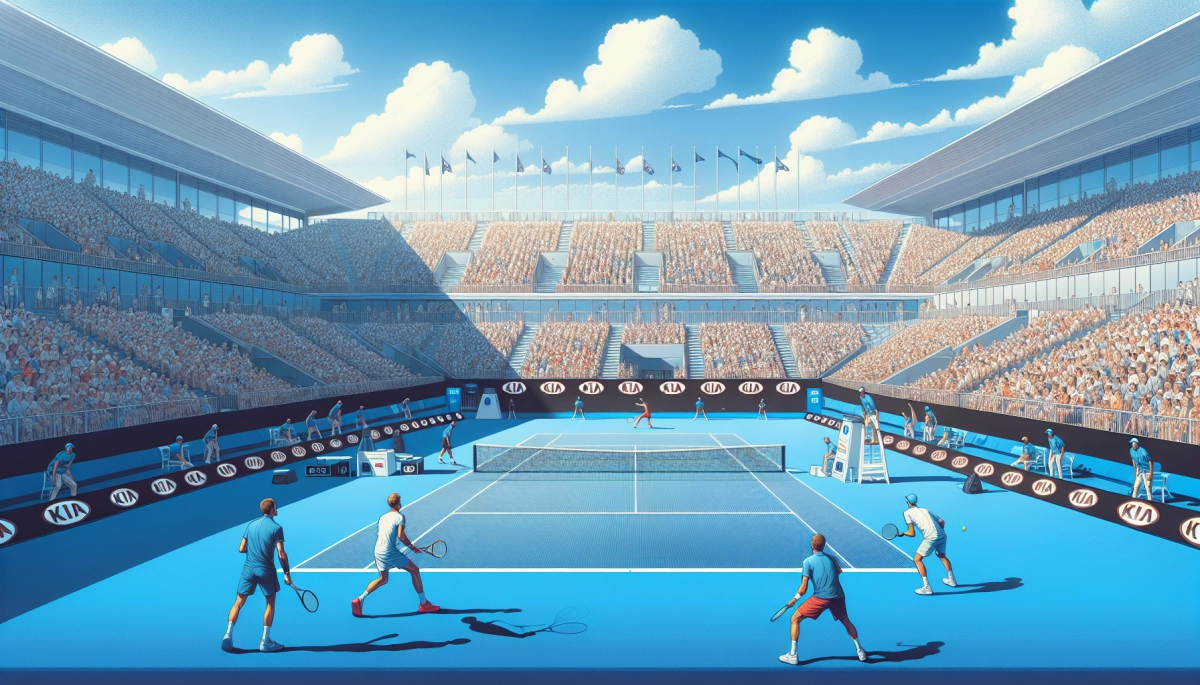
Why the Australian Open showcases the greatest rivalries you should follow
You watch the Australian Open expecting high-speed rallies, physical endurance, and a test of adaptation to the hard courts. The tournament often produces matches that define careers, and when players like Rafael Nadan, Novak Djokovic, and Roger Federer meet, you should anticipate tactical depth, dramatic momentum swings, and moments of sheer brilliance. Understanding why these matchups matter helps you pick which sessions and replays to prioritize.
Hard courts at Melbourne Park favor all-court players who can combine baseline consistency with timely aggression. Each of these three players brings a different tactical identity: one excels with baseline power and heavy topspin, another with exceptional return-of-serve and movement, and the third with precision, variety, and aggressive court positioning. That diversity produces match-ups that you, as a viewer, find both strategically rich and emotionally engaging.
Early-round dynamics and what to look for in each marquee matchup
Before the late-stage fireworks, early and middle rounds often set the tone. You should watch for specific signs that predict how a match will unfold: serve effectiveness on crucial points, willingness to take the ball on the rise, and how each player manages the heat and scheduling demands unique to Melbourne.
Rafael Nadan: heavy spin, resilience, and court positioning
- Playing style cues: Look for heavy forehand patterns and how opponents aim to redirect his topspin backhand. You should notice when he uses depth to push opponents behind the baseline.
- Early-match indicators: If his first-serve percentage climbs and he converts break chances early, he tends to control rallies and shorten points effectively.
- Matches to prioritize: Contests where opponents try to rush him, or where slower balls invite his spin—these produce more tactical variation and longer, rewarding rallies for you to watch.
Novak Djokovic: return dominance and defensive transitions
- Playing style cues: You should watch his return position and how quickly he transitions from defense to offense. His ability to neutralize big servers often decides matches.
- Early-match indicators: Early success converting break points and extending rallies to force errors from aggressive players signals a likely Djokovic win.
- Matches to prioritize: Any meeting vs. big servers or power players—these matches highlight his tactical intelligence and stamina.
Roger Federer: variety, timing, and courtcraft
- Playing style cues: Watch his willingness to come to the net, slice into backhands, and change tempo. Federer matches teach you how variety can unbalance rhythm-based opponents.
- Early-match indicators: When his first-strike tennis—particularly forehand winners and approach shots—finds rhythm, he often takes control quickly.
- Matches to prioritize: Encounters where he can mix serve placement with short points or sudden net incursions make for crisp, instructive viewing.
With those tactical lenses, you can better evaluate early matches and set your watch list for the tournament. Next, you’ll get detailed picks of historic and recent Australian Open clashes between these three, with minute-by-minute turning points you won’t want to miss.
Epic finals to rewatch: Djokovic vs Nadal — how endurance defines the turning points
Watch any Djokovic–Nadal Australian Open final as a sequence of endurance phases rather than isolated points. Break the match into minute-by-minute blocks and note these turning points so you catch the small shifts that decide marathons:
– Minutes 0–20 (opening nerves): pay attention to first-serve rhythm and how each handles the returner’s aggressive position. An early successful return or an immediate break attempt often foreshadows who will own the baseline exchanges later.
– Minutes 20–60 (settling into rallies): this is where Nadal’s heavy topspin starts to push depth and where Djokovic’s return depth and crosscourt defense stabilise. Look for the first extended deuce game — the winner of that game usually converts psychological pressure into tactical control.
– Minutes 60–120 (attrition phase): physical wear appears; watch court positioning changes (deeper stands, shorter steps to net). Small wins — a successful short ball to step in, a single forehand winner after 15-ball rally — become match-defining. Note who wins the long rallies at 30+ shots; that often coincides with crucial service breaks.
– Final stretch (clutch and margins): focus on two-point sequences: return + converted break chance, or an approach-and-net finish immediately following a defensive reset. These compressed sequences, often within a single game or two, flip the scoreboard and are the ones you’ll replay.
When you watch, fast-forward to the middle of long sets and examine body language on the changeovers. That’s where momentum is read and shifted.
Tactical masterclass to watch: Federer vs Djokovic — the net rush and return duel
Federer–Djokovic AO matches are chess matches of timing, and watching them minute-by-minute reveals repeated patterns that produce turning points:
– Opening ten minutes: Federer probes with varied serves and occasional net approaches. If Djokovic neutralizes with deep returns and forces Federer back, the match often flips to Djokovic’s control.
– Mid-set tactical swings: pay attention to the success rate of Federer’s approach shots. A single effective approach (landing low and forcing a rushed pass) typically leads to a short service game and can create three or four quick service holds that swing momentum.
– Tiebreak or late-set crunch: the turning point is usually one short point — an unexpected drop shot or an inside-out forehand winner after a defensive rally. Watch who takes the initiative after such moments; that player usually rides the mini-wave to close the set.
Listen to how Federer alters tempo: slice to draw Djokovic forward, then punish with a deep forehand. Djokovic’s counter is a single, perfectly timed return that takes time away from Federer’s step-in. Those single-return winners are the “minute-by-minute” clips you’ll want to replay.
Contrast sessions: Federer vs Nadal — variety vs heavy spin in compact bursts
Federer–Nadal Aussie encounters are best watched in short bursts to appreciate contrast:
– Early exchanges (first 15 minutes): Nadal’s high-bouncing forehand tries to push Federer back; notice how Federer uses low slices to change the ball’s bounce. The immediate turning point is often a successful short-rally winner from Federer that prevents Nadal from dictating with top-spin depth.
– Mid-match adjustments: look for how Federer shortens rallies with serve-and-volley or sudden net steps. If Nadal adapts by targeting the backhand or flattening his forehand, the match tilts. Key moments are the first three games after a changeover — tactical adjustments either consolidate or reverse momentum.
– Closing stages: the decisive clips are not always big winners but error patterns under pressure — a mis-timed forehand, a lazy second serve, or a failed approach. Those micro-errors, appearing across consecutive games, form the sequence that ultimately hands the set to one player.
Use these targeted viewing windows to extract the most instructive and dramatic parts of each matchup — and you’ll see why these rivalries define the Australian Open spectacle.
Ready to rewatch? Pick one match from each pairing and follow the minute-by-minute windows above. Use a notebook or timestamp markers to note turning points, then compare how each player responded in the next few games. That short active viewing loop — observe, mark, replay, learn — is the quickest way to turn entertainment into insight.
Final viewing playbook
When you sit down to rewatch Djokovic–Nadal, Federer–Djokovic or Federer–Nadal, treat each match like a tactical classroom: focus on short clips (10–20 minutes), identify the immediate cause of a momentum swing, and watch the following games to see the response. If you want official match videos, lineups and historical stats to support your analysis, check the Australian Open official site. Above all, enjoy the layers — the subtleties you miss in a live match are often the moments that make champions.
Frequently Asked Questions
Which specific AO finals between Djokovic and Nadal are best for studying endurance?
Look for finals with long sets and decisive fifth-set sequences; those matches show extended rallies, physical shifts and late-match tactical adjustments. Prioritize matches where both players consistently traded long service games and baseline exchanges — those contain the endurance patterns discussed above.
How should I time my rewatches to catch tactical shifts in Federer–Djokovic matches?
Focus on the opening ten minutes to see serve and approach patterns, then jump to mid-set blocks (around games 4–7 and 10–12) to catch tactical swings. Tiebreaks and the first few games after them often reveal who adapts best under pressure.
What are the quickest indicators that Federer is altering tempo against Nadal?
Watch for sudden increases in slice usage, early net approaches, and a shift to flatter serves. Those changes often produce one or two short-rally winners or forced errors — the immediate indicators that Federer has successfully changed rhythm and taken the initiative.