
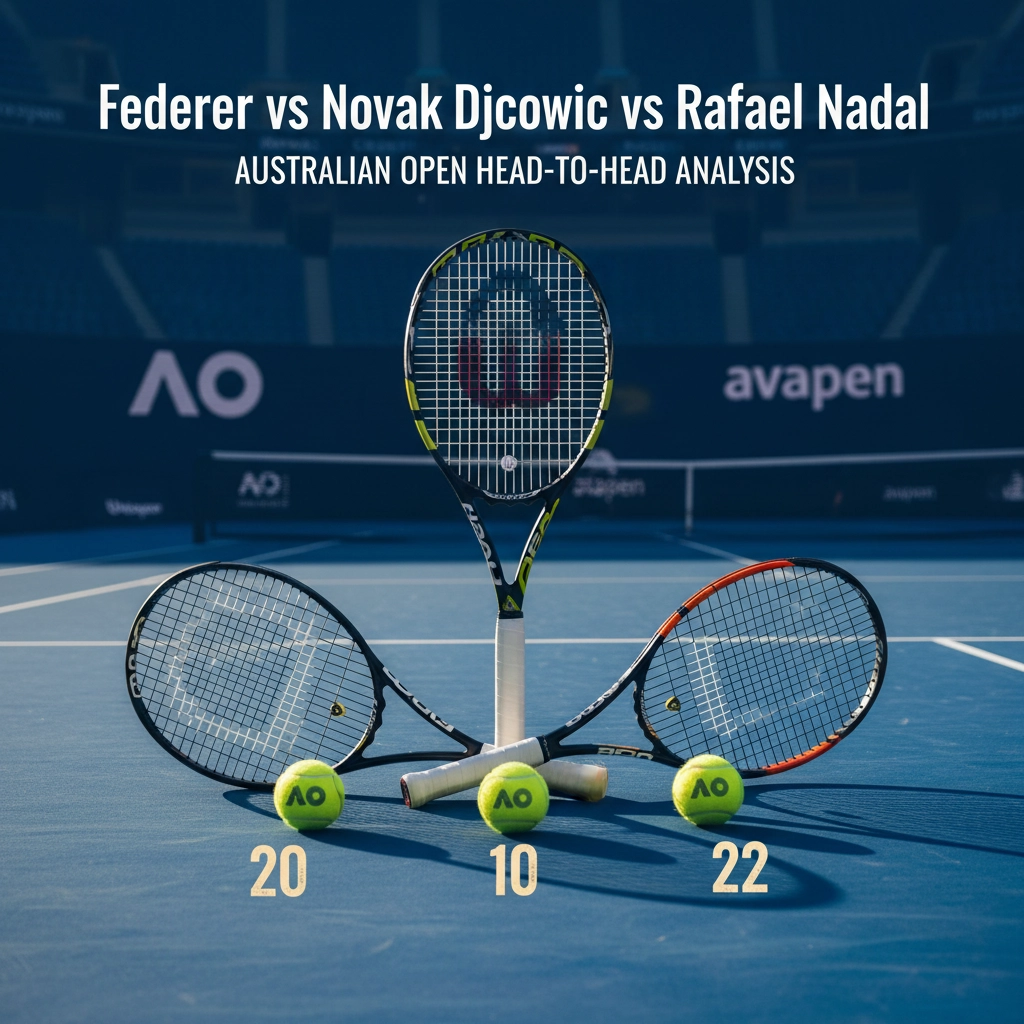
Why the Australian Open became the prime testing ground for the Big Three
You approach the Australian Open expecting heat, long baseline exchanges, and a surface that rewards mobility and precision. For Federer, Djokovic, and Nadal — often called the Big Three — Melbourne has been a recurring proving ground. Each player arrived with a distinct game: Federer brought effortless offense and variety; Nadal countered with unrivaled topspin and court coverage; Djokovic combined flexibility, supreme return depth, and mental resilience. Those differences shaped not only match outcomes but also how each adapted year to year.
How surface and conditions influenced their Australian Open battles
The Plexicushion and later GreenSet/Rebound-variant hard courts in Melbourne favor players who can neutralize pace and construct points patiently. You’ll notice Djokovic’s return game and movement fit these conditions exceptionally well, allowing him to take control of rallies early. Federer’s flatter winners and net skills often worked when the court rewarded pace and shorter points, and Nadal’s heavy high-bouncing forehand could push opponents behind the baseline and force uncomfortable positions. Heat and long matches also tested endurance, turning some encounters into physical and psychological marathons.
Early patterns: title distribution and momentum shifts at Melbourne Park
When you look at title counts and stretches of dominance, clear patterns emerge. Djokovic stands out as the most prolific winner at the Australian Open among the three, while Federer has taken multiple crowns during his peak years, and Nadal has collected a singular but significant triumph. Those titles aren’t just trophies — they mark periods when a player’s tactical approach and physical condition aligned perfectly with the tournament’s demands.
What the early meetings revealed about tactical matchups
- Return vs. serve: Djokovic’s exceptional return often neutralized opponents’ serves, turning what would be free points into extended rallies where his consistency won the day. When you watch matches, you’ll see him take control immediately after the return.
- Variation and transition: Federer used slice, drop shots, and timely net approaches to shorten points. Against Djokovic and Nadal, those tactics worked best when you saw Federer dictate tempo early.
- Topspin and endurance: Nadal’s strategy relied on pushing opponents back with heavy forehands and exploiting angles — a plan that forced longer rallies and tested your stamina.
These early details—surface fit, title timing, and tactical tendencies—set the stage for specific matches that defined their rivalries. In the next section, you’ll get a match-by-match breakdown of the most consequential Australian Open showdowns between Federer, Djokovic, and Nadal, with tactical shifts and turning points explained in play-by-play detail.
Case study: Djokovic vs Nadal — the five-set return duel
If you want to learn how Djokovic systematically dismantled Nadal’s baseline hegemony at Melbourne, study a typical five-set duel between them. The pattern often starts with Nadal trying to displace Djokovic with heavy high-bouncing forehands, opening angles and drilling the backhand corner. Djokovic answers by stepping in slightly earlier on the return, taking the ball laterally and redirecting pace with depth — not necessarily by muscling winners, but by forcing Nadal to hit extra, uncomfortable swings.
A crucial turning point usually arrives around the late stages of the second set or early in the third: Djokovic varies the depth of his returns, occasionally taking a short return to the forehand to prevent Nadal from setting up the heavy inside-out. That single tactical tweak converts previously automatic service holds into contested service games. When Djokovic begins to win a higher percentage of break points, Nadal is compelled to shorten points with more risk — his first-serve percentage drops, he overhits on rallies, and unforced errors creep in.
Physically, these matches hinge on micro-breaks in momentum: a rain delay, a medical timeout, or a single lengthy deuce game where Djokovic survives. The mental cost of losing those tight games often shifts Nadal from dictating play to scrambling defensively, and Djokovic’s supreme flexibility allows him to exploit that transition with angled backhands and perfectly timed drops into the court.
Case study: Djokovic vs Federer — neutralizing aggression and seizing the net
Against Federer at Melbourne, Djokovic’s blueprint was to neutralize Federer’s ability to shorten points and attack the net. Early games are a chess match: Federer uses the slice and serve-and-volley mix to draw Djokovic forward, looking to end points quickly. Djokovic counters by returning low and deep, targeting Federer’s backhand wing and denying easy approach opportunities.
The match often pivots in a single service game where Federer, sensing opportunity, goes for low-percentage body serves or wide slice serves. Djokovic reads the pattern, steps across to take the serve early and immediately redirects to Federer’s forehand, forcing the Swiss to hit off-balance approach shots. When Djokovic wins that opening transition exchange, he gains permission to take the ball earlier in rallies, robbing Federer of the time to set up his signature winner.
A tactical adjustment Federer sometimes attempts is increasing net approaches earlier — but Djokovic’s passing shots and willingness to stay in points sap the effectiveness of that plan. The decisive plays are frequently Djokovic’s retrieval-to-counterattack sequences: he stretches a defensive lob or slice into an offensive backhand return, then finishes the game with a deep neutralizing shot that prevents Federer’s next approach.
Case study: Federer vs Nadal — aggression, topspin, and the short-point gamble
Federer vs Nadal at the Australian Open has often been about pacing: Federer wants short points and quick transitions; Nadal wants long, high-bouncing exchanges. The match narrative typically begins with Federer attacking the center with aggressive serves and forehand winners, looking to prevent Nadal from stepping into his heavy forehand loop.
Nadal responds by elevating the bounce and targeting Federer’s backhand, pushing him behind the baseline and creating time to reset the crosscourt grind. The key tactical moment comes when Federer successfully mixes in low slices and drop shots to keep Nadal guessing. If those shorter options land effectively, Nadal is forced to come forward more than usual, and Federer can close points at the net.
Conversely, when Nadal sustains deep, high-bouncing patterns, Federer is pushed onto the defensive, and the match becomes a test of endurance. The turning points are rarely single winners; they are sequences where one player wins two or three exchanges in a row, shifting the scoreboard and the opponent’s risk calculus — and at Melbourne, where heat and long matches magnify those margins, those sequences decide everything.
Before we close, one practical point: Melbourne’s unique blend of court speed, climate swings and scheduling quirks amplifies tactical subtleties. Small adjustments — a fractionally earlier return position, a slimmer margin on a drop shot, or a tweak in string tension — can cascade into match-defining momentum swings. Those marginal gains explain why the same trio can produce dramatically different matches from year to year.
Final reflections on the Melbourne trilogy
The Federer–Djokovic–Nadal matchups at the Australian Open are more than isolated contests; they’re living case studies in adaptation. Each player arrived with distinct priorities — Federer’s court craft and timing, Nadal’s heavy-topspin pressure, Djokovic’s elasticity and return mastery — and Melbourne’s conditions forced them to refine those strengths in real time. What endures is not a single blueprint for victory but a set of enduring lessons about reading opponents, exploiting micro-margins, and the value of versatility under pressure. For anyone wanting to dive deeper into match history or upcoming draws, the official tournament site is the best starting point: Australian Open stats and history.
Frequently Asked Questions
How does Djokovic typically neutralize Nadal’s heavy-topspin game at the Australian Open?
Djokovic often takes the ball earlier and flattens his returns, redirecting pace and varying depth to prevent Nadal from establishing his inside-out forehand rhythm. Shortening or disguising returns forces Nadal into lower-percentage setups and opens opportunities to break serve.
Why is Federer’s style harder to execute consistently at Melbourne against Djokovic?
Federer’s short-point, net-oriented aggression relies on time and precise approach opportunities. Djokovic’s deep, low returns and exceptional passing shots reduce those opportunities, and when Djokovic sustains long neutral exchanges he erodes Federer’s margin for low-error aggression.
What should coaches and players take away from these head-to-heads for preparing future Grand Slam strategies?
Prioritize adaptability: practice altering return depth, shifting court position by small increments, and rehearsing tactical responses to momentum swings (e.g., risk management after a long game). Conditioning for the specific tournament environment and rehearsing micro-adjustments can convert tight tactical edges into match outcomes.