There’s a distinct blend of skills that separates Roland Garros winners: heavy topspin to push opponents back, patient point construction to exploit the slow clay, and elite endurance to outlast long rallies; champions pair precise clay movement and sliding defense with selective aggression like the dangerous drop shot and unshakeable mental resilience to seize decisive moments.
Historical Significance of Roland Garros
Evolution of the Tournament
Established as the French Championships in 1891, the event opened to international players in 1925 and relocated to the Stade Roland Garros in 1928. The onset of the Open Era in 1968 transformed its global stature, while recent infrastructure upgrades – notably the retractable roof on Court Philippe-Chatrier completed in 2020 – changed scheduling dynamics. Clay’s slower, high-bounce characteristics have consistently shaped tactics, favoring stamina, topspin and tactical point construction.
Iconic Moments in History
Rafael Nadal’s record at the tournament – an unmatched 14 Roland Garros titles – defines modern clay dominance, while Björn Borg’s run of six titles in the late 1970s and early 1980s set an earlier benchmark. Yannick Noah’s 1983 victory remains the last Frenchman to win men’s singles, and Roger Federer’s 2009 triumph completed his career Grand Slam, underscoring the event’s role in tennis legacies.
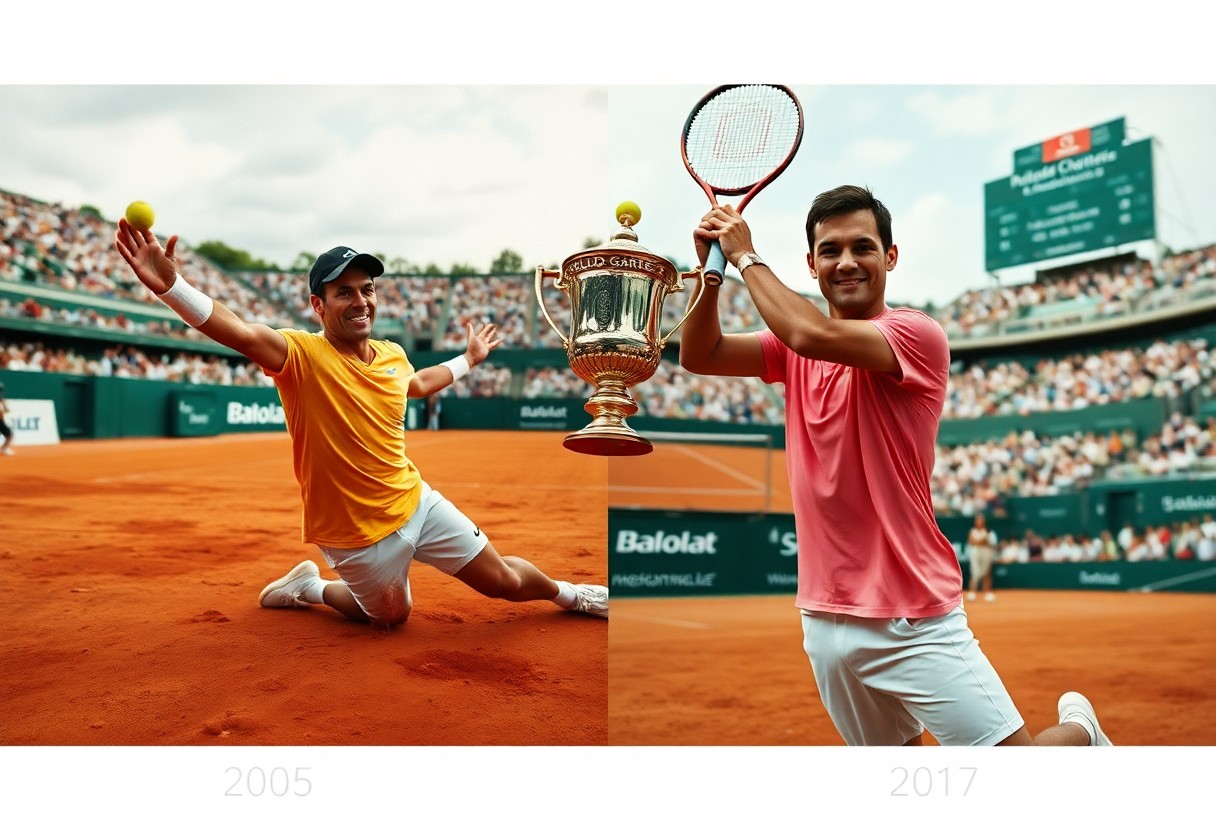
Digging deeper, Nadal’s titles span 2005-2008, 2010-2014, 2017-2020 and 2022, illustrating both peak dominance and remarkable longevity; his left-handed heavy topspin and court positioning force opponents into extended rallies and high-error patterns. Noah’s 1983 win over national expectations galvanized French tennis programs and spectator interest for decades. Federer’s 2009 final – a decisive win that filled the single gap in his major résumé – highlighted how Roland Garros can both reward clay specialists and crown all-surface greats, with every iconic match influencing player preparation, coaching emphasis and the tournament’s tactical evolution.
Key Mental Strategies for Success
Focus and Concentration
Elite players build a micro-routine between points-visualizing the target, taking 2-4 controlled breaths and resetting racquet grip-to sustain focus across long clay rallies. Rafael Nadal’s 14 Roland Garros titles underline how repeatable rituals and a point-by-point attention span matter on slow courts where momentum swings slowly. Coaches track metrics like first-serve percentage and unforced errors to measure focus: improving serve percentage by even 5-10% in a match often shifts break opportunities and match flow.
Adapting to Pressure
Pressure at Roland Garros appears in tiebreaks, final sets and noisy changeovers; champions use simple cues-short breathing, code words, or a tactile ritual-to halt escalation and execute. Novak Djokovic and other comeback specialists show that a single reset cue can convert a 0-40 game into a hold under stress, while practiced responses reduce panic and keep decision-making sharp.
Practical adaptation comes from deliberate exposure: simulate five-set scenarios, run repeated tie-break drills with consequences (for example, serve five consecutive points for bonus rest), and use “if-then” plans-if down a break in the fourth, then shorten attention to the next two points. Sports psychologists quantify gains: teams report improved clutch conversion after 6-8 weeks of targeted pressure training. Embedding these routines into daily practice makes them automatic when the real match-point pressure hits.
Physical Conditioning Techniques
Physical preparation on clay demands targeted strength, mobility and energy‑system work tailored to long rallies and frequent sliding. Implement 4-6 weekly sessions mixing lower‑body strength (squats 3×5 at ~80% 1RM), eccentric calf and hamstring work, plyometrics for reactive strength, and mobility drills for hip and ankle range; elite male targets often aim for a VO2max of 60-70 ml·kg⁻¹·min⁻¹ while women target 50-60 ml·kg⁻¹·min⁻¹ to sustain long matches.
Endurance Training
Use interval sets like 4×4 minutes at 90-95% HRmax with 3-minute active recovery, plus long steady runs of 45-75 minutes at 65-75% HRmax. On‑court, perform point‑simulation drills (6-10 shot rallies, 3-5 sets, 90-120s rest) to reproduce match metabolic demands; these sessions build aerobic base, speed recovery between points and increase tolerance for multi‑set battles.
Injury Prevention Strategies
Emphasize eccentric strength (Nordic hamstring curls 2-3×/week), rotator cuff resilience, single‑leg stability and progressive loading with a ≤10% weekly increase. Screen movement patterns, address ankle proprioception and glute activation deficits, and prioritize soft‑tissue recovery-spikes in load are a common trigger for overuse injuries like patellar and Achilles tendinopathy.
Research indicates eccentric protocols can reduce hamstring injuries by about 50%; translate this to tennis by starting Nordic curls at 2×6 reps and progressing to 3×8 over 4-6 weeks while monitoring session‑RPE and GPS distance. Combine this with prehab routines (10-15 minutes: banded hip work, cuff rotations, single‑leg balance) and restrict weekly load jumps to under 10% to lower acute and chronic injury risk on clay.
Tactical Play and Game Strategies
Tactical play on clay prioritizes tempo control, spin variety and spatial pressure: elite points are often built over 3-6 shot constructions where slide positioning, early ball-taking and depth manipulation force errors. Champions convert sustained pressure into openings by mixing heavy topspin to push opponents back, well-timed drop shots to exploit forward movement, and selective aggression-Rafael Nadal’s 14 French Open titles show how consistent depth plus angle creation dominates Roland Garros.
Court Positioning
Players typically position 0.5-2 meters behind the baseline to absorb the high-bounce clay strokes, then step 1-2 meters inside to attack short balls; sliding recovery into the center remains non-negotiable. When opponents open the court, move earlier to cut the angle and use the left/right split-step timing to turn defense into offense-sitting too deep repeatedly is dangerous because it gives attackers extra time to dictate rallies.
Shot Selection
Favor heavy crosscourt topspin to push opponents off the court, use slice to change rhythm and deploy the drop shot after stringing together 3-4 deep balls; on serve, a kick serve to the backhand creates short replies to attack. Mixing a predictable deep pattern with sudden low-trajectory winners forces movement patterns clay specialists exploit.
For example, construct points with a deep crosscourt to the backhand, follow with a high-bouncing inside-out forehand to open the opposite corner, then finish with a short angled approach or drop shot-this 3-step template is how champions like Nadal and Djokovic turn positional gains into winners. Also, vary spin: alternating heavy topspin and low slice across rallies keeps opponents off balance and increases forced error rates when you time the offensive third ball correctly.
The Role of Coaching and Support Staff
Alongside tactical and mental preparation, the coaching team turns marginal gains into match-winning edges. Teams of 4-6 specialists-head coach, hitting partner, physio, fitness trainer, data analyst-coordinate training loads, recovery protocols and in-match plans. For example, Rafael Nadal’s long-term team supported his development into a 14-time Roland Garros champion through tailored ankle and load management and clay-specific footwork drills. Sports science inputs like VO2 testing and GPS tracking reduce overuse injuries and sharpen endurance for five-set battles.
Building a Winning Team
Top players assemble a blend of specialists and loyal confidants to sustain peak form. A typical core of 4-6 staff covers tactical planning, physical conditioning, recovery and match analysis; teams kept intact for 3+ years often show better Grand Slam consistency. Hitting partners recreate opponent looks, physios implement pre-match protocols, and analysts prepare heatmaps highlighting an opponent’s preferred 20-30% of court targets to exploit on clay.
Effective Communication
Coaches translate scouting into 2-3 tactical shifts at changeovers, refining depth, spin and court positioning. Players often review adjustments with the head coach and analyst during set breaks, focusing on opponent second-serve tendencies (for example, attacking returns when the opponent’s second-serve win rate is below 40%). Misaligned messages risk losing momentum; concise, prioritized instructions matter.
On-court direct coaching is limited at Roland Garros, so pre-match briefings, halftime reviews and clay-specific drills carry the load. Teams use Hawk-Eye and match-stat breakdowns to quantify patterns-serve placement heatmaps, rally-length distributions and breakpoint conversion rates-then distill those into one-line gameplans for changeovers. Sports scientists monitor HRV and perceived exertion to advise when to shorten points or increase spin; a single misread can flip a tight match by a break.
Analyzing Opponents
Match notes and video breakdown reveal opponent patterns: left-handers like Nadal (14 Roland Garros titles) favor high-kicking forehands to the backhand, while flat hitters shorten rallies. Teams log 3-5 prior clay matches, first-serve splits and break-point rates to build a counter-plan, prioritizing serve placement, spin-to-backhand targeting and pace variation to exploit observed weaknesses.
Research and Preparation
Scouts assemble a dossier: chart serve direction percentages (e.g., 65% wide on second serves), return positioning, average rally length and favored patterns on clay. Practice simulates the opponent’s weapons-replicating a heavy kick serve or 18-22 shot topspin exchanges-and drills specific scripts so the player can execute targeted responses under pressure, emphasizing short-ball aggression and deep-angle consistency.
In-Match Adjustments
On-court changes hinge on measurable thresholds: if an opponent wins >60% net points, avoid easy approaches; when first-serve falls under 55%, step in on second serves. Coaches suggest swapping to a kick serve, increasing drop-shot frequency by ~20-30% or shifting return position 0.5-1 meter to alter angles and force the opponent out of preferred patterns.
Examples show successful tweaks happen quickly-within one or two service games-using live stats and coach signals to confirm effectiveness. Players test a single change (serve placement, shot depth or tempo) for two to four games; if break-point conversion improves or unforced errors rise by >15%, the adjustment is retained, highlighting the value of short, data-driven experiments during match play.
Conclusion
To wrap up, champions at Roland Garros blend relentless endurance, precise heavy-topspin courtcraft, intelligent point construction and adaptive tactics to exploit clay’s unique rhythms. Superior sliding mechanics, sustained physical recovery, strategic variety on serve and return, and calm decision-making under shifting conditions separate winners from contenders. Mastery of these interconnected elements produces consistent success on the Parisian red dirt.
FAQ
Q: What tactical adjustments do champions make specifically for Roland Garros?
A: On clay, champions prioritize point construction over sheer power. They use heavy topspin to push opponents behind the baseline and exploit the high bounce, vary depth to control rallies, and mix in short angles and drop shots to break rhythm. Serving strategy shifts toward placement and spin (kick serves to the backhand, wide serves to open the court) rather than raw speed. Players also shorten points at the right moment-closing in after a deep, penetrating shot or when an opponent is off-balance-to conserve energy while finishing efficiently.
Q: How do top players prepare physically and mentally for the unique demands of a two-week clay-court Grand Slam?
A: Physically, champions build endurance through longer on-court drills, interval conditioning, and specific footwork training for sliding and recovery. Recovery protocols (ice baths, compression, targeted physiotherapy) and nutrition planning are emphasized to handle consecutive long matches. Mentally, they cultivate patience and resilience: set-point-by-point focus, flexible match plans, and routines to manage momentum swings and shifting weather. Simulation of long rallies and training under different wind and temperature conditions also helps maintain tactical clarity during the event.
Q: Which shot patterns and point-construction habits most often define consistent winners at Roland Garros?
A: Consistent winners rely on a heavy, reliable forehand to dictate rallies and a compact, steady backhand to absorb pace. They open points by pushing opponents wide or deep, then use angled winners or drop shots to finish. Effective use of spin serves and deep returns sets up the baseline advantage; timely approaches and crisp volleys reward those who vary court position. Tempo changes-mixing heavy, slow rallies with sudden acceleration-force errors and create openings. Discipline in shot selection and minimizing unforced errors across long exchanges separates champions from the rest.