With its slow, granular surface and unique friction dynamics, clay transforms stroke timing and movement, forcing players to master slide mechanics and patient point construction; slower ball speed and higher bounce prolong rallies while variable footing elevates physical and tactical demands, rewarding those with superior endurance, spin control and adaptability and penalizing rushed aggression at Roland Garros.
The Unique Characteristics of Clay Courts
Clay courts slow pace and magnify endurance: matches at Roland Garros routinely produce longer exchanges, with rallies often extending to 6-8 shots or more, favoring patience and movement. Players who use heavy topspin and superior court coverage-illustrated by Rafael Nadal’s 14 French Open titles-gain a clear edge. Surfaces also demand controlled sliding, which can be a tactical asset but increases the risk of awkward falls and ankle strain during extended matches.
Surface Composition and Texture
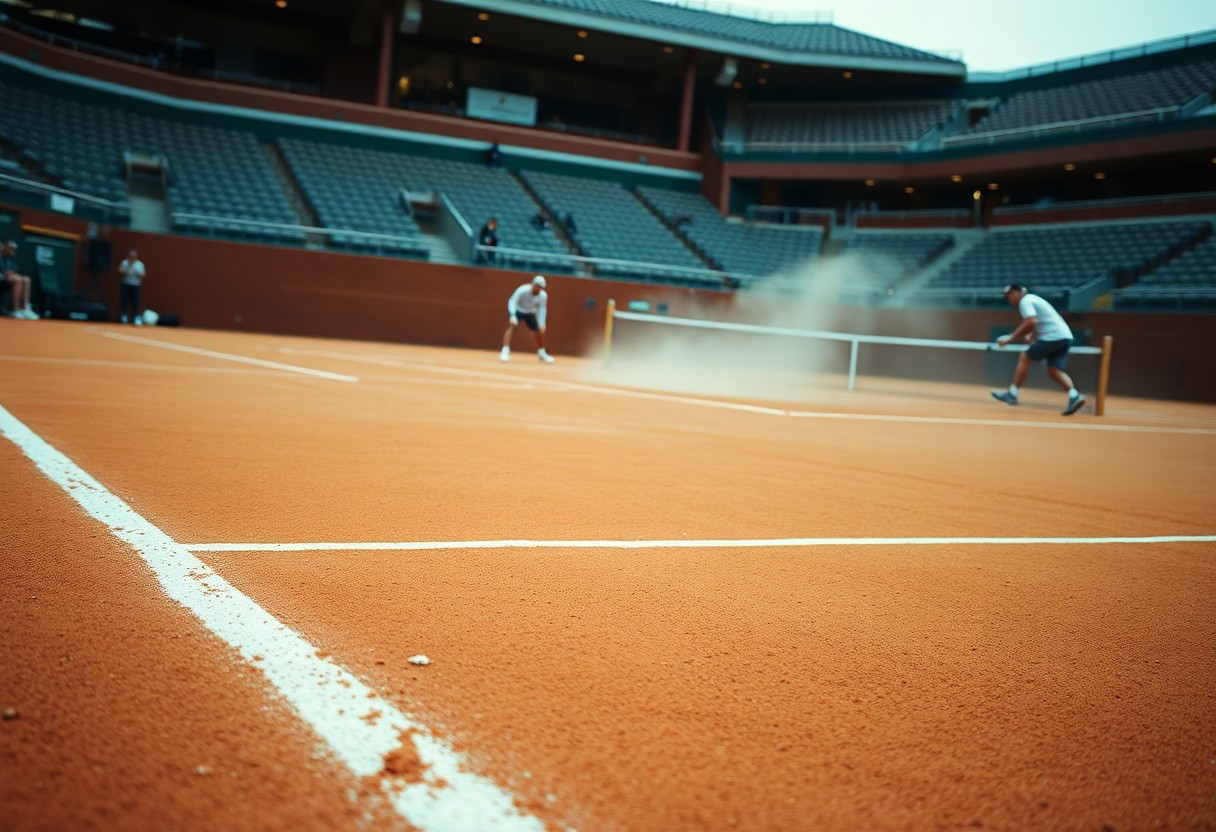
Roland Garros uses traditional red “terre battue”: a thin top-dressing of crushed brick, sand and silt laid over compacted limestone and clay sub-bases. Grounds crews adjust moisture and firmness daily by watering, rolling and brushing to maintain consistency; the top layer is only a few millimetres to a centimetre thick, so small changes in hydration visibly alter ball bite and slide.
Impact on Ball Behavior
Granular particles cause the ball to lose speed on contact and to bounce higher and slower than on hard or grass courts, turning fast serves into attackable second balls and reducing ace frequency. Players who impart heavy topspin-often exceeding 3,000 rpm on signature forehands-force the ball to kick up sharply, pushing opponents behind the baseline and changing stroke timing.
Match statistics underline the effect: serve-dominant strategies yield fewer direct winners on clay, while returners convert breaks more often; rallies convert into longer tactical exchanges where depth, angle and spin trump raw pace. Examples from Roland Garros show experienced clay specialists convert patience into point construction, using high-bouncing kicks and strategic short angles to open the court and exploit opponents’ movement deficits.
Physical Demands of Clay-Court Tennis
Matches on clay demand sustained output: with rallies often extending beyond 10+ shots and many matches lasting over 3 hours, players typically cover 3-6 km per match while repeatedly decelerating and re-accelerating. That combination taxes aerobic capacity, fast-twitch reserve and joint stability simultaneously, producing distinctive fatigue patterns that favor athletes with high VO2 max, efficient recovery between points and robust lower-body conditioning.
Endurance and Agility
Aerobic endurance underpins success: long rallies force players to maintain intensity across extended points and sets, while anaerobic bursts power defensive-to-offensive transitions. Interval-style conditioning-4-6 minute blocks at match intensity with 30-60s rests-mirrors clay demands, and players who sustain repeated efforts without form breakdown (e.g., keeping split-step timing) win more long exchanges and reduce error spikes late in matches.
Footwork Techniques
Sliding is the defining footwork tool on clay: players use controlled open-stance slides to reach wide balls, then recover with short chassés or crossover steps. Proper slide mechanics-low center of gravity, angled outside foot, and toe-brake control-both extend reach and reduce peak impact forces, but poor technique elevates ankle and knee injury risk during repeated decelerations.
Drills emphasize repeatability and specificity: 10-15m linear slides, lateral 5×5m shuffle-to-slide repetitions and reactive cone drills train musculature for eccentric control. Coaches also program 3-4 sessions weekly of plyometrics (box jumps, depth hops) and eccentric hamstring work to support the high braking loads generated when players transition from slide to sprint, while monitoring volume to avoid overuse syndromes.
Strategic Implications
On clay, point construction replaces outright power: players must use heavy topspin to push opponents back, then exploit short balls with angled winners or a well-timed drop shot. Longer rallies and slower ball speed mean match duration often exceeds three hours, so tactical choices-when to open the court, when to reset with a slice, and when to attack-directly determine outcomes. Rafael Nadal’s 14 Roland Garros titles exemplify how combining spin, movement and endurance creates sustained advantage on this surface.
Shot Selection and Patterns
Favoring spin-heavy patterns, players commonly open with a deep crosscourt to the backhand, then run an inside-out forehand to finish; a well-placed kick serve to the opponent’s backhand creates the first short ball. Mixing low slices and drop shots every 6-8 rallies breaks rhythm, while persistent depth forces opponents 3-4 meters behind the baseline, opening angles for winners. Successful clay specialists sequence shots patiently rather than attempting outright pace-based winners.
The Importance of Patience in Play
Patience on clay means waiting for a true opening-often after 10-20 shot exchanges-rather than forcing low-percentage winners early; elite players win by converting a few well-crafted short balls per set. Maintaining composure during extended rallies and selectively choosing the 2-3 moments to accelerate separates heavy-topspin baseliners from those who overhit and give away free points.
Training-wise, this translates into specific drills: simulate 20+ shot exchanges, practice transitioning from deep topspin to a precise drop or angle, and rehearse point-construction sequences until timing is automatic. Mentally, players use breathing routines and point-by-point focus to avoid rushing-statistically, break opportunities on clay are fewer, so converting the limited chances you create becomes decisive.
Psychological Aspects of Competing on Clay
Extended rallies and slow-bounce patterns force players into a different mental rhythm: patience becomes a weapon, while impatience is punished. Matches at Roland Garros commonly stretch beyond three hours, demanding sustained focus and tactical adaptability; Rafael Nadal’s 14 Roland Garros titles illustrate how elite mental endurance and point-construction pay dividends on clay. Players who break points into micro-goals-secure serve, build to forehand, finish opportunistically-maintain clarity under pressure and convert attritional advantages into breaks.
Mental Toughness
Clay rewards players who combine persistence with selective aggression: staying in points when necessary but striking decisively when an opening appears. Champions develop routines to reset after miscues, use visualization between changeovers, and emphasize process metrics (first-serve percentage, forced errors created) over scorelines. Novak Djokovic’s clay-era adjustments-improving patience and defensive slide mechanics-show how targeted mental training converts technical tweaks into match wins.
Dealing with Frustration and Fatigue
On slow courts, frustration often arises from long, grinding exchanges and fleeting opportunities; top players counter this with short, repeatable rituals (breath-control, towel pause, micro-goals) to interrupt negative spirals. Physical fatigue compounds errors, so pairing mental resets with concrete recovery actions during changeovers-drink, shade, saline-reduces impulsive tactics. Coaches and sports psychologists emphasize reframing mistakes as information rather than failure to preserve tactical clarity throughout long matches.
Deeper strategies blend physiological recovery and cognitive reframing: implement pre-planned pacing (attack windows rather than constant offense), use carbohydrate gels and electrolyte strategies between sets, and employ post-changeover mental cues to switch focus from outcome to process. Teams often track heart-rate variability and perceived exertion to time aggressive plays, while mental tools-box breathing, word cues, and short-term goals like “next service game”-limit rumination. In hot, humid conditions at Roland Garros, combining these approaches with immediate physical measures (cold towels, shaded changeovers, targeted stretching) prevents a downward spiral where both fatigue and frustration amplify unforced errors.
Historical Perspective on Roland Garros
Rooted in the 1891 French Championships, Roland Garros evolved from a club-only event into an international Grand Slam by 1925, with the stadium christened for aviator Roland Garros in 1928. Wartime interruptions and postwar reorganizations reshaped entry rules and scheduling, while the tournament’s identity remained tied to red clay, producing longer rallies and specialist champions and charting how surface, infrastructure and global tennis politics made Roland Garros uniquely demanding.
Evolution of the Tournament
Structural shifts accelerated with the Open Era in 1968, admitting professionals and elevating depth and physicality; draws standardized to the 128-player main draw. Incremental innovations-improved drainage, refined clay mixes and the Court Philippe-Chatrier roof (2020)-altered playing conditions and scheduling. Combined rule and broadcast-driven changes pushed players toward greater endurance and tactical specialization, reshaping preparation for the late-May/early-June clay calendar.
Notable Matches and Players
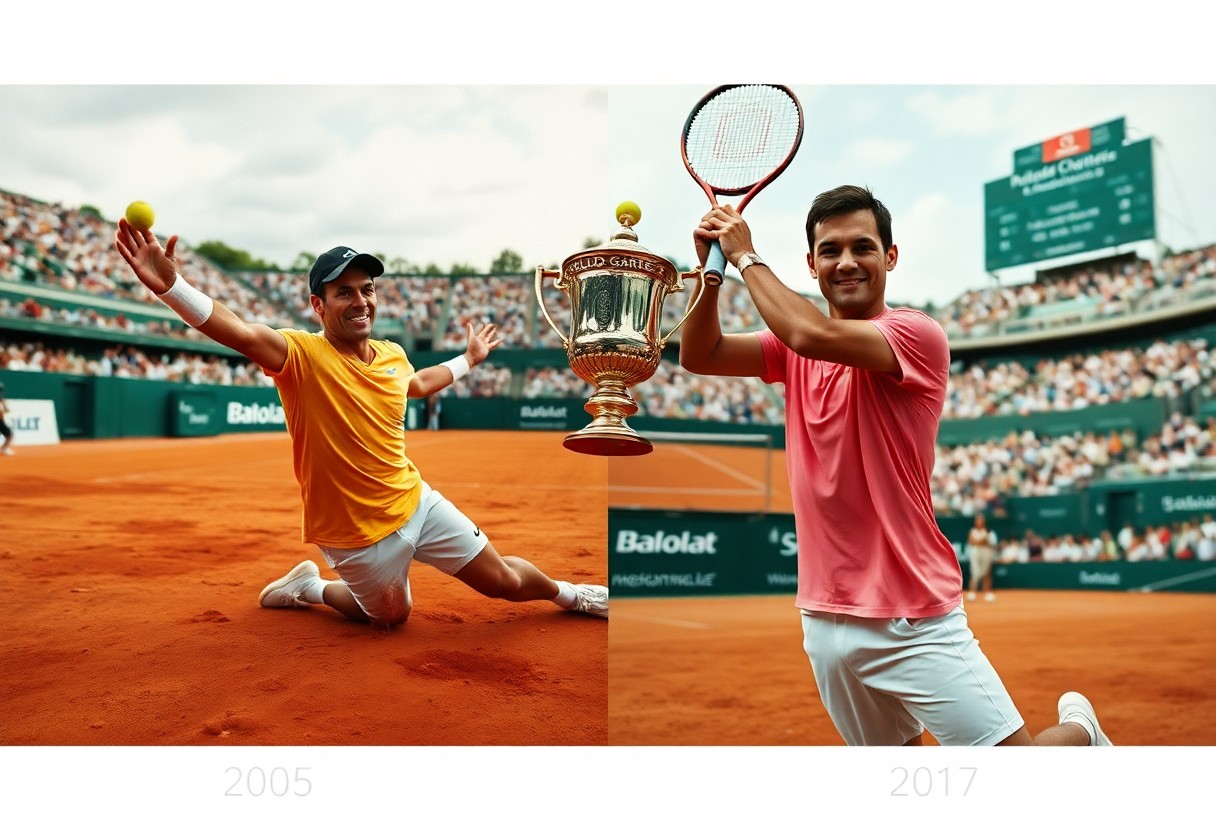
Some figures define Roland Garros: Rafael Nadal’s 14 titles and extraordinary win rate embody clay supremacy, while Björn Borg (six titles) and Chris Evert (seven titles) established earlier benchmarks. Gustavo Kuerten’s three championships (1997, 2000, 2001) showcased topspin and movement, and dramatic contests-like Gastón Gaudio’s 2004 final comeback (0-6, 3-6, 6-4, 6-1, 8-6), where he saved a match point-reveal how endurance and mental strength alter outcomes.
Nadal’s edge comes from heavy topspin, left-handed angles and elite sliding that turn defense into offense; his Roland Garros winning percentage exceeds 90%, forcing errors through prolonged exchanges. Clay specialists prioritize point construction, lateral agility and tactical variation-qualities that explain why raw power often yields to consistency here. Matches like Gaudio’s comeback and Kuerten’s tactical variety illustrate how momentum shifts and nuanced shot selection win titles on clay.
Preparation Techniques for Success
Training Regimens
On-court work balances endurance, sliding and point-simulation: many pros schedule 4-6 hours of court time weekly plus 2-3 gym sessions. Interval drills like 10×30s high-intensity rallies and 20-minute live-ball sets build anaerobic capacity and decision-making under fatigue. Strength emphasis is on single-leg moves-Bulgarian split squats, 3×8-12-and eccentric calf work to reduce ankle and Achilles strain. Repetition of heavy-topspin forehand patterns (à la Nadal) develops margin and clay-specific court positioning.
Adapting to Different Conditions
Surface and weather shifts demand fast adjustments: Paris rain makes balls heavier and bouncier, while Madrid (≈667 m) produces quicker flight and lower bounce than Roland Garros. Players tweak footwork-longer, controlled slides on tacky clay-and alter point construction to exploit higher bounces or faster, skidding conditions. Equipment choices (grip, tread depth) and in-match stringing strategies also change to maintain spin and control.
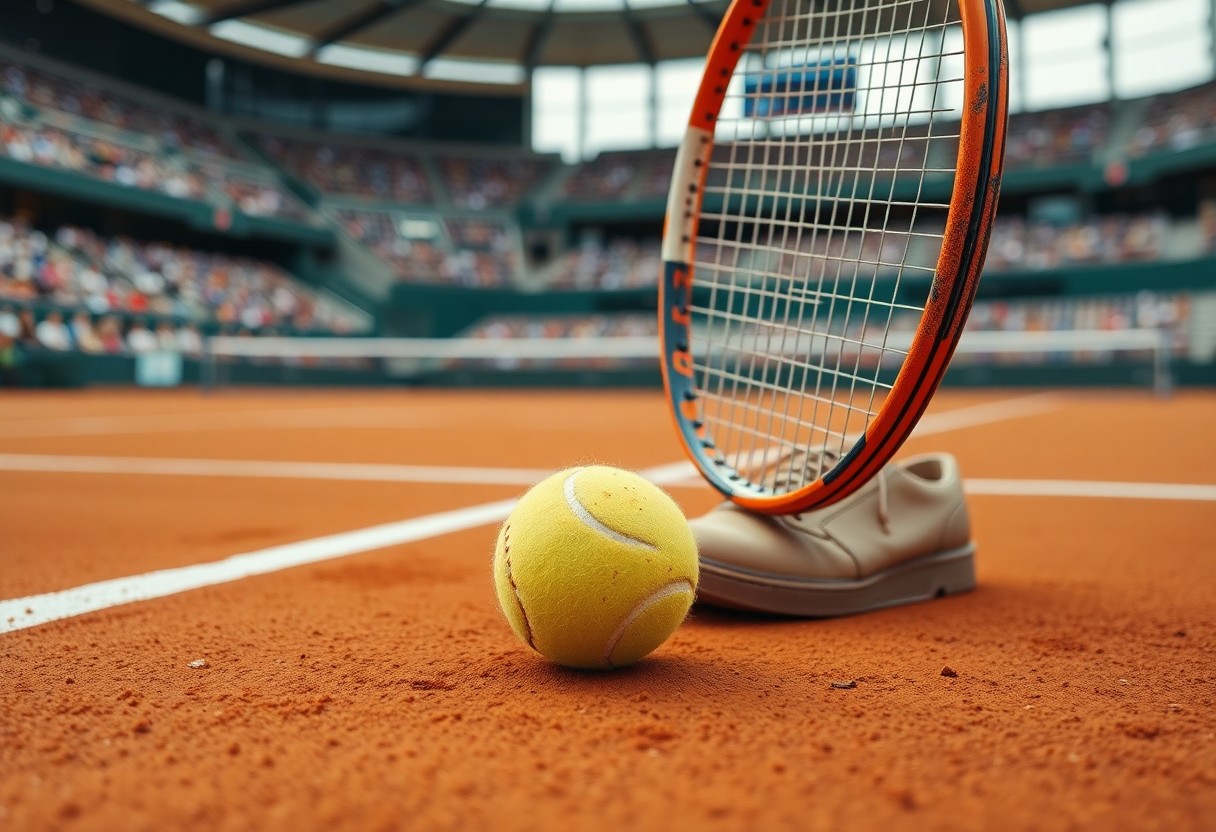
More specifically, teams lower string tension by about 3-5 lb for extra bite, select shoes with deeper treads for wet days, and plan recovery windows after long clay matches to manage inflammation. Coaches track humidity and ball type; when humidity rises they shorten rallies early, favoring heavy topspin lobs and kick serves to regain positional advantage while reducing slip-related injury risk.
Final Words
Conclusively, Roland Garros exposes the physics and physiology of clay-court tennis: slower pace and higher bounce amplify topspin and extend rallies, demanding precise sliding, superior footwork and sustained aerobic strength. Tactical patience, shot tolerance and equipment choices interact with surface and weather to magnify small advantages; mastering this interconnected science separates versatile champions from specialists on Paris’s unique, enduring stage.
FAQ
Q: Why does clay slow play and change ball behavior so much at Roland Garros?
A: Clay is a high-friction, deformable surface that absorbs more kinetic energy than grass or hard courts, so the ball loses speed on impact and stays in the strike zone longer. The loose top layer of crushed brick allows the ball to grip and kick up, amplifying topspin and producing higher, more variable bounces. Because clay dissipates forward momentum, baseline rallies lengthen and flat serves and shots are less penetrating, forcing players to construct points with more variation in spin, depth and placement rather than raw pace.
Q: What technical and tactical adjustments do players need to thrive on clay at Roland Garros?
A: Players must adopt heavier topspin to exploit the surface’s kick, lower string tension for added bite and resilience, and wider, controlled footwork that includes sliding to both reach balls and reset quickly. Tactically, success on clay favors patience: use depth and angles to move opponents, mix high-bouncing topspin with low slices to change rhythm, and choose selective net approaches after displacing the opponent. Physical conditioning for aerobic endurance and repeated change-of-direction is crucial because points are longer and recovery windows are smaller.
Q: How do weather, court maintenance and equipment amplify the challenge at Roland Garros?
A: Weather alters clay properties: humidity or rain compacts the surface and reduces dust, slowing bounce variability, while dry, hot conditions loosen the top layer and increase sliding and unpredictable kicks. Groundskeeping-watering, rolling and dragging-changes court speed day-to-day, so players must adapt quickly to subtle differences in grip and bounce. Equipment choices matter: shoes with a lug pattern and stable sole, durable strings that maintain tension with heavy spin, and slightly lower string tension help players manage the unique demands. Combined, these environmental and equipment factors require continuous tactical, technical and physical adjustments throughout a tournament, testing every player’s adaptability.