Most spectators revere Roland Garros as the singular Grand Slam defined by its slow, unforgiving clay that rewards slide technique, endurance and produces demanding, often risky long rallies that test players’ bodies; this guide explains the tournament’s evolution, court types, tactical adaptations and the historic prestige and legendary matches that shape its enduring narrative.
History of the French Open
Tracing its arc from a club-only tournament in 1891 to one of four Grand Slams, the event transformed repeatedly: it opened to international players in 1925, moved to Stade Roland Garros in 1928, and entered the Open Era in 1968. Over time the red clay shaped playing styles and legends, producing extended rallies, weather interruptions, and iconic runs-most notably Rafael Nadal’s 14 titles that define clay-court supremacy.
Origins and Evolution
Originating as the French Championships for members of French clubs, it remained insular until organizers allowed foreign entrants in 1925, accelerating international prestige. Soon after, the construction of Stade Roland Garros in 1928 created a permanent red-clay home; this surface emphasized topspin and endurance, rewarding specialists and altering training approaches across Europe and South America.
Key Historical Milestones
Significant markers include the inaugural year 1891, the 1925 opening to internationals, the 1928 relocation to Roland Garros, and the 1968 Open Era that admitted professionals. Later infrastructural shifts-like the addition of a retractable roof on the main court-changed scheduling resilience. Competitive milestones range from early dominance by European greats to modern-era records, especially Rafael Nadal’s unparalleled clay record.
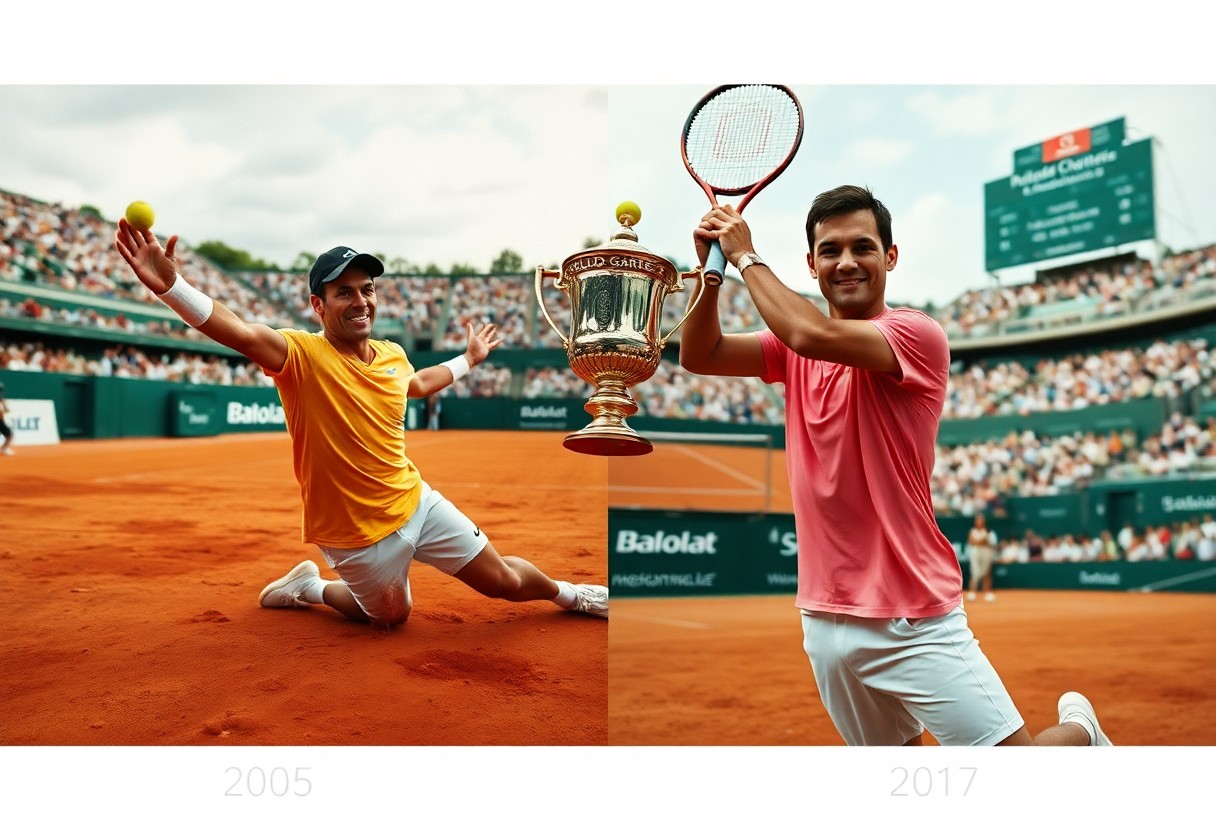
Delving deeper: the 1925 rule change immediately diversified champions and boosted global entries, while the 1968 transition transformed prize money, player preparation, and television reach. Ken Rosewall’s 1968 victory symbolized pro integration, and Nadal’s first Roland Garros win at age 19 in 2005 began a dynasty. Operational advances-court resurfacing standards and the main-court roof-reduced cancellations but preserved the tournament’s trademark physicality and tactical demands.
Types of Courts
Different surfaces-clay, grass, hard, carpet, and synthetic-dictate ball speed, spin and point construction: clay slows the ball and rewards topspin and endurance, grass produces the quickest, lowest bounces favoring serves, and hard courts sit between with predictable rebound. Tournament examples include Roland Garros (red clay), Wimbledon (grass) and the US Open (hard court). Recognizing how each surface shapes tactics explains why specialists dominate particular events.
- Clay
- Grass
- Hard
- Carpet
- Synthetic
| Clay | Slowest surface, high bounce, favors topspin and extended rallies. |
| Grass | Fastest, low bounce, rewards serve-and-volley and slice shots. |
| Hard | Medium pace, consistent bounce, often increases joint impact over time. |
| Carpet | Very fast, low bounce; largely phased out from major pro tours. |
| Synthetic | Variable speed and grip, common in indoor facilities and club play. |
Clay Court Characteristics
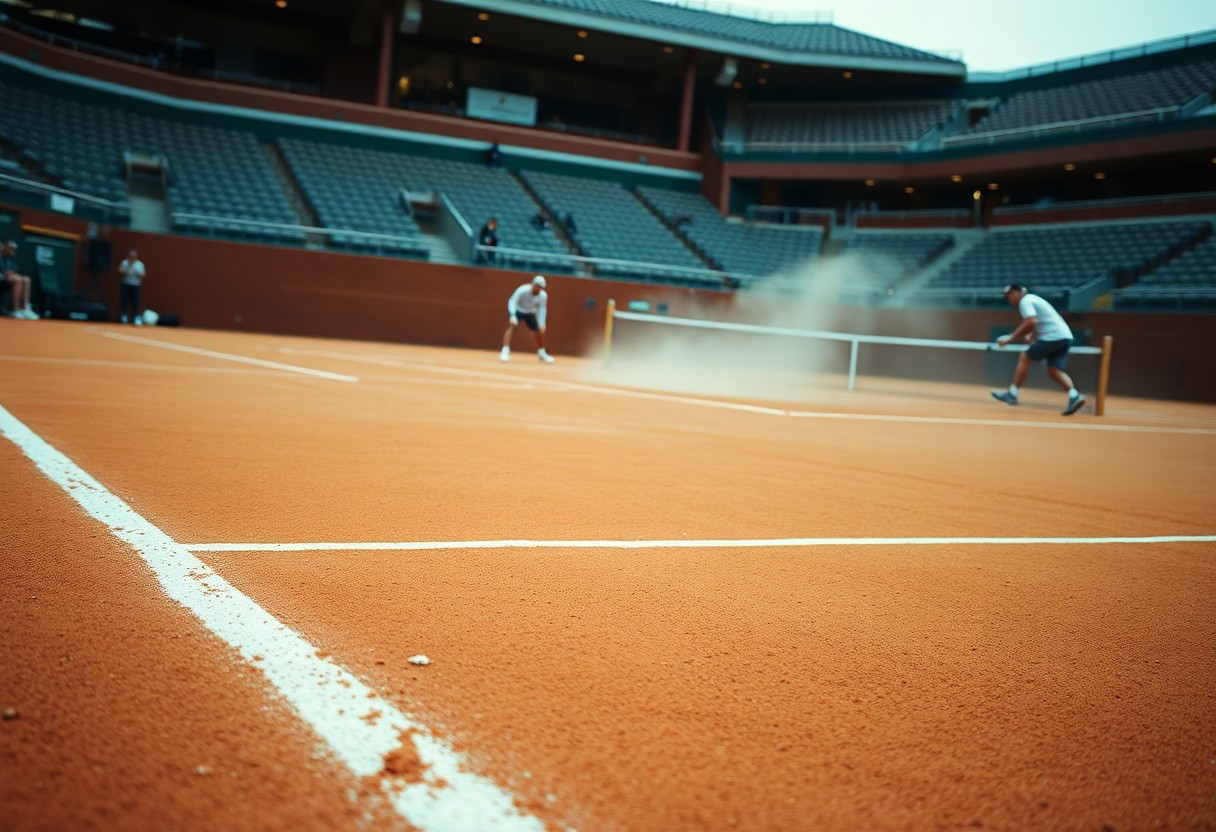
Roland Garros’ red clay uses a top layer of crushed brick over aggregate, producing a higher bounce and slower ball speed that magnifies topspin-Rafael Nadal’s dominance (14 Roland Garros titles) illustrates how spin plus endurance wins on clay; sliding is integral for defense, though it can elevate ankle and knee strain if technique is poor.
Differences from Other Surfaces
Clay contrasts sharply with grass and hard courts: it is the slowest surface with prolonged rallies, grass is the fastest favoring short points, and hard courts offer the most predictable bounce but greater cumulative impact on joints; players like Federer (8 Wimbledon titles) and Nadal (14 RG titles) exemplify surface-specific success.
Maintenance and equipment shifts also matter: clay courts require daily watering, harrowing and rolling to control firmness, players use shoes with deeper treads for traction, and string tension/shot selection are often adjusted-these factors combine to change match length, recovery demands, and tactical planning across surfaces.
Legendary Moments
From sustained dynasties to singular breakthroughs, Roland Garros has produced defining chapters: Rafael Nadal’s 14 titles and Björn Borg’s six championships set numerical benchmarks, while Roger Federer’s 2009 victory completed his career Grand Slam. Crowds still recall marathon five-setters and rain-interrupted evenings that shifted momentum, turning individual matches into lasting legacies that shape player careers and tournament lore.
Iconic Matches and Players
Nadal’s clay mastery against Federer in the 2006 and 2007 finals exemplified tactical supremacy; Gustavo Kuerten’s unexpected 1997 title announced a new clay specialist, and Federer’s 2009 win remains pivotal for his career Grand Slam. Spectacles often combine tactical variety, endurance over best-of-five, and strategic use of heavy topspin that rewards clay-court specialists.
Unforgettable Upsets
Robin Soderling’s shock 2009 fourth-round win over Rafael Nadal ended Nadal’s unbeaten run at Roland Garros since 2005, propelling Soderling to the final and reshaping that year’s draw. Gaston Gaudio’s comeback in 2004, overturning match points to take the title, stands as another seismic upset that emphasized clay’s unpredictability.
Often upsets arise from form swings, tactical mismatches on clay, or physical frailty after long matches; Soderling exploited Nadal’s off-day with aggressive flat hitting, Kuerten’s 1997 run showcased an underdog seizing momentum, and Gaudio’s 2004 recovery proved psychological resilience can overturn apparent certainty.
Tips for Spectators
Arrive early, use the official French Open app for schedule changes and mobile tickets, and expect security lines-Philippe-Chatrier entry can exceed 30 minutes on busy days; pack a compact, policy-friendly bag, sunscreen, and dust-resistant shoes for the clay courts. Plan restroom and concession breaks between matches to avoid missing key points. Assume that setting a firm meeting spot and checking live court assignments will save time and stress.
- Arrive early to beat queues and catch warm-ups.
- App-based tickets speed entry and give real-time updates.
- Compact, clear bags pass security faster.
- Wear dust-resistant shoes for clay traction and cleanliness.
- Hydrate-long days can exceed 6 hours in the grounds.
Best Times to Attend
Early-round weekday sessions (days 1-4) let you see multiple matches with lighter crowds and often 30-60% lower ticket prices than the final weekend; middle week showcases rising stars and full stands, while semifinals and finals (last Sat-Sun) draw sold-out crowds and peak demand-aim for morning sessions on weekdays to minimize lines and maximize match variety.
Navigating the Facilities
Map your route: expect a 10-20 minute walk between major courts, follow stadium signage to the correct entrances, and use the official app for live gate and queue updates; staff at main entry points assist with accessibility requests, and clearly marked routes reduce confusion during session changeovers.
Facilities include multiple food outlets and drink stations-plan for 5-15 minute concession waits during changeovers, prefer cashless payments where available, and locate water refill points on arrival to avoid long lines; use shaded fan zones and seating kiosks to regroup between matches and keep pace with the posted match schedule.
Step-by-Step Guide to Tickets
| Step | Action / Details |
|---|---|
| 1 – Pick Dates | Choose sessions during the two-week tournament (late May-early June); evening sessions often feature top players and sell out fastest. |
| 2 – Pre‑sale Windows | Subscribe or join FFT lists for priority access; pre-sales commonly open in the autumn for the following year’s event. |
| 3 – Official Sale | Buy via rolandgarros.com or authorized partners at release time – aim for the first hour when new batches drop. |
| 4 – Resale & Exchange | Use the tournament’s official resale/exchange platform to avoid fraud; secondary marketplaces carry higher scam risk. |
| 5 – On‑site / Hospitality | Box office and hospitality packages offer last‑minute options; expect queues and premium pricing for Philippe‑Chatrier seats. |
Purchasing Options
Buy tickets through rolandgarros.com, official partners, or the tournament’s authorized resale platform; prices typically range from about €25 for outer-court access to several hundred euros for Philippe‑Chatrier prime sessions, while hospitality packages often start in the €400+ range – secure e‑tickets and payment protection to avoid counterfeit listings.
Seating Arrangements
Three main showcourts-Philippe‑Chatrier (~15,000), Suzanne‑Lenglen (~10,000), Simonne‑Mathieu (~5,000)-use tiered pricing and numbered sections; seats behind the baseline and central lower rows deliver the best sightlines for rallies, whereas side seats offer better perspective on court geometry but can be angled.
Consult stadium maps to check row and section: lower bowl rows (1-20) put you within a few metres of players, upper tiers provide full-court context and often lower cost. Accessible seating is available but limited, so book early; consider sun/shade (afternoon sun hits certain sides) and whether you prefer a quieter session (early rounds) or high-energy night matches when choosing specific blocks.
Factors Influencing Performance
Surface porosity, ball behaviour, tactical approach and physical conditioning define success at Roland-Garros: clay slows pace and rewards heavy topspin, elite court coverage and precise movement, while variable weather and equipment choices alter bounce and footing. Players who adapt shoe tread, string tension and pacing gain edges in long rallies; recovery between five-setters becomes as decisive as point construction. The combination of these variables often separates champions from early exits.
- Clay porosity and abrasion
- Topspin effectiveness
- Movement and sliding skill
- Stamina for extended rallies
- Weather (rain, humidity, wind)
- Equipment – shoes, strings
Player Adaptation to Clay
Sliding proficiency and converting heavy topspin into depth are nonnegotiable; Rafael Nadal’s footwork and lefty spin underpin his 14 Roland-Garros titles, a case study in mastery. Preparations during the 4-6 week European clay swing (Monte Carlo, Barcelona, Madrid, Rome) focus on low-contact mechanics, longer point tolerance and specific leg strength to handle repeated lateral decelerations and explosive recoveries.
Weather Conditions
Humidity and rain make courts tackier and slower, while hot, dry days produce faster, lower bounces that boost aggressive kick serves; wind magnifies errors on looping topspin. The installation of a roof on Philippe-Chatrier has reduced rain interruptions, forcing quicker turnarounds and different recovery strategies.
In persistent dampness the ball gathers clay, becomes heavier and shortens rallies, so players shorten swings and target depth; conversely, dusty dry patches create more skid and sharper bounce, encouraging low slices and angled patterns. Teams often lower string tension by a few pounds, change shoe tread and tweak session intensity to limit slips and manage load across the fortnight.
Pros and Cons of Attending
Pros & Cons at Roland-Garros
| Pros | Cons |
|---|---|
| Unique clay-court experience with longer rallies and tactical play. | Unpredictable weather-outdoor courts still face delays despite the Philippe-Chatrier roof (installed 2020). |
| Close access to top players on outer courts and practice courts for autographs. | Long queues for entry, food and toilets, especially during early and late-session switches. |
| Historic atmosphere in iconic venues: Court Philippe-Chatrier and Suzanne-Lenglen. | High ticket and hotel costs during the two-week event; premium prices near the grounds. |
| Two-week festival vibe, drawing roughly 450,000 spectators across the tournament. | Large crowds inside the grounds can make moving between courts slow and congested. |
| Chance to catch upset performances and emerging talent in early rounds. | Scheduling changes and late finishes can disrupt travel plans and evening commitments. |
| Wide range of on-site food and Parisian street options nearby. | Food lines peak midday; limited seating areas during big-session overlaps. |
| Good public-transport links (metro/RER) for most of central Paris. | Metro and RER can be very crowded before and after sessions, adding travel stress. |
| Fan zones, merchandise stalls and photo ops add to the spectacle. | Scalpers and inflated resale prices on secondary markets; verify tickets carefully. |
Benefits of Live Matches
Hearing the ball, seeing clay sliding and feeling crowd crescendos is unmatched; Rafael Nadal’s dominance with 14 French Open titles exemplifies how surface specialists shine live. Matches often reveal tactical nuance-longer rallies and footwork-so attending lets you study pattern changes, spin variations and player routines across Court Philippe-Chatrier and Suzanne-Lenglen in real time.
Drawbacks to Consider
Weather interruptions, crowded concourses and high on-site prices are common; the two-week schedule attracts ~450,000 fans, which means queues, tricky sightlines on smaller courts and intermittent schedule reshuffles. Also note sun exposure and long standing periods can make day sessions physically taxing.
Delays and logistics add friction: security searches, bag checks and occasional transport congestion extend entry times, while rooftop coverage only protects main courts-outer courts remain weather-exposed. For some, resale ticket risks and peak-day hotel surcharges further reduce convenience and value, particularly during the second-week semifinals and finals.
FAQ
Q: How did the French Open begin and how has it changed over time?
A: The tournament began as a national clay-court championship in 1891 restricted to members of French clubs and opened to international players in 1925, gaining Grand Slam stature soon after. Organizers moved the event to the Roland-Garros complex in the late 1920s, and the competition evolved through the 20th century into one of tennis’s four majors. The Open Era, beginning in 1968, allowed professionals to compete and shifted the event’s competitiveness and global profile; since then the venue and facilities have been upgraded repeatedly to expand capacity, improve player amenities and add modern features such as a retractable roof on the main stadium and additional show courts.
Q: What makes clay courts unique and how do the main courts at Roland-Garros differ?
A: Clay courts use a crushed brick surface that slows the ball and produces a higher, more variable bounce, promoting longer rallies, heavy topspin and sliding footwork; matches tend to favor consistent baseliners who can construct points and sustain endurance. Roland-Garros’s primary courts each offer distinct settings: Philippe-Chatrier is the central, highest-capacity show court equipped with a roof for weather interruptions; Suzanne-Lenglen is the secondary show court known for its open, scenic surroundings and large crowd atmosphere; the smaller Simonne-Mathieu court sits within the botanical garden area and provides a more intimate viewing experience. Court maintenance (watering, daily dragging and line work) and weather strongly affect play, making adaptability and physical recovery important factors for success.
Q: Which players and moments are most associated with the French Open’s legacy?
A: The tournament is defined by eras of dominance and many iconic performances: certain players have established remarkable records on clay, turning Roland-Garros into the centerpiece of their careers, while past champions from different generations have showcased stylistic changes in the sport. Memorable moments include epic five-set finals, unexpected upsets that launched careers, and dramatic comeback runs that captured global attention; individual rivalries and repeated title defenses on clay have produced some of tennis’s most enduring images. Beyond headline champions, the French Open’s history is rich with milestone events-the first Open Era edition, landmark first-time winners, and matches that highlighted clay-court strategy and physical resilience.