Just tracing Roland Garros from its 1925 founding to today reveals a tournament defined by its historic origins, the grueling physical demands of clay-court play, landmark matches that shaped tennis, and ongoing stadium and technological innovations that solidified its global prestige as a modern Grand Slam.
The Origins of Roland Garros
Roots extend to the late 19th century when the French Championships began in 1891 as a club-restricted event; the 1925 opening to foreign competitors transformed it into an international major, and the creation of Stade Roland Garros in 1928-named for aviator Roland Garros (1873-1918)-gave the tournament a permanent home. The venue’s signature red clay, made from crushed brick, immediately shaped playing style and upkeep demands.
Early Beginnings
French tennis grew inside elite Parisian clubs such as the Racing Club de France, where the amateur-only championships produced intense domestic rivalries; by the 1910s stars like Suzanne Lenglen were already drawing large crowds. Club-based entry restricted international competition, so tactical developments on slow clay-patience, heavy topspin and endurance-evolved primarily within a French framework.
The First Tennis Championships
The 1925 reform removing nationality limits invited top players from Britain, the United States and Australia, accelerating the event’s rise to Grand Slam prominence; organizers then standardized formats and schedules to accommodate longer clay matches and increased spectator demand, prompting investment in permanent facilities at the Bois de Boulogne.
Detailing that shift, courts composed of crushed brick required specialized care-daily watering and rolling-to preserve bounce and footing, which in turn produced long rallies that tested stamina; additionally, unpredictable weather (rain or heat) frequently disrupted play and raised player-safety concerns, forcing early innovations in scheduling and court maintenance.
The Development of the Venue
Opened in 1928 to host France’s Davis Cup defense, Roland Garros evolved from an intimate Art Deco complex into a modern Grand Slam campus; subsequent works-most notably the 2019-2020 overhaul-reconfigured circulation, increased seating on major courts and added state-of-the-art broadcast, player and maintenance facilities, transforming a compact site into a hybrid of heritage architecture and contemporary stadium engineering while preserving the tournament’s characteristic clay identity.
Architectural Changes
Originally framed by Art Deco pavilions and low-rise stands, the venue saw phased rebuilds: Court Philippe-Chatrier’s 2019-2020 reconstruction raised capacity to about 15,000 and introduced deeper subsurface foundations, Suzanne-Lenglen’s terraces were reworked to improve sightlines, and facades were restored to balance conservation with modern safety, accessibility and sightline standards.
Expansion and Modernization
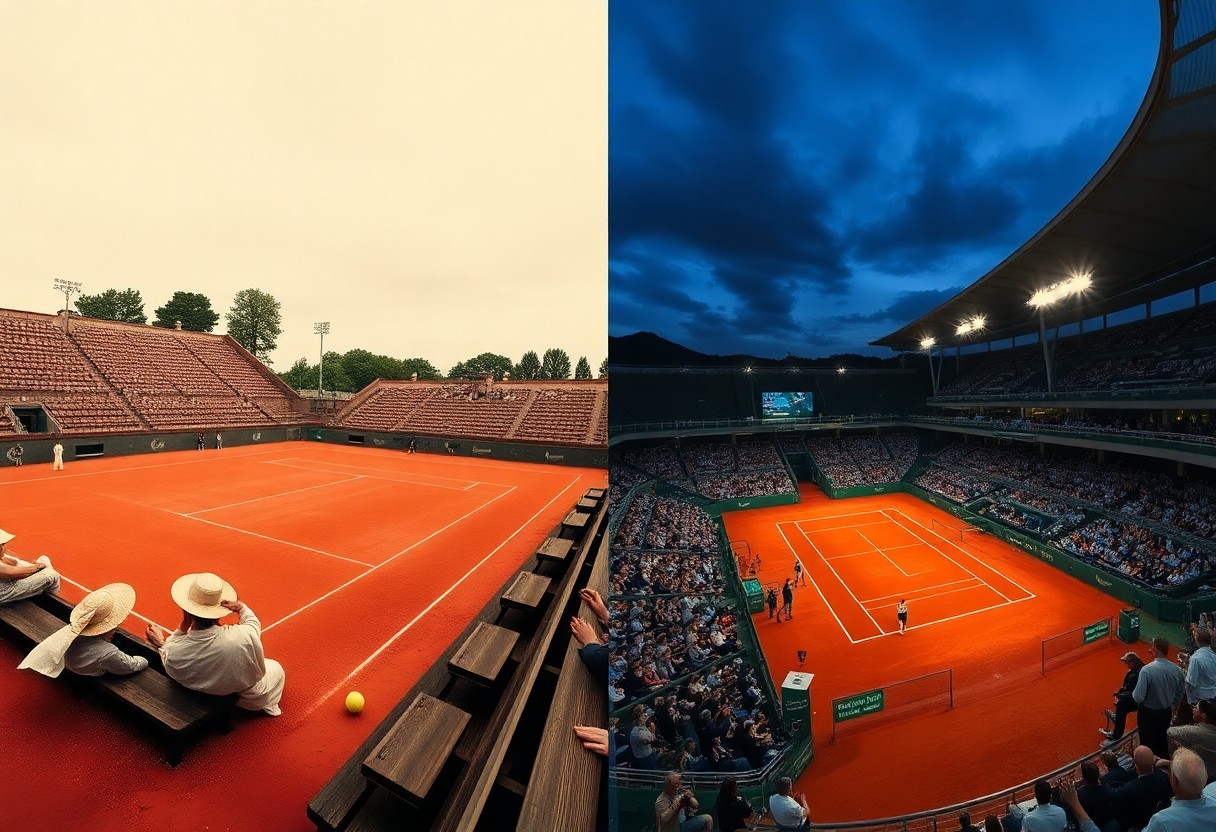
Recent expansion added Court Simonne-Mathieu in 2019-nestled within historic greenhouses with roughly 5,000 seats-and installed a retractable roof on Chatrier, enabling evening sessions and reducing rain delays; however, the tight urban footprint introduced transport bottlenecks and crowd-management challenges that required redesigned entry plazas and upgraded public transit links.
Beyond new courts and a roof, upgrades included enlarged player zones, contemporary locker rooms, upgraded practice courts and enhanced drainage systems to preserve clay quality; broadcasting zones were expanded with fiber and camera rigs to meet global TV demands, while phased construction minimized tournament disruption-a complex logistical case study in combining heritage conservation with large-scale event requirements.
Key Historical Moments
Across decades Roland Garros has produced seismic shifts: Yannick Noah’s 1983 triumph remains the last French men’s singles win, Gustavo Kuerten’s three titles (1997, 2000, 2001) cemented Brazilian clay mastery, and the venue grew into Rafael Nadal’s fortress-14 championships that rewrote tournament records and modern expectations for clay dominance.
Landmark Matches
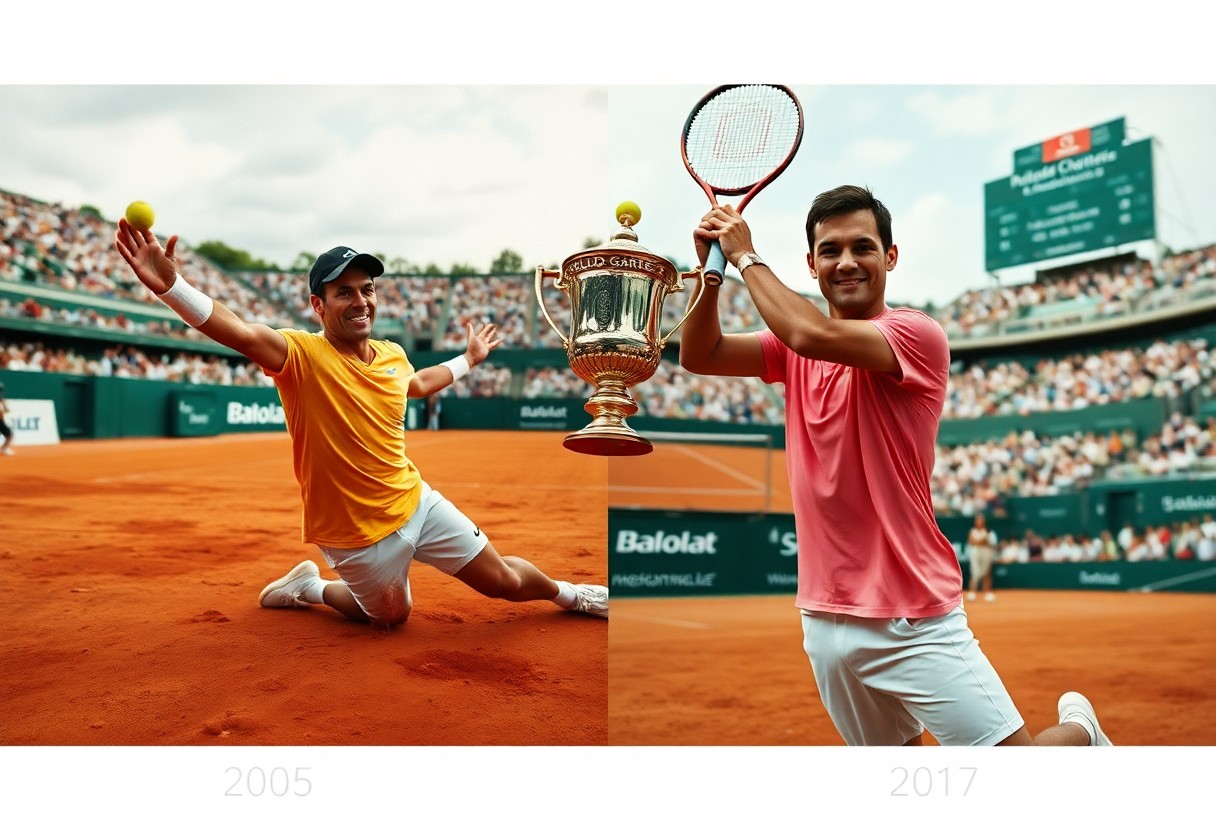
Several showpiece matches changed trajectories: Noah’s 1983 final over Mats Wilander galvanized French support, Rafael Nadal’s breakthrough aged 19 versus Mariano Puerta in the 2005 final announced a new era, and Roger Federer’s 2009 victory over Robin Söderling completed his career Grand Slam after Söderling’s shock 2009 upset of Nadal earlier in the draw.
Legendary Players
Roland Garros legacies are defined by specialists and all‑rounders: Rafael Nadal (14 titles), Björn Borg’s six clay crowns, Gustavo Kuerten’s trio of wins, and Yannick Noah’s national milestone each mark distinct chapters; Novak Djokovic and Roger Federer also used Paris to complete career Grand Slams, underscoring the tournament’s career‑defining weight.
Stylistically, clay rewarded topspin, endurance and court craft: Nadal’s heavy left‑handed topspin and relentless footwork created a dangerous forehand that opponents struggled to handle across long rallies, while Borg’s flat, rhythmic baseline game and Kuerten’s graceful movement showcased alternative routes to success. Tournament statistics-consecutive runs like Nadal’s 2005-08 and 2010-14 dominance, Kuerten’s 1997 breakthrough, and Federer’s 2009 milestone-illustrate how surface, fitness and tactical adaptation produced eras rather than single moments, making Roland Garros a proving ground for sustained greatness.
The Rise of the French Open
By 1925, opening the championships to international players accelerated Roland Garros’s ascent from a national contest into a tournament of global ambition. That shift drew stars like Suzanne Lenglen and later showcased the clay’s tendency for grueling rallies and injuries, forcing tactical patience and stamina. The venue’s expansion and match scheduling through the 1930s steadily increased draw size and public interest, setting the stage for its later Grand Slam status.
Evolution Into a Grand Slam
Opening to internationals in 1925 was pivotal; the tournament gained parity with Wimbledon and the U.S. Championships in prestige. The 1968 Open Era then allowed professionals, transforming entry lists and prize money and bringing iconic five-set finals. Examples include Björn Borg’s six titles and Rafael Nadal’s 14 Roland Garros crowns, which cemented the event’s status among tennis’s four majors.
Global Impact and Recognition
Televised worldwide, Roland Garros reaches millions across more than 200 territories and draws nearly half a million spectators during the fortnight, amplifying its commercial and cultural clout. The 2019 renovation added a retractable roof on Court Philippe-Chatrier, improving scheduling and broadcast reliability. Broadcasters, sponsors and digital services now leverage real-time stats to increase global engagement and year-round brand value.
Beyond broadcasts, the tournament shaped playing styles-Spain’s Rafael Nadal and Brazil’s Gustavo Kuerten (three titles) exemplify how clay success creates global icons. National federations in Spain and South America built clay academies that produced generation-defining specialists, while the French Tennis Federation uses the event to fuel development programs and boost Parisian tourism during the fortnight.
Technological Advancements
Across recent decades Roland Garros has integrated innovations that transformed play and operations: the installation of the retractable roof on Court Philippe Chatrier (completed 2020) ended many rain delays, while electronic review systems (adopted in the mid-2000s) tightened officiating. Grounds crews now use laser-leveling rollers and automated irrigation to maintain the signature red clay, cutting maintenance time and improving match consistency.
Innovations in Equipment
Racquet technology shifted from ~65 sq in wooden frames to modern graphite/carbon-fiber frames (95-110 sq in) from the 1980s onward, and the 1990s arrival of polyester strings amplified topspin and durability. Ball construction, string sensors and lighter shoes with specialized herringbone soles have all altered stroke patterns and movement, favoring heavier-spin baseline play at Roland Garros.
Enhancements in Spectator Experience
Spectator amenities now emphasize uninterrupted viewing and connectivity: the Court Philippe Chatrier roof (2020) and upgraded LED lighting improved scheduling reliability for the stadium’s ~15,000 seats, while tournament apps, stadium Wi‑Fi and big screens deliver real‑time stats and replay to fans throughout the grounds.
Further improvements include the 2019 opening of Court Simonne‑Mathieu (≈5,000 capacity), which blends intimate sightlines with botanical surroundings, plus expanded hospitality zones, cashless concessions and digital ticketing that streamline entry and in‑stadium purchases, increasing dwell time and overall fan satisfaction.
The Role of Roland Garros in Today’s Tennis
As the centerpiece of the clay season, Roland Garros both defines playing styles and dictates calendar priorities; its 128-player singles draws and two-week intensity expose endurance and slide technique, while innovations like the retractable roof on Philippe-Chatrier have modernized scheduling and global TV windows.
Current Tournament Format
The event follows Grand Slam norms: 128-player singles draws, 32 seeds, a 128-player qualifying for 16 spots, men best-of-five sets and women best-of-three across two weeks, culminating on the final weekend; recent venue upgrades-night sessions and roofs on Philippe-Chatrier and Suzanne Lenglen-have reduced rain disruptions and expanded prime-time coverage.
Influence on Future Generations
Roland Garros shapes coaching and player development by rewarding heavy topspin, courtcraft and stamina; Rafael Nadal’s 14 titles and Iga Swiatek’s 2020 and 2022 wins provide tactical blueprints, while junior pathways and national clay circuits steer many prospects toward clay-specialist skill sets.
Coaches increasingly train to replicate long, sliding rallies, emphasizing specific endurance and eccentric strength and exercises aimed at reducing injury risk; federations and academies-backed by the FFT-run hundreds of clay events annually (FFT’s youth calendar includes hundreds of national clay events), producing a steady pipeline of specialists. Video analysis of Nadal and Swiatek, equipment tweaks (lower string tension, grippy shoes) and targeted periodization mean juniors now build seasons around clay peaks, creating clear, aspirational pathways from junior titles to professional Roland Garros ambitions.
Final Words
On the whole, Roland Garros has transformed from a modest early-20th-century national championship into a singular global event where clay-court tradition meets technological and organizational innovation. Its history – wartime resilience, architectural evolution, and iconic champions – underpins contemporary prestige, shaping play, training, and tournament culture. The tournament today balances heritage with modernization, securing its place among tennis’s most distinctive and influential spectacles.
FAQ
Q: How did Roland Garros start and evolve into the international tournament we know today?
A: The event began as the French Championships in the late 19th century as a national competition, played on clay courts favored in France. In the mid-1920s the tournament opened to international players and shortly afterward the Stade Roland Garros was built on the outskirts of Paris to host France’s Davis Cup teams; the venue was named after the aviator Roland Garros. Over subsequent decades the Championships grew in prestige, attracting top international competitors and becoming one of the four Grand Slam tournaments, while maintaining its distinctive red clay surface and the traditions associated with it.
Q: What major changes have defined Roland Garros’ development from a sporting and infrastructure perspective?
A: Several watershed changes reshaped the tournament: the advent of the Open Era (1968) allowed professional players to compete, transforming the level of competition; stadium and spectator upgrades have included expanded stands, improved player facilities and hospitality, and the installation of floodlights and scheduling for night sessions. Technological advances such as electronic review systems and enhanced broadcast capabilities modernized match officiating and viewing. In the 21st century the site has seen major renovation projects-adding roofs and updating courts-while prize-money and player services were modernized to meet global Grand Slam standards.
Q: What makes Roland Garros uniquely challenging and how has the tournament balanced tradition with modernization?
A: Roland Garros is defined by its slow, high-bouncing clay, which favors endurance, heavy topspin and strategic point construction; matches often reward physical resilience and tactical adaptability. The tournament has balanced tradition and progress by preserving the clay-court identity and historic courts while investing in infrastructure (covered courts, improved seating, and technological officiating) and player amenities. Organizers have also pursued sustainability and fan-experience improvements, ensuring the event remains a premier, modern Grand Slam while retaining the distinctive playing characteristics and heritage that set it apart.