Clay demands patience and precise footwork; learn how the slow surface and high bounce change timing and strategy. Sliding safely is important to avoid injury and maintain balance, while topspin and patience are big advantages that produce longer rallies and tactical depth. Expect unpredictable bounces, softer shoes, and a premium on endurance and point construction for success at Roland-Garros.
Understanding Clay-Court Tennis
Types of Clay Surfaces
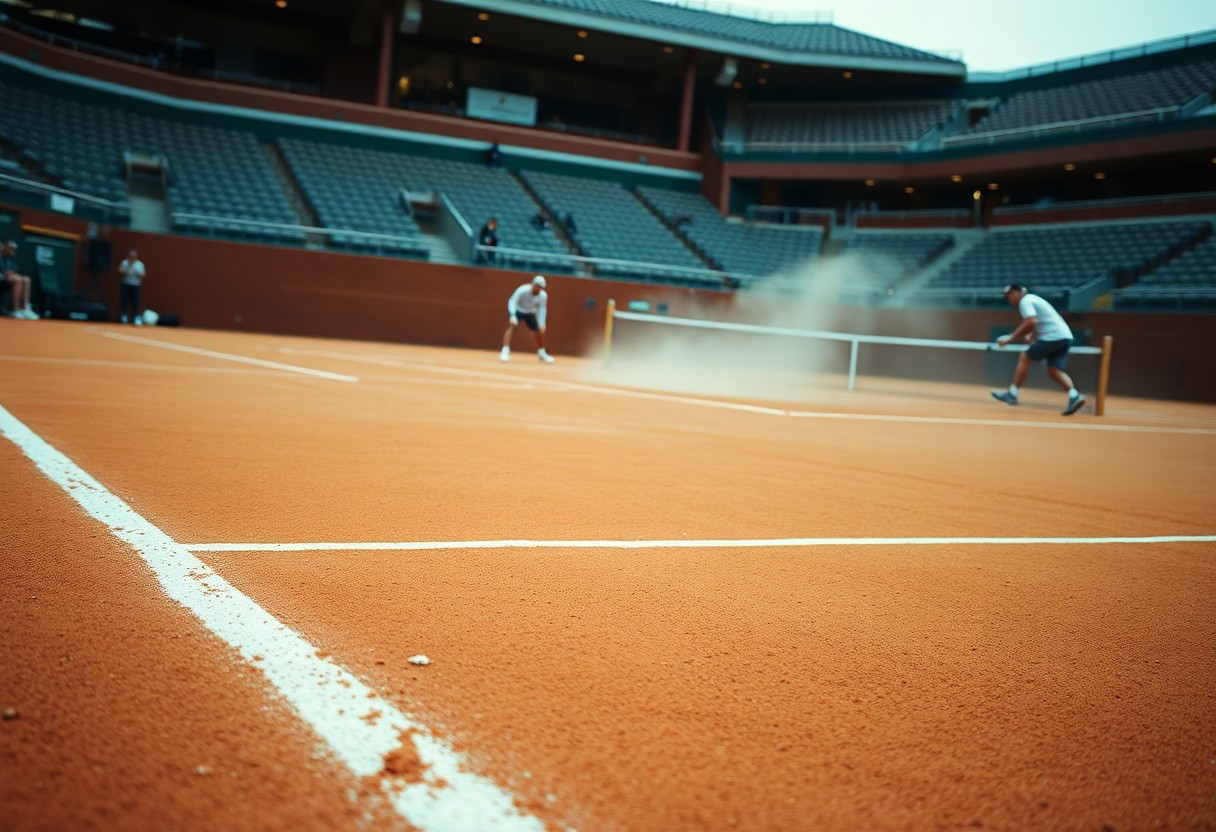
Red and green variants dominate play: red clay (brick dust) slows the ball and produces higher bounce, while green clay (Har-Tru) offers firmer footing and slightly quicker pace; courts built over asphalt or packed loam change traction and maintenance demands, influencing slide technique and string choices. After matches on clay, players often adjust string tension and footwork.
- red clay
- green clay
- Har-Tru
- packed loam
| Surface | Details / Example |
|---|---|
| Red clay | Brick-dust top; slowest speed, high bounce; Roland-Garros standard |
| Green clay (Har-Tru) | Crushed metabasalt; firmer, quicker slide; common in U.S. club courts |
| Clay over asphalt | Compacted base yields consistent pace and easier drainage/maintenance |
| Packed loam | Sand-silt mix; variable traction and bounce depending on compaction |
Key Characteristics of Clay-Court Play
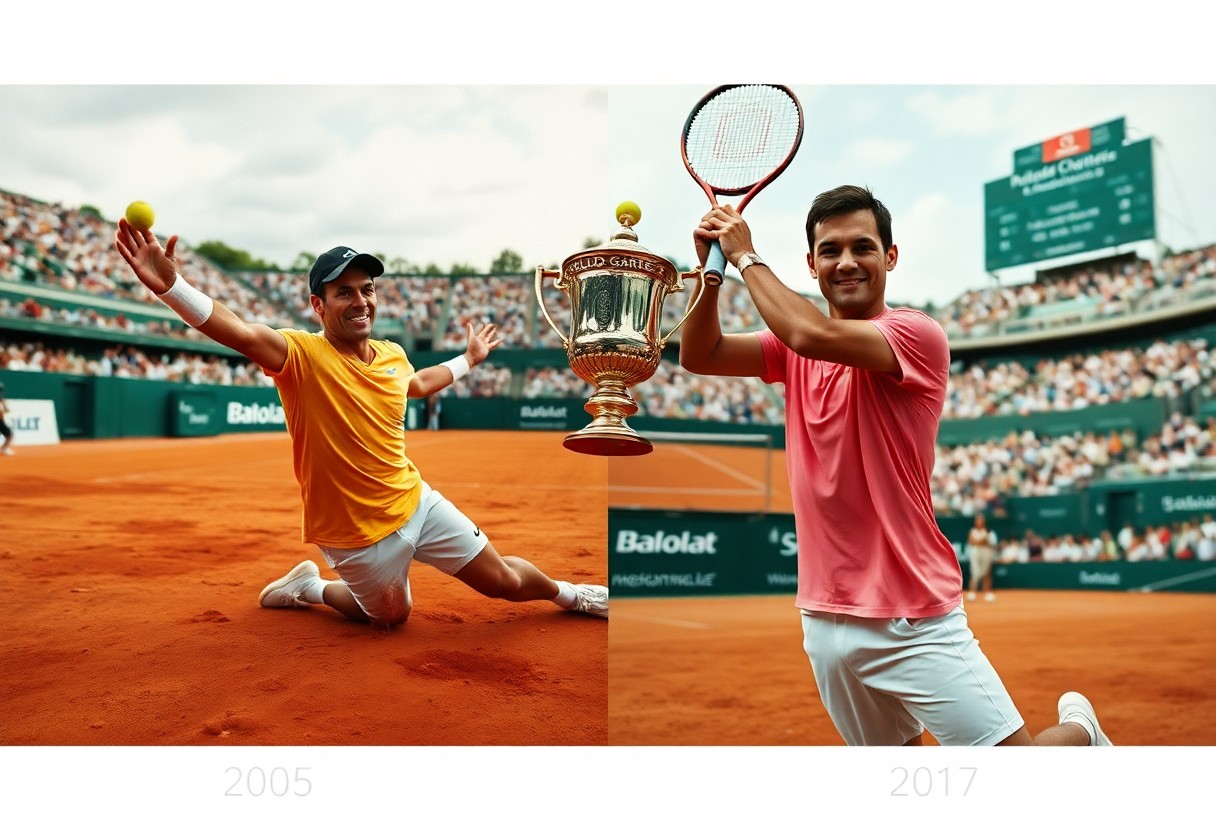
Rallies on clay routinely extend beyond baseline exchanges, often lasting 5-10+ shots, rewarding heavy topspin and patience; serve penetration is reduced so players deploy more kick serves and point construction, as exemplified by Rafael Nadal’s 14 Roland-Garros titles built on relentless depth and movement. Longer rallies, ample sliding, and high topspin define success.
Technically, clay favors players who can generate angle and reset points with depth-kick serves, heavy forehands, and strategic drop shots are more effective; tactically, expect fewer free points and more physical attrition, with matches often lasting 30-40% longer than equivalent hard-court contests at the same level, increasing wear on ankles and knees and making conditioning and recovery vital for tournament progression.
Essential Tips for Beginners
Prioritize low, balanced strokes and expect longer rallies on clay where the surface is slower and the bounce is higher. Use heavy topspin to push opponents behind the baseline and create short balls; target 2-3 deep angles per point. Practice controlled sliding with 2-3 recovery steps to stay balanced and reduce risk of ankle sprains. Study champions who win with patience and point construction. Assume that mastering consistent depth beats outright power on clay.
- Heavy topspin
- Sliding
- Consistent depth
- Point construction
- Avoid ankle sprains
Footwork and Movement
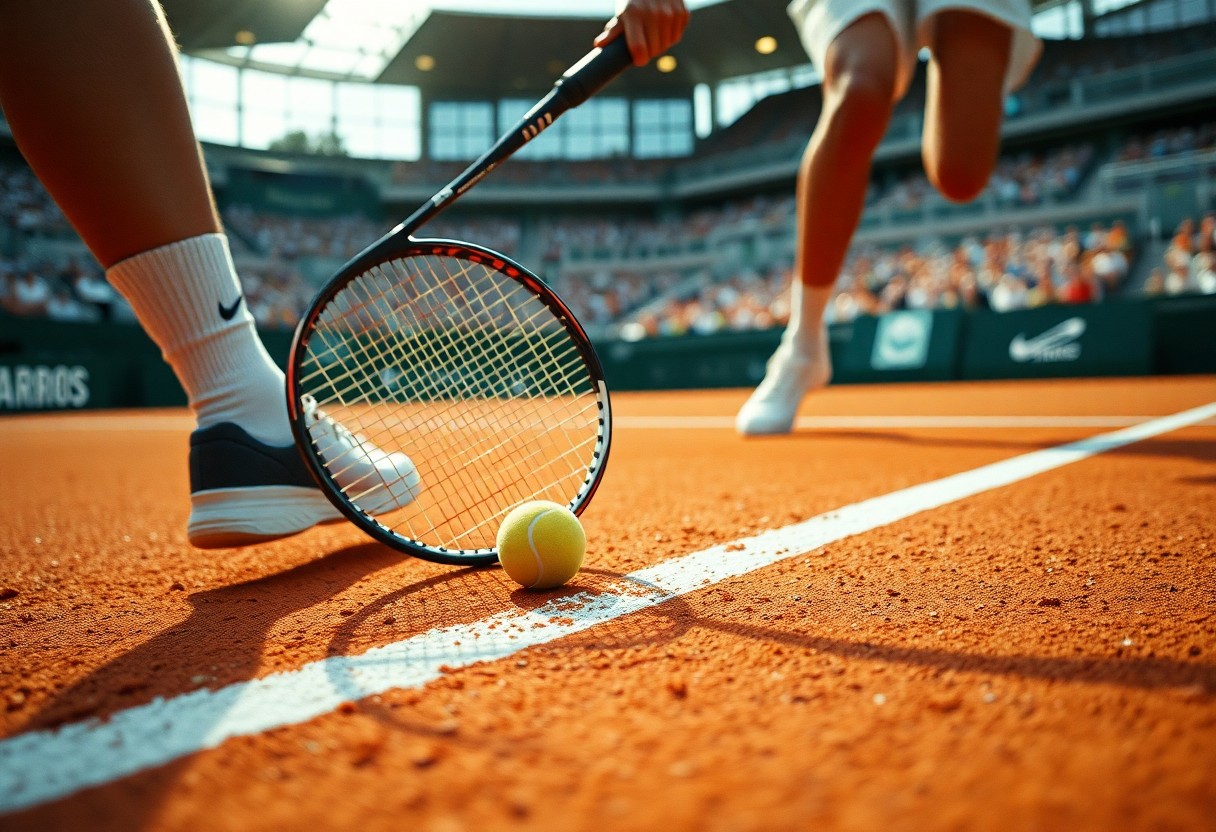
Slide into each stroke using 2-3 controlled steps, keeping hips low to absorb momentum and set up an aggressive recovery. Time your split-step about 0.2-0.4 seconds before opponent contact so you can move in any direction. Drill 10-minute shadow-sliding sessions and single-leg stability work to build ankle strength and reduce injury risk. Match-play rhythm often requires one extra recovery step compared with hard courts.
Strategies for Success
Construct points over 4-7 shots instead of hunting winners; use heavy crosscourt topspin to open the court and then finish with angled drives or a well-timed drop shot. Mix pace-flat serves and spin returns-to force short replies; target opponents’ weaker wing 60-70% of the time in extended rallies. Tactical patience and depth will pressure errors more than raw power on clay.
Practice point-construction drills: start with a deep crosscourt, follow with a high-arching topspin to push the opponent back, then attack the short ball created by a low reply; repeat in 3-ball sequences for 15 minutes. Analyze opponent tendencies-if they retreat more to the backhand, increase angled play and set up the drop shot. Champions exploit momentum shifts rather than overpowering opponents on clay.
Step-by-Step Guide to Playing on Clay
Begin with a deliberate warm-up, then focus on sliding footwork and higher-bouncing, spin-heavy strokes to control rallies. After that, construct points with patience: open the court with a heavy crosscourt forehand, follow to the net on shorter returns, and favor angles over outright power. Use match-simulation drills of 4 sets of 10 points to practice point construction and recovery under pressure.
| Step | What to focus on |
|---|---|
| Warm-up | 10-15 minutes of light jogging, dynamic stretches, then progressive hitting starting flat to heavier topspin. |
| Footwork | Practice controlled slides of 1.5-3 m, stay low, and plant to recover quickly. |
| Strokes | Emphasize heavy topspin forehands and a deep neutral backhand; mix in low slice to change pace. |
| Serve & Return | Use kick serves and target the body; return deep and low to buy time for recovery. |
| Point Construction | Work crosscourt patterns, 3-4 shot build-ups before finishing, prioritize angle over power. |
Preparing for Your First Match
Arrive with clay-specific shoes (herringbone sole), fresh string tension lowered ~2-4 lbs from your hard-court setting, and two pairs of socks; warm up with 15 minutes of sliding drills and 15 minutes of rallying. Aim for a 10-minute serve-return routine and one practice set to test endurance; failure to adapt to sliding increases the risk of slips and muscle strain.
Techniques to Master
Prioritize heavy topspin on the forehand to generate high bounce and push opponents back, combined with a compact, penetrating backhand and a deceptive low slice to change tempo. Study Rafael Nadal’s use of spin – his 14 Roland Garros titles show how topspin and court positioning dominate on clay; drill 4×50 topspin reps per session.
Drill specifics: do crosscourt topspin patterns in 4 sets of 25 balls, short-angle backhand drills 3×20, and sliding recovery cone drills with 10 reps each side. Also practice serving kick placements to the T and wide return targets; integrate point-play drills where you build rallies of 3-5 shots before attempting a winner to simulate clay-match patience and shot selection.
Factors Influencing Performance
Several interlocking elements determine clay performance: court composition, ball wear, and match timing each shift rally patterns. Wet days make the surface heavier and slower, while dry heat produces a faster, lower-bouncing court and more abrasive ball wear. Player footwear and spin selection amplify these effects, altering point construction and error rates. Thou must adapt tactics and recovery plans when any of these variables change.
- Weather
- Surface speed & bounce
- Player fitness
- Equipment
- Scheduling & recovery
Weather Conditions
Higher humidity and rain make Roland Garros courts heavier, cutting ball speed and favouring heavy-topspin players; Paris in May-June usually ranges about 12-25°C with 50-85% humidity. Dry, sunny windows create looser top layers and quicker, lower bounces that reward flatter hitters and shorten rallies, while sudden showers introduce unpredictable clay pickup on the ball that increases error rates and match interruptions.
Player’s Physical Condition
Endurance and lateral strength are decisive: clay matches at Roland Garros often exceed three hours, requiring repeated high-intensity direction changes and extended rallies that load quadriceps and adductors eccentrically. Strong sliding technique lowers impact, yet insufficient conditioning raises injury risk to knees and ankles; with roughly 24 hours between rounds, precise load management is imperative for consistent recovery and performance.
Elite preparation emphasizes 2-3 weekly sessions of eccentric leg work, lateral plyometrics and balance drills, combined with daily mobility and a 20-30 minute dynamic warmup; physiotherapy, tailored shoe outsole choices and minor string-tension tweaks further reduce soft-tissue complaints and sharpen traction, producing measurable gains in consistency across long clay matches.
Pros and Cons of Clay-Court Tennis
| Pros | Cons |
|---|---|
| Slower surface that rewards heavy topspin and patient construction. | Serves are less dominant, producing far fewer aces and free points. |
| Higher bounce gives time to set up shots; benefits baseline grinders. | Rallies are longer-often averaging 6-7 shots at Roland Garros-so matches can be more tiring. |
| Encourages variety: drop shots, angles and tactical point building. | Sliding mechanics increase risk of ankle and knee strain if not executed properly. |
| Levels the playing field against big servers; returners gain an edge. | Requires a specific footwork and shoe setup; adaptation time is necessary after hard-court season. |
| Promotes endurance and defensive development for players and juniors. | Court maintenance (watering, dragging) and weather cause frequent delays and variable conditions. |
| Historically produces epic contests-Rafael Nadal’s 14 French Open titles illustrate clay mastery. | Surface specialists can dominate tournaments, skewing results toward clay-expert styles. |
| Generally softer underfoot with less repetitive impact than hard courts. | Worn spots create unpredictable bounces that punish poor anticipation. |
| Slower pace aids tactical and technical growth for developing players. | Wet or heavy clay dramatically alters ball weight and spin, complicating match planning. |
Advantages of Playing on Clay
Clay rewards players who construct points and use heavy topspin; the slower, higher-bouncing surface gives defenders time to reset and favors those with strong footwork and endurance. At Roland Garros rallies average about 6-7 shots, so players who excel at patience and angle creation-like Rafael Nadal-gain a measurable edge. Training on clay also improves sliding technique and point selection, skills that transfer to better tactical play on all surfaces.
Disadvantages to Consider
Clay matches demand more cardiovascular and muscular endurance, often extending match time and increasing cumulative load on the legs; sliding mishaps raise the risk of ankle and knee injuries. Additionally, big servers and aggressive short-point players lose some of their edge, while weather and court wear introduce unpredictability that can disrupt game plans.
More specifically, players need specialized gear-herringbone-pattern shoes and sometimes reinforced ankle support-and a deliberate sliding technique; without this, lateral stress accumulates and performance drops. Coaches often schedule a 2-3 week adaptation period before key clay events, and maintenance factors like watering can change ball speed within a single match, forcing tactical adjustments mid-contest.
Common Mistakes to Avoid
Sliding poorly, swinging flat, and trying to finish points too early all compound on clay – points lengthen and errors multiply. Players often fail to adjust to the higher bounce and slower pace, leading to unforced errors from overhitting or getting pushed off court. Watch how top clay specialists extend rallies and force you to move laterally; neglecting footwork, depth, and variation hands opponents easy openings.
Tactical Errors
Attacking with raw power instead of building point construction is costly: on clay, winners are rarer and points typically last longer, so failing to use heavy topspin, angles, and drop shots hands control to opponents. Serving only down the middle or constantly attacking the opponent’s forehand instead of mixing placement and spin often yields low return errors but high rally disadvantages; adapt strategy to longer exchanges and court geometry.
Technical Flaws
Flat drives and short footwork are the most damaging technical flaws on clay – a flatter trajectory skids less and gives opponents time to recover, while poor slide technique breaks balance and recovery. Lack of a reliable kick second serve and insufficient topspin on the forehand leave you vulnerable when rallies extend beyond four shots; refine contact point and swing path to generate higher bounce and margin.
To correct these issues, practice specific adjustments: do sets of 100 low-to-high forehands focusing on brushing up to increase topspin, and include 50 paced slice-to-topspin transition drills to train change of pace. Work on a controlled kick serve in 30-minute serving blocks, aiming for net clearance and higher bounce rather than sheer speed. Footwork drills should include repeated 5-8 metre slide recoveries and two-cone lateral sprints to rebuild balance under load; players who adopt these exact reps report fewer mid-rally errors and improved court positioning during long matches.
Final Words
With this in mind, the French Open’s clay demands adapted footwork, heavier topspin, and strategic point construction; beginners should focus on sliding technique, patience, and reading bounces, while learning to craft longer rallies and exploit angles. Studying matches and practicing on clay accelerates progress and deepens appreciation for the surface’s tactical richness.
FAQ
Q: How does clay differ from hard and grass courts, and how does that affect ball behavior and match length?
A: Clay is a softer, granular surface (crushed brick at Roland‑Garros) that absorbs speed and produces higher, slower bounces compared with hard or grass courts. Balls lose pace on impact and kick up more, so flat shots are less penetrating while topspin and heavy margins are rewarded. Because points are easier to prolong – serves are less dominant and passing shots are harder to finish – rallies and matches tend to be longer, often favoring players with endurance, patience and superior point construction.
Q: What movement, tactics and equipment adjustments do players make specifically for clay-court tennis?
A: Movement on clay emphasizes controlled sliding: players take slightly longer, lower steps and use slides to recover position while keeping balance. Tactically, clay rewards heavy topspin, deep angles, consistent depth and variety (drop shots, kick serves, changes of pace) to open court or draw short replies. Serving aims for placement and spin over sheer speed. Footwear features deeper treads for grip on loose surfaces and shoes often have reinforced toes for sliding. Conditioning for long rallies and recovery is crucial; match plans focus on constructing points patiently and exploiting opponents’ positioning mistakes.
Q: How do court maintenance, weather and tournament procedures at the French Open influence play and viewing?
A: Roland‑Garros staff regularly sweep, roll and, when needed, water courts to keep grain and moisture consistent; these operations change court speed and bounce over the day. Rain makes courts heavier and slower and can cause delays or schedule shifts; after rain, courts may play slower until crews restore the top layer. Clay shows ball marks, which umpires can inspect for tight calls. For spectators, expect variable conditions across sessions: earlier matches on freshly prepared courts may play slightly faster than late‑day matches after many rallies or damp weather.