Why a Luxury Tennis Set Is More Than Just Sparkle
You may already know the classic tennis bracelet silhouette: a continuous line of stones set in a slim band. What turns that familiar shape into a luxury tennis set is the combination of materials, craftsmanship, and design intent. As you shop or commission a set, you’ll want to evaluate not only how it looks on your wrist but how it will perform over time, how it complements your wardrobe, and how it holds value.
This section helps you frame the questions to ask and the attributes to prioritize. You’ll learn to distinguish between marketing language and meaningful specifications, so you can make informed choices whether you’re buying a ready-made piece or working with a jeweler to customize your set.
What Really Defines a Luxury Tennis Set: Materials, Craft, and Design
Luxury is a composite quality. In tennis sets, three pillars determine whether a piece belongs to the luxury category:
- Materials: High-purity precious metals and high-grade gemstones or diamonds that offer both beauty and durability.
- Craftsmanship: Secure settings, even spacing, precise prongs or bezels, and a clasp engineered for daily wear.
- Design integrity: Balanced proportions, comfort on the wrist, and a finish that complements the chosen stones.
When you examine a tennis set, inspect the settings closely. Luxury pieces will show tight, consistent prongs or seamless bezel rails that protect stones while minimizing metal visibility. The clasp mechanism should be integrated into the design—often a box clasp with safety latch or figure-eight safety—to prevent accidental loss.
How Metals, Diamonds, and Gemstones Change the Look and Longevity
Choosing the right metal
The metal you select affects color, weight, hypoallergenic properties, and long-term wear. Common luxury choices include:
- 18k gold (yellow, white, rose): Offers rich color and good density; 18k balances purity with durability.
- Platinum: Denser and more durable than gold, with a natural white luster that resists tarnish—preferred for secure settings.
- 14k gold: Slightly harder and more scratch-resistant than 18k, a practical choice if you wear the set daily.
Understanding diamonds and alternative gemstones
Diamonds remain a traditional choice for tennis sets because of their hardness and brilliance, but colored gemstones are increasingly popular for luxury variations. Consider these factors:
- Cut and symmetry: Determine brilliance and how the stones reflect light.
- Carat and size distribution: Even sizing creates a uniform line; graduated stones make a different visual statement.
- Stone type and treatments: Natural sapphires, emeralds, and rubies offer rich color but may require different settings or protective measures than diamonds.
As you move forward, you’ll want to learn specific grading details—how cut grades, clarity, and color affect value—and how to evaluate treatments, certifications, and setting techniques to protect your investment.
Reading Certifications, Grading Reports, and What They Mean for Value
When investing in a luxury tennis set, documentation matters as much as the piece itself. Grading reports and certificates provide an objective baseline for quality and provenance. For diamonds, prioritize reports from reputable labs such as GIA, AGS, or IGI. Key items to review on a report include:
- Cut grade and proportions: These determine brilliance more than carat weight alone—excellent or ideal cuts maximize fire and return on your investment.
- Clarity and inclusions: Understand where inclusions are located; surface-reaching inclusions can affect durability and setting choices.
- Color grade and fluorescence: Both affect face-up appearance; fluorescence can soften the look of lower-color stones but may also influence value.
- Measurements and carat weight distribution: For sets, evenness matters—look for consistent measurements or a documented graduated design.
- Confirm natural vs. lab-grown: Lab-grown diamonds are physically identical but different in market behavior and resale expectations; their origin should be explicitly stated.
For colored gemstones, seek documentation of treatments (heat, oiling, fracture filling) and, when relevant, origin reports—Kashmir sapphires or Colombian emeralds carry premium pricing. If purchasing antique or bespoke sets, provenance and previous appraisals add to value and insurability. Always request a current appraisal that lists a replacement value for insurance, not just purchase price.
Customization and Design Choices: From Classic Cohesion to Bold Statements
Customizing a tennis set lets you balance personal style with longevity. Begin by deciding whether you want a uniform, classic line of stones or a modern reinterpretation. Options to consider:
- Setting style: Prong settings maximize light; bead or bezel settings offer protection; invisible settings create a seamless ribbon of gems but require expert craftsmanship.
- Clasp and safety: Opt for integrated box clasps with double safety, figure-eight locks, or additional safety slides—critical for high-value pieces.
- Proportion and scale: For wrists under 6.5 inches, stones in the 1.5–3 carat total per stone range (depending on cut) maintain elegance without overwhelming—larger stones suit broader wrists or statement pieces.
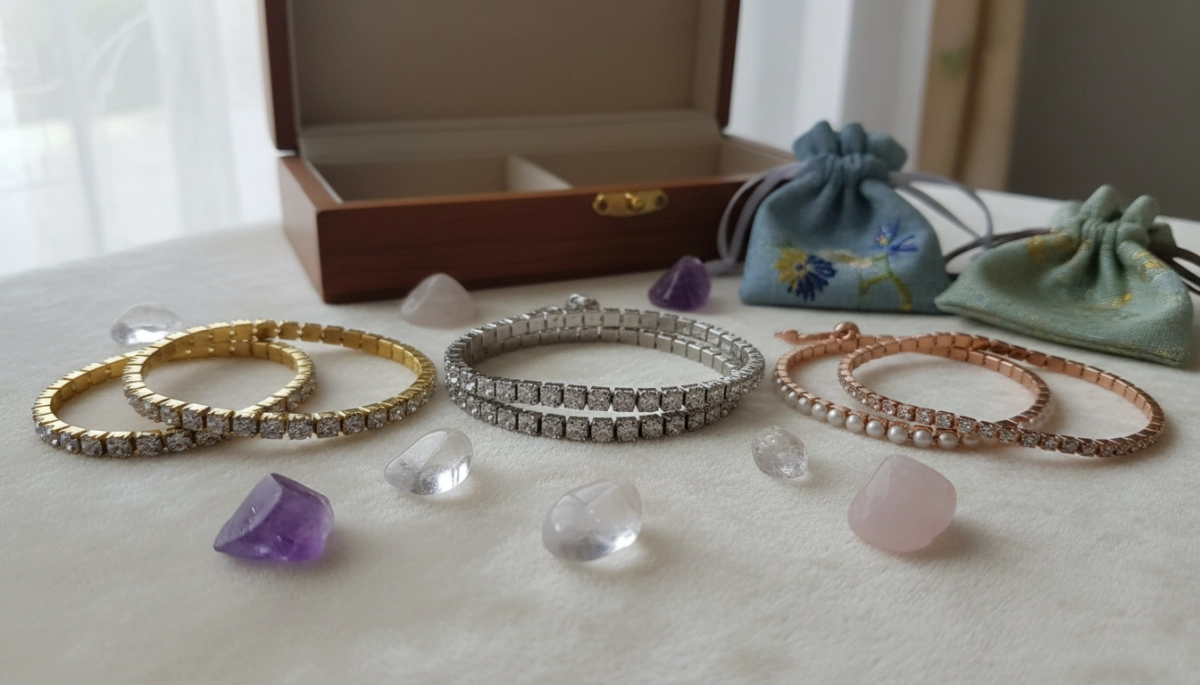
- Mixing stones and metals: Consider bi-metal constructions (warm yellow gold with white gold settings) or alternating diamonds with colored gems for a bespoke signature.
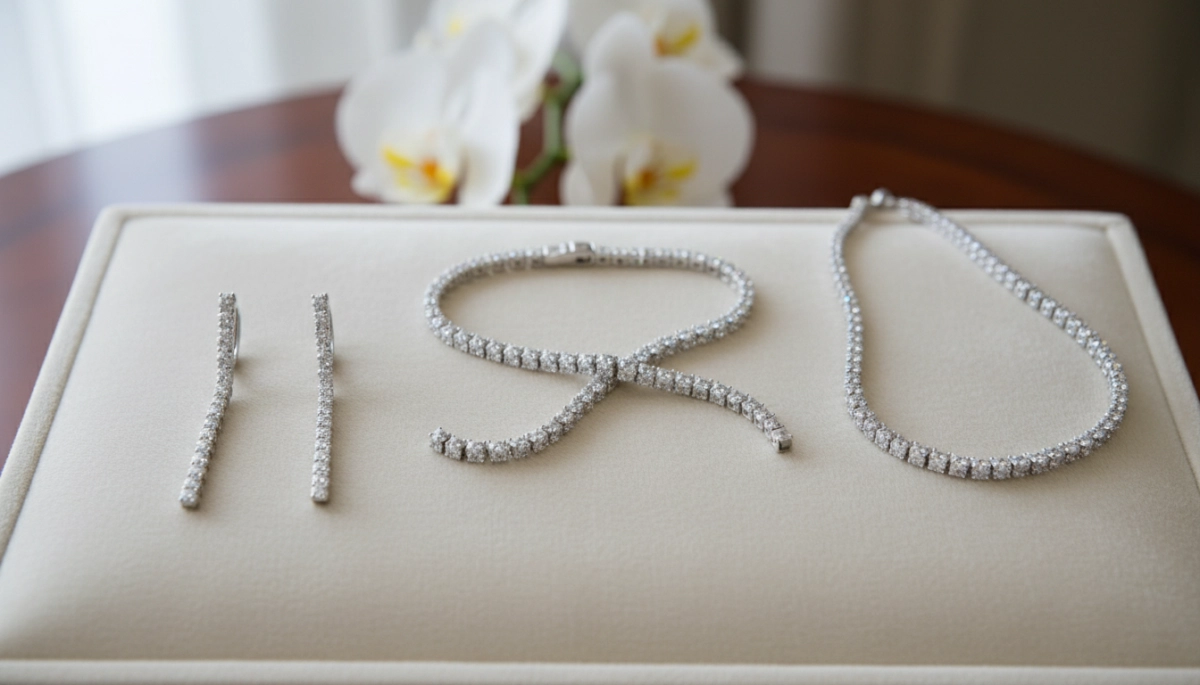
- Coordinated sets: Match bracelet width and stone size with accompanying necklace, earrings, or ring to ensure visual harmony.
Work with a designer who provides CAD renderings or wax models so you can evaluate proportions before production. Insist on a mock-up for fit and comfort checks—articulation and weight distribution determine daily wearability.
Care, Maintenance, and Insurance: Protecting Your Investment
Luxury tennis sets are designed for wear, but they require routine care to preserve beauty and safety. Follow a simple maintenance regimen:
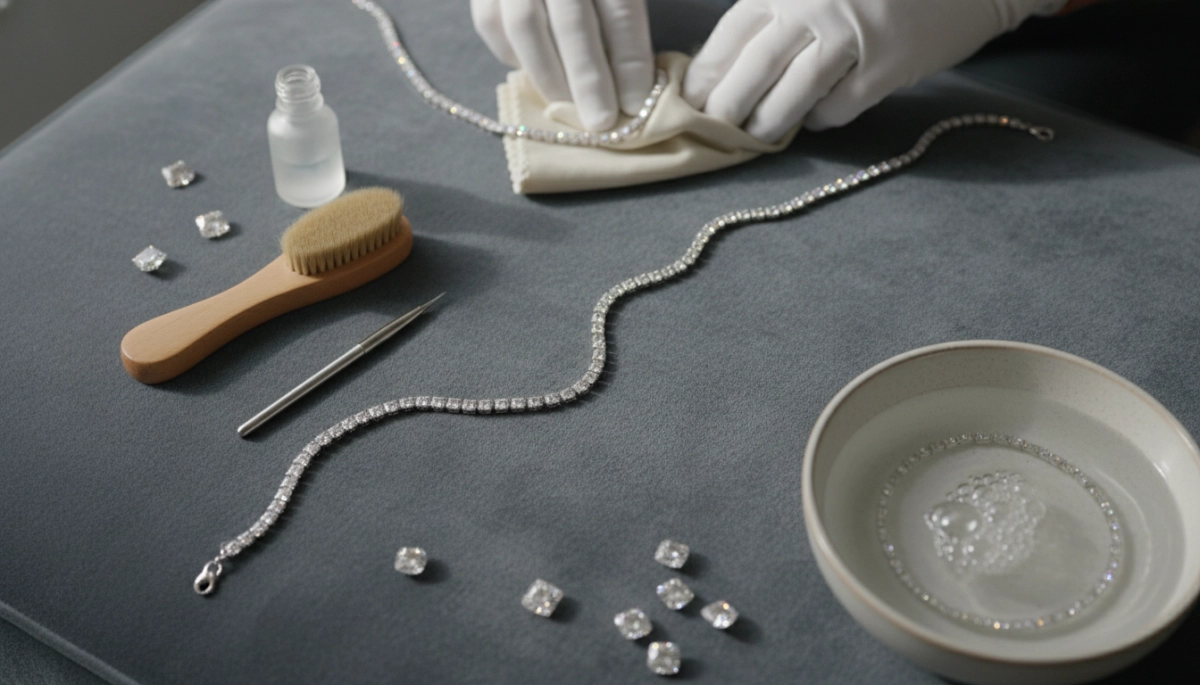
- Clean gently with warm water, a mild detergent, and a soft brush; avoid ultrasonic cleaners for fragile-treated gemstones (e.g., fracture-filled emeralds).
- Have a jeweler check prongs, settings, and the clasp every 6–12 months; re-tipping prongs and tightening bezels prevents loss.
- Reapply rhodium plating on white gold as needed to maintain color and luster—typically every 1–2 years with regular wear.
- Store pieces separately in soft pouches or a lined jewelry box to prevent scratching and tangling.
- Insure the set with a policy that covers loss, theft, and mysterious disappearance; update appraisals after significant market shifts or modifications.
Finally, remove the set for activities that risk impact, chemicals, or abrasion—sports, heavy housework, swimming in chlorinated pools, and applying lotions or perfumes. Small daily habits protect both the aesthetics and the long-term value of your luxury tennis set.
Making the Purchase Count
Buying a luxury tennis set is as much about the process as the piece. Approach it as a collaboration: define your priorities, request transparent grading and treatment reports, insist on mock-ups or CAD views for custom work, and arrange for post-purchase care and insurance. Build a relationship with a trusted jeweler who understands both technical requirements and your personal style so the set remains wearable, insurable, and meaningful for years to come. For objective education on diamond grading and terminology, consult GIA’s diamond information.
Key Takeaways
- Prioritize materials, craftsmanship, and documented grading when evaluating luxury tennis sets.
- Choose settings and metals that suit the stones and your intended wear, and plan routine maintenance and insurance.
- Work with reputable professionals and request clear documentation and mock-ups for custom pieces.