
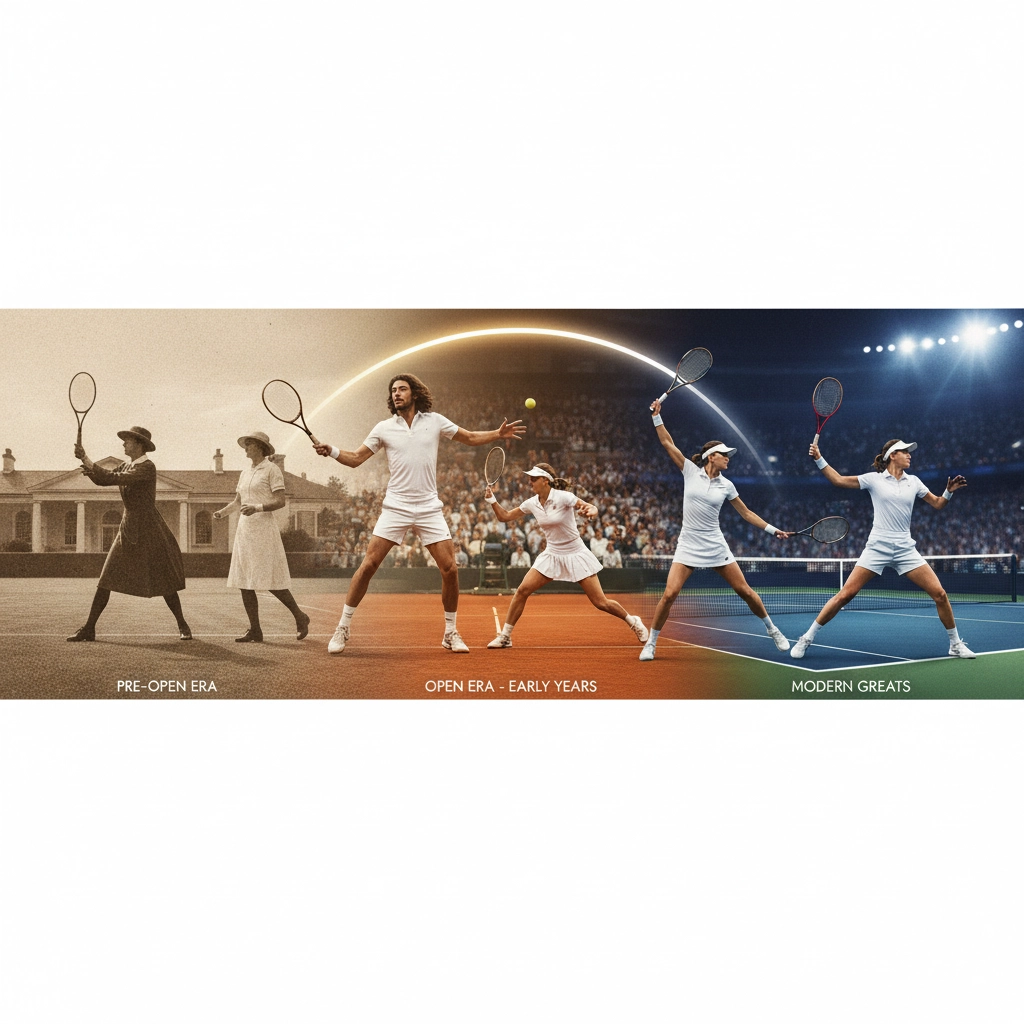
Why understanding tennis eras helps you appreciate the sport’s legends
When you study tennis history by era, you learn more than win-loss records: you see how changes in rules, professionalism, equipment, and global competition reshaped which players could dominate. Seeing legends in context helps you judge achievements fairly — a champion in the amateur-only 1920s faced different barriers than a modern player navigating a full professional tour, year-round travel, and advanced sports science. This part introduces the key figures and frameworks you’ll need to compare Pre-Open heroes with later greats.
What defines the Pre-Open era and why it matters to you
The Pre-Open era (roughly before 1968) was split between amateur championships and separate professional tours. Many of the names now enshrined as “legends” earned their reputations in amateur events like Wimbledon, the U.S. Championships, and Davis Cup, while top professionals sometimes competed in separate, less-documented circuits. Knowing this split helps you understand why some great players have fewer Grand Slam titles than you might expect when compared to modern counterparts.
Pre-Open era pioneers you should know
These players set technical, tactical, and cultural standards for generations to follow. As you read their short profiles, note how their achievements reflect the conditions of their time — limited surfaces, different racket technology, and the amateur/pro divide.
-
Bill Tilden — the American standard-bearer
Tilden dominated the 1920s with an all-court game, tactically advanced play, and a long run of major titles and exhibition influence. If you want to appreciate early leadership and dominance, Tilden is a benchmark.
-
Suzanne Lenglen — the first global female superstar
Lenglen combined explosive shot-making with unmatched courtcraft in the 1910s–1920s, redefining women’s tennis and boosting the sport’s popularity in Europe and beyond.
-
Don Budge and the first Grand Slam
Budge completed the calendar Grand Slam in 1938, showcasing baseline consistency and mental resilience that still resonates when you compare complete-season dominance across eras.
-
Fred Perry and Maureen Connolly — champions of the 1930s–1950s
Perry was the last British world No. 1 before the modern era, while Connolly’s early-1950s Grand Slam showed how youth and power began to change the women’s game.
-
Pancho Gonzales and the professional circuit
Gonzales exemplifies top-level professional play in the 1950s and 1960s when pros were excluded from amateur majors; his record highlights the importance of considering non-Grand-Slam success in your comparisons.
-
Rod Laver — the bridge between eras
Laver’s 1962 calendar Grand Slam (as an amateur) and later Open Era success make him a critical figure when you want to trace continuity from Pre-Open strengths to the modern game.
How you should weigh achievements across different conditions
To compare legends fairly, consider multiple criteria: number of major titles, length and consistency of dominance, surface versatility, quality of competition, and the impact of professionalism and technology on results. Use these lenses when you move from Pre-Open figures to the Open Era stars that transformed tennis into the global professional sport you watch today.
Next, you’ll explore the Open Era’s breakthrough: how the 1968 shift opened competition and gave rise to modern greats whose records you already recognize.
The Open Era revolution: what changed and why it matters to you
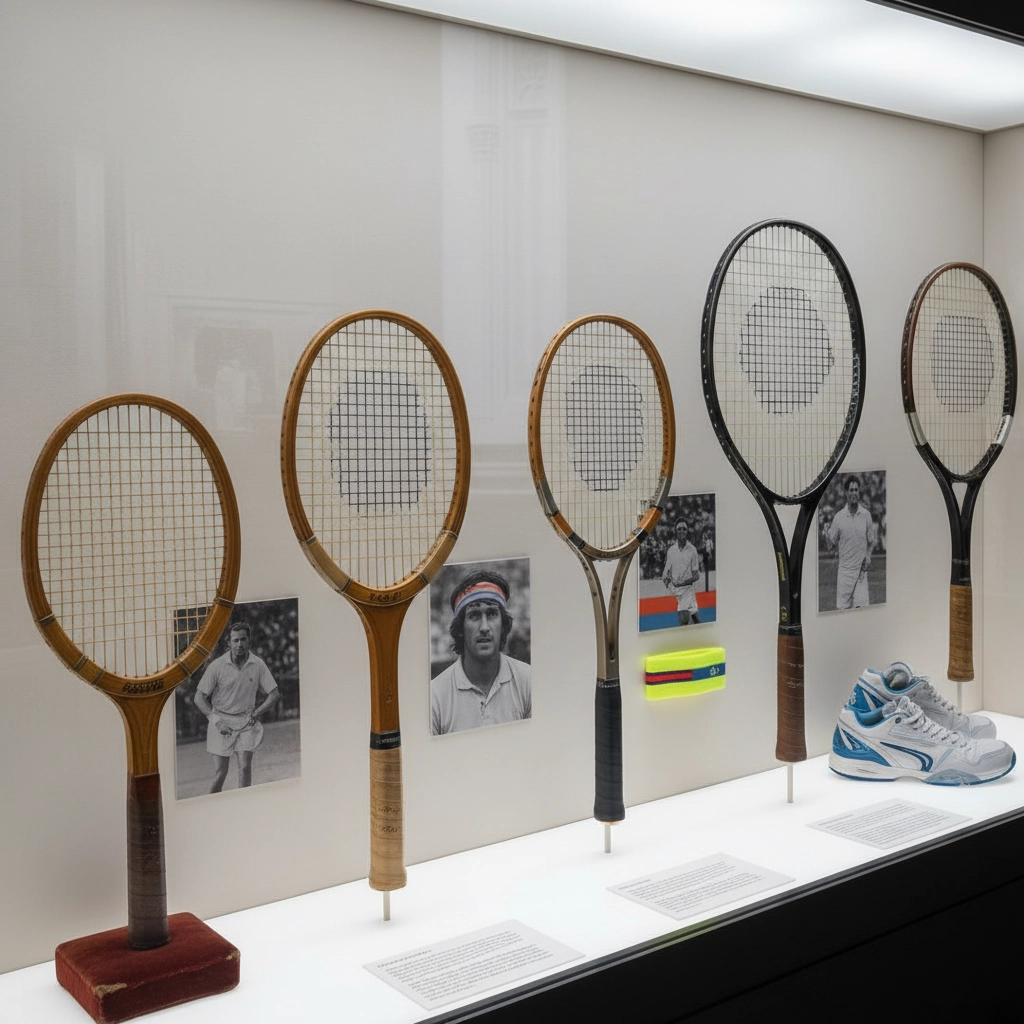
When tennis opened its doors in 1968, the sport underwent a structural and cultural overhaul. Suddenly the best amateurs and the best professionals met at the same majors, prize money became a central measure of success, and national or exhibition circuits gave way to a global tour. For you as a fan or student of the game, that matters because records from the Open Era are drawn from a unified competitive field — making direct statistical comparisons to Pre-Open players easier, though still not straightforward.
The immediate effect was a richer rivalry landscape and clearer season-long narratives. Players could pursue calendar Grand Slams, year-end championships, and consistent rankings without being confined by the amateur/professional split. Equipment and court maintenance began to improve faster too, amplifying the impact of training, strategy, and sports science. When you evaluate legends after 1968, weigh both the new breadth of competition and the accelerating pace of technological and tactical change.
Early Open Era titans and the new metrics of greatness
The first decades after 1968 produced pioneers who thrived under the unified system and helped define what modern greatness looks like. Rod Laver — already established before Open tennis — validated his place by succeeding on both sides of the divide. Ken Rosewall’s longevity and consistency across surfaces became a model for later careers. On the women’s side, Billie Jean King and Margaret Court (who straddled both eras) pushed for equality and professionalism, reshaping the sport off-court as well as on it.
By the 1970s and early 1980s, you see the first sustained rivalries that resemble today’s narratives: Chris Evert’s baseline precision against Martina Navratilova’s net game, and Jimmy Connors’ relentless competitiveness transitioning into Björn Borg’s baseline ice-cool dominance and John McEnroe’s serve-and-volley artistry. These players taught you to value head-to-head records, surface specialization (clay vs. grass vs. hard courts), and season-long consistency — metrics that complement raw major counts when judging legacies.

From specialization to all-court mastery: late 20th-century stars to modern greats
The sport’s next phase saw athletes extend careers with sport science while mastering a variety of playing conditions. Ivan Lendl and Mats Wilander introduced a more physical baseline game and professional rigor; Pete Sampras combined serve supremacy with clutch Grand Slam performances to dominate the 1990s. In women’s tennis, Steffi Graf’s Golden Slam and Martina Navratilova’s unprecedented grass-court success highlight how versatility and surface dominance both define legendary status.
Finally, the turn of the century produced the era you most likely recognize: Andre Agassi’s all-court reinvention, Roger Federer’s aesthetic efficiency and record-breaking streaks, Rafael Nadal’s clay supremacy and adaptive resilience, and Novak Djokovic’s baseline completeness and consistency. When you compare these modern giants, use multiple lenses — major totals, weeks at No. 1, breadth of surfaces, head-to-heads, and longevity — to account for the richer competitive and technological context they faced. That multi-dimensional view helps you place each legend where they belong: not just in rankings, but in the story of tennis evolution.
Continuing your journey through tennis history
Understanding tennis by era is an invitation to explore, not a final verdict. Seek out classic matches, follow living legends as they extend or redefine standards, and let multiple criteria — context, surface, rivalry, and longevity — guide your judgments. For deeper biographical details and archived footage, consider resources like the International Tennis Hall of Fame, which curates careers across generations and helps connect the eras you’ve read about with primary sources and exhibits.
Frequently Asked Questions
How should I compare Grand Slam counts from the Pre-Open era to the Open Era?
Grand Slam totals are useful but incomplete across eras. In the Pre-Open era, top professionals were often excluded from amateur majors, so supplement title counts with contemporaneous professional records, head-to-heads, exhibition results, and longevity to get a fuller picture.
Why is Rod Laver often described as a bridge between tennis eras?
Rod Laver won major titles both before and after the 1968 Open Era began, demonstrating excellence across the amateur/professional divide. His success on multiple surfaces and in distinct competitive contexts makes him a natural connector when you trace how playing conditions and competition evolved.
Which metrics matter most when judging a player’s legacy across different periods?
No single metric tells the whole story. Combine major titles with weeks at No. 1, head-to-head records, surface versatility, duration of peak performance, and the competitive environment (including whether the player faced the era’s best professionals). Contextual factors like technology and tour structure should also inform your comparisons.