How the Grand Slam Rivalries Began and Why They Matter
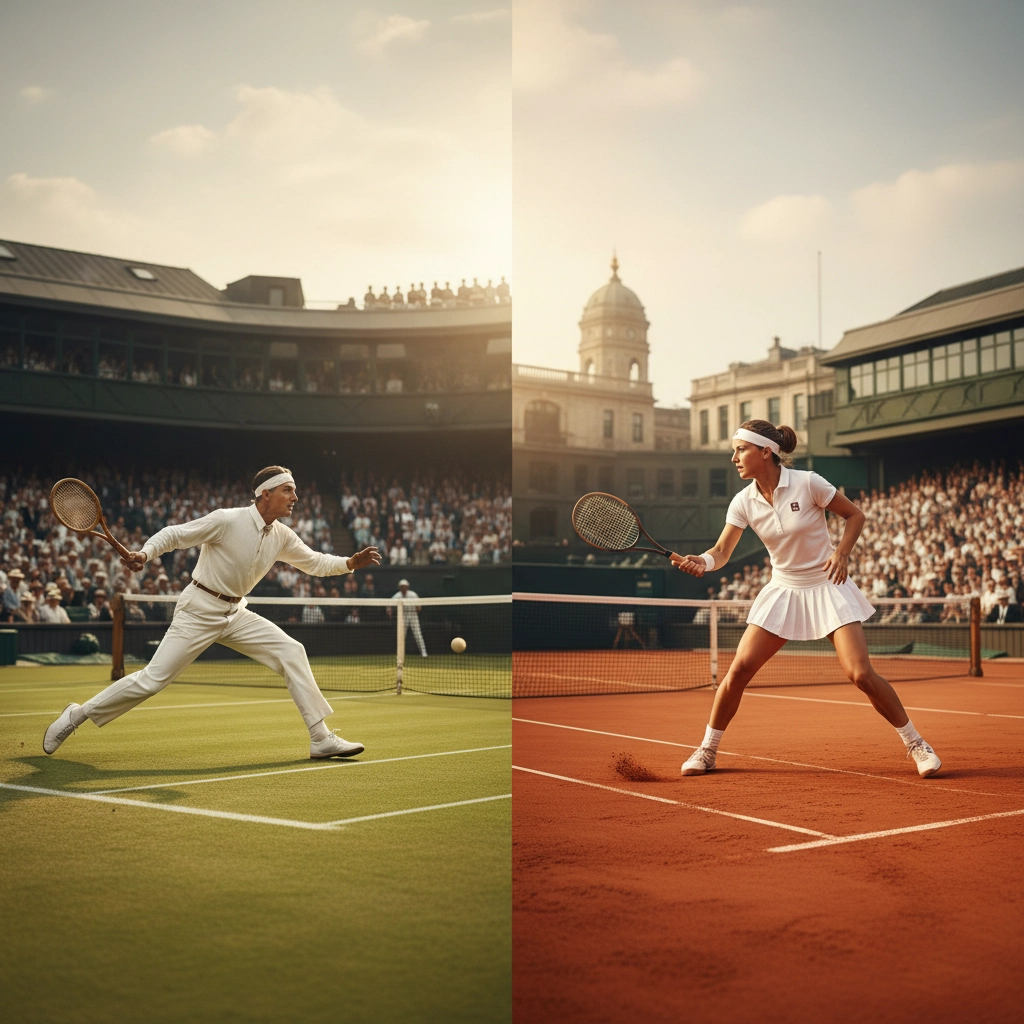
You often think of Wimbledon and Roland-Garros as two distinct worlds: pristine lawns and red clay, drama played out under very different skies. To understand the champions who defined these tournaments, you need to see how surface, culture, and early organizational choices created unique tests of skill. These tournaments did more than hand out trophies — they forged styles, rivalries, and national pride that still inform how you watch and evaluate tennis today.
This section will give you the early context: the origins of each championship, the first players who captured public imagination, and the technical and tactical differences that pushed champions to evolve. By tracing the first decades, you’ll recognize patterns that recur through the 20th century — serve-and-volley supremacy at Wimbledon, baseline endurance on clay, and the emergence of all-court players who bridged those divides.
Wimbledon’s Founders and the Rise of Grass-Court Icons
From Victorian lawns to a global stage
Wimbledon began in 1877 and quickly became the benchmark of tennis excellence. You can trace a line from the first singles champion to the polished, fast-paced game that defined much of the early 20th century. Because grass rewards quick points and low bounces, players who mastered serve-and-volley tactics rose to prominence here, and their names became synonymous with the tournament itself.
- Spencer Gore (1877) — as Wimbledon’s inaugural singles champion, Gore represents the institutional birth of tennis prestige.
- Laurence Doherty and Reggie Doherty (late 1890s–1900s) — brothers who dominated singles and doubles, illustrating early tennis dynasties.
- Fred Perry (1930s) — one of the first global British icons whose athletic style prefigured modern power tennis.
How early techniques shaped modern grass play
When you study these early champions, you see patterns: emphasis on quick footwork, precise volleys, and tactical serving. Those technical priorities shaped coaching and equipment choices for decades. Even as rackets and athleticism evolved, Wimbledon maintained a reputation for rewarding aggression and touch — traits you still look for in contemporary champions.
Roland-Garros: Clay’s Baptism of Endurance and Craft
Why clay created different champions
Roland-Garros, established in 1891 as the French Championships and later becoming the international clay Grand Slam, demanded patience, stamina, and point construction. You will notice that clay specialists often came from nations where slow courts were common, and their success inspired a style built on heavy topspin, tactical defense, and relentless baseline play.
- Max Decugis (early 1900s) — among France’s first stars, his repeated titles helped raise the tournament’s domestic prestige.
- René Lacoste (1920s) — a pioneer of tactical baseline play whose influence extended beyond the court into tennis culture and apparel.
- Henri Cochet and Jean Borotra — members of the famed “Four Musketeers” who brought French tennis to the world stage and demonstrated versatility across surfaces.
As you finish this part, you should have a clear sense of how Wimbledon and Roland-Garros cultivated different types of champions through surface and tradition — and why early winners still matter when you judge greatness. Next, you’ll examine the defining rivalries and transformative players who bridged surfaces and reshaped tennis in the mid-20th century.
Mid-Century Titans and the Professional Schism
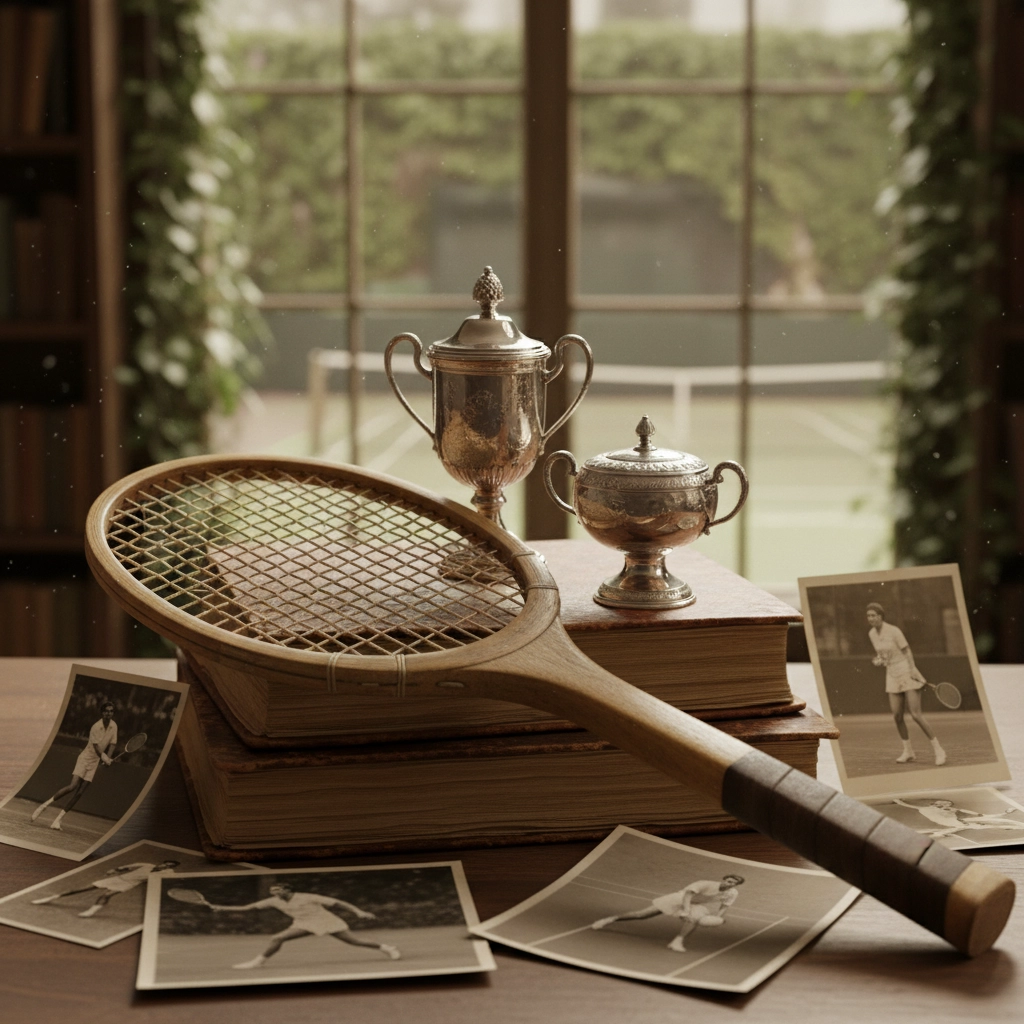
By the 1940s and ’50s you see tennis becoming not just a pastime but a profession — and that split between amateur prestige and the rising pro tours rewired who you counted as a champion. Players like Don Budge and Bobby Riggs dominated headlines in the decades after World War II, but it was the advent of full-time professionals — Jack Kramer’s tour, Pancho Gonzales’s stubborn excellence, and later Lew Hoad’s power — that pushed the game toward greater athleticism and spectacle. Those pros often weren’t welcome at the traditional championships, so Wimbledon and Roland-Garros retained an aura of amateur prestige even as the best players sometimes competed elsewhere.
When Rod Laver forced his way back into the spectrum with calendar Grand Slams before and after the Open Era, he collapsed that artificial barrier. Laver’s 1969 sweep — after years as a top professional — proved that the sport’s greatest test was no longer a matter of membership or purse, but of adaptation across surfaces. You’ll notice in these mid-century careers a gradual homogenization of skill: big serves, improved footwork, and more deliberate point construction that started to translate between grass and clay.
Rivalries That Bridged Grass and Clay: Borg, Connors, and the New Baseline Wars
The 1970s and early ’80s introduce the archetype of the cross-surface rival — players who could win at both Wimbledon’s sprint and Roland-Garros’s marathon. Björn Borg is the obvious fulcrum: his heavy topspin and iron endurance made him a clay colossus, yet his uncanny footwork and mental ice made him unbeatable on grass for a spell. Facing him were stylistic opposites — Jimmy Connors’s flat, aggressive game and John McEnroe’s touch and serve-and-volley artistry — who forced every champion to add tools to their toolbox.
At Roland-Garros you saw consistency and calculated endurance rewarded; at Wimbledon, touch and anticipation remained premium. But Borg, Connors, Ilie Năstase, Guillermo Vilas, and later players like Chris Evert and Martina Navratilova demonstrated that the best modern champions were not surface specialists by default. Their rivalries pushed tactical innovation — heavier topspin, improved defensive positioning, and psychological gamesmanship — and set the stage for the Open Era’s consolidation of greatness across venues.
Technology, Training, and the Birth of the All-Court Player
By the late 20th century, equipment and training catch up with ambition. Wooden frames give way to composite rackets; string technology amplifies spin; year-round conditioning rewrites endurance expectations. These changes favor players who can translate power into precision and switch rhythms between grass and clay. You can trace a direct line from the mid-century pros to later champions who combined serve speed, baseline consistency, and net proficiency — Pete Sampras’s pinpoint serving at Wimbledon, Andre Agassi’s baseline domination, and Steffi Graf’s athleticism across all surfaces.
The result is a new benchmark: the all-court player. Wimbledon and Roland-Garros remain unique tests — speed and slice versus grind and spin — but the champions who define modern tennis are those who can reconcile both. Understanding that evolution helps you appreciate why certain rivalries and breakthroughs feel catalytic — they didn’t just win matches, they rewrote what a champion could be. Next, you’ll look at the late 20th-century icons who finalized that transition and the modern titans who inherited their lessons.
The Modern Turning Point: Champions of the 21st Century
As tennis entered the 21st century, the sport’s elite combined the physicality of modern training with the tactical versatility first demanded by earlier champions. Innovations like composite rackets, improved strings, and electronic review systems reshaped shotmaking and match strategy, while slower grass and more homogeneous court preparation narrowed — but did not erase — the performance gap between surfaces. Champions such as Roger Federer, Rafael Nadal, and Novak Djokovic showed how enduring mastery often depends on both specialization and adaptability: one might dominate a single surface for a decade while still evolving tools to threaten rivals elsewhere.
These recent eras renewed public fascination with cross-surface narratives: Grand Slam streaks, head-to-head rivalries, and the longevity of top players. At the same time, grassroots traditions—striped shirts at Wimbledon, the clay-dusted rituals at Roland-Garros—kept the tournaments anchored in their unique identities. That tension between innovation and tradition is what keeps each championship compelling season after season.
Enduring Threads and What to Watch Next
Wimbledon and Roland-Garros have become more than venues for trophies; they are living archives where technique, culture, and technology meet. Expect the technical details to keep changing—strings, footwork, data-driven training—but also expect the same human dramas: rivalries that test temperament, players who reinvent themselves, and moments when a surface amplifies a career-defining performance. If you want to follow the current pulse of those traditions, official tournament sites remain the best source for schedules, draws, and historic records — for example, Wimbledon.
Frequently Asked Questions
How do different court surfaces influence the style of play at Wimbledon and Roland-Garros?
Surface dictates bounce, speed, and the types of points that succeed: grass at Wimbledon rewards low, fast bounces and quick net play, favoring serve-and-volleyers and players with slice and touch. Clay at Roland-Garros slows the ball, produces higher bounce, and rewards topspin, patience, and point construction. Champions adapt technique and tactics to these conditions, which is why surface specialists and all-court players emerge from different backgrounds.
Which champions have successfully won both Wimbledon and Roland-Garros?
Winning both requires versatility. Historical and modern examples include all-court greats like Rod Laver and Björn Borg, and contemporary figures such as Roger Federer, Rafael Nadal, and Novak Djokovic, each of whom has captured major titles on both grass and clay. These players combined power, variety, and tactical intelligence to translate success between very different tests.
What was the significance of the Open Era for these championships?
The Open Era removed the amateur-professional divide, allowing the best players to compete at Wimbledon and Roland-Garros regardless of professional status. That change intensified competition, validated cross-surface comparisons (Rod Laver’s post-professional Grand Slam is a key example), and helped accelerate technical and athletic developments that produced the modern, globally recognized champions you read about in this article.