When Greatness Collides: Why Certain Matches Become Essential Viewing
You watch tennis for more than rallies and scorelines; you watch for moments that crystallize skill, temperament, and history. Classic matches do more than decide a title — they reveal the sport’s evolving techniques and the personalities that define eras. By understanding what turns a good match into a must-watch encounter, you’ll appreciate not only the outcome but the context that made it legendary.
Core ingredients that make a match timeless
Not every high-stakes contest becomes a classic. When you look for matches that repay repeated watching, pay attention to a few recurring features:
- Contrast of styles: Matches where contrasting tactics clash — serve-and-volley vs. baseline power, relentless defense vs. aggressive offense — create tension and teach you about strategic adjustments.
- High-quality play under pressure: Long rallies, precise serving, and repeated clutch shots show players at the peak of execution; these are the sequences you’ll rewatch to study technique.
- Emotional stakes and narrative: Rivalries, long title droughts, or comebacks lend emotional weight. When you know the backstory, each point carries narrative meaning.
- Turning points: Shifts in momentum — a single break, a controversial call, or a dramatic tiebreak — turn matches into stories with chapters you can follow.
- Historical significance: Matches that change how the game is played or that cap off an era (a last title, a passing of the torch) amplify importance for future viewers.
How Rivalries and Moments Shape Which Matches You Should See First
Rivalries are the easiest shortcut to classic matches because they already contain a built-in storyline: familiarity breeds adaptation, and repeated clashes produce escalating drama. When you begin exploring classic tennis, prioritize matchups where both players pushed each other to evolve.
Start with rivalries that crossed surfaces and decades. For instance, Borg vs. McEnroe showcases the psychological duel between ice-cool baseline precision and fiery serve-and-volley aggression; watching their Wimbledon clashes helps you understand tension in clay-to-grass transitions. Sampras vs. Agassi teaches a lesson in stylistic contrast — powerful serving and net play against relentless baseline rhythm — that influenced 1990s tennis tactics. More recent rivalries, such as Federer vs. Nadal and Djokovic vs. Nadal, illustrate how endurance, spin, and variety redefined excellence across surfaces.
Which early matches to watch and why they matter
- Borg–McEnroe, 1980 Wimbledon: a masterclass in mental fortitude and contrasting personalities.
- Sampras–Agassi finals from the 1990s: clear examples of how serve-dominated play met baseline aggression at the tour’s pinnacle.
- Federer–Nadal, 2008 Wimbledon: often cited for its drama and shot-making under pressure, it exemplifies clay-to-grass rivalry climaxing on tennis’s biggest stage.
As you watch these matches, focus on how each player adapts within points and between sets — those adjustments reveal the deeper tactical battles beyond scores. In the next section, you’ll get detailed scene-by-scene breakdowns of several landmark matches, including the pivotal points and tactical shifts that made them unforgettable.
Scene-by-scene: Federer–Nadal, 2008 Wimbledon
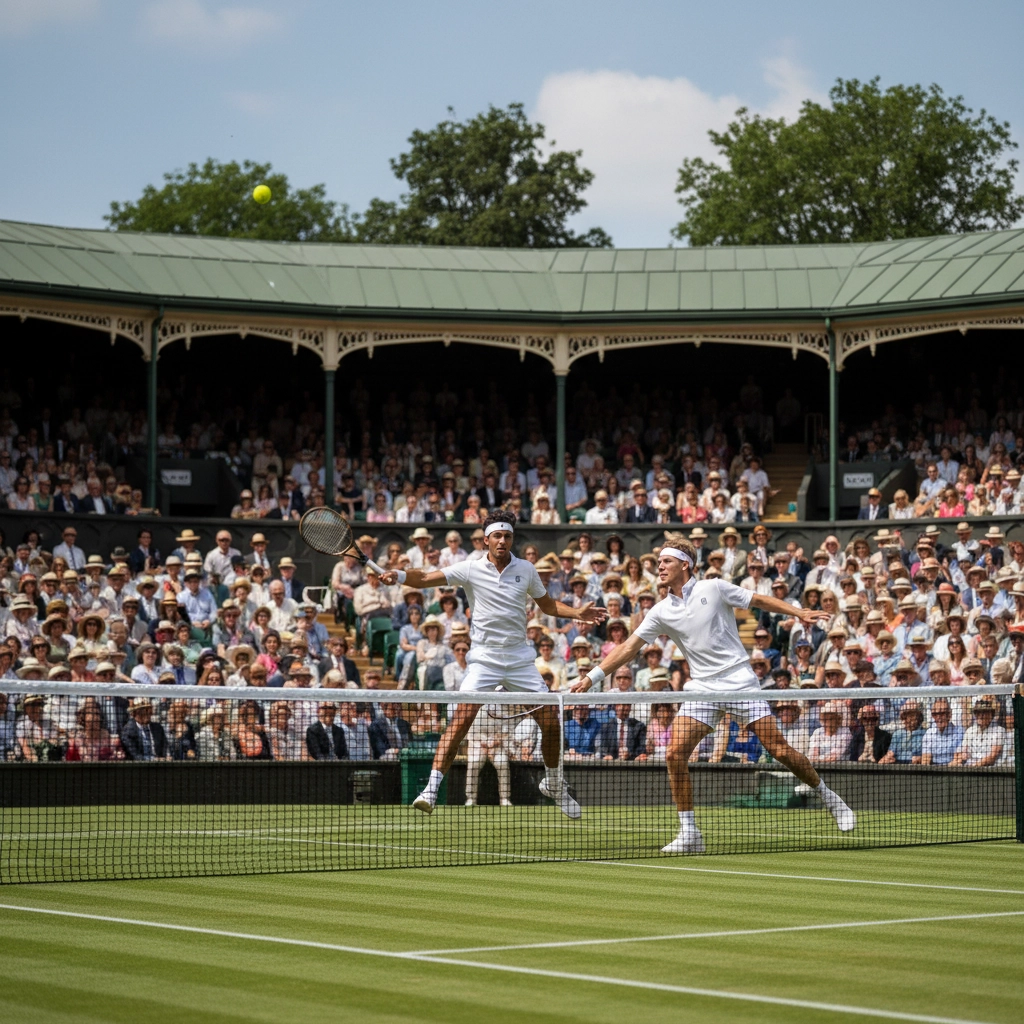
Start by watching the opening sets as a lesson in contrast: Nadal’s heavy, high-bouncing forehand relentlessly pushes Federer back, while Federer’s serve variety and slices try to flatten rallies and bring Nadal forward. Note how Nadal’s lefty angle to Federer’s backhand on the ad court immediately creates awkward positioning — that’s where many of the first two breaks come from. As the match reaches the third and fourth sets, study Federer’s tactical shift: he shortens points with more serve-and-volley and shorter swings, mixing drop shots and sudden net approaches to unsettle Nadal’s rhythm. The two consecutive tiebreaks are microcosms of the duel — Federer’s timing and clean winners against Nadal’s court coverage and clutch defense. The final set is about endurance and tiny margins: watch how Nadal extends rallies, draws Federer into longer exchanges, and finds passing angles at critical moments. The decisive break late in the fifth arrives after sustained pressure, a handful of aggressive returns and a couple of Federer errors under fading light. For players and fans alike, this match is a masterclass in adapting tempo, mixing attack with patience, and the physical/mental demands of peak-level grass-court tennis.
Classic tension and tactics: Borg–McEnroe, 1980 Wimbledon
This is a primer in psychological warfare and stylistic opposition. Start by observing Borg’s baseline constancy — flat, deep groundstrokes, uncanny anticipation, and a near-mechanical calm — versus McEnroe’s improvisational net play, slice returns, and volatile emotion. The legendary fourth-set tiebreak (an 18–16 marathon) is where both approaches are tested: McEnroe’s touch and daring volleying face Borg’s retrieval and consistency, point after point. Watch the micro-decision moments — who steps in, who lets the ball bounce, when a player chooses angle over depth — because those choices determine momentum swings. Pay attention to body language: Borg’s stoicism absorbs pressure; McEnroe’s bursts of protest and energy can flip momentum but also cost focus. Technique-wise, study McEnroe’s left-handed serve placement and footwork to the net, and Borg’s slice-to-topspin transitions when under attack. This match teaches how psychological control and tactical clarity can decide even the most fluctuating contests.
Endurance and adaptation: Djokovic–Nadal, 2012 Australian Open
Treat this final as a lesson in physical extremes and incremental adjustments. Over nearly six hours, both players trade tactical evolutions: Nadal initially applies heavy forehand pressure and short-angle attacks; Djokovic responds by widening the court with cross-court backhands and then, as the match wears on, converts defense into sudden offense. Watch how Djokovic’s return position inches forward in key phases to neutralize Nadal’s serve, and how Nadal counters by varying spin and attacking second serves. The fourth-set tiebreak and the last games of the fifth are textbook examples of mental recalibration under fatigue — shot selection becomes conservative, points are won by a single penetrating shot or an unforced error. Technically, focus on foot speed, recovery between points, and how both players shorten swings while maintaining depth. For coaches and serious viewers, this match is invaluable for studying pacing, nutrition/fitness’s effect on tactics, and the tiny, repeatable choices that decide marathon encounters.
Next Steps for the Curious Fan
Great matches repay repeat viewing when you approach them with purpose. Pick one aspect to study each time you rewatch — tempo control, serve patterns, or how a player solves a particular tactical problem — and let that focus shape what you notice. Keep a short list of specific moments (a tiebreak, a late break, a decisive rally) to revisit rather than trying to absorb everything at once. If you want original sources and full-match archives, many tournaments maintain searchable libraries; for example, check the Wimbledon Archives for historical finals and highlights.
- Watch with intention: pick one tactical question per viewing.
- Use slow motion and replays for technical details like footwork and contact point.
- Compare the same match at different times to see how your understanding evolves.
Frequently Asked Questions
Which classic match should a beginner watch first?
Start with a single, well-known match that combines clear contrast and narrative — a match that’s frequently cited for tactical or psychological lessons. Choose one you can find in full; watching start to finish helps you see momentum shifts and adjustments, which are the best lessons for beginners.
How can I analyze a match to learn tactics rather than just enjoy the highlights?
Break the match into phases: opening strategy, mid-match adjustments, and closing tactics. Focus on serve placement, return positioning, shot selection under pressure, and point construction. Note turning points (breaks, tiebreaks) and replay them to identify the smallest decision changes that led to a swing in momentum.
Where can I legally watch full classic matches and reliable match archives?
Look for official tournament archives and the governing bodies’ platforms (Grand Slam websites, ATP Tour, WTA, ITF), plus licensed streaming services and reputable sports broadcasters. Many tournaments offer curated historical footage and complete finals through their official channels.