Why thoughtful care matters for your diamond tennis bracelet and necklace
Your diamond tennis bracelet and necklace are designed to be worn often, but regular wear exposes delicate settings, clasps, and stones to oils, dirt, and impact. If you want diamonds that keep their brilliance and metal that retains its finish, you need a simple, consistent care routine. This section explains practical habits and safe at‑home cleaning so you can protect your investment without unnecessary fuss.
Daily habits to prevent damage and buildup
Small, repeatable habits make the biggest difference. Incorporate these practices into your routine so your pieces stay secure and look their best every day.
- Put jewelry on last: Make your bracelet and necklace the final step when dressing so hairspray, perfume, lotions, and makeup don’t settle into settings.
- Remove before active tasks: Take off jewelry before exercising, swimming, gardening, or heavy lifting to avoid knocks, abrasion, and contact with chemicals.
- Avoid exposure to harsh chemicals: Chlorine, household cleaners, and some beauty products can dull metal and loosen settings—remove jewelry before using them.
- Check clasps and links quickly: Give your clasp and visible prongs a rapid visual and tactile check each week. If something feels loose or misaligned, stop wearing the piece until it’s inspected professionally.
- Limit moisture and perspiration: If you sweat heavily, wipe the piece with a soft cloth and let it dry fully before storing it to avoid tarnish and mineral buildup.
Safe at-home cleaning: materials, steps, and what to avoid
Cleaning at home is effective when done gently and correctly. Use mild supplies and avoid anything abrasive that could scratch metal or loosen prongs.
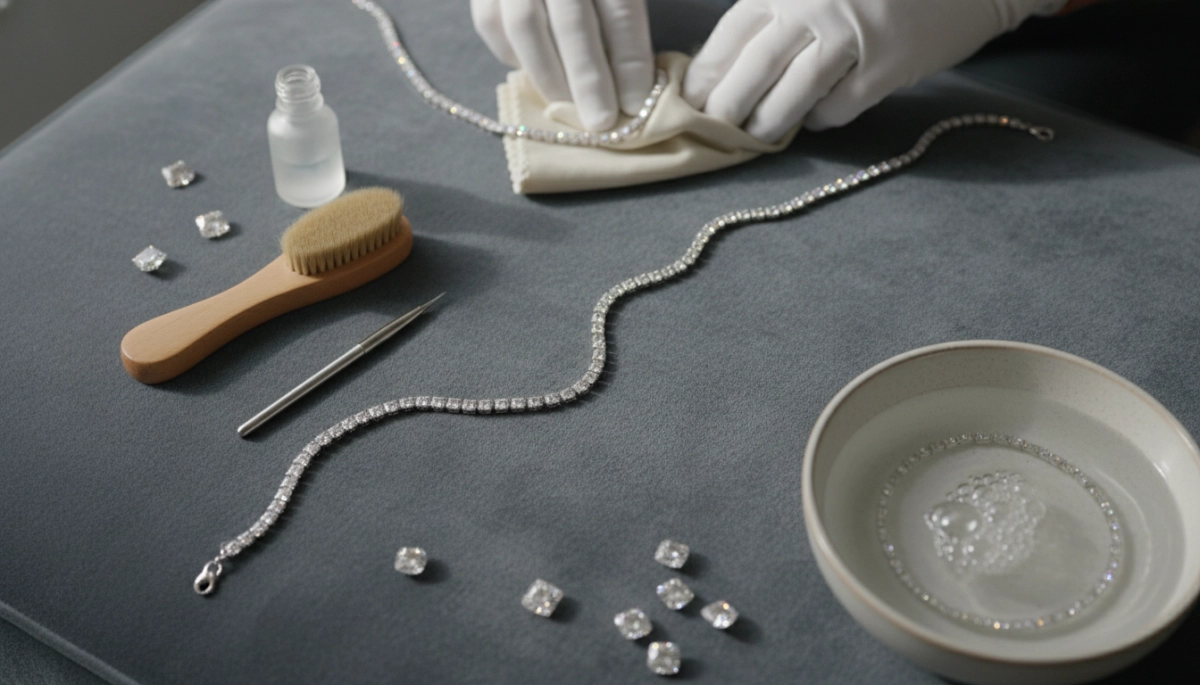
- What you need: A small bowl, warm (not hot) water, a drop of mild dish soap, a soft-bristled toothbrush or jeweler’s brush, and a lint-free cloth.
- Cleaning steps:
- Mix a few drops of dish soap into warm water.
- Soak the bracelet or necklace for 10–15 minutes to loosen oils and grime.
- Gently brush around each stone and along the chain or settings, paying special attention to the underside where debris collects.
- Rinse thoroughly in warm water and pat dry with a lint-free cloth; allow pieces to air-dry completely before wearing or storing.
- What to avoid: Do not use bleach, acetone, toothpaste, or household silver polish. Avoid ultrasonic cleaners if you suspect loose stones or worn prongs—these devices can dislodge settings.
- Frequency: Light cleaning every 1–2 weeks for regular wear, deeper cleaning monthly, and quick wipe-downs after heavy use.
Those basic habits and cleaning steps will keep your tennis pieces bright and reduce the risk of damage, while preparing you to identify issues that need professional care. In the next section, you’ll learn how to inspect settings like a jeweler, when to schedule professional cleaning and repairs, and best practices for long‑term storage and travel.
Inspecting settings and stones like a jeweler
Regular visual and tactile checks help you catch wear before it turns into lost stones or a costly repair. You don’t need professional tools to do an effective inspection—just good light, a steady hand, and a magnifier if you have one (a 10x loupe is ideal, but a phone camera zoom will also help).
- Use bright, direct light: Hold the piece under a lamp and look at each setting from all angles. Look for gaps between the stone and the metal seat, worn or flattened prongs, and any dull or chipped facets on the diamonds.
- Magnify for detail: Examine prongs and bezels with a loupe or phone camera. Prongs that are pointed, uneven, or thinner at the tips indicate wear; look for tiny cracks at the base of prongs where they meet the gallery.
- Check for movement: Gently tap the stone with a soft tool (or use your fingertip) while listening closely. Any rattling or perceptible wobble is a sign the stone is loose and needs immediate attention.
- Inspect chains and links: Run each section of chain between thumb and forefinger to feel for thinning or stretching, and inspect soldered joints for signs of stress or breaks.
- Test the clasp and safety features: Open and close the clasp several times. It should move smoothly and snap securely. For box clasps and safety latches, ensure the catches engage fully and aren’t bent.
When to schedule professional cleaning, maintenance, and repairs
Knowing when to bring your tennis bracelet or necklace to a jeweler can save you money and heartbreak. Professional care is more than polishing—it’s preventive maintenance that preserves both beauty and security.
- Routine professional check: Have a trusted jeweler inspect settings and clasps at least once a year. If you wear a piece daily, consider inspections every 6 months.
- Immediate attention for loose or damaged components: If you detect a loose stone, bent prong, missing pavé accent, or a clasp that doesn’t secure properly, stop wearing the piece and seek professional repair right away.
- Deep cleaning and polishing: Professional steam or ultrasonic cleaning (performed by the jeweler) removes embedded dirt safely. Ask about rhodium replating for white gold when the metal starts to yellow or lose luster.
- Documentation and appraisal: Update appraisals every 3–5 years or after major repairs. Keep repair receipts and before/after photos for insurance claims.
- Choose the right jeweler: Look for certified gemologists, clear repair estimates, and warranties on work. Avoid quick, cheap fixes that might compromise settings.
Best practices for storage and travel
Proper storage protects delicate settings and prevents tangling, scratching, or accidental loss—especially important for travel.
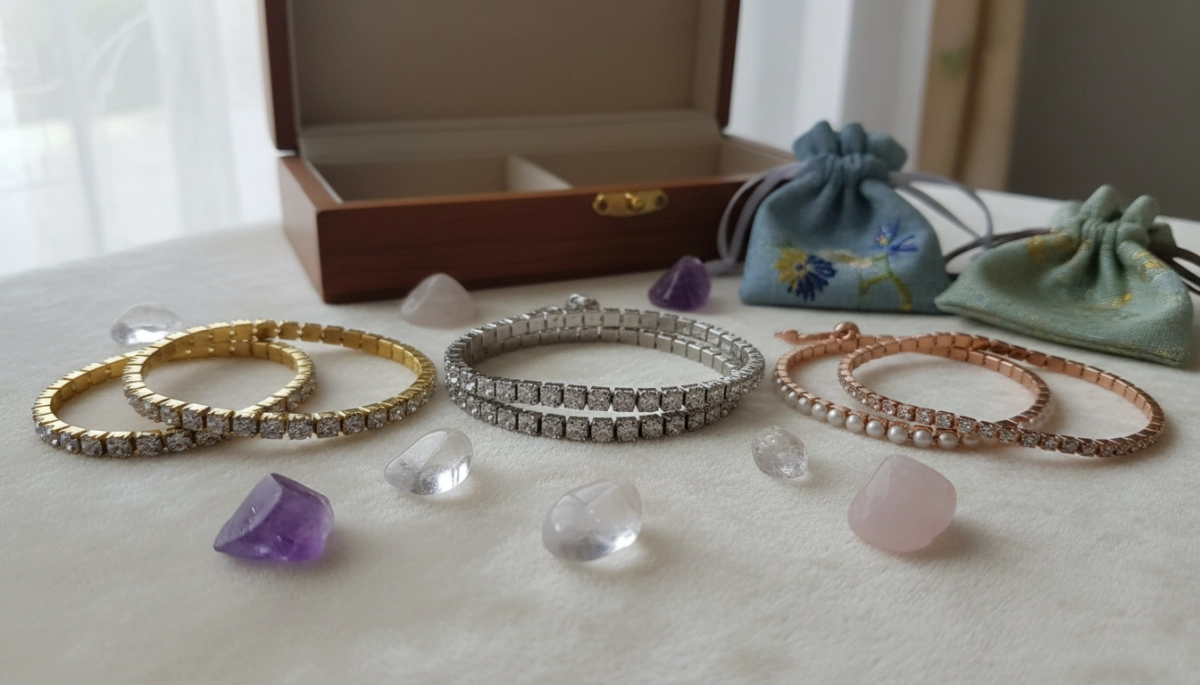
- Store pieces separately: Use soft pouches or individual compartments in a jewelry box so diamonds don’t rub against other metals or stones.
- Keep bracelets fastened: Close clasps before storing to preserve shape and prevent tangles; lay tennis bracelets flat to avoid stress on links.
- Secure necklaces to prevent knots: Thread a necklace through a card or use collar clips to keep chains straight; travel rolls with separate zipped pockets work well.
- Control humidity and exposure: Avoid damp basements and bathrooms; use silica gel packets in storage containers to reduce moisture and deter tarnish.
- Carry-on during travel: Always keep high‑value pieces with you in a carry-on—never checked luggage. Use a small, padded case and carry documentation or photos for customs or insurance if needed.
Caring with confidence
Wearing your diamond tennis bracelet and necklace should feel effortless—little care choices and timely attention protect both beauty and value so you can enjoy them worry‑free. When unsure about a repair or cleaning method, rely on a trusted jeweler for advice and service. For more detailed guidance from a recognized authority, see GIA’s jewelry care resources.
Key Takeaways
- Inspect regularly and address any loose stones or damaged clasps immediately.
- Use gentle at‑home cleaning and reserve ultrasonic/harsh treatments for professionals.
- Store pieces separately, fasten bracelets, and carry valuables in your carry‑on when traveling.