Why a Gemstone Tennis Set Can Be a Better Fit for Your Style
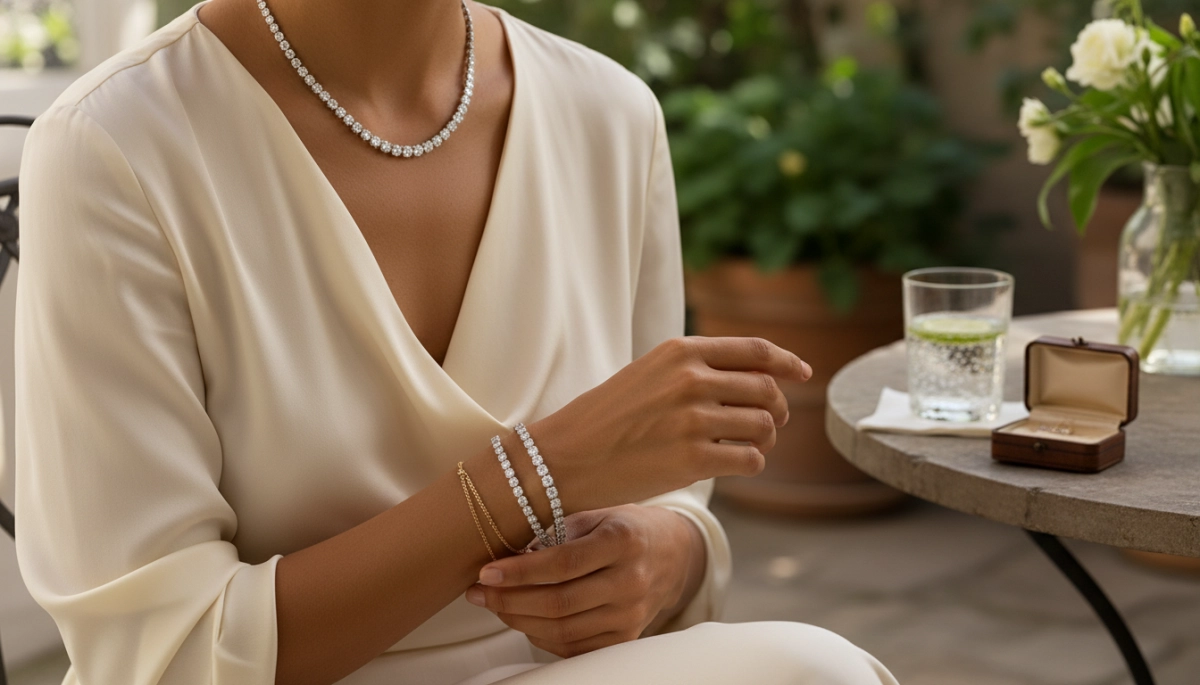
You may love the classic sparkle of diamonds, but gemstone tennis sets give you an immediate way to express personality through color. Whether you want a bold statement piece or a subtle wash of hue, a row of matched gemstones around the wrist or neck changes how your jewelry reads with outfits, skin tone, and occasion. In this section you’ll get a clear sense of the practical and aesthetic reasons to consider gemstones instead of—or alongside—diamonds.
From a practical perspective, gemstones often cost less per carat than comparable diamonds, letting you choose larger or more colorful stones for the same budget. From an aesthetic perspective, gemstones let you coordinate with seasonal wardrobes, birthstones, or brand color palettes. You’ll also find that some gemstones offer unique optical effects—chatoyancy, asterism, or color change—that diamonds do not provide.
How Popular Gemstones Change the Look of a Tennis Set
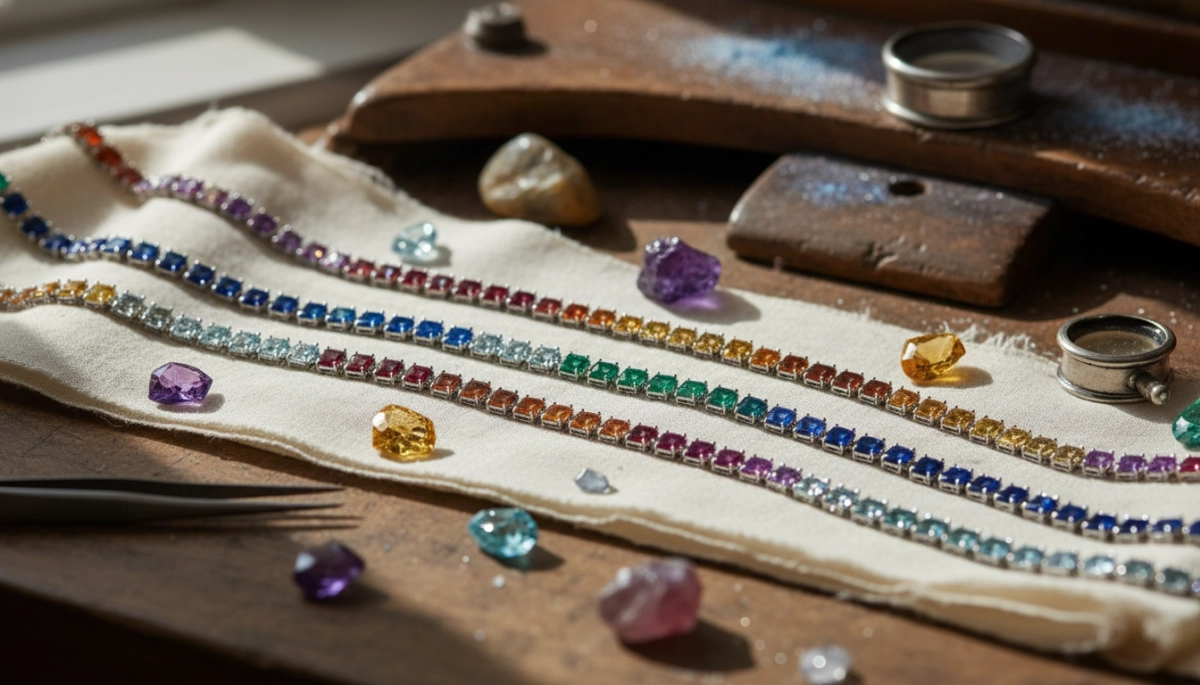
When you choose a gemstone tennis set, the stone type determines not only color but also brilliance, durability, and care needs. Here are several commonly used gemstones and what they contribute to a tennis set:
- Emerald: Rich green and unmistakable elegance. Emeralds provide deep color but can be softer and may require protective settings or more frequent maintenance.
- Sapphire: Available in blue and many other colors (padparadscha and fancy sapphires). Sapphires are durable and brilliant, making them a popular diamond alternative for everyday wear.
- Ruby: Intense red that reads as luxurious and romantic. Rubies are among the tougher colored stones and hold up well in a tennis setting.
- Tourmaline: Wide color range including pinks, greens, and bi-color varieties. Tourmaline gives you creative color options but varies in hardness by type.
- Amethyst and Citrine: Affordable quartz options that offer purple and golden hues. These offer bold color at a lower price but require more careful wear and storage.
- Tsavorite and Paraiba Garnet/Tourmaline: Vivid, often neon-like greens and blues. These are eye-catching choices but can command higher prices due to rarity.
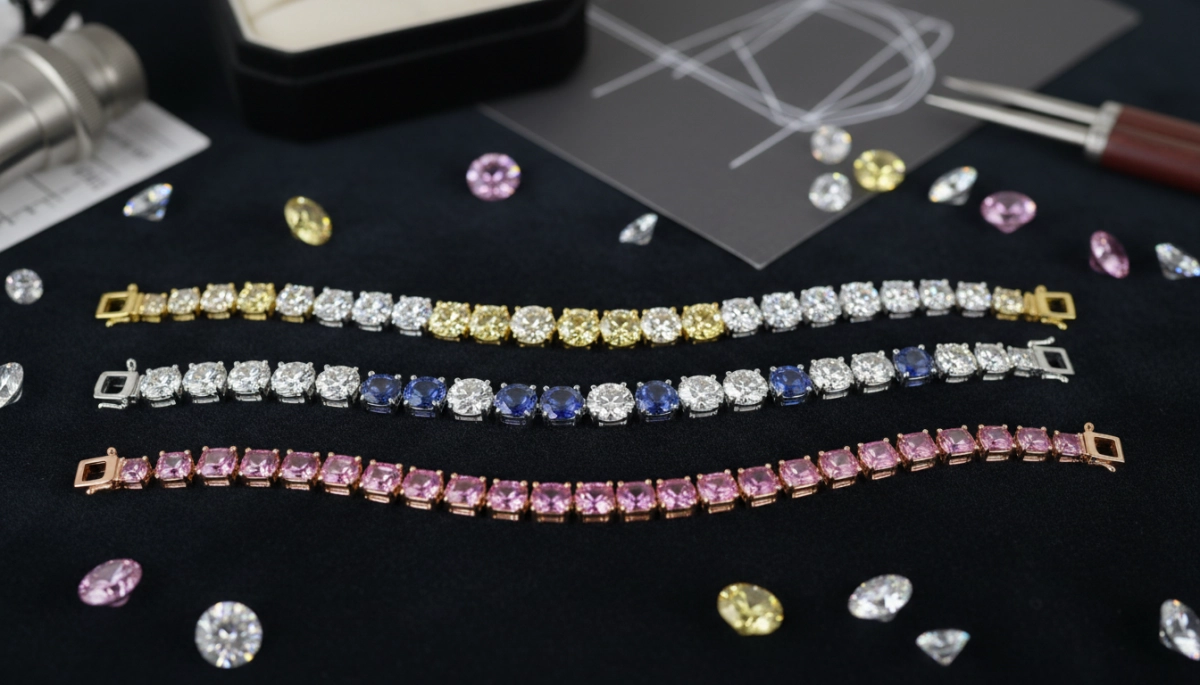
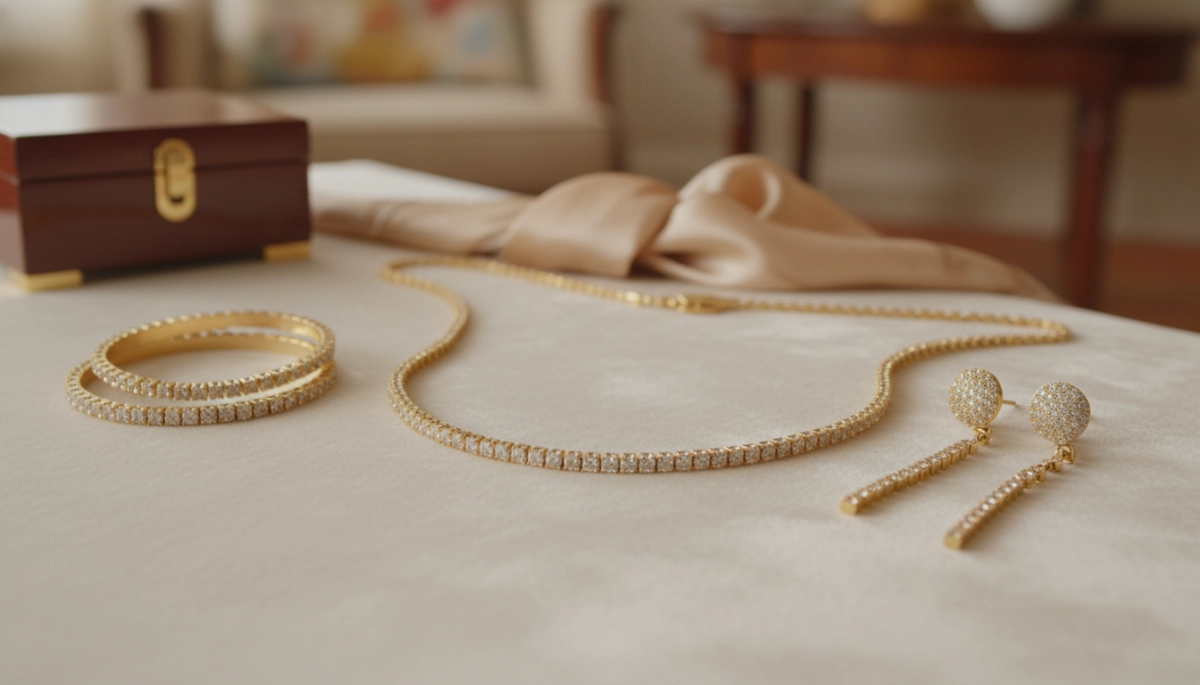
In addition to stone choice, you’ll need to think about cut uniformity, color saturation, and how stones are matched for a continuous look. For example, small differences in hue between adjacent gems become very noticeable in a tightly set tennis bracelet, so reputable setters grade and sort stones carefully. You should also consider the setting metal—white gold or platinum will emphasize cool stones, while yellow gold warms up reds, oranges, and browns.
Understanding these basics prepares you to compare specific stones on your shortlist. In the next section, you’ll learn how to evaluate gemstone quality, durability, and setting styles to choose the best tennis set for daily wear and long-term value.
Evaluating Gemstone Quality and Durability
When assessing a gemstone tennis set, treat each stone as both a color source and a tiny mechanical part of wearable jewelry. Start with the three familiar quality factors—color, clarity, and cut—but translate them for a continuous-row application. Color should be consistent across all stones: look for uniform hue, tone, and saturation so the bracelet or necklace reads as one uninterrupted band. Clarity matters differently by gem type; minute inclusions are expected in emeralds and sometimes even rubies, but these can affect toughness more than sparkle. Cut is crucial for even light return—poorly cut gems will create dark patches along the length of the piece.
Durability is a separate checklist. Know the Mohs hardness and also the stone’s toughness and cleavage. Sapphires and rubies (9) are excellent for everyday tennis sets; emeralds (7.5–8) have softer toughness due to inclusions and often require protective settings; quartz varieties like amethyst and citrine (7) are affordable but will scratch more easily. Also ask about commonly applied treatments—heat, oiling, fracture filling, and irradiation are frequent and affect both appearance and care. For high-value or rare stones, request lab documentation of origin and treatments.
Setting Styles, Security, and Practical Wearability
The setting you choose will protect the stones and define the look. Shared prong and four-prong settings keep a lightweight, classic profile and maximize light; they’re common for diamond-style brilliance but expose stone girdles more. Bezel and semi-bezel settings wrap metal around the stone and offer superior protection for softer or included gems like emeralds. Channel settings create a sleek, modern edge but can limit how large each stone appears.
Security features matter: a high-quality tennis bracelet should have a secure box clasp plus one or two safety latches, soldered links, and well-tipped prongs. Consider metal choice for longevity—platinum resists wear best, while gold can be easier to resize or match with other pieces. Finally, think practically about size and profile: thicker settings and higher crowns on stones will catch clothing; low-profile bezels or flush channels are better for daily wear.
Shopping, Certification, and Long-Term Value
Before buying, inspect the set in different lighting and ask the seller how stones were matched and what grading was used. For gemstones over a certain size or value, request individual or parcel reports from reputable labs (GIA, AGS, or independent gem labs). Ask for a detailed treatment disclosure and a written appraisal for insurance. Compare per-carat pricing across similar color grades and origins—rare hues (paraíba-like blues or vivid tsavorite greens) can command steep premiums.
Consider warranty and maintenance services: reputable vendors offer periodic inspection, prong re-tipping, and cleaning. If you’re on a budget, look at semifine options (smaller stones but excellent color matching) or mixed-metal designs that balance cost and wearability. With informed inspection and proper care, a gemstone tennis set can deliver both daily practicality and vivid, individualized style for years to come.
Personalizing Your Gemstone Tennis Set
Choose a path that reflects how you live and what you want to communicate: a vivid, statement-making row of tsavorite or paraíba-like blue stones for impact; a mixed gemstone set that changes with your wardrobe; or a protected, low-profile design for daily wear. Before committing, see pieces in multiple light sources, request treatment and matching documentation, and ask about warranties and maintenance plans. If you want independent guidance on grading and treatments, consult resources from a recognized gem authority such as the GIA.
Finally, remember that a gemstone tennis set is both jewelry and a personal canvas—prioritize what matters most to you (color, durability, provenance), and let the piece evolve with your style over time.
Key Takeaways
- Gemstone tennis sets offer vivid color and personalization opportunities beyond traditional diamonds.
- Match stone type and setting to your lifestyle for the right balance of beauty and durability.
- Verify treatments, request documentation, and maintain periodic inspections to protect your investment.