
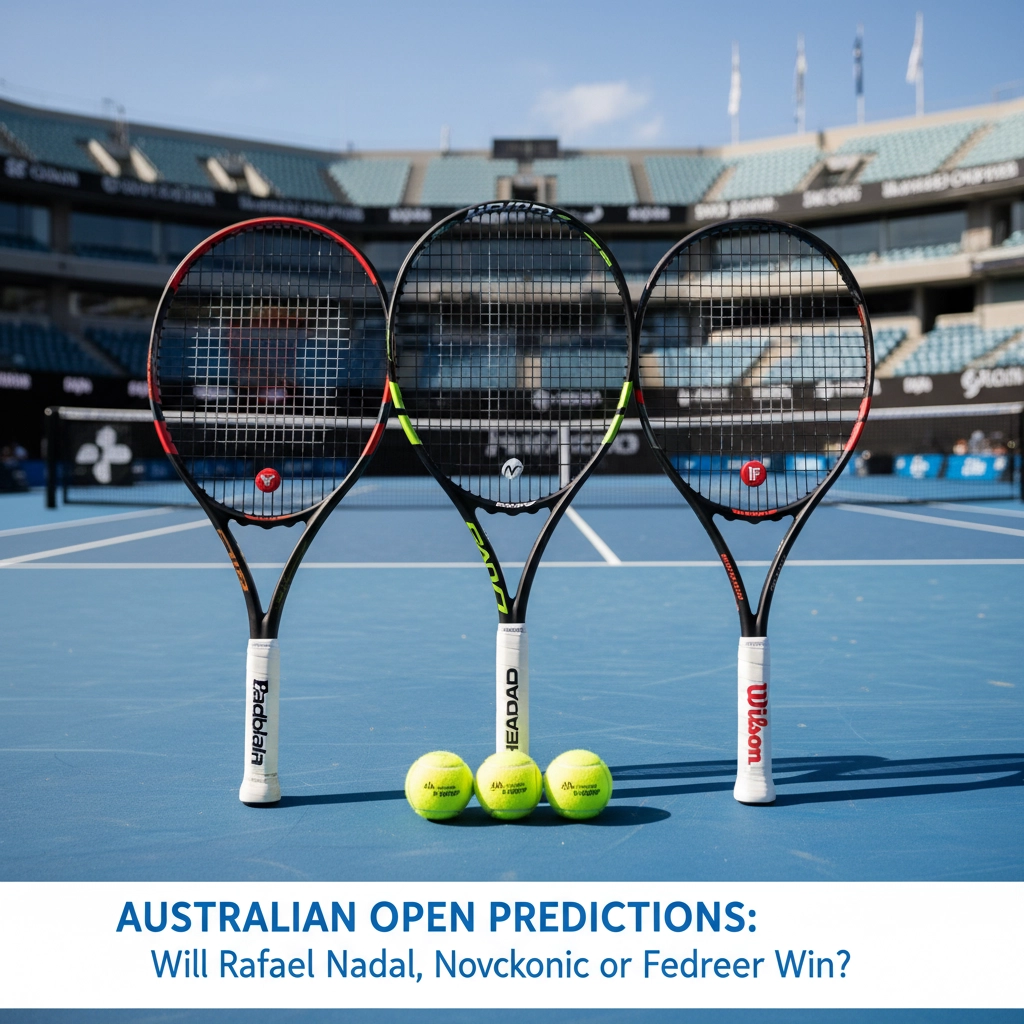
Why the Melbourne Slam still centers on Nadal, Djokovic and Federer — and what you should watch
You’re about to follow one of the most scrutinized questions in tennis: can Rafael Nadan, Novak Djokovic or Roger Federer win the Australian Open? Even as the tour evolves and younger contenders emerge, these three names remain focal points for fans, pundits and bettors because they combine historical dominance with varying current form. Understanding the dynamics that shape each legend’s chances helps you read the draw, assess upset risk and set realistic expectations for each round.
In Melbourne, match outcomes are shaped by a mix of surface speed, physical readiness after the off-season, tactical matchups and psychological momentum. You’ll want to track pre-tournament warm-up results, any lingering injuries, recent adjustments to serve or return patterns, and how each player handles pressure moments in five-set scenarios. Below, you’ll find an early primer on the most relevant factors and a concise snapshot of each contender’s status heading into the Open.
Key factors that will determine who has the edge in the early rounds
Surface and conditions
The hard courts at Melbourne Park favor players who can sustain high-intensity baseline rallies and recover quickly between points. You should consider that court speed can vary slightly year to year; a faster court aids players with potent serve-and-forehand combos, while a slower setup rewards defensive consistency.
Fitness, injury history and match sharpness
At this stage, physical readiness is decisive. You’ll evaluate recent tournament loads, any offseason surgeries or niggles, and how many extended matches a player endured in lead-up events. Endurance matters particularly in the second week when best-of-five tests muscle resilience and mental focus.
Mental form and recent head-to-head trends
Psychological momentum—confidence from recent wins or the burden of expectations—can swing close matches. Head-to-head records are a useful guide: they reveal tactical matchups that may persist regardless of ranking. For instance, one player’s return pattern might consistently trouble another’s second serve, or a specific court positioning could neutralize a big hitter.
- Tactical adaptability: You’ll watch whether a player can change pace, approach the net when needed, or vary spin to disrupt rhythm.
- Serve and return efficiency: Early hold-break patterns usually predict deeper tournament success.
- Draw difficulty: The balance between seeded protection and dangerous floaters will affect each favourite’s path.
Brief early-read profiles: how Nadal, Djokovic and Federer look on paper
You should treat these as starter observations rather than definitive conclusions. Nadal’s resilience and heavy topspin reward baseline dominance but you’ll check his movement and recovery after any recent injuries. Djokovic’s return game and court coverage make him a constant favourite; monitor his match sharpness and how he manages long rallies. Federer’s aggressive offense and slice variation can shorten points, but you should watch whether his serve holds up under sustained pressure and how often he’s pushed to five sets.
With those indicators mapped out, the next section will examine the draw lines, likely early-round matchups and statistical models that translate form into probability — guiding you toward a data-informed prediction.
Reading the draw: likely early-round matchups and traps
You’ll want to scan the draw with an eye for stylistic matchups more than just seed numbers. Early rounds frequently produce dangerous floaters: journeymen with heavy serves who can cash in on a slow-starting favourite, clay-courters whose spin and angles can create uncomfortable rallies on court two, and qualifiers with match rhythm after several competitive wins. For each of the Big Three, identify one or two specific danger types in their section.
– For Nadal, look for heavy top-spin baseliners or lefty counterpunchers who can prolong rallies and make him work for short balls. If an opponent can redirect pace and keep him moving, Nadal’s pattern of grinding points becomes less efficient.
– For Djokovic, watch for big servers who can shorten points and avoid his return pressure; also aggressive net players who take time away from his court coverage can create early stress.
– For Federer, small-ball magicians and players who can absorb pace may turn rallies into draining affairs; conversely, he’s susceptible if consistently pushed to defensive exchanges where his movement is tested.
Also flag any seeded players returning from downtime or those with protected rankings; they can be misleadingly dangerous because their current ranking underrates their level. Local wildcards and experienced doubles specialists who transition effectively to singles can spring surprises, particularly in the first two rounds. Finally, map likely fourth- and quarter-round clashes—the order of seeded protection matters, because an early five-seter for any of the trio materially increases upset risk later in the tournament.
Translating form into probability: how models rank the Big Three
Statistical models synthesize many moving parts: baseline Elo (or ATP points converted), surface-specific adjustments, recent match outcomes, head-to-head patterns, injury indicators and fatigue from lead-up tournaments. You should treat model outputs as ranges, not absolutes. A model might give Djokovic the highest single-tournament probability because his return and break-point conversion metrics translate well to Melbourne’s courts; Nadal’s probability will hinge on movement and match-load; Federer’s projection depends heavily on serve-holding percentage and ability to avoid extended attritional matches.
Practical model features to monitor:
– Surface-adjusted Elo: captures long-term quality weighted by hard-court results.
– Short-term form multiplier: inflates or deflates chances based on last 6–12 matches.
– Injury/sharpness penalty: downgrades players who retired recently or posted limited match minutes.
– Draw difficulty index: increases upset probability if a player’s path contains many awkward matchups.
When models disagree, they usually do so because of different weightings for recent matches versus historical baseline. Use ensemble views (several models averaged) to smooth extremes. For everyday use, treat top-ranked probabilities as indicative of who you should watch closely, but always update after each round: a single upset or unusually long match can reconfigure the entire field’s odds.
How to follow the predictions through the fortnight
- Check the official draw and order-of-play each morning to spot potential traps and late changes; stay updated at Australian Open official site.
- Refresh model outputs after each round — a single upset or long match shifts probabilities more than you think.
- Watch for on-site indicators: practice reports, physio activity and pre-match warm-ups often reveal readiness better than rankings.
- If you’re tracking betting markets, compare model odds to market odds to identify value rather than absolute favourites.
Final thoughts for the title race
The Australian Open will deliver the mix of high-quality tennis, tactical chess and unexpected drama that makes Grand Slam week special. Whether you side with Nadal’s resilience, Djokovic’s defensive mastery or Federer’s shotmaking, treat predictions as a guide, not a guarantee. Keep updating what you know, enjoy the match narratives as they unfold, and remember that the best part of the fortnight is watching elite competitors adapt and push one another — often producing outcomes no model fully predicted.
Frequently Asked Questions
Who enters Melbourne with the best statistical chance among Nadal, Djokovic and Federer?
Models often favour the player whose recent hard-court form and return metrics align best with Melbourne conditions; in many frameworks Djokovic edges ahead due to return and break-point numbers, but Nadal and Federer remain strong contenders depending on fitness and draw. Always check ensemble model outputs combined with recent match activity.
How should I interpret head-to-head records when assessing early-round risk?
Head-to-heads are useful but context-dependent. Surface, recent form and injury history matter more than an aggregate win-loss line. Look for recent meetings on similar surfaces and whether one player’s style consistently disrupts the other’s rhythm.
Can protected rankings, wildcards or qualifiers realistically derail the Big Three’s runs?
Yes. Players coming through qualifying have match rhythm and confidence; returning players with protected rankings can be much better than their seeded positions suggest; and local wildcards often lift their game. These are the common upset vectors in the first two rounds and should be watched closely in any predictive model.