
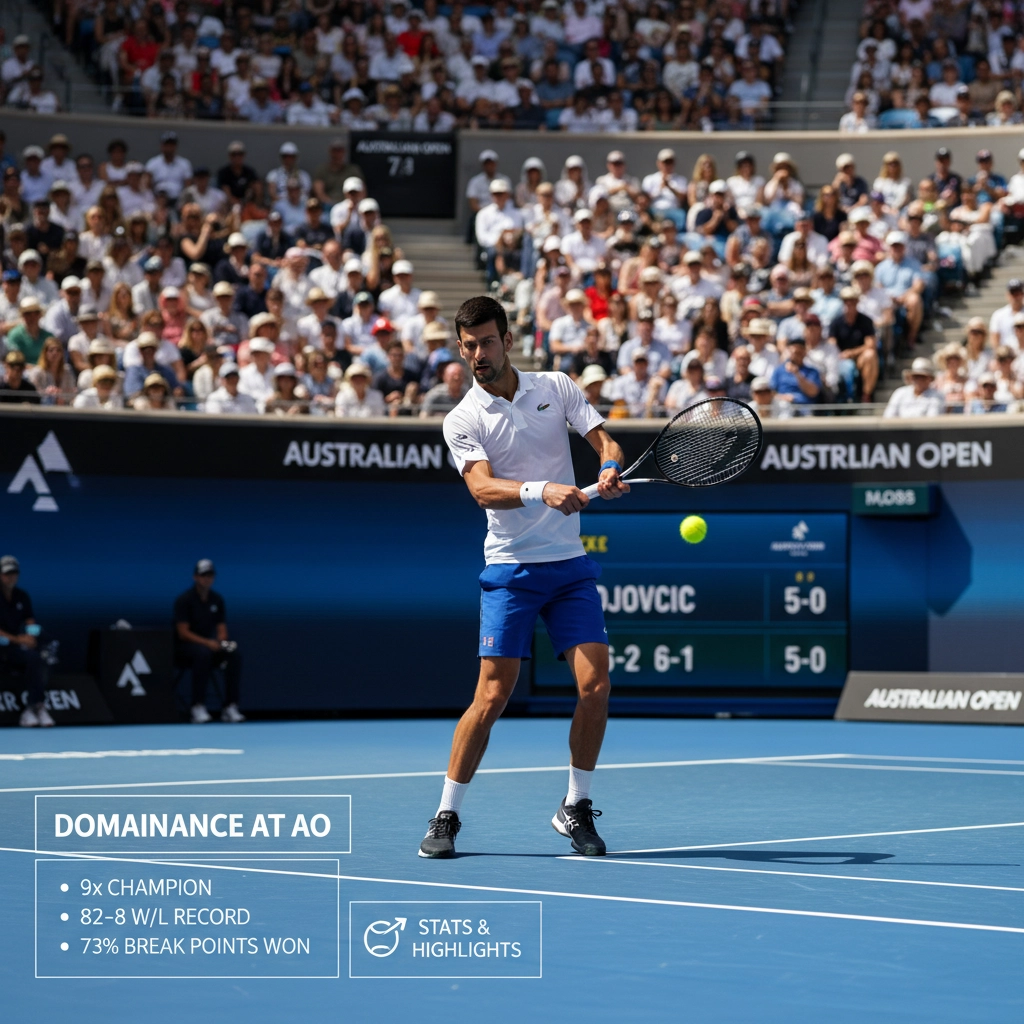
Why Novak Djokovic is the benchmark at the Australian Open
You may have noticed that when the Australian Open arrives, Novak Djokovic is almost always the central figure in the conversation. His sustained excellence in Melbourne isn’t accidental — it’s the product of a blend of physical preparation, technical skill, mental resilience, and strategic match management tailored to the conditions at Melbourne Park. In this section you’ll get a clear picture of the attributes that make the tournament his strongest major and how those translate into repeat championships.
What makes Melbourne Park a favourable stage for his game
You should consider court speed, climate, and tournament scheduling when assessing why Djokovic thrives here. The Australian Open’s hard courts reward players who combine movement, depth, and a reliable return game. Djokovic’s ability to neutralize pace, take the ball early, and change direction mid-rally aligns directly with those conditions, letting him dictate play from the back of the court or step in to finish points when needed.
- Adaptability to court speed: You’ll see Djokovic adjust his timing to slower or quicker courts without sacrificing consistency.
- Return-first mentality: At Melbourne Park his return often shifts neutral rallies into scoring opportunities, especially against big servers.
- Stamina and recovery: The physical build-up across two weeks rewards players who recover well between matches — an area where Djokovic’s preparation and scheduling discipline pay off.
Early statistical signals you should track
Before diving into match-by-match breakdowns, you’ll want to watch a few high-level stats that consistently predict Djokovic’s success at the Australian Open. These metrics help you understand why close matches tend to swing his way and which elements of his game you should focus on when analyzing his performances.
Key metrics that explain recurring dominance
- Return effectiveness: Look at return points won and return games won — Djokovic typically wins a high percentage, turning opponents’ service games into break chances.
- Break-point conversion and defence: You’ll often find he both creates more break opportunities and saves a larger share of break points against him than most rivals.
- Rally consistency: Fewer unforced errors in extended rallies makes Djokovic the favorite in baseline attrition battles common on hard courts.
- Physical and tactical consistency: Match-to-match variation tends to be low; you can expect a steady level of intensity that translates into predictable outcomes across the draw.
These early signals frame the deeper statistical story: they explain why Djokovic often emerges on top in close sets and long matches. In the next section, you’ll examine specific match stats, head-to-head numbers at the Australian Open, and the signature moments that turned key finals in his favor.
Match-level statistics that decide finals
When you dig into individual matches at Melbourne Park, a handful of in-match statistics repeatedly explain why Djokovic tends to prevail when the title is on the line. These are not flashy numbers so much as the small, repeatable advantages that compound over five sets and across two weeks.
- Deciding-set resilience: On hard courts, decisive sets reward players who can both maintain baseline depth and accelerate when opponents falter. You’ll notice Djokovic raises his first-serve percentage slightly and shortens points just enough in final sets — a subtle but effective blend of conserving energy and seizing high-percentage opportunities.
- Tiebreak performance: Tiebreaks at the Australian Open often swing matches; Djokovic’s combination of clutch serving, precise returns and low unforced error counts gives him an edge. He tends to play more aggressively on the second point after returning well, turning mini-breaks into scoreboard pressure rather than extended rallies.
- Break-point economy: Matches where Djokovic wins come from creating marginally more break chances and converting them at key moments. Equally important is his break-point defence — when opponents get chances, he changes angles and adds depth, forcing weaker putaways that become errors or short replies.
- Transitioning from defence to offence: Stat lines that show high return points won and then a low number of forced errors indicate a player who is converting defensive positions into scoring opportunities. That transition — often visible in rally-length breakdowns — is where Djokovic turns attrition into advantage.
Putting these together explains why many finals look close on paper (games and even set counts) but blow apart under pressure: Djokovic’s steadiness in crucial exchange types — tiebreaks, deciding-set holds, and break-point moments — shifts probabilities in his favor more than raw winners or aces do.
Head-to-head trends at Melbourne Park and the signature moments that matter
Instead of listing every scoreline, look for patterns across Djokovic’s matchups at the Australian Open. Against big servers he leans on early returns and depth to prevent free points; against heavy-topspin baseliners he uses lateral movement to create openings; against all-court players he mixes pace and angles to destabilize net approaches. These tactical choices are consistent, which is why head-to-head records in Melbourne often tilt toward him even when opponents are top-ranked.
Signature moments that have repeatedly defined key matches aren’t isolated rallies but moments in which Djokovic changes the tenor of the match — a long rally won on the run that breaks the opponent’s belief, a clinical hold after failing to convert multiple break chances, or an early mini-break in a decisive tiebreak that forces errors. Those micro-moments show up as streaks in match logs: a run of return games won, consecutive break points saved, or a sudden drop in opponent first-serve percentage.
When you watch Djokovic in Melbourne, watch for those inflection points rather than just the final score. They reveal the real story: he doesn’t always outpower opponents, but he out-positions, out-thinks and times his peaks to match the tournament’s pressure points — and that combination is what consistently turns tight head-to-heads into championship wins.
The lasting edge: mindset, timing and craft
What stands out at Melbourne Park is not a single stat or highlight but a way of playing that consistently finds small edges and exploits them when it matters most. Djokovic’s approach — meticulous preparation, in-match adaptability and an almost surgical sense of timing — creates pressure that opponents often fail to relieve. That combination is why his presence reshapes the tournament each year and why watching those subtle inflection points is as instructive as watching the trophy lift.
Frequently Asked Questions
Which match statistics most often explain Djokovic’s wins at the Australian Open?
The decisive numbers tend to be tiebreak win rate, break‑point conversion and defence, return points won, and clutch increases in first‑serve percentage in deciding sets. Those metrics capture his ability to perform under pressure more than raw ace or winner totals.
How does Djokovic change tactics against different opponent types in Melbourne?
He neutralizes big servers with aggressive, deep returns; uses lateral movement and depth to counter heavy‑topspin baseliners; and disrupts all‑court players by varying pace and angle to discourage net approaches. The adjustments are consistent and targeted rather than wholesale style changes.
Why do tiebreaks and late‑set moments frequently go Djokovic’s way?
In tight moments he combines clutch serving, focused returning, low unforced errors and a calm tactical mindset. That lets him convert mini‑breaks into scoreboard pressure and turn narrow opportunities into momentum swings that opponents struggle to reverse.