
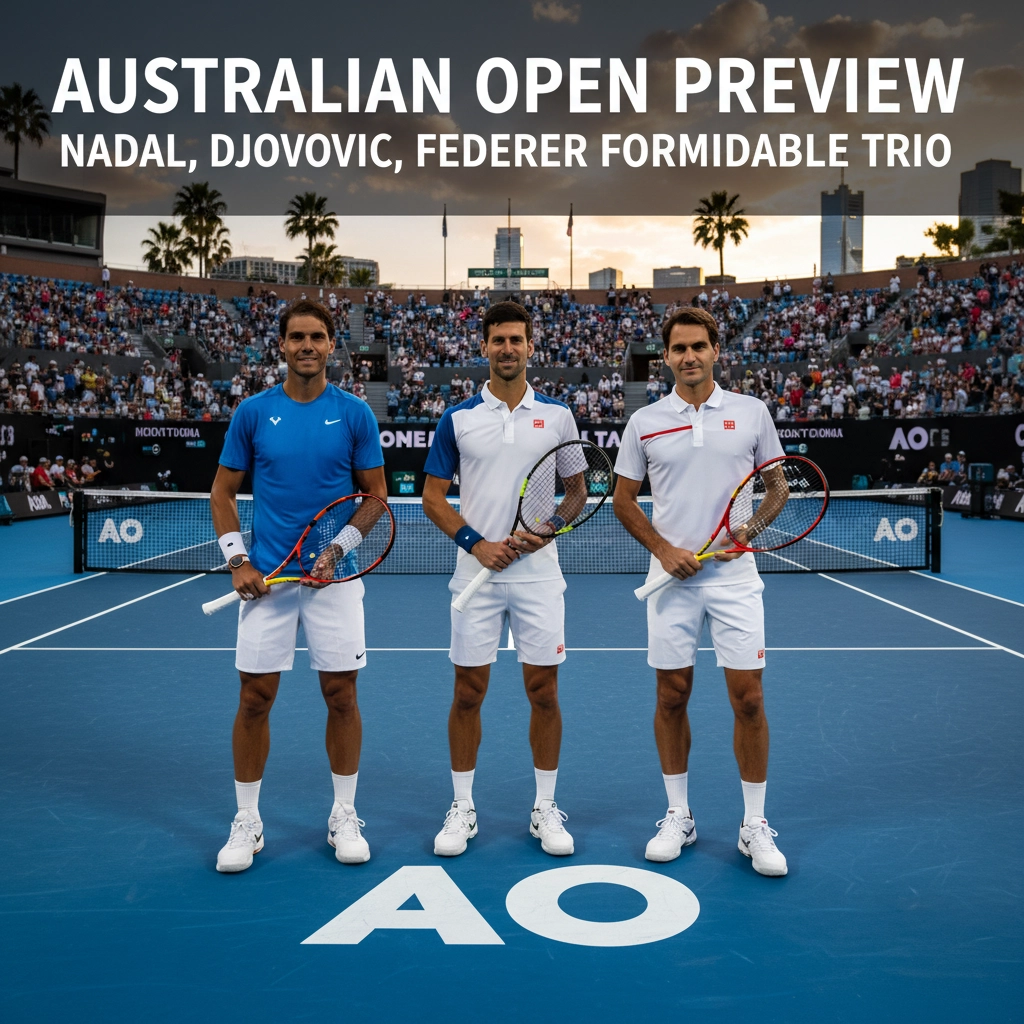
Why the Australian Open is a unique test for you as a fan and for the champions
You know the Australian Open is more than the first Grand Slam on the calendar; it often sets the tone for the entire season. Playing in Melbourne demands heat management, quick adaptation to hard courts and sustained mental resilience through long matches under a strict schedule. For players with long careers like Rafael Nadal, Novak Djokovic and Roger Federer, the tournament tests not only current form but how well they preserve and deploy experience against younger challengers.
As you prepare to follow the event, it helps to frame what makes this edition special: each of the trio brings a distinct approach to Melbourne’s conditions, and their recent bodies of work suggest different probabilities of success. Understanding their match-readiness, injury status and tactical adjustments will give you a clearer sense of likely match-ups and where upsets might occur.
How Nadal, Djokovic and Federer arrive in Melbourne: fitness, form and tactical edges
Rafael Nadal — clay-honed intensity adapted to hard courts
You’ll notice Nadal’s trademark physicality and heavy topspin remain central to his game, even on the faster Australian hard courts. Recent results show he’s managing workload carefully; when fit, he relies on short, explosive bursts to dictate baseline patterns. Pay attention to:
- Physical management: how many five-set matches he’s played in the lead-up and whether he’s conserving energy.
- Return game adjustments: Nadal often varies depth and angle to disrupt opponents used to flatter hard-court trajectories.
- Mental resilience: his ability to reset after slipping in early sets can swing tight matches in Melbourne’s typically humid evenings.
Novak Djokovic — baseline control and psychological superiority
Djokovic often enters the Australian Open as the statistical favorite because his movement, return of serve and court intelligence are exceptionally well-suited to Melbourne Park. When you watch him, focus on:
- Return dominance: Djokovic’s capacity to neutralize big servers creates pressure from the outset.
- Consistency under pressure: his break-point conversion and defensive-to-offensive transitions are key in long rallies.
- Match rhythm: Djokovic excels when he controls tempo; look for early sets where he imposes structure and minimizes unforced errors.
Roger Federer — precision, variety and efficient energy use
Federer’s game is built on measured aggression, a versatile repertoire of shots and the ability to shorten points. As you watch him, consider:
- Serve placement and slice backhand to steer rallies away from baseline grinders.
- Point construction: Federer looks to create angles and approach sooner to avoid attritional baseline rallies.
- Match scheduling: his recovery days and selective event play in the lead-up will affect his late-tournament stamina.
These early considerations—fitness management, tactical tweaks and psychological edges—shape the likely trajectories for Nadal, Djokovic and Federer in Melbourne; next, you’ll examine head-to-head trends and specific match-ups to watch in the opening rounds.
Opening-round match-ups and the banana skins to monitor
As the draw drops, pay close attention to which lower-ranked opponents land against the Big Three in the first two rounds — those early matches often contain more danger than fans expect. For Nadal, look for opponents who can rush him off the baseline with flat, penetrating shots and who mix in early aggression on his second serves. When Nadal’s first-serve percentage dips, those matches can become attritional and physically costly, regardless of the opponent’s ranking.
Djokovic’s early tests typically come from big servers and players who take the ball early to disrupt his timing. If an opponent serves heavy and mixes short, punchy returns to take time away from Djokovic, you may see an atypically tepid opening set. Also watch for left-handers who can open the court to Nadal or Federer and shift rhythm; slice and spin variations can create awkward patterns against players used to dictating from their favoured wings.
Federer’s first rounds hinge on how quickly he can shorten points. Opponents who are comfortable in transition and who can force baseline exchanges will lengthen rallies and play into Federer’s endurance variables. Conversely, strong returners who can neutralize his serve placement early could produce uncomfortable rallies that prevent Federer from constructing his preferred approach-shots.
Across the board, external factors matter: extreme heat, late-night scheduling and the pace of the hard courts on match day can amplify vulnerabilities. Watch warm-up intensity and body language in the very first service games — for elite players, small physical or timing signs in set one are often reliable early warnings that a match will become more contested than the seedings suggest.
Projected tactical paths into the second week
If the trio reach the latter rounds, their tactical blueprints start to diverge visibly. Nadal’s most realistic path to the second week requires him to sharpen the wedge between offense and defense: he’ll need to flatten portions of his forehand to shorten rallies while preserving his depth and heavy lefty kick to keep opponents behind the baseline. Expect tactical concessions — shorter return positions on big servers, selective serve-and-volleying on short balls and planned off-days to avoid accumulated fatigue.
Djokovic’s route is built on continuity. He aims to control tempo early, using return position and depth to force opponents into defensive modes. In later rounds, where margins narrow, Djokovic will lean on micro-adjustments — a slightly earlier step on the return, a change of pace from defensive slices to sudden drive-uplifts — to convert break opportunities. His ability to switch from patience to sudden acceleration will likely decide tight quarters and semis.
Federer’s path is the most stylistically distinct: he needs to compress points and exploit angles to make the court feel smaller. That means earlier approaches, a premium on first-serve percentage to open the court, and precise net play to convert short rallies into quick victories. If he can string together two or three matches without gruelling five-setters, Federer transforms from a potential vulnerability into the tournament’s most efficient scorer.
As the draw shapes, use these tactical templates to read matches: if Nadal’s flattening game takes effect, if Djokovic controls the return rhythm, or if Federer shortens points consistently — those signals will map strongly to deep runs into the second week.
Final act: anticipation, form and the fine margins
The Australian Open will test more than rankings — it will reveal who best manages small margins, recovery and match-to-match adjustments. Expect storylines to shift with each evening session, and take cues from early service games and movement patterns rather than pre-tournament hype. For real-time updates and scheduling, follow the Australian Open official site.
Whatever the outcomes, the tournament will once again be a study in how elite players leverage experience, tweak tactics and survive the unique pressures of a hard-court slam. Fans should enjoy the nuance: the subtle shifts in timing, the strategic gambits and the moments when form and fortune converge.
Frequently Asked Questions
How can lower-ranked players pose an early threat to Nadal, Djokovic or Federer?
Lower-ranked opponents often threaten by taking the ball early, serving aggressively, and varying pace and spin to disrupt the Big Three’s preferred rhythms. Short points, strong returns and capitalizing on any dip in first-serve percentage are common ways they create upsets.
What tactical changes do the Big Three make as they progress into the second week?
Nadal tends to flatten portions of his forehand and pick spots to shorten rallies; Djokovic focuses on controlling return depth and tempo with micro-adjustments; Federer aims to compress points, use angles and increase net approaches to end rallies quickly.
Which external factors should viewers watch that might influence match outcomes?
Pay attention to extreme heat, late-night scheduling, court pace and visible signs of fatigue or timing issues in the opening service games. Those external variables can amplify vulnerabilities and change the course of tightly contested matches.