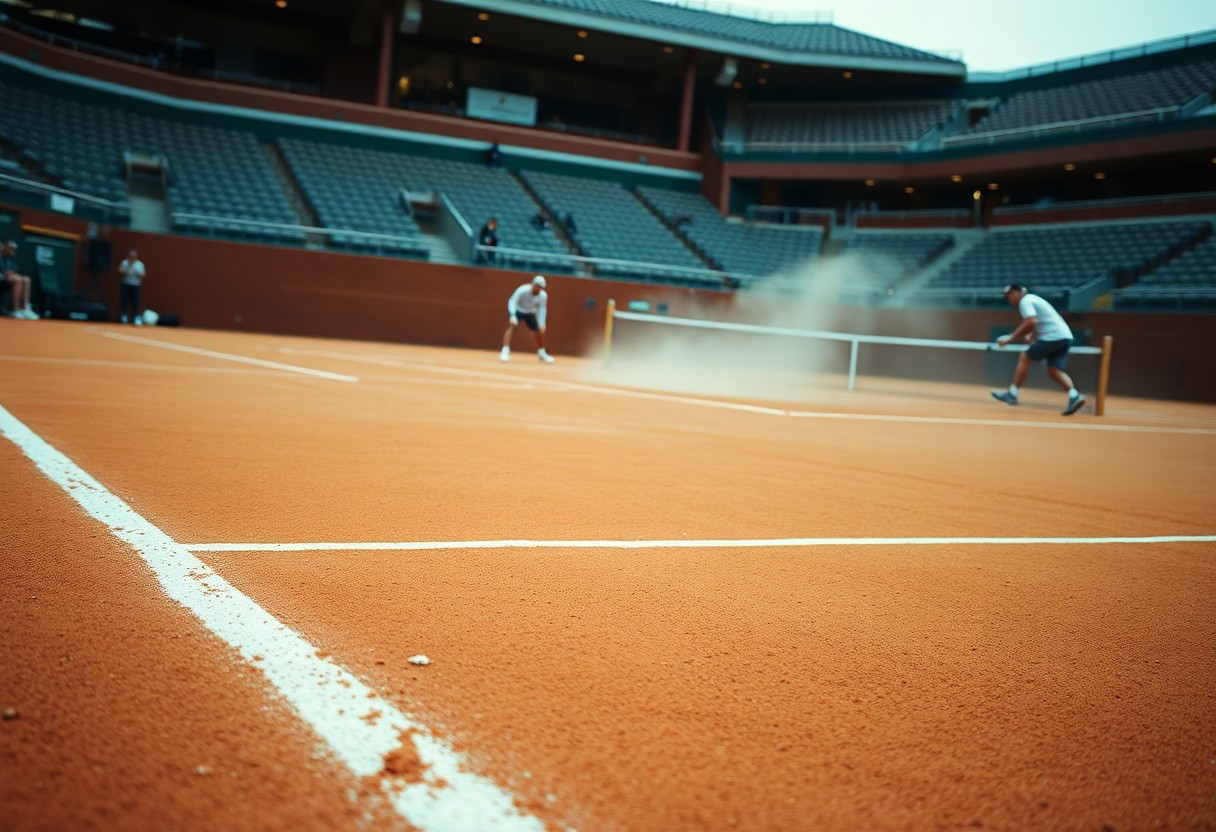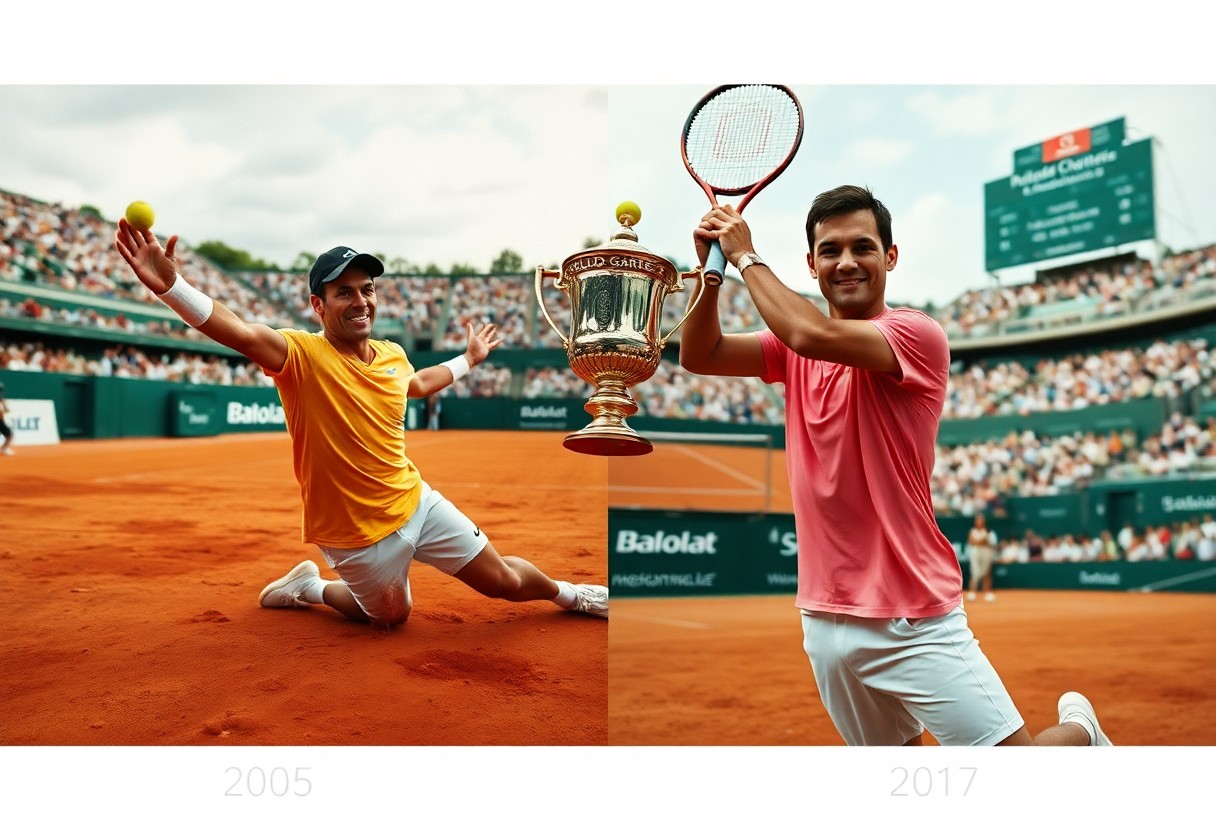
Clay courts define Roland Garros, where the slow, high-bouncing surface transforms power-based tactics into a test of patience and movement; the historic red clay and variable weather produce an unpredictable ball kick that rewards spin and footwork while punishing impatience, making Roland Garros a distinct Grand Slam that emphasizes sustained strategy, superior sliding technique and mental and physical endurance.
The History of Roland Garros
Tracing its roots through more than a century, the tournament began as a national championship and transformed into a global spectacle by embracing professionalism and infrastructure upgrades. Key milestones include 1891 (founding), 1925 (opened to international players), and the move to the stadium named for aviator Roland Garros in 1928. Over time innovations-from the 1968 Open Era to modern court care-shaped the event’s singular identity on red clay.
Origins of the Tournament
The French Championships originated in 1891 as a competition for French club members and gradually sought wider relevance; organizers allowed foreign entrants in 1925, dramatically raising the level of play. The construction of the Stade Roland Garros in 1928 to host Davis Cup ties anchored the event physically and symbolically, linking national pride to the distinctive terre battue surface that still defines the venue.
Evolution Through the Years
Open tennis beginning in 1968 brought professionals and global television exposure, producing era-defining champions-Björn Borg’s six titles in the 1970s and Rafael Nadal’s 14 wins are case studies in clay mastery. Simultaneously, scheduling, player conditioning, and court maintenance evolved: matches lengthened, baseline tactics deepened, and the tournament adapted to protect players and preserve the unique playing characteristics of the surface.
Infrastructure advances further reshaped play and logistics: the main court, Philippe-Chatrier (about 15,000 seats), received a retractable roof in 2020, enabling rain interruptions to be managed without altering the schedule. Grounds crews now roll and water courts nightly to control bounce and wear, while expanded night sessions and upgraded practice courts have supported a heavier, more international calendar without sacrificing Roland Garros’s traditional clay identity.
Unique Surface Characteristics
Roland Garros’ red clay is a layer of crushed brick over crushed stone and sand, producing a slower court with higher, more irregular bounce than grass or hard courts. Groundskeepers water and roll courts daily to preserve consistency, and players must slide deliberately to recover. The surface amplifies topspin and extends rallies, which helps explain why specialists who master footing and patience repeatedly excel at this Slam.
The Clay Court Advantage
Clay rewards heavy topspin and endurance: balls skid less and kick up, so a player who can generate spin and sustain long exchanges gains leverage. Serve-and-volley tactics lose potency because ace frequency drops and break points increase, shifting advantage to returners and grinders. Case in point: Rafael Nadal – 14 French Open titles – whose topspin, court craft, and sliding technique epitomize clay dominance.
Impact on Play Styles
Baseline grinders thrive as clay magnifies margin-for-error in fast, flat hitting; players adapt with shorter swings and heavier spin to control depth. Big servers like John Isner see diminished edge, while drop shots and angled slices become tactical weapons. Matches at Roland Garros demand point construction and patience, favoring athletes who combine endurance with shot variation.
Footwork shifts dramatically: sliding into shots requires anticipatory steps and balance, and players often prepare earlier to create top-spin trajectories that clear the net and bounce high. Net approaches are more selective-effective when set up by long rallies-so clay specialists train for sustained intensity, exemplified by several long five-set duels historically common at the tournament.
Notable Matches and Players
Rivalries and milestone performances have made Roland Garros a stage for defining moments: Rafael Nadal’s 14 titles redefine dominance, while Gustavo Kuerten’s rise in 1997 and Chris Evert’s consistency shaped eras. Matches often hinge on patience and spin, producing long rallies and tactical shifts that expose weaknesses faster than faster surfaces.
Historic Finals
Some finals read like clay-court textbooks: Nadal’s emphatic victories over Federer across the 2000s showcase endurance and margin of error, Guga’s 1997 breakthrough inspired Brazil, and other title matches have featured multi-hour tactics battles and momentum swings that turned single sets into tournament-deciding sagas.
Legendary Clay Court Players
Rafael Nadal (14 Roland Garros titles), Chris Evert (7), and Gustavo Kuerten (3) stand out for sustained excellence on clay; Federer reached three straight finals (2006-2008) but never captured the trophy, illustrating how specialized skills matter at Paris.
Nadal’s lefty heavy topspin, Kuerten’s flair under pressure, and Evert’s unforced-error discipline illustrate distinct clay templates: sliding balance, point construction, and relentless consistency. Tournament data-title counts, multi-year streaks, and repeated matchups-confirm clay success is as much technique and endurance as raw power.
The Role of Weather and Conditions
Over the two-week span at Roland Garros, shifting weather repeatedly alters ball behavior, court speed and scheduling. Mornings below ~18°C with high humidity tend to make the surface heavier and slower, promoting long rallies and sliding defense, while afternoons into the mid-20s produce a faster, livelier court that rewards cleaner ball-striking. Rain causes delays and surface repairs, magnifying the advantage for players who adjust equipment and tactics quickly.
Influence of Temperature and Humidity
Cooler temperatures (about 12-18°C) and humidity over 60% keep clay tacky, producing a lower, deadened bounce; warmer, drier conditions (around 22-28°C) dry the top layer and create a higher, quicker bounce. Teams routinely respond by tweaking string tension by ~2-3 lbs and selecting soles for extra grip or slide control, directly influencing rally length and error rates.
Temperature & Humidity Effects
| Condition | Typical Effect |
| Cool & Humid | Slower court, lower bounce, longer rallies, increased traction for slides |
| Warm & Dry | Faster court, higher bounce, shorter points, benefits aggressive hitters |
| Rain/Wet | Play halted or delayed, courts rolled and patched, surface becomes heavy |
How Conditions Change the Game
When the clay is damp, matches skew toward endurance; players grind out points and rely on topspin and slide-based defense, which has helped specialists accumulate wins at Roland Garros. In contrast, sustained heat shortens points and increases the payoff for clean serving and aggressive returns, shifting momentum toward players who can convert fewer opportunities into winners. Equipment choices and in-match adjustments become decisive.
Practical examples include altering string setups and shoe selection mid-tournament: teams often reduce tension by 2-3 lbs in heat to gain control, and players opt for denser tread in damp weeks to limit slips. Tactically, coaches emphasize point construction-using heavy topspin to exploit a dried top layer or flattening out shots to finish points when the court plays faster-demonstrating how small condition-driven changes yield big match outcomes.
Cultural Significance of the Event
Roland Garros operates as more than a tournament; it is a national spectacle rooted in history since the French Championships began in 1891 and the stadium opened in 1928 bearing aviator Roland Garros’s name. The fortnight draws roughly about half a million spectators and a global broadcast footprint, turning Parisian neighborhoods into fan zones and making clay-court strategies part of the sport’s broader cultural conversation.
French Tennis Heritage
France’s tennis identity is shaped by legends and institutions: the 1920s “Four Musketeers” era, Suzanne Lenglen’s early dominance, and modern figures like Amélie Mauresmo. The Fédération Française de Tennis uses Roland Garros to showcase development programs and national academies, linking grassroots coaching initiatives with elite performance and preserving a uniquely French approach to clay tactics and courtcraft.
Global Impact and Fan Engagement
Broadcast into more than 200 territories and amplified across social platforms, Roland Garros leverages star power-Rafael Nadal’s 14 titles being a global draw-to create appointment viewing worldwide. Fans engage through interactive apps, multilingual coverage, and on-site activations, while the clay’s marathon rallies impose a physical toll that adds dramatic narrative value and intense fan discussion.
Digital innovations have expanded reach: expanded live-stream options, multi-camera feeds, and AR highlights enhance remote viewing, and curated fan experiences in Paris-hospitality suites, sponsor activations, and public viewing screens-drive tourism revenue. Tournament scheduling, like prime-time sessions, intentionally maximizes global TV audiences and social conversation, turning single matches into worldwide cultural moments.
Future of Roland Garros
Recent renovations – most visibly the retractable roof on Court Philippe-Chatrier (completed 2020, capacity ~15,225) and the 2019 reopening of Court Simonne-Mathieu – already changed scheduling and broadcast windows. Broadcasters now get more reliable primetime slots, while the FFT pushes for sustainability measures to mitigate heavier spring rains and rising maintenance costs, balancing modernization with the preserved clay character that defines the tournament.
Innovations and Adaptations
LED lighting upgrades and the Chatrier roof have enabled expanded night sessions, improving global TV reach. Tournament tech is evolving too: expanded use of electronic review systems like Hawk‑Eye, player‑tracking analytics for coaching insights, and augmented‑reality fan features in the app are already piloted to boost engagement without altering on‑court play.
Keeping Tradition Alive
Grounds teams still rely on daily watering and rolling plus meticulous brushing to preserve the signature slow, sliding surface; that hands‑on work is non‑negotiable to maintain ball bounce and slide that players and fans expect at Roland Garros.
Surface composition remains a careful mix of crushed brick, sand and stone dust with a top playing layer typically measured in millimetres; groundskeepers monitor moisture and compaction to the millimetre to keep performance consistent. The FFT has repeatedly affirmed that main courts will stay clay, ensuring that innovations enhance logistics and fan experience while the playing surface and traditional slide remain intact.
To wrap up
Conclusively, Roland Garros affirms clay’s dominance by combining slower, high-bounce courts that amplify topspin and extend rallies with the demand for tactical patience, sliding technique, and superior stamina; its historic surface and distinctive match rhythms uniquely test adaptability and strategic nuance, making success there a defining indicator of clay-court mastery among Grand Slams.
FAQ
Q: How does clay change the way tennis is played compared with grass or hard courts?
A: Clay is the slowest of the three major surfaces and produces a higher, more irregular bounce because the ball grips the loose, crushed-brick top layer. Serves lose some of their immediate penetrating effect, so big servers get fewer free points and break chances increase. Rallies are longer, emphasizing construction of points, patience, and point-to-point variation rather than outright power. Sliding becomes a major movement skill-players use controlled slides to recover and reposition, which alters footwork patterns and increases demand on balance and leg endurance. Topspin is amplified on clay: heavy topspin shots kick higher and push opponents back, making spin-heavy forehands and heavy kicking second serves especially effective. Overall, clay rewards consistency, tactical variation, and endurance more than raw pace or infinitesimal reaction times.
Q: What specific features make Roland Garros unique among the Grand Slams?
A: Roland Garros combines its signature red-brown terre battue, historic courts and tournament timing in late spring to create a singular event. Its clay composition and meticulous maintenance produce variable conditions-drier, faster courts later in the fortnight; slower, grippier courts after rain-so adaptability matters. Philippe-Chatrier and the surrounding courts are intimate compared with larger multi-purpose stadiums, which amplifies crowd influence and the sensory experience of clay (visible ball marks, dust, audible slides). Roland Garros is the only Grand Slam on clay, which places a premium on a clay-court season and specialist skill set; the tournament’s history also institutionalizes clay tactics and preparation among contenders. The surface also changes match statistics: longer average rallies, more breaks of serve, and higher physical attrition across matches than on grass or hard courts.
Q: How do players adapt their technique, strategy and equipment to succeed at Roland Garros?
A: Successful clay-court players adjust equipment, movement and point construction. Equipment tweaks include using slightly higher-tension or more spin-friendly strings, shoes with softer, deeper outsoles for grip while sliding, and sometimes a marginally heavier racket setup for control through long rallies. Technically, players emphasize heavy topspin (especially on the forehand), deep, angled backhands, patient approach patterns and improved defensive skills to turn defense into offense. Tactically they target opponent movement with angled, short crosscourt balls, use kick serves to neutralize returns, and build points with lateral displacement rather than quick winners. Conditioning shifts toward sustained aerobic fitness, repeated-intensity recovery and stronger lower-body resilience to handle sliding and long matches. Practically, many players arrive weeks earlier for clay-tune tournaments to adapt footwork, timing and tactical templates specifically for Roland Garros’ surface and typical weather-driven variations.