History at Roland Garros is a tapestry of Rafael Nadal’s clay supremacy, epic five-set battles that tested endurance, and shocking breakthroughs by underdogs, all of which transformed tactics, training and the sport’s global stature; this post examines the matches whose intensity, drama and lasting rule changes made the claycourt Major a laboratory of tennis evolution.
The Birth of a Grand Slam
Origins and Early Years
Founded in 1891 as the French Championships for club members, the event evolved quickly: initially national, it added a women’s draw in the 1890s and by 1925 opened to international competitors. Suzanne Lenglen’s dominance in the 1920s and the rise of the “Four Musketeers” pushed the tournament onto the world stage, while the move to a permanent site and the 1928 stadium named for aviator Roland Garros cemented its identity.
Evolution of the Tournament
Transition to the Open Era in 1968 transformed Roland Garros into a professional Grand Slam, accelerating prize growth, global TV coverage and player diversity. Ground improvements and tactical shifts emphasized heavy topspin and sliding, favoring specialists; Rafael Nadal’s unprecedented 14 titles exemplify modern clay mastery. Infrastructure upgrades later allowed longer sessions and broader scheduling flexibility.
Stadium modernization intensified after the 2000s: Philippe-Chatrier gained a retractable roof in 2020, and courts now use advanced drainage and clay blends to limit washouts. Tournament-day scheduling expanded with night sessions and improved broadcast technology, increasing viewership worldwide and altering match preparation, recovery protocols, and coaching strategies for a physically demanding, clay-specific Grand Slam.
Historic Matches That Defined the Sport
Matches at Roland Garros rewrote tennis narratives: Rafael Nadal’s record 14 titles reshaped clay supremacy, Yannick Noah’s 1983 victory made him the first French champion in 37 years, and Novak Djokovic’s 2016 win completed his Career Grand Slam. These moments changed playing styles, coaching priorities, and tournament expectations, with decades-long ripple effects on how players prepare for best-of-five clay battles and how nations measure Grand Slam success.
The Great Rivalries
Nadal vs. Federer produced defining Roland Garros clashes in the 2006 and 2007 finals, while Nadal-Djokovic matches repeatedly decided title hopes throughout the 2010s. Head-to-heads at Roland Garros exposed tactical shifts – heavier topspin, selective aggression, endurance training – and delivered high-stakes drama that altered ranking trajectories and Grand Slam legacies.
Unforgettable Finals
Some finals transcended results: Yannick Noah’s 1983 triumph electrified France, Stan Wawrinka’s 2015 win over Djokovic confirmed his rise as a major threat, and Nadal’s multi-title runs established his clay dynasty. Each final delivered pivotal momentum swings, tactical masterclasses, and moments replayed by coaches and analysts for years.
Examining details: Noah ended a 37-year national drought in 1983, Wawrinka’s 2015 title was his second Grand Slam and showcased a dominant backhand under pressure, and Nadal’s string of four consecutive titles from 2005-2008 forced rivals to reinvent clay strategies. Those finals served as case studies in resilience, shot selection, and physical preparation.
Breakthrough Moments in Tennis History
Matches that rewired careers and tactics at Roland Garros defined eras: from shock fourth-round exits that toppled favorites to marathon finals that forced strategic evolution. Instances like Robin Söderling’s 2009 upset and the rise of unexpected champions reshaped rankings, while sustained dominance by a single player altered training and court expectations for clay specialists.
Unexpected Upsets
Upsets at Roland Garros puncture assumptions-Söderling’s 2009 victory over Rafael Nadal ended Nadal’s stranglehold, and Jelena Ostapenko’s 2017 run, as a 47th-ranked unseeded player to champion, showed power and aggression can topple consistency. Those matches forced top players to adjust preparation against lower-ranked opponents who bring fearless, high-risk tennis on clay.
Record-Breaking Performances
Stat lines at Roland Garros are stark: Rafael Nadal’s record 14 French Open titles sits far above the field, while Chris Evert’s seven women’s titles and Björn Borg’s six mark other eras of supremacy. Those numbers changed how rivals approached clay-court seasons and talent development across generations.
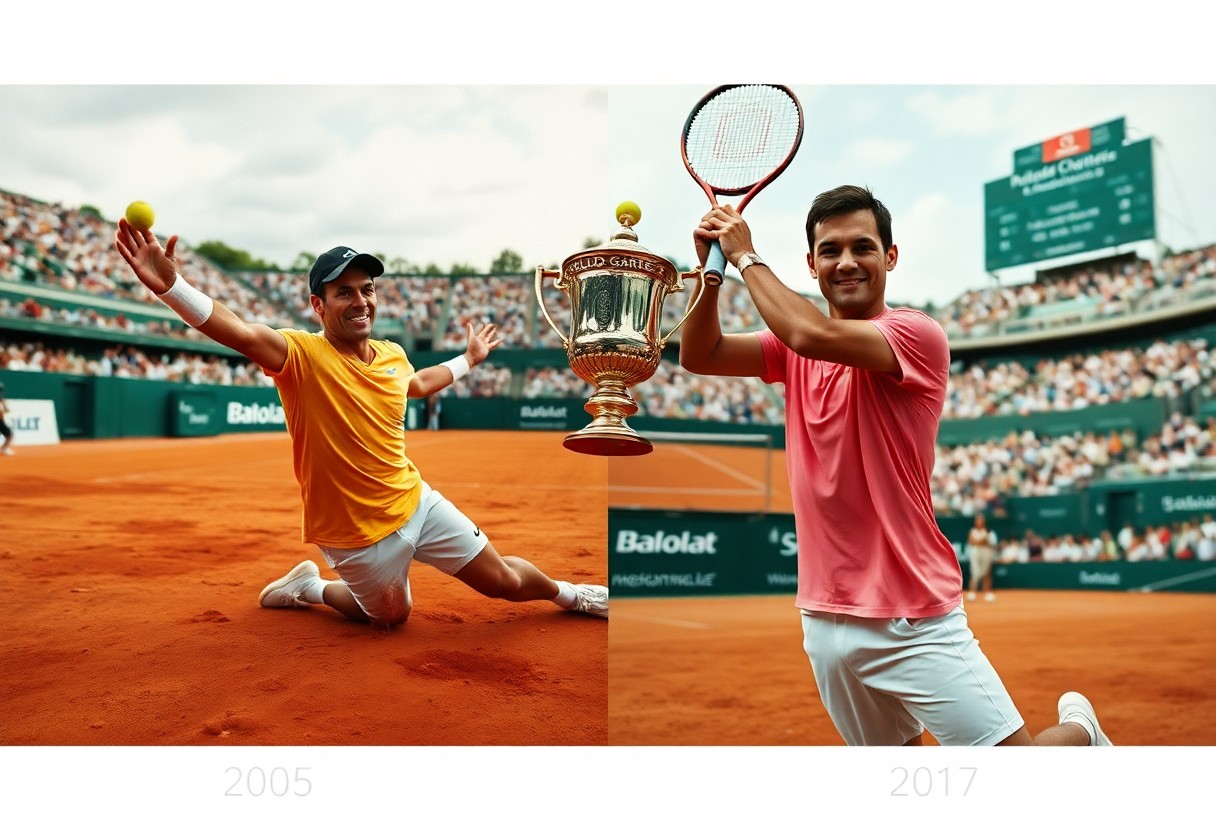
Nadal won his first Roland Garros at age 19 in 2005 and produced two dominant stretches-2005-2008 and 2010-2014-plus multiple comeback titles (including 2017 and 2022), demonstrating both peak consistency and longevity. His repeated tactical mastery-heavy topspin, court positioning, and mental resilience-set benchmarks opponents still measure themselves against today.
The Role of Clay: Challenges and Triumphs
Clay at Roland Garros forces a redefinition of tactics and physiology: players trade raw serve speed for sustained point construction, exploiting heavy topspin and angles to control exchanges. Frequent shifts in humidity and court compaction alter bounce and ball speed within a week, so adaptability becomes as decisive as shot-making. Long rallies, sliding demands and clay-specific stamina turn individual matches into endurance tests that create lasting legacies.
Unique Playing Conditions
Red clay slows the ball and produces a higher, kickier bounce, rewarding heavy topspin while penalizing flat hitters; players routinely slide into shots, increasing strain on ankles and knees. Wind and rain change court friction and ball pick-up, so string choice and tension are adjusted for grip and control. Examples include day-to-night shifts that lengthen rallies and matches, altering recovery and in-match tactics.
Players Who Conquered the Clay
Rafael Nadal’s 14 titles epitomize modern clay dominance, combining relentless defense and extreme topspin. Earlier eras saw Björn Borg’s six French victories, while Gustavo Kuerten’s three titles (1997, 2000, 2001) showcased flair and angle play. Those champions illustrate how specialized movement, tactical patience and surface-tailored shot repertoires determine success at Roland Garros.
Tactically, clay specialists build points through depth and manipulation of spin: Nadal frequently uses a high-bouncing forehand to open angles, Kuerten mixed drop shots and inside-out winners, and Borg neutralized opponents with relentless baseline retrieval. Conditioning is nonnegotiable-many five-set contests at Roland Garros exceed 4+ hours-so recovery protocols, nutrition and match pacing are as decisive as technical skill.
The Influence of Legends on the Tournament
Legends reshaped Roland Garros by altering playstyles, coaching priorities and public perception: Rafael Nadal’s 14 titles rewrote clay benchmarks, Chris Evert’s nine consecutive finals (1973-1981) set a consistency standard, and Björn Borg’s six championships in the 1970s promoted baseline endurance and heavy topspin as winning formulas.
Iconic Players and Their Impact
Rafael Nadal’s first title in 2005 triggered a tactical shift toward extreme topspin and unmatched physical preparation; Gustavo Kuerten’s shock 1997 victory and subsequent wins in 2000 and 2001 sparked increased South American interest in clay specialization, while Monica Seles’ early-90s dominance redefined aggression and mental tenacity on court.
Lasting Legacies in Roland Garros
Institutional legacies persist: courts named after past greats, record books that guide junior goals, and tournament programming that preserves clay-specific traditions; Nadal’s and Evert’s records now function as benchmarks for training and ambition across academies worldwide.
Examining outcomes, Kuerten’s 1997 triumph catalyzed Brazilian investment in tennis infrastructure and youth participation, while Nadal’s sustained success forced changes in conditioning, racket stringing choices and match preparation-coaches now prioritize lateral movement, endurance and heavy spin production. Tournament organizers responded by expanding coaching clinics and junior events, ensuring these legacies translate into measurable growth of clay-court expertise.
The Future of Roland Garros
Renovations since 2019 have reshaped tournament logistics: the retractable roof on Court Philippe‑Chatrier (completed 2020), the sunken, garden-wrapped Simonne‑Mathieu court (opened 2019), and added floodlights enabling regular evening sessions have reduced rain disruption and broadened global TV windows, helping the event host around nearly half a million spectators annually. Ongoing plans emphasize capacity optimization, upgraded player facilities, and measurable sustainability targets to cut water and energy use.
Innovations and Changes
Expanded electronic review systems and more advanced match analytics are changing coaching and officiating, while operational tech-digital ticketing and AI scheduling-has improved court utilization. Surface work includes drainage tweaks and trials of clay blends to speed play in wet springs. The Simonne‑Mathieu green roof and energy-efficient lighting signal a sustainability push, though firmer clay mixes could increase strain and injury risk for players used to classic slow surfaces.
Trends to Watch in Upcoming Tournaments
Power-plus-mobility players such as Carlos Alcaraz and Jannik Sinner are shortening rallies by blending heavy topspin with aggressive finishing, shifting match dynamics away from pure attrition. Expect greater reliance on player GPS and biometric data, more strategic use of night sessions for global audiences, and tighter scheduling to navigate variable spring weather.
Tactically, coaches emphasize higher first-serve percentages, earlier return positioning and selective serve-and-volley points to close matches faster; Rafael Nadal’s benchmark of 13 Roland Garros titles still defines clay mastery, yet modern contenders win by creating short, high‑intensity points. Sports science-GPS tracking, individualized recovery protocols and targeted load management-gives better depth, so conditioning and analytic-driven game plans will increasingly determine champions.
Summing up
Presently the legacy of “Iconic Moments In Roland Garros History – Matches That Shaped Tennis Forever” demonstrates how landmark matches altered tactics, forged player identities, and advanced clay-court strategy; these contests-epic five-setters, stunning upsets, and career-defining triumphs-map the sport’s technical and psychological evolution and remain crucial study for coaches and historians.
FAQ
Q: How did Yannick Noah’s 1983 French Open victory shape Roland Garros and French tennis?
A: Noah’s 1983 triumph broke a long drought for home fans and remains the last time a Frenchman won the men’s singles title at Roland Garros, creating an enduring national legend. His energetic style, charisma and emotional connection with the crowd elevated the tournament’s cultural importance in France, increased grassroots interest in tennis, and inspired a generation of French players. The win also shifted media attention and sponsorship toward French tennis, helping fund development programs and raising expectations for future home contenders.
Q: Why is Rafael Nadal’s first Roland Garros title in 2005 considered a turning point for clay-court tennis?
A: Winning at 19, Nadal introduced a new standard for physicality, topspin-heavy tactics and relentless court coverage on clay, overturning prevailing notions about how to dominate on the surface. His combination of lefty spin, athleticism and tactical intensity forced opponents to adapt equipment, training and match strategy specifically for clay. That title launched a decade of near-total dominance at Roland Garros, influenced coaching approaches worldwide, and changed how players prepared for the clay season.
Q: What made Robin Soderling’s 2009 upset of Rafael Nadal at Roland Garros so impactful?
A: Soderling’s four-set victory ended Nadal’s unbeaten run at Roland Garros and shattered the aura of invincibility that had defined the tournament for years. The shock result opened the draw, ultimately allowing Roger Federer to capture his only French Open title and complete a career Grand Slam, reshaping the men’s Grand Slam landscape. Beyond immediate tournament consequences, the upset demonstrated that Nadal could be defeated on clay, prompting tactical reassessments by top players and increasing belief that the established order at Roland Garros could be challenged.