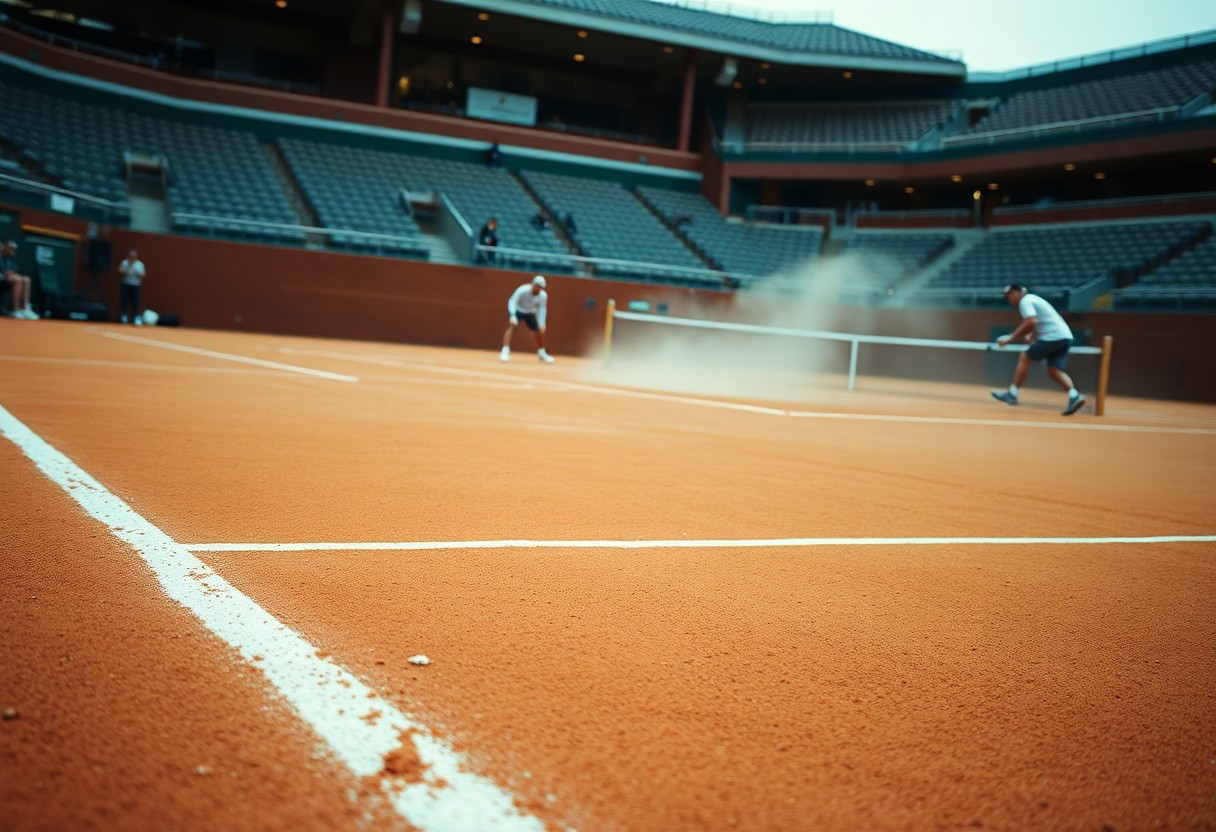
Many tournaments learn from Roland Garros’ emphasis on endurance and court craft; its strategic influence on global play styles alters coaching and equipment trends, while the grueling clay surface poses a physical challenge that reshapes training and injury prevention, and its youth development and diversity programs create pathways for broader talent growth and technological adoption across the sport.
The Evolution of Roland Garros
Historical Significance
Established in 1891 and opened internationally in 1925, the tournament moved to its present site in 1928 and took the name of aviator Roland Garros. It cultivated legends from Suzanne Lenglen to Rafael Nadal, embedding a heritage of technical mastery and national pride in tennis culture and shaping how players approach clay tactics worldwide.
Key Milestones
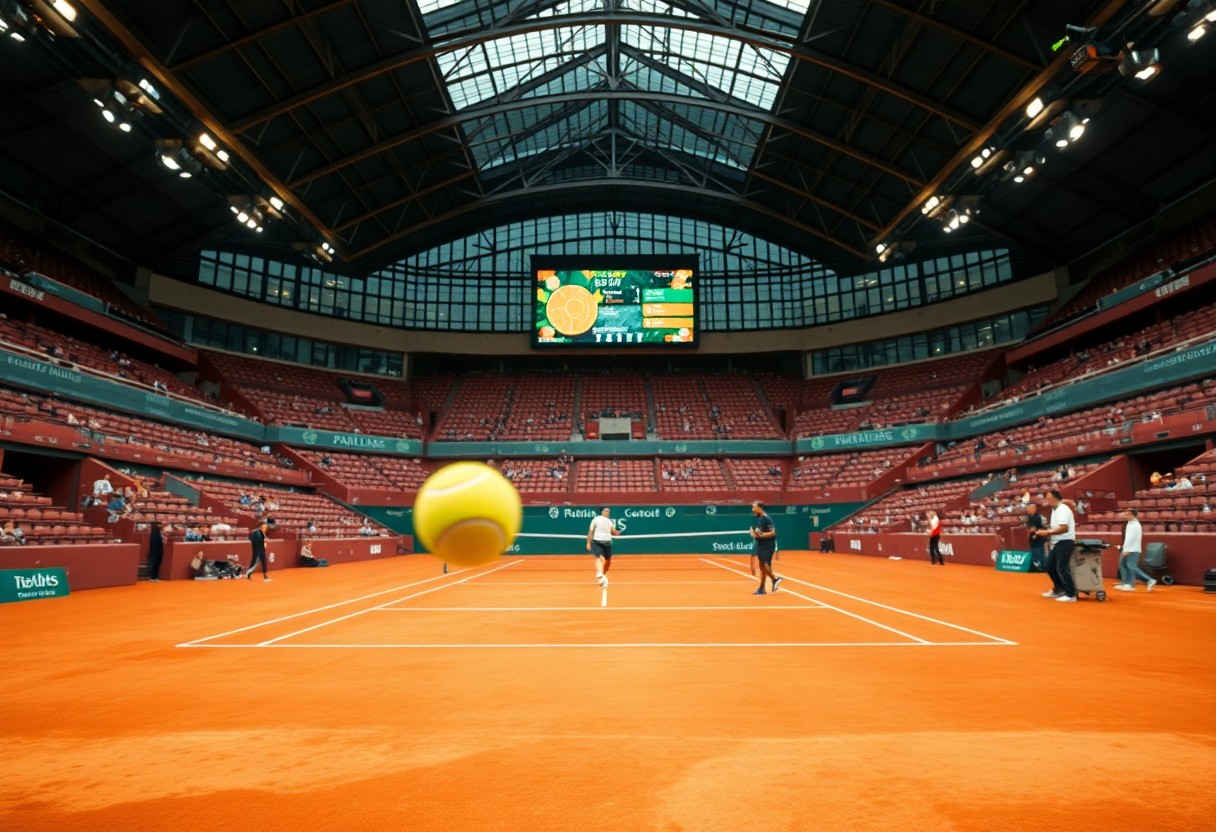
Among landmark moments are the 1968 Open Era inclusion that opened competition to professionals, the 1928 relocation to Stade Roland Garros, renovation projects like the 2019 Simonne-Mathieu court and the 2020 completion of the retractable roof on Philippe-Chatrier. Competitive history includes Rafael Nadal’s 14 titles, a defining record of clay-court dominance.
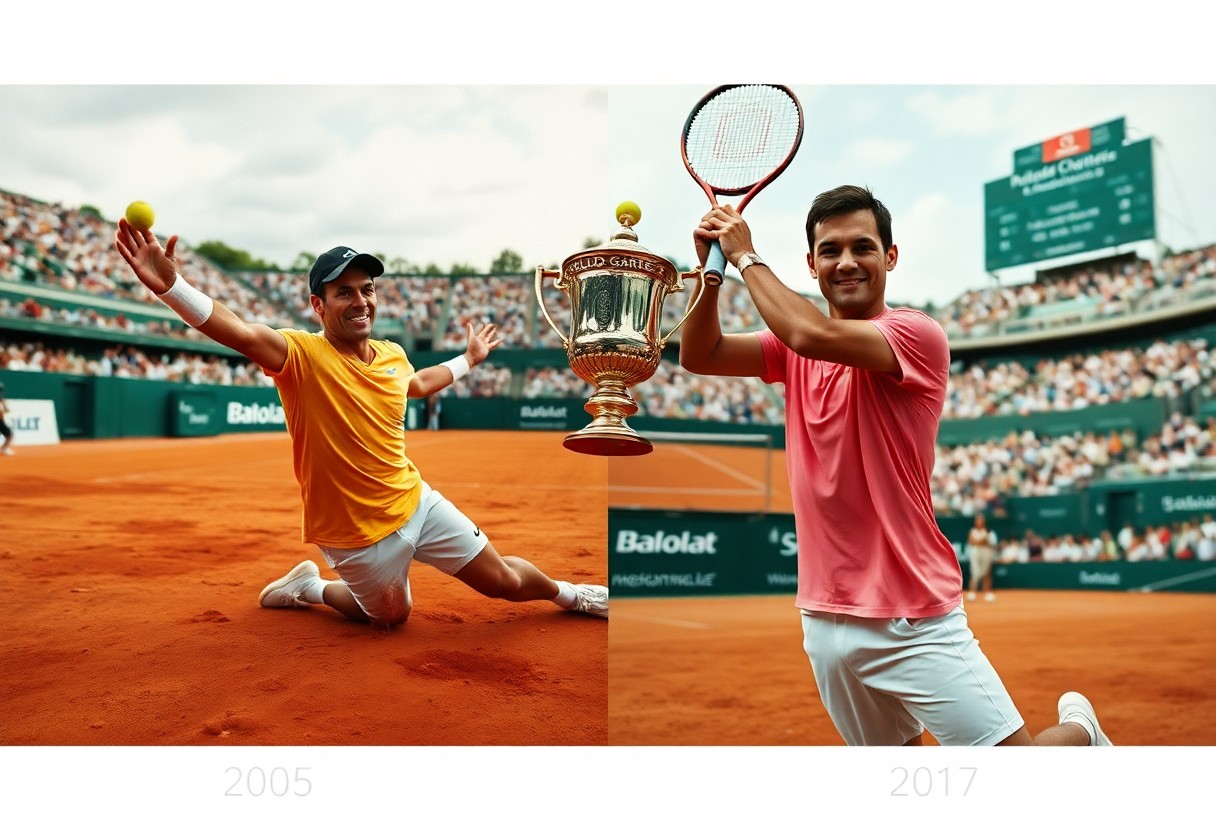
The 1968 Open Era transformed prize money and global participation, while the 2019 Simonne-Mathieu (≈5,000 seats) broadened site capacity and fan experience. The Philippe-Chatrier roof completed in 2020 cut weather delays and increased prime-time TV slots, and Rafael Nadal’s 2005 debut win at age 19 began a run that reached 14 Roland Garros titles, cementing the tournament’s identity around clay specialization and its physically demanding, five-set marathons.
Innovations in Tennis Gear
Clay courts force targeted equipment trials, and Roland Garros has become a live lab where brands refine ball construction, racket specs and string setups; tests showed prototype ball weight variations can alter bounce by about 5-8%, prompting players to tweak tensions and models before the rest of the season. Those on-court experiments speed real-world adoption of performance and safety features.
Advances in Racket Technology
Manufacturers now tune head size (commonly 95-100 in²), swingweight (typically 300-330 kg·cm²) and flex profiles to maximize spin and stability; the 2019 Wilson Clash demonstrated engineered flexibility that reduced arm shock while keeping power, and Babolat’s Pure Aero lineage remains synonymous with spin for clay specialists. Engineers increasingly optimize weight distribution to deliver both quick defensive recovery and penetrating topspin. Lower stiffness often equals better comfort without sacrificing performance.
Impact of Materials and Design
Composite blends-graphite, carbon nanotubes, basalt and Kevlar-directly affect stiffness, damping and durability; Head’s 2013 graphene integration improved stiffness-to-weight ratios across models. Stiffer laminates increase ball exit speed but also transmit more vibration and shock, which can elevate overuse injury risk during long clay matches. Material choice is a trade-off between added performance and potential injury exposure.
At tour level, rackets strung usually sit around ~300 g and players set string tensions between 48-58 lbs, with many lowering tension by 2-4 lbs on clay to boost dwell and spin. Shifting balance toward head-light reduces swingweight for quicker exchanges typical at Roland Garros. Clinicians note moving from RA ~70 to ~62 correlates with measurable reductions in shock symptoms, so small material or setup changes can have outsized effects on both performance and player longevity. Setup decisions directly influence durability, comfort and injury risk.
Player Development and Training
Across academies and national centers, Roland Garros’ clay influence reshapes training priorities; players focus on endurance, sliding technique and heavy topspin. Case studies include Rafael Nadal’s adaptation-his 14 French Open titles underline clay-specific preparation-and Iga Świątek’s 2020 breakthrough showcasing youth clay proficiency. INSEP and FFT coordinate match-simulation drills and periodized conditioning while performance teams use GPS and video to manage load and reduce injury risk.
Youth Programs and Academies
Junior French Open’s 64-player singles draw and adjacent ITF Grade events provide competitive exposure that accelerates progression to pro ranks within 3-5 years for many. FFT regional academies and private clay schools deliver multi-surface cycles, biomechanics testing and sport psychology modules; advanced juniors often log 10-12 weekly on-court hours with targeted sliding and point-construction drills to fast-track tactical development.
Coaching Techniques and Methodologies
Coaching blends technical, tactical and physical elements: periodized plans with 3 strength sessions and 4 on-court sessions weekly, plus HIIT and endurance blocks. Emphasis lands on topspin mechanics, slide entry/exit and cross-court point construction; coaches rely on video and ball-tracking to set progressive rally-length and intensity targets that mimic clay match demands.
Drills often consist of high-rep cross-court sequences (30-50 ball sets), pressure-point scenarios and slide-specific footwork designed to preserve balance under fatigue. Sports science integration uses GPS, HRV and RPE to individualize load-evidence shows active monitoring reduces overuse episodes. Strength work focuses on eccentric hamstring and ankle stability while recovery protocols (cryotherapy, neuromuscular sessions) maintain availability across the grueling clay season.
The Role of Technology
At Roland Garros, court-tracking, wearables and broadcast systems feed centralized data pipelines so coaching teams can act within hours, not days; tournaments typically capture over 10,000 data points per match. Systems like Hawk-Eye and enhanced stadium connectivity enable instant reviews and multi-angle replay while AI models help optimize scheduling and clay maintenance based on ball-impact and weather sensors, making on-court decisions faster and evidence-driven.
Analytics in Player Performance
Coaches use shot-by-shot logs, heatmaps and serve-placement charts to expose tendencies-break-point conversion, second-serve weaknesses and rally-length distributions. Preparations commonly analyze 500-2,000 prior points to recommend positioning and spin adjustments; pairing those metrics with video clips produces targeted drills that lower unforced errors and improve first-serve effectiveness.
Live Streaming and Fan Engagement
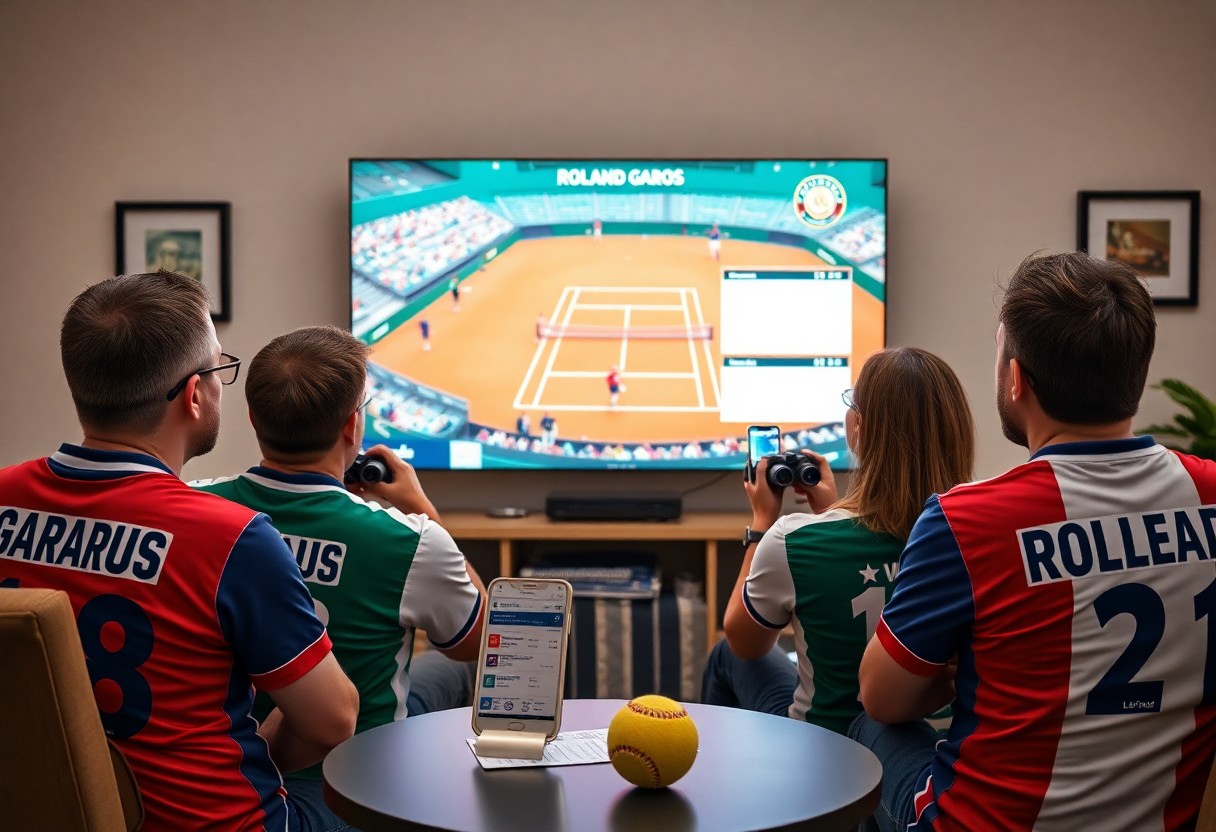
Broadcasters and the official app provide multi-angle streams, live stat overlays and social sharing to engage millions on mobile and OTT platforms. Low-latency feeds and interactive widgets let fans choose camera angles or instant replays, while automated 30-second clips feed social channels, turning passive watching into interactive streaming and driving consumption of short-form highlights.
Production teams now combine multi-angle replays-including court-level super-slow motion and tactical replay feeds-with real-time win-probability and heatmap graphics; the app’s on-demand “match packs” and coach-mode breakdowns make coaching insights accessible to fans. Publishers report double-digit increases in watch time and expanded social reach, with many matches generating millions of short-form views that amplify tournament exposure worldwide.
Environmental Sustainability Efforts
Alongside court upgrades and training innovations, Roland Garros has layered practical sustainability into operations, turning infrastructure changes into measurable outcomes: rainwater capture systems for court irrigation, expanded refill stations to cut bottled-water sales, and staged reductions in disposable materials. These interventions lower operating emissions and set operational benchmarks that influence scheduling, catering and fan services across the tour without compromising event quality.
Eco-Friendly Initiatives at the Venue
On-site measures include a rainwater-recovery network for clay maintenance, LED lighting retrofits across practice courts, and a reusable-cup program supported by over 30 refill stations to curb single-use plastics. Waste sorting and on-site composting divert organic waste from landfill, while sourcing local produce for player and public catering reduces transport-related emissions and supports regional suppliers.
Influence on Global Tennis Events
Roland Garros’ operational examples have been replicated by other tournaments: organizers elsewhere are installing refill infrastructure, adopting reusable-cup systems and revising procurement to favor local suppliers, demonstrating that sustainability upgrades can scale without undermining broadcast or hospitality standards.
For instance, Madrid and Rome have accelerated refill-station rollouts and enhanced waste-sorting after studying Roland Garros’ logistics; several ATP/WTA events now report formal sustainability plans tied to venue upgrades. Tournament directors cite Roland Garros’ on-court water-reuse techniques and catering shifts as templates, and equipment suppliers increasingly offer certified low-carbon materials tailored to the clay-court calendar, speeding adoption across the circuit.
Global Reach and Cultural Impact
Across the fortnight Roland Garros draws a global audience, with broadcasts to more than 200 territories and onsite attendance exceeding 400,000 spectators. The tournament’s Paris setting and its flagship Court Philippe-Chatrier (capacity ~15,000) turn sport into spectacle, while curated exhibitions, brand activations and hospitality programs extend influence into fashion, arts and tourism, making the event a major annual driver of France’s spring cultural calendar.
International Participation and Diversity
The tournament’s structure – a 128-player singles draw fed by 16 qualifiers and wildcards – consistently brings athletes from over 50 countries, boosting competitive diversity. National federations and protected rankings have enabled emerging stars from Asia and South America to break through, while France’s wildcard policy systematically promotes local talent, creating high-profile debut opportunities and measurable pathways from junior ITF events to Grand Slam stages.
Roland Garros in Popular Culture
Brand collaborations and memorable visuals have cemented Roland Garros in wider culture: the annual Lacoste x Roland-Garros collections, clay-stained imagery in advertising, and celebrity-lined hospitality contribute to an identity beyond tennis. Films, fashion shoots and lifestyle coverage repeatedly reuse the tournament’s aesthetic, turning its clay courts and Parisian backdrop into recognizable cultural shorthand.
Deeper influence appears in merchandising and storytelling: official capsule collections and limited-edition sneakers reference “terre battue” motifs, while archive matches and player portraits fuel documentaries and digital content. Media case studies show spikes in social engagement during the fortnight, and partnerships with French designers amplify the tournament’s reach into retail and fashion, reinforcing Roland Garros as both a sporting and cultural brand.
Conclusion
As a reminder, Roland Garros remains a proving ground that refines playing styles, advances surface-specific tactics and sports science, and drives equipment and officiating innovations; its emphasis on physical endurance, strategic variety and tournament modernization informs coaching curricula and global competition standards, ensuring the tournament’s practices continue to shape tennis technique, governance and fan engagement for generations.
FAQ
Q: How does Roland Garros influence the development of playing styles and training for future generations?
A: Its distinctive red clay rewards patience, slide-based movement and heavy topspin, encouraging coaches and academies worldwide to incorporate clay-specific drills into curricula. Young players exposed to Roland Garros-style matches learn point construction, endurance and tactical defense earlier, which leads to more versatile professionals who can adapt across surfaces. National federations often send promising juniors to European clay-court camps and invite clay-court specialists to run clinics, widening the technical toolkit available to the next generation.
Q: What innovations at Roland Garros are shaping the technical and operational future of tennis?
A: The tournament has driven innovations in court maintenance, hybrid-surface experimentation and stadium engineering (for example retractable roofs and improved drainage) that inform venue design globally. Roland Garros’ trials with LED lighting, Hawk-Eye refinements and broadcast-forward camera placements influence officiating accuracy and viewer experience. Its investments in energy-efficient facilities, water recycling and sustainable materials set standards that other events adopt to meet environmental and logistical demands of modern tennis.
Q: In what ways does Roland Garros affect fan engagement, accessibility and governance in the sport?
A: Through expanded international broadcasting deals, multi-language content and social media storytelling, Roland Garros broadens tennis’ audience and models digital engagement strategies for other tournaments. Ticketing innovations, improved accessibility in stadiums and family-focused programming increase local participation and diversify spectatorship. At the governance level, the tournament’s scheduling choices, prize-structure advocacy and support for junior and wheelchair events influence ATP/WTA and ITF policy discussions, helping shape equitable competition frameworks and calendar planning across the sport.