
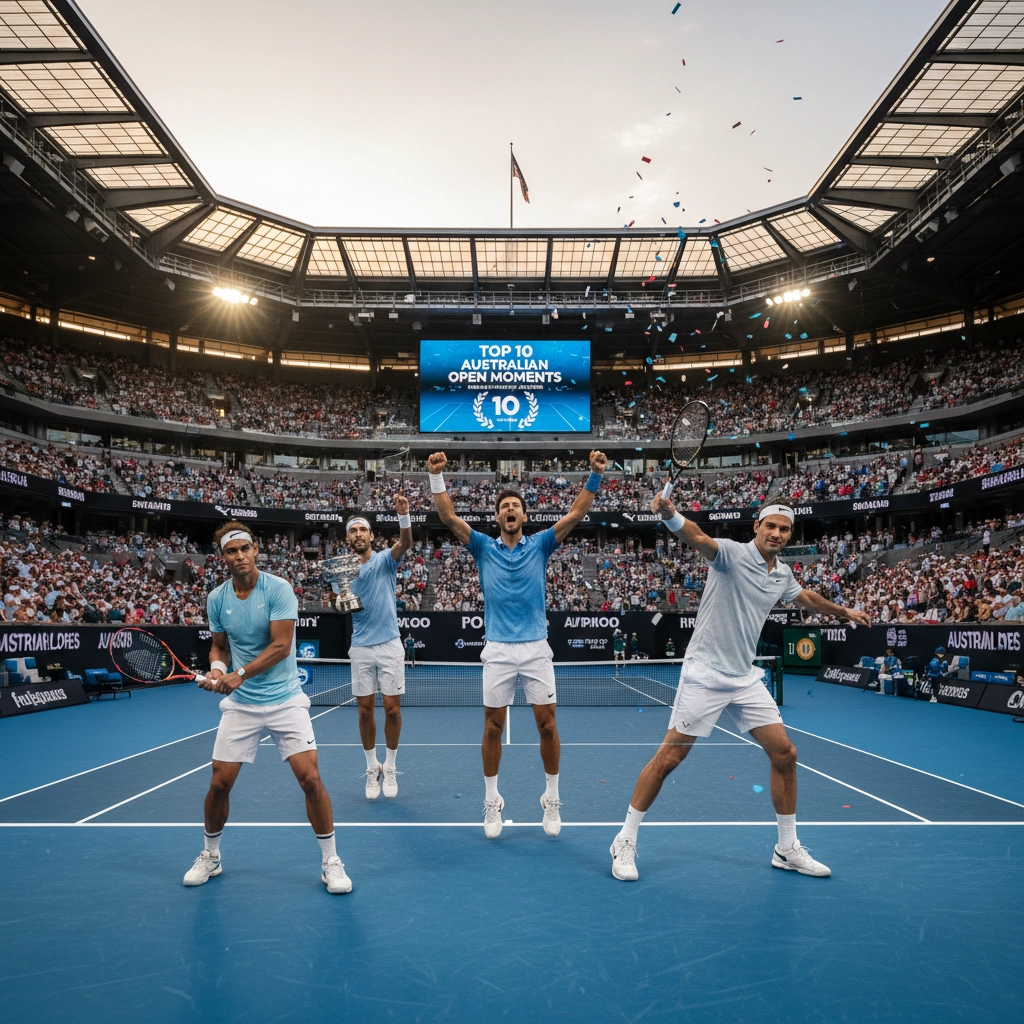
How the Australian Open Became Ground Zero for the Big Three
The Australian Open hasn’t just handed out trophies — it’s shaped careers. When you follow the trajectories of Rafael Nadal, Novak Djokovic and Roger Federer, you’ll see how Melbourne tested their adaptability, resilience and hunger. For each player, the hard courts and the unique conditions at the Rod Laver Arena produced defining matches that influenced Grand Slam legacies and head-to-head narratives.
In this first part, you’ll explore the formative Australian Open moments that announced these champions to the world, revealed tactical evolutions, and set up the rivalries that dominated tennis for years. These early highlights provide context for the larger epic clashes you’ll read about next.
Federer’s Early Australian Open Milestones
Federer’s first major statement in Melbourne
When Federer captured his first Australian Open title, you witnessed more than a trophy — you saw the arrival of a new standard. His fluid footwork, clean ball striking and composed temperament on big points signaled a shift in men’s tennis. That early triumph in Melbourne helped you understand why Federer would remain a perennial favorite at Grand Slams.
Elegance under pressure: Federer’s repeat performances
As Federer returned to the Australian Open in subsequent years, you could track his tactical adjustments: improved serve placement, smarter net approaches, and a mental calm during decisive games. Those repeat deep runs and title defenses illustrated how he turned Melbourne into a stage for both artistry and ruthlessness.
Nadal and Djokovic: Early Encounters That Foreshadowed Rivalries
Nadal’s breakthrough and the hard-court test
Nadal’s rise at the Australian Open proved that his clay-court dominance was only part of the story. When he claimed his breakthrough title in Melbourne, you saw him adapt his heavy-topspin game and court coverage to a faster surface. That victory showed his tactical versatility and gave him belief that he could compete for majors outside clay.
Djokovic’s emergence as a Melbourne mainstay
Djokovic’s early Australian Open successes were less about a single match and more about establishing a pattern: relentless return games, extraordinary defensive retrievals and a psychological edge in long rallies. You could tell early on that Melbourne suited his baseline consistency and mental fortitude, and that the Australian Open would become a centerpiece of his career.
- Key takeaway: these early moments demonstrated how each player adapted distinct strengths to Melbourne’s conditions.
- Key takeaway: the matches that followed would build on these foundations, producing some of the sport’s most intense rivalries.
Now that you’ve seen how Federer, Nadal and Djokovic used their early Australian Open moments to shape careers and rivalries, the next section will take you into the matches — the five-set wars, momentum swings and championship dramas — that made the top 10 list truly unforgettable.
Endurance Classics: When Melbourne Became a Test of Will
Some Australian Open matches are remembered for brilliance; others for the slow erosion of body and nerve. When Nadal and Djokovic met in Melbourne for those epic five‑set affairs, you didn’t just watch tennis — you watched willpower being measured point by point. These matches stretched into late-night battles where the surface, the bounce, and the crowd’s shifting mood all mattered. You saw Nadal crank up his heavy topspin to dislodge rhythm, and Djokovic absorb, redirect and neutralize with returns that seemed to arrive from everywhere at once.
What made these encounters exceptional wasn’t only length but momentum swings: sets traded, long rallies that felt like mini-matches, and the psychological grind of coming back from a deficit. In those hours, tactics evolved in real time — shorter points to protect the body, calculated risk at the net, and the tiny adjustments that decide tie breaks. For the watching public, these were dramas that revealed character as much as skill: who could find the next level of focus, who could summon a single shot to change the arc of the match, and who wilted under the weight of expectation.
Federer’s Melbourne Revival: Age, Artistry and One Unforgettable Title
When Federer returned to the top in Melbourne, it felt like a narrative rewiring. After injury and doubts about longevity, you watched him reclaim a Grand Slam with the same poise that had once been taken for granted. That title run was a study in adaptation: Federer’s serve placement was smarter, his forehand bite measured, and his courtcraft used fewer flashy winners and more surgical point construction. Against Nadal in the final, those adjustments mattered — every approach, every well-timed slice, and every calm game on big points reinforced the sense that mastery can coexist with maturity.
The match did more than hand Federer another trophy. For fans it was confirmation that tennis careers could be resilient, that experience could offset years, and that aesthetic brilliance could be married to pragmatic strategy. Melbourne, which had once been a proving ground for youthful ascendancy, became the setting for an elegiac reclamation: a champion reminding the sport what made him exceptional, even as the next generation watched and learned.
Djokovic’s Psychological Edge: Turning Momentum into Dynasty
Across multiple seasons, Djokovic used Melbourne as a laboratory for one of tennis’ most potent weapons: psychological control. Where Federer dazzled and Nadal bulldozed, Djokovic often dominated the space in between — neutralizing opponents’ strengths and making the opponent play the match he wanted. You saw it in his return games that peeled open service holds, in his steely calm during long, pressure-laden rallies, and in the way he could flip momentum after a lost set.
In key Australian Open moments, that edge translated into late-match comebacks, decisive tie-break mastery and a knack for producing his best tennis on the stages that mattered most. Melbourne matches became less about flashy lines and more about who could endure the attrition, who could remain precise under fatigue, and who could impose a plan across five sets. Watching Djokovic at his Melbourne best, you understood how psychological resilience becomes tactical advantage — and why the Australian Open sits at the heart of his legacy.
Legacy on the Melbourne Hardcourts
The mark left by Nadal, Djokovic and Federer at the Australian Open extends beyond trophies and match statistics. Their encounters reshaped how players approach best-of-five matches on hardcourts — from physical preparation and recovery to tactical adjustments under extreme pressure. Young players and fans alike still reference those Melbourne nights when discussing grit, shot selection and the interplay between style and strategy. For anyone seeking schedules, records or historical context, see the Australian Open official site.
The Enduring Allure of Melbourne
Melbourne offers a rare combination of atmosphere and stage that amplifies tennis into theatre. The moments created there by Nadal, Djokovic and Federer don’t just live in highlights reels; they live in memory — the kind that reshapes expectations about what’s possible on court. That enduring allure keeps fans returning, players striving, and the tournament evolving season after season.
Frequently Asked Questions
What makes Nadal vs Djokovic matches at the Australian Open so memorable?
Those matches often became endurance tests with dramatic momentum swings: heavy Nadal topspin against Djokovic’s exceptional return and movement. Long rallies, tactical shifts and psychological resilience turned several encounters into late-night epics that highlighted both players’ strengths.
How did Federer change his game during his Melbourne revival?
Federer adapted by placing serves more intelligently, using a measured forehand and leaning on refined courtcraft rather than sheer power. His approach balanced aesthetic shotmaking with pragmatic strategies to manage matches and preserve energy.
Why is Djokovic said to have a psychological edge at the Australian Open?
Djokovic’s edge came from relentless consistency, return games that could break opponents’ serves frequently, and an ability to stay composed under pressure. Those traits allowed him to flip momentum, dominate tie-breaks and execute game plans across long matches.


