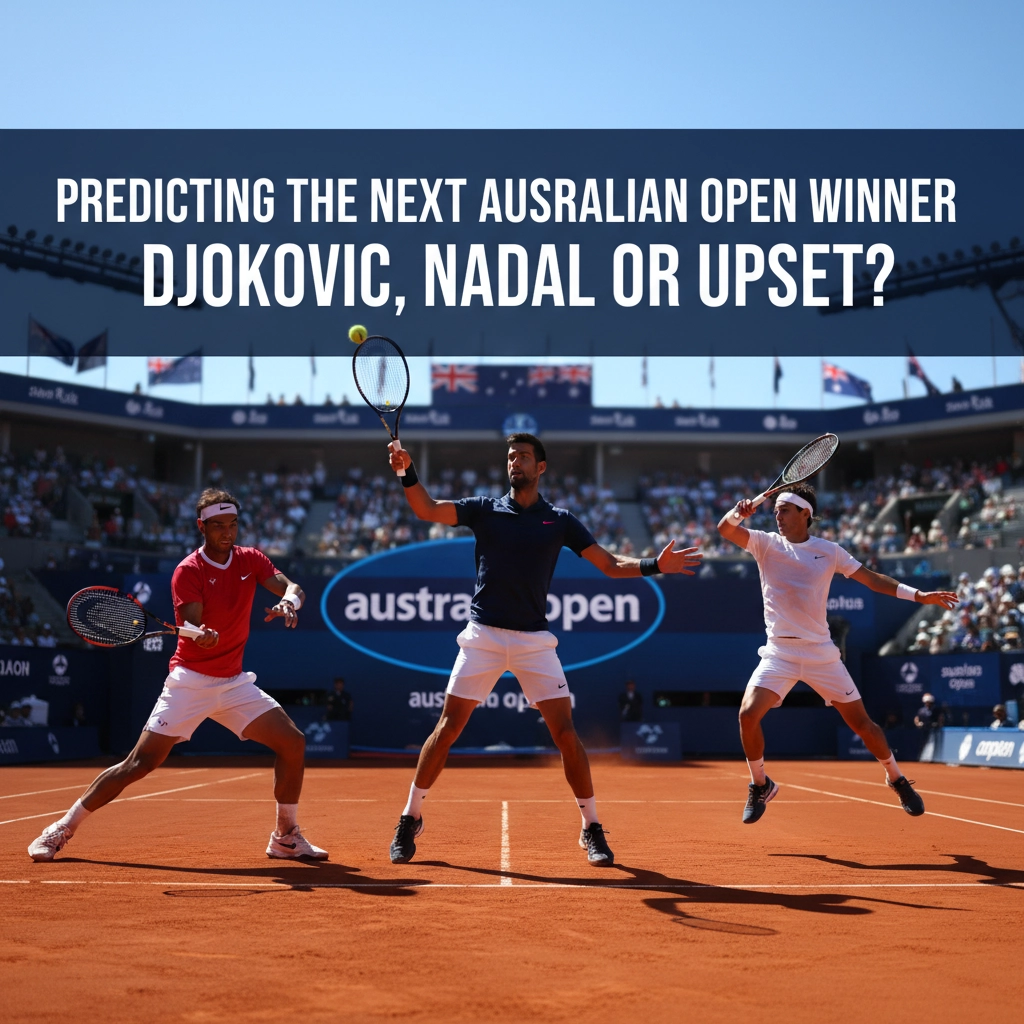
Why the Australian Open often narrows the field to Djokovic, Nadal or a surprise champion
You know the Australian Open is unique: it’s the first Grand Slam of the season and it often sets the tone for the year. By the time the hard courts in Melbourne welcome the world’s best, players have different preparation paths — some peak early, some are still shaking off the off-season rust. That variability is why debates about whether Novak Djokovic or Rafael Nadal will lift the trophy again, or whether an upset will occur, are always compelling.
When you assess title favorites, you should account for surface, historical performance, recent form and psychological momentum. Djokovic has an extraordinary record in Melbourne thanks to his baseline control and return game on hard courts, while Nadal’s relentless intensity and improved hard-court tactics make him a perennial threat when fit. But Grand Slams are also where dark horses emerge: a confident young player or a veteran rediscovering form can upset the established order.
How to weigh form, fitness and draw when predicting the winner
Form and match rhythm — what you should look for
You’ll want to evaluate recent match results rather than rely solely on ranking. Key indicators of form include:
- Match wins against top-10 opponents in the lead-up tournaments, which show readiness to beat elite competition.
- Performance in match tiebreaks and deciding sets, which reflects physical conditioning and mental resilience.
- Consistency of serve and return statistics — high first-serve percentage and break-point conversion matter on Melbourne’s hard courts.
Fitness, injury history and scheduling decisions
Fitness can be the decisive factor between Djokovic, Nadal and a surprise champion. You should consider:
- Recent withdrawals or retirements in tournaments, which may signal lingering physical issues.
- Training intensity and any late changes to scheduled lead-up events — players who cut back might be protecting longer-term health, while those who push hard risk late injury.
- Recovery from known chronic issues (e.g., Nadal’s foot or hip concerns) and how match load may influence performance over two weeks.
Draw dynamics and path to the final
Even elite players can be vulnerable to draw-related upsets. When you analyze the draw, pay attention to:
- Potential early-round clashes with dangerous floaters who frequently upset seeds.
- Section density — a “stacked” quarter where multiple in-form players are grouped can exhaust a favorite before the semi-finals.
- Weather and scheduling — extreme heat or late-night matches can tilt outcomes toward younger, fitter competitors.
With these early indicators in mind, you have a framework to judge whether Djokovic’s consistency, Nadal’s competitive fire, or a dark-horse run is most probable — in the next section, you’ll dig into head-to-head matchups, statistical trends at Melbourne Park, and specific players who could cause an upset.
Head-to-head matchups and the tactical edges that matter in Melbourne
When you break down potential finals, the raw head-to-head record is less important than the tactical matchups. Melbourne’s hard courts reward players who can neutralize big serves, extend rallies without giving away free points and impose pressure on break points. Against that backdrop, Djokovic’s return and backcourt coverage remain the single biggest equalizer — he can flip pressure back onto big servers and force opponents into uncomfortable margin-of-error tennis. Nadal, when fully fit, brings relentless depth, heavy topspin and the ability to push opponents behind the baseline, turning short balls into attack opportunities.
Look at the specific exchanges that decide matches: second-serve returns, short-ball aggression, and the willingness to step in on short rallies. A player who can consistently punish second serves and convert a high percentage of break points will make the draw very thin for both Djokovic and Nadal. Conversely, anyone who can shorten points with a powerful first serve and finish at the net reduces the effectiveness of both Djokovic’s retrieving and Nadal’s heavy baseline patterns.
Tactical adaptation across a long match is also crucial. Djokovic has a documented advantage in mid-match adjustments and tiebreak scenarios, while Nadal’s capacity to elevate intensity and grind through long sets can swing momentum in his favor. Spotting which player can impose their rhythm early in matches — and who is likely to tire or falter in the fifth set — is a practical way to tilt your prediction toward one champion or another.
Statistical trends at Melbourne Park and the dark horses who fit them
Certain statistical patterns at Melbourne Park repeat year to year: hold percentages on first serve, break-point conversion, and average rally length in winning matches. Historically, champions combine a high first-serve win rate with elite return numbers. If you see a contender posting both — strong free-point production on serve and a return game that generates frequent break opportunities — they’re more than just a dangerous outlier.
Which players match those metrics and could cause an upset? Look for:
– Powerful, aggressive movers who can shorten points but also sustain baseline rallies when needed (they neutralize Djokovic’s retrieval and limit Nadal’s time to spin up).
– Young, fearless returners who punish second serves and thrive in tiebreaks — those are often the qualifiers for surprise runs.
– Experienced top-10 players who have struggled with consistency but show high serve efficiency and fewer unforced errors in the lead-up tournaments.
Names change season to season, but the profile stays constant: elite returns + reliable serve + mid-match adaptability. That combination makes a non-favorite a true threat in Melbourne.
In-tournament variables that flip predictions
Finally, never underestimate day-to-day variables. Extreme heat, late finishes and a stacked section of the draw can turn a presumed path into a gauntlet. Scheduling quirks — a player forced into back-to-back late-night matches — can sap the advantage from a higher seed and open the door for fresher opponents. Momentum is contagious: a confidence-boosting five-set win in the early rounds can transform a “dark horse” into a legitimate contender by the quarterfinals.
When you assemble your prediction, weigh tactical matchup, statistical fit and those in-tournament variables together. That method will give you a sharper sense of whether Djokovic’s consistency, Nadal’s intensity, or an inspired upset is the likeliest outcome in Melbourne.
What to watch in Melbourne
Predicting a champion before the first ball is struck is tempting but premature. The real verdict comes from live signals: player fitness updates, early-round serve and return numbers, how contenders handle late finishes and heat, and the psychological momentum of tiebreaks and five-set battles. Keep an eye on those indicators rather than headline projections — they’ll tell you more about who’s peaking at the right time.
Frequently Asked Questions
Who is more likely to win the Australian Open: Djokovic or Nadal?
It depends on current form and fitness. Djokovic’s game is exceptionally well-suited to Melbourne’s hard courts and he often has the edge in returns and tiebreaks; Nadal can overpower opponents when fully fit but his chances hinge on physical condition and recovery across the fortnight. Both remain top contenders, with in-tournament form ultimately deciding the favorite.
How much do scheduling and extreme heat change predictions?
Significantly. Back-to-back late matches, long five-setters, and extreme temperatures amplify fatigue and increase the likelihood of upsets. A fresher, well-managed player can exploit an opponent’s recovery deficit, so scheduling and weather are crucial context when adjusting pre-tournament predictions.
What characteristics make a dark horse most likely to cause an upset in Melbourne?
Look for players who combine a high first-serve win rate with elite second-serve returns, strong break-point conversion, and the ability to shorten points when needed. Young, fearless competitors who thrive in tiebreaks and show mid-match adaptability have the best shot at turning a surprise run into a title threat.