
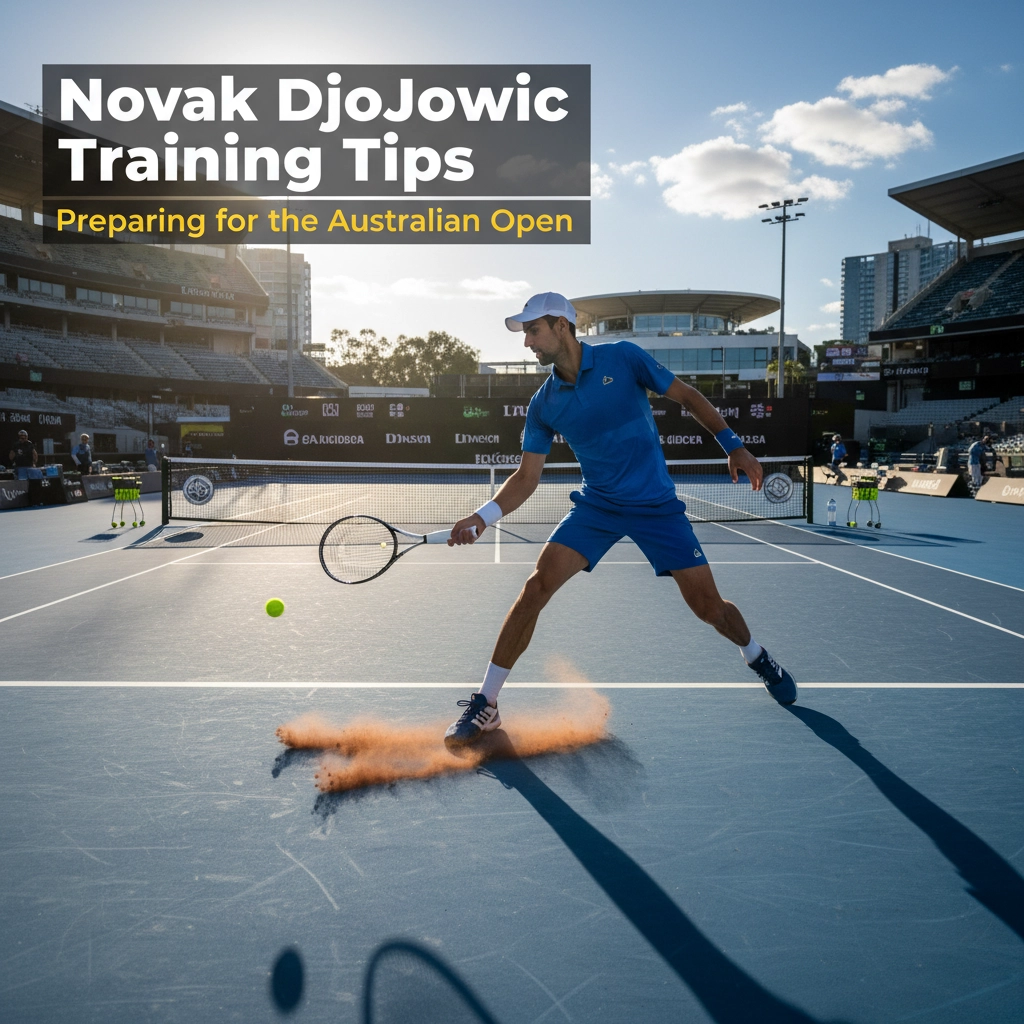
Prepare for Melbourne: What Djokovic’s preseason teaches you about tournament-specific readiness
You want to arrive in Melbourne with sharp movement, resilient fitness, and a calm competitive mindset. Novak Djokovic’s preparation is worth studying because he consistently tailors his training to the unique demands of the Australian Open: long matches, heat, fast hard courts, and a packed schedule. By adopting the same principles you can reduce injury risk, improve consistency, and peak at the right moment.
Identify the demands and set clear, measurable goals
Before you train, pinpoint what matches you’ll need to win and what obstacles you’ll face on hard courts. Translate those into SMART targets: serve percentage under pressure, first-step acceleration, sustained intensity for 3–5 hour matches, and reliable recovery between rounds. Use these targets to guide weekly microcycles and to measure progress during practice.
Foundational phase: Movement, baseline control, and durable conditioning
Djokovic starts with a base that supports everything else. In your early-phase program you prioritize hip mobility, lateral quickness, core stability, and aerobic capacity so you can sustain high-quality practice days and avoid breakdowns when intensity rises.
Key components to build in the early weeks
- Mobility and joint resilience: Focus on dynamic hip and thoracic mobility to enable efficient change-of-direction and reduce compensatory loading on knees and lower back.
- Movement patterning: Drill split-step timing, low-contact recovery steps, and explosive first steps. Emphasize technique over maximal speed so the motor patterns are reliable under fatigue.
- Baseline consistency drills: Use progressive rallying sessions—from controlled crosscourt exchanges to patterns that force directional changes and defensive recovery.
- Conditioning with tennis specificity: Alternate high-intensity interval runs (short court sprints with quick decelerations) and longer aerobic sessions to build match endurance without overtaxing the nervous system.
- Strength and injury prevention: Prioritize posterior chain strength, single-leg stability, and scapular control. Include Nordic hamstring progressions, single-leg Romanian deadlifts, and banded shoulder work.
Structuring a typical week in the base phase
Plan 4–6 training days that mix on-court technical sessions (2–3 shorter, high-focus sessions), 2 gym sessions emphasizing strength and anti-rotational control, and 1–2 aerobic maintenance sessions. Schedule at least one active recovery day with mobility, massage, or light swimming. Track load by noting session duration, perceived exertion, and court-specific metrics (e.g., first-step times, rally length).
With these foundations in place you’ll be ready to progress into Djokovic-style high-intensity on-court routines and match-simulation work designed to fine-tune tactics and peaking for the Australian Open.
High-intensity on-court routines and realistic match simulation
Once the base is established, shift the emphasis to specificity: replicate the intensity, decision-making, and physical stress of five-set matches on hard courts. Djokovic’s work in this phase is less about raw volume and more about targeted, high-quality repetitions that teach you to execute under fatigue.
- Intensity blocks: Organize sessions into 2–3 focused 20–30 minute blocks where the objective is maximal quality, not endless hitting. Example: 2 × 25-minute point-play focusing on defensive-to-offensive transitions (work 4 minutes, rest 1 minute between games). Track error rates and first-strike winners.
- Serve and return pressure drills: Alternate short sessions where one player serves 15–20 pressured first serves (simulate 2nd-set breakpoints) while the receiver practices aggressive takeaways and directional returns. Reverse roles. Aim to maintain >60% first-serve percentage in these blocks while varying placement.
- Situational point training: Script patterns you expect to face in Melbourne—fast court rallies, transition volleys, deep kick serves. Run 10–15 repeat points per pattern with a coach or hitting partner changing start positions and adding “surprise” balls to replicate match unpredictability.
- Controlled match-play: Conduct weekly practice matches with full scoring and conditions: 3–5 sets, limited coaching, simulated crowd noise, and time-of-day adjustments. Debrief each match with objective metrics (unforced errors, first-serve %, breakpoints saved) to keep targets measurable.
Maintain one technical maintenance session per week where you intentionally lower intensity and focus on precision—short rallies, serve placement, and footwork cues—so you don’t engrain rushed mechanics from constant high-load training.
Heat acclimation, recovery protocols, and the taper to peak
Melbourne’s summer heat and the tournament’s dense schedule demand specific acclimation and disciplined recovery. Djokovic prepares his body to perform day after day; you should too.
- Heat adaptation: Start controlled heat exposure 10–14 days before competition. Gradually increase session duration in warm conditions (aim for 60–90 minutes), monitor heart rate and perceived exertion, and practice your hydration/sodium plan. Incorporate short high-intensity efforts near the end of these sessions to mimic end-of-rally stress.
- Recovery hierarchy: After intense days prioritize sleep, nutrition, and active recovery. Use contrast showers or brief cold immersion (6–10 minutes at 10–15°C) after the most taxing practices, compression garments for travel, and daily mobility sessions to maintain joint range. Schedule one full low-load day each week.
- Tapering principles: Two-week taper: reduce total on-court volume 30–50% while preserving intensity through short, high-quality rallies and serve/return work. Maintain strength sessions with lower volume but preserved load (e.g., 2 sets of heavy compound lifts) to keep neuromuscular readiness without inducing fatigue.
Log recovery metrics (sleep hours, RHR, HRV, soreness) to adjust the taper dynamically—cut volume earlier if markers show accumulated fatigue, or maintain slightly higher workload if you’re responding well.
Tactical sharpening and championship point routines
Physical readiness only pays off when married to clear tactics and a repeatable match routine. Djokovic’s edge often comes from his preparation for specific opponent types and his rock-solid point-to-point rituals.
- Pattern planning: Prepare 3–4 go-to patterns for different opponents: big server, aggressive baseliner, serve-and-volleyer. Drill these patterns until they can be executed under fatigue—e.g., crosscourt return, two-shot takeover to open the court, then finish with deep inside-out forehand.
- Pressure scenarios: Practice clutch situations—serve for the set, down break points—with consequences (extra sprints, forfeited points) to build tolerance. Simulate 5–10 “match points” per week in practice matches.
- Between-point routine: Hone a concise pre-serve and post-point routine: breath control (3 slow exhalations), visual target, and quick reset cues. Consistent micro-routines reduce decision noise and preserve energy during long matches.
Combine these tactical strips with the physical and recovery strategies above and you’ll approach Melbourne ready to translate practice intensity into match wins.
Consistency, controlled curiosity, and the willingness to iterate on what works for your body and schedule will carry you farther than any single workout. Keep a coach or training partner accountable, use metrics to inform small changes, and protect the processes that allow you to recover and return to high-quality work. Preparation is a collection of habits—treat each session, meal, and rest period as an intentional step toward match day.
Peaking for Melbourne
Arrive at the courts with clear priorities: preserve calm, trust your routines, and be ready to adapt. On match days simplify choices—focus on execution rather than reinvention—and let the work you’ve invested guide your decision-making. Peak performance is less about perfect planning and more about disciplined preparation, realistic self-monitoring, and the composure to apply your skills under pressure.
Frequently Asked Questions
Can recreational players use Novak Djokovic’s training approach?
Yes—many principles scale down well (quality over volume, intentional recovery, tactical clarity). Reduce intensity and volume, prioritize injury prevention, and focus on consistency. Work with a coach or trainer to modify drills and loads so they fit your fitness level and weekly schedule.
How can I acclimate to heat if I don’t have access to hot outdoor conditions?
Use alternatives like indoor heated spaces, post-exercise sauna sessions, or shorter, more frequent exposures while wearing extra layers to raise core temperature safely. Begin adaptation earlier, monitor heart rate and perceived exertion, and practice your hydration/sodium plan. Always progress gradually and consult a medical professional if you have health concerns.
When should I start tapering for a shorter tournament?
For week-long events a 7–10 day taper is common: progressively reduce volume by ~30–50% while keeping intensity in short, high-quality sessions. Maintain neuromuscular readiness with lower-volume strength work and use recovery metrics (sleep, RHR, HRV, soreness) to fine-tune how quickly you cut workload.