Why Novak Djokovic has become the benchmark at the Australian Open
You can look at the Australian Open and see a tournament shaped around Novak Djokovic’s strengths. When you watch him play at Melbourne Park, you’ll notice a combination of technical precision, physical resilience, and mental control that repeatedly produces deep runs and titles. Rather than relying on a single weapon, Djokovic uses a complete game that is especially well-suited to the hard courts and demanding January conditions.
Tactical and physical advantages you should note
- Return and neutralizing serve: You’ll see Djokovic routinely take control of rallies immediately after the return. His ability to neutralize big servers forces opponents to play more points from the defensive side.
- Baseline consistency and movement: If you pay attention, his court coverage and ability to redirect pace mean he extends rallies until opponents make errors or leave the court open.
- Heat and fitness management: You can observe Djokovic’s superior endurance in long matches and hot conditions, often prevailing late in five-set battles when others fatigue.
- Mental elasticity: When pressure builds, you’ll notice he typically raises his level rather than folding — an attribute that has turned tight Melbourne finals into his advantage.
- Adaptation to surface and ball speed: Melbourne’s Plexicushion/Hard court favors consistent, deep ball-striking; you’ll see Djokovic tailor his tactics to exploit the slightly slower, higher-bouncing conditions that reward baseline precision.
How Rafael Nadal and Roger Federer fit into the Melbourne picture you’re trying to understand
To place Nadal and Federer alongside Djokovic at the Australian Open, you should consider how their games interact with Melbourne’s conditions and how career circumstances have influenced their appearances. Each player carries an unmistakable legacy, but you’ll notice different patterns when you compare their Australian Open histories to Djokovic’s sustained dominance.
What you should know about Nadal’s Melbourne profile
- Clay-first pedigree: You’ll see Nadal’s heavy topspin and left-handed angles excel most on clay, while hard courts require him to flatten out shots and modify tactics.
- Injury interruptions: When you review his AO runs, gaps and early exits often tie back to physical issues that have limited his ability to peak every January.
- Big-match grit: You’ll also find Nadal’s competitive spirit produces standout Melbourne performances when he arrives fully fit.
What you should know about Federer’s Melbourne profile
- Grace on faster courts: You’ll remember Federer’s elegant movement and aggressive finishing that fit very well on quicker surfaces, but Melbourne’s conditions sometimes neutralized his net-rushing edge.
- Scheduling and longevity: If you consider Federer’s late-career timetable and eventual retirement from regular tour play, you’ll see fewer title opportunities at the Australian Open compared with his peak years.
- Legacy impact: You’ll appreciate that Federer’s AO success and style still shape how spectators and analysts view the tournament’s competitive standards.
Having established these early comparisons and the core reasons Djokovic performs so consistently at Melbourne Park, you’re ready to dig into head-to-head records, match-by-match examples, and statistical evidence that explain how these dynamics played out in specific tournaments.
Head-to-head narratives at Melbourne: how patterns emerge in their clashes
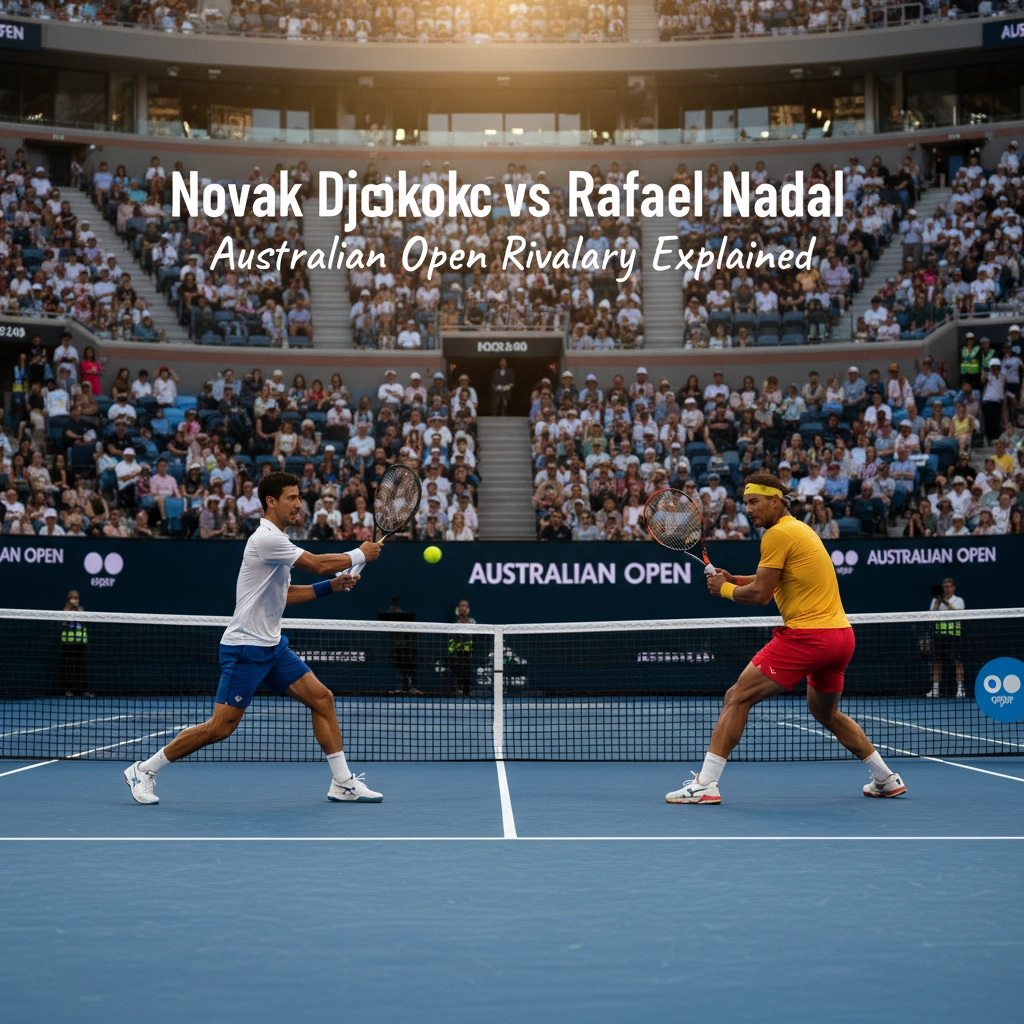
When you look at Djokovic’s meetings with Nadal and Federer at the Australian Open, you’ll notice recurring themes rather than one-off surprises. Against Nadal, matches in Melbourne often become tactical chess games: Nadal tries to open with heavy forehand kick and shorter angles, while Djokovic systematically lengthens rallies and converts the openings with penetrating backhand returns. When both are healthy, you’ll see those contests tilt toward whoever can impose rhythm first — and more often than not at Melbourne, that’s Djokovic because his return neutralizes Nadal’s service rhythm early.
Against Federer, the story you should pick up on is one of style versus counter-style. Federer’s aggressive timing, angled first-strike forehand and net game can look like the perfect antidote to long baseline exchanges — and on faster days in Rod Laver Arena that was occasionally true. But you’ll also notice Djokovic’s ability to absorb pace and produce surgical passing shots, plus his uncanny lateral recovery, which reduces the effectiveness of Federer’s blitz-and-finish tactics over the course of a best-of-five encounter. In short, Melbourne magnifies Djokovic’s counters to both opponents’ strengths, and those tactical edges repeat across multiple matchups.
Match-by-match snapshots that crystallize the rivalries
There are a handful of Melbourne matches that act as illustrative blueprints. Think of the Grand Slam battles that went deep into the fifth set: you’ll repeatedly see Djokovic drawing on physical endurance and shot selection to grind down opponents. In the matches where Nadal came in with form and fitness, Djokovic’s returns and movement turned long rallies into opportunities to break late. Against Federer, you’ll recall sets where Djokovic’s backhand down-the-line or his ability to defend short balls created swing moments that shifted momentum decisively.
Pay attention to how these swing points unfold: often a single clutch break saved or earned early in the fourth or fifth set changes the tactical complexion — Federer is forced to take more risks; Nadal must flatten his heavy topspin; Djokovic, conversely, looks to settle. Those micro-moments in Melbourne tend to accumulate into match-defining trends that favor the player better at adapting to heat, courts and the pressure of late-January tennis.
Numbers you can point to that explain Melbourne dominance
If you want to quantify what you’re seeing, focus on return metrics, five-set win percentage, and title consistency. Djokovic holds the men’s record for Australian Open singles titles, while Federer and Nadal have had success there on a smaller scale (Federer won multiple AO titles in his career; Nadal captured the trophy once). Beyond trophies, you’ll notice Djokovic’s superior percentages in return games won and break-point conversions in Melbourne matches — figures that translate directly into more service breaks and more control of match tempo.
Finally, you should take into account durability measures: Djokovic’s rate of deep runs and recovery between matches means he arrives at quarters and semis fresher, statistically improving his odds in extended contests. Combine that with his mental-attack conversion at pivotal points, and the statistical picture explains why Melbourne has become his most reliably productive Slam.
Looking forward, the variables that will shape future Australian Opens are clear: player fitness and scheduling, subtle changes in court speed and ball composition, and the rise of younger challengers who can pressure the established order. Those factors, combined with Djokovic’s proven ability to adapt, make Melbourne a continuing litmus test — not just for trophies but for who can sustain form across long seasons and the unique conditions of late-January tennis.
Reading the road ahead
Djokovic’s sustained excellence at Melbourne has become a defining chapter of his career, but it also reframes how we view legacy and rivalry in men’s tennis. For Nadal and Federer the narrative shifts toward selective peaks and enduring influence, while for the next generation it’s a map of the standards they must meet. Whatever happens in future editions, the Australian Open will remain a place where physical resilience, tactical evolution and mental clarity are measured most sharply — and where new storylines are always ready to emerge. For schedules, ticketing and official updates, see the Australian Open official site.
Frequently Asked Questions
Why has Novak Djokovic been so dominant at the Australian Open?
Djokovic’s success in Melbourne stems from an uncommon combination of movement, return game, endurance and mental consistency that suits the tournament’s conditions. His ability to neutralize opponents’ serves and convert late-break opportunities in best-of-five matches repeatedly gives him an edge on the hard courts of the Australian Open.
How do Nadal and Federer generally approach matches against Djokovic in Melbourne?
Against Nadal, matches often become tactical baseline duels with Nadal using heavy topspin and Djokovic countering with depth and returns. Against Federer, the dynamic is usually aggressive offense versus Djokovic’s defensive retrieval and passing shots. In both cases, Djokovic’s capacity to adapt mid-match tends to shift momentum in his favor at Melbourne.
Can Nadal or Federer realistically challenge Djokovic for more Australian Open titles now?
Both players have proven they can win at Melbourne, but factors like current fitness, age, and schedule priorities affect their realistic chances. While occasional deep runs are possible if form and health align, consistently outpacing Djokovic at the Australian Open would require sustained peak performance across the fortnight, which has been Djokovic’s hallmark.