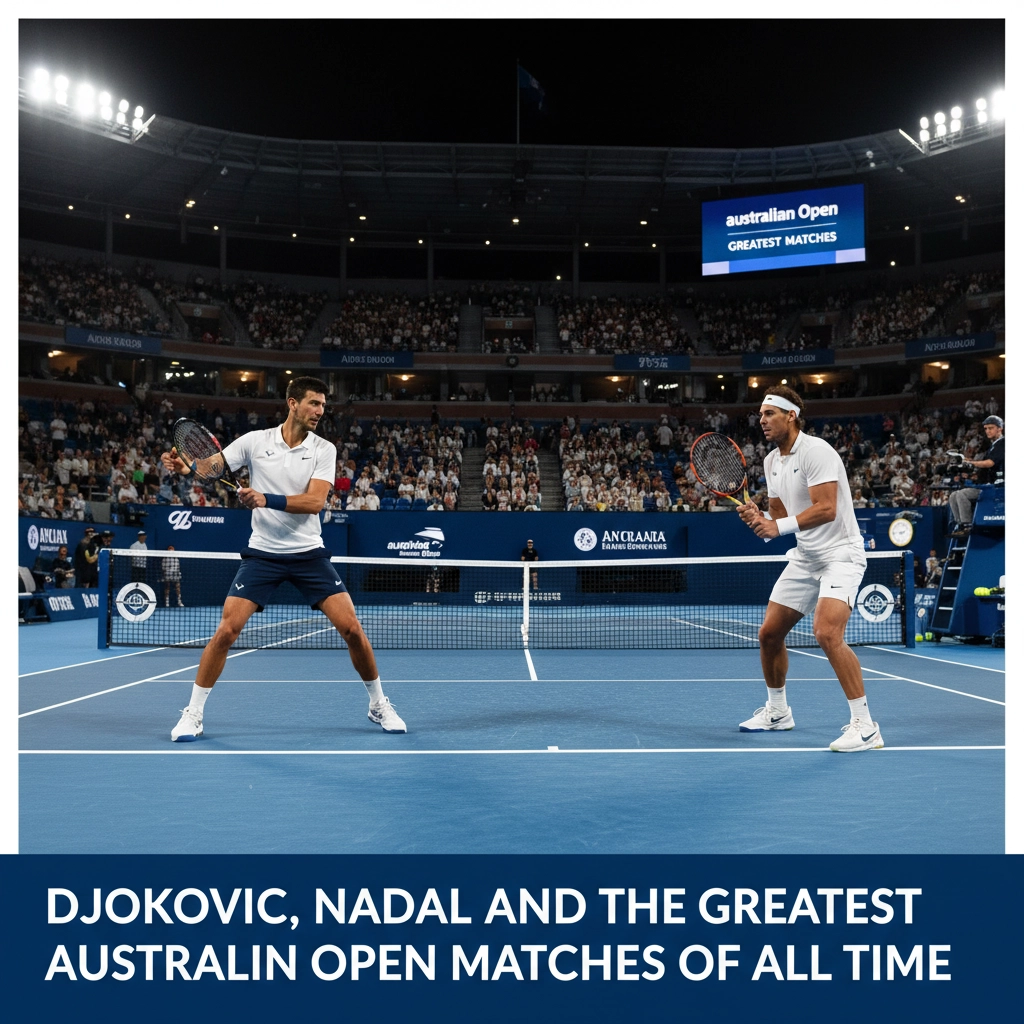

Why the “Big Three” rewrote what the Australian Open means to modern tennis
You’ve likely watched the Australian Open expecting drama, endurance and tactical brilliance — much of which today’s expectations trace back to Rafael Nadal, Novak Djokovic and Roger Federer. Their overlapping peaks didn’t just produce memorable finals; they changed how players, organizers and fans view the tournament. You’ll see their fingerprints in everything from match intensity to Melbourne Park’s calendar prominence.
Each member of the trio brought a distinct influence. Federer introduced a model of precision and versatility that made the hard courts feel like a stage for artistry. Nadal brought uncompromising physicality and grit that forced openers and later rounds to become tests of durability. Djokovic established a standard for baseline defense and mental resilience that often decided the biggest matches. Together, they raised the tournament’s competitive ceiling and shifted how winning at the Australian Open is weighed in a champion’s legacy.
How their rivalries turned Melbourne into a proving ground
When you think of the Australian Open before the Big Three, you might picture a Grand Slam warm-up lost in the shadow of Wimbledon or Roland Garros. Their rivalries changed that narrative. Head-to-head clashes in Melbourne often carried Grand Slam momentum into the rest of the season, making the event a true proving ground for form, fitness and psychological advantage.
- Repeated marquee matchups: Frequent meetings between Nadal, Djokovic and Federer at the Australian Open created serial storylines — rematches that fans and media tracked year to year.
- High-stakes epics: Their matches pushed the limits of five-set tennis, turning quarterfinals and semifinals into must-watch television and elevating the tournament’s global profile.
- Adaptive strategies: You could watch tennis tactics evolve in real time: Federer’s net approaches, Nadal’s heavy topspin, Djokovic’s counterpunching — each forced the others to innovate.
For you as a fan, analyst or aspiring player, those rivalries provided a blueprint. You learned how match-ups mattered more than rankings alone, how recovery and conditioning could override raw talent, and how clutch play under Melbourne’s unique conditions often determined who could claim a major early in the season.
Early ripple effects on scheduling and player priorities
Their dominance also nudged players and coaches to treat the Australian Open with greater strategic importance. You started to see season planning centered around peaking in January — training blocks, off-season recovery and even travel choices were increasingly made with Melbourne in mind. Tournament organizers reacted by refining court surfaces, scheduling marquee nights and investing in facilities that supported the physical demands of prolonged battles.
That combination of on-court rivalry and off-court adjustment set the stage for lasting change at Melbourne Park. In the next section, you’ll examine the specific matches, records and moments at the Australian Open that most clearly illustrate how Nadal, Djokovic and Federer reshaped the tournament’s history.
Signature matches that became modern legends
Some matches at Melbourne Park stopped being just results and became templates for how modern tennis is played and consumed. A few clearly stand out as turning points — not only for the winners, but for the tournament’s identity.
– The marathon that redefined endurance: Novak Djokovic’s five-hour-plus final against Rafael Nadal (the longest Grand Slam final in history) did more than hand Djokovic a title. It showed that a match in Melbourne could be an endurance test of skill, patience and willpower — a contest where baseline defense and impenetrable movement could neutralize pure power and spin. That match’s drama convinced viewers and players alike that the Australian Open could produce epic narratives every bit as compelling as Roland Garros or Wimbledon.
– The comeback and reinvention narrative: Roger Federer’s return to the top in his mid-30s, culminating in a dramatic win over Nadal in a later Australian Open final, illustrated longevity as a competitive weapon. Federer’s victory after prolonged recovery signaled that career phases could be extended through smart scheduling, medical support and tactical adaptation — a notion that altered how players planned their seasons around Melbourne.
– The breakthrough that broadened tennis’ map: Rafael Nadal’s first Australian Open title — his emergence as a hard-court Grand Slam champion — challenged assumptions about surface specialists. Nadal’s ability to translate relentless physicality and topspin to Melbourne’s courts expanded the tactical palette that could succeed there, encouraging a generation to combine clay-born intensity with hard-court precision.
Those matches became reference points. Coaches dissected them on morning shows, tactical adjustments discussed in press conferences translated into training sessions, and fans began to anticipate not just winners but which styles might prevail under Melbourne’s lights.
Records and ripple effects that rewired expectations
Beyond individual matches, the trio’s aggregate achievements rewired expectations for what it takes to win the Australian Open.
– Statistical dominance that raised the bar: Djokovic’s unparalleled haul of Australian Open titles established Melbourne as his benchmark tournament and forced rivals to measure success against consistency as much as peaks. Federer’s multiple titles across different eras underscored versatility; Nadal’s hard-court breakthroughs proved resilience can trump surface stereotypes.
– A premium on preparation and recovery: The trio’s repeated deep runs emphasized offseason planning. Players now treat January as a destination to peak for, not a warm-up stop; physiotherapists, sports scientists and tailored practice blocks are standard in preparation for Melbourne’s unique early-season grind.
– Commercial and scheduling consequences: Their presence drew prime-time crowds and global viewers, encouraging organizers to protect marquee matchups and invest in infrastructure — night sessions, retractable roofs and improved conditioning facilities. That changed how tournaments promote and schedule matches, increasing the Australian Open’s weight in the tennis calendar.
Collectively, these records and moments did more than fill trophy cabinets. They shifted how champions are made in January: superior fitness, tactical malleability and psychological toughness became as crucial as shot-making. For anyone watching or aspiring to compete at Melbourne Park, the Big Three rewrote the metric for greatness.
Enduring imprint on Melbourne Park
The careers of Rafael Nadal, Novak Djokovic and Roger Federer did more than fill trophy cabinets; they altered the atmosphere and ambitions of the Australian Open itself. Their rivalries and reinventions encouraged organizers to invest in player comfort, night-time spectacle and global broadcasting, while coaches and younger players adapted training and tactical thinking to match the standards those three set. As the tournament continues to evolve, the influence of their play and presence remains visible in how matches are scheduled, how athletes prepare for January’s rush, and how fans everywhere anticipate the next great contest. For up-to-date tournament information and history, see the Australian Open official site.
Frequently Asked Questions
How did Novak Djokovic specifically reshape the Australian Open’s competitive expectations?
Djokovic’s sustained dominance at Melbourne Park — through exceptional physical resilience and baseline consistency — set a new standard for what it takes to win repeatedly in January, pushing rivals to prioritize fitness, retrieval skills and mental toughness.
In what ways did Roger Federer influence player longevity at the Australian Open?
Federer’s late-career returns and tactical adaptations highlighted how smart scheduling, recovery management and courtcraft can extend elite performance, encouraging players to view the Australian Open as a target for career resurgence rather than just early-season form-building.
Why is Rafael Nadal’s Australian Open success significant for surface specialists?
Nadal’s ability to translate his clay-court intensity and topspin into hard-court victories broadened tactical approaches players consider viable in Melbourne, demonstrating that surface labels can be overcome by adaptability and physical preparation.