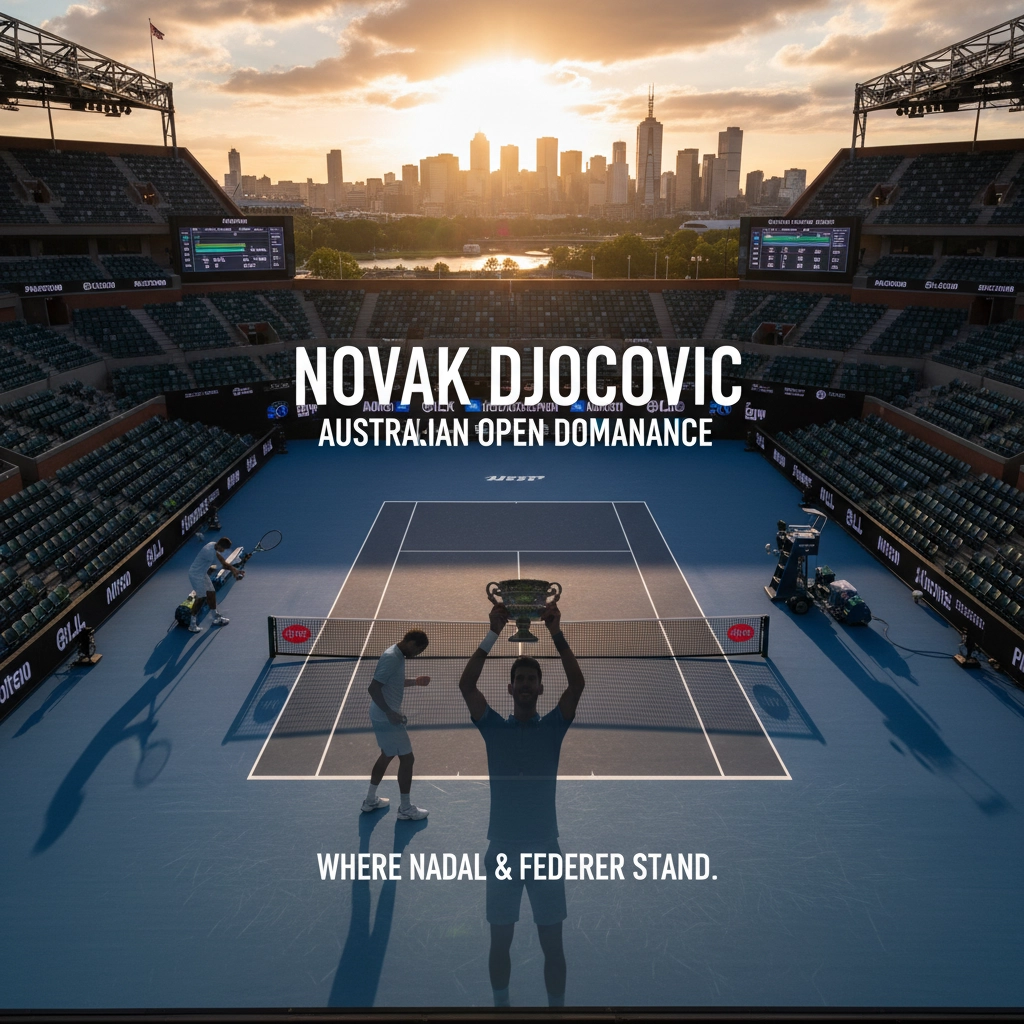

How Melbourne Park Became the Arena for the Big Three’s Legacies
You may think of Wimbledon or Roland-Garros when picturing Federer, Nadal, and Djokovic, but the Australian Open has been a decisive battleground that shaped their careers. As the first Grand Slam of the year, the tournament tests form, fitness, and mental reset after the off-season. For you, understanding why Melbourne Park matters means looking beyond trophies: the surface speed, the summer heat, and the timing of the event create conditions that highlight different strengths of each player.
When you follow the Big Three in Australia, you notice patterns. Federer’s elegant shot-making and aggressive court positioning often excelled on the relatively fast Plexicushion and later GreenSet surfaces. Nadal’s physicality and topspin gradually adapted to the lower-bouncing, quicker courts, while Djokovic’s return game and movement consistently exploited the marginal conditions to grind opponents down. These contrasts turned many matches into strategic masterclasses rather than simple displays of shot-making.
Early Showdowns in Melbourne: Defining Moments and First Clashes
Why the early meetings mattered to the rivalry
Early matches at the Australian Open set narratives that lasted for seasons. You can trace turning points back to specific editions where confidence swung, injuries were exposed, or tactical innovations were introduced. The importance of those early showdowns is twofold: they provided a template for how each player would approach future encounters, and they gave fans a preview of how the season might unfold.
Notable early matches you should know
- Federer vs Djokovic (2007–2010): These early finals and semis in Melbourne showcased Federer’s all-court artistry against Djokovic’s emerging flexibility and mental resilience. You could see Djokovic learn match management and tactical variation in these meetings.
- Nadal vs Federer (2009 Australian Open): While Nadal’s dominance on clay was clear, his matches in Melbourne exposed the gaps he needed to close on faster courts. You’ll notice that this period motivated Nadal to broaden his game and conditioning.
- Nadal vs Djokovic (early 2010s): Their Australian clashes presented a contrast between Nadal’s heavy-topspin aggression and Djokovic’s counterpunching depth. These contests often hinged on marginal improvements in Djokovic’s baseline defense and serve return.
As you examine these early chapters, pay attention to three recurring themes that shaped outcomes: adaptation to surface and conditions, mid-match tactical adjustments, and physical durability through multi-hour matches. Each of the Big Three displayed strengths in one or more of these areas, and the Australian Open frequently exposed who adapted fastest.
Having established how Melbourne shaped their rivalry and highlighted the earliest consequential matchups, you’re ready to dive into specific epic battles — full five-set thrillers, shifts in momentum, and match points that defined eras. In the next section, you will explore the most iconic Australian Open matches among Federer, Nadal, and Djokovic, analyzing key points, turning moments, and lasting impact on their careers.
Epic Five-Set Marathons That Redefined Careers
You remember these matches not just for their length, but for how they exposed — and reshaped — the limits of each player’s game. At Melbourne, the heat and lengthy rallies turned physical fitness into a tactical weapon. When Djokovic and Nadal traded multi-hour classics, it was less about a single shot and more about incremental chipping away: one extra return in, one better recovery step, one more deep ball to the opponent’s backhand. For you watching, the pattern is clear — the player willing to extend rallies and force tiny errors usually prevailed.
Key points in these marathons were predictable and ruthless: serve reliability under fatigue, depth of the return on the opponent’s second serve, and the ability to suddenly shorten points when an opportunity appeared. Watch how Djokovic tightened his grip in long matches by stealing the initiative with low, penetrating backhand returns; or how Nadal’s intensity and heavy forehand could still overturn momentum late in sets. Federer’s long battles in Melbourne often hinged on his capacity to change pace — deploying slice, coming to the net and finishing points decisively when rallies became grinding affairs.
Turning moments in these matches rarely came from a single spectacular shot. Instead, they arrived as sequences: a break opened after a long hold that ended with a forehand winner, or a player saved consecutive break points with surgical serving, turning a wobble into psychological ascendancy. Those moments had outsized effects on careers: a win built a player’s aura of invincibility at the start of the season; a loss exposed vulnerabilities that rivals and coaches targeted in the months that followed.
For the Big Three, the lasting impact was profound. Djokovic’s repeated triumphs in marathon matches at the Australian Open bolstered his reputation as the premier baseline rescuer. Nadal’s ability to survive and sometimes win those wars forced him to tinker with his flatter balls and movement on faster surfaces. Federer’s experiences there led him to pick moments to attack rather than extend, refining a game management approach that extended his longevity.
Tactical Masterclasses: Turning Points That Shifted the Rivalry
Some clashes felt like chess rather than brute force. In these encounters, you can learn the most about how small tactical adjustments flip a match. Consider the player who began a match trading heavy topspin, then midway shifted to take the ball earlier, cutting down the opponent’s reaction time. Or the one who switched from rallying deep to frequent net approaches to punish an opponent’s soft replies. Those are the matches where the coaching box and in-play intelligence matter most.
Key tactical levers included: returning to the opponent’s weaker wing (often Nadal’s backhand against Federer; Federer’s backhand against Djokovic), targeted serve patterns to set up the third-ball attack, and selective net forays to destabilize baseline comfort. A classic turning move was a mid-match decision to alter serve direction and follow it in — suddenly the opponent’s rhythm collapsed and the match tilted.
You should also note how these masterclasses influenced broader strategy. After being outmaneuvered in Melbourne, players adjusted offseason work: Nadal practiced taking the ball earlier and flattening his strokes; Federer fine-tuned his slice-to-volley transitions; Djokovic doubled down on return depth and court positioning. These tactical evolutions didn’t just win individual matches — they rewrote how the Big Three approached the Australian season and, by extension, the rest of the year.
Legacy and What to Watch Next in Melbourne
What endures from the Federer–Nadal–Djokovic era at the Australian Open isn’t just a collection of epic scorelines — it’s a template for excellence under pressure. Their matches left behind tactical blueprints, new standards of physical preparation, and a cultural memory of what peak rivalry looks and feels like on hard courts. Those echoes shape players, coaches, and fans every January in Melbourne.
As you watch future tournaments, pay attention to how contemporary contenders borrow and adapt those lessons: endurance training that rivals marathon conditioning, flexible tactics that mix depth with sudden aggression, and psychological habits forged to withstand long, grinding contests. For official schedules, historical archives and highlight reels, start with the Official Australian Open site, then look for curated match collections on major tennis broadcasters and the tournament’s channels.
Frequently Asked Questions
What made Federer, Nadal, and Djokovic matches at the Australian Open so compelling?
Compelling matches combined contrasting styles, high stakes early in the season, and Melbourne conditions that rewarded both baseline resilience and aggressive touch. Long rallies, sharp tactical shifts, clutch serving under fatigue, and visible psychological battles turned individual points into drama that carried through entire matches.
How did the conditions in Melbourne influence the outcomes between the Big Three?
Melbourne’s hard courts and often extreme heat magnified fitness and recovery advantages. The surface favors depth and low-bouncing returns, so players who could sustain intensity, vary pace, and strike opportunistically usually gained the upper hand. The environment pushed tactical and physical adjustments that proved decisive.
Where can I watch classic Australian Open clashes among Federer, Nadal, and Djokovic?
Look for official archives and highlights on the tournament’s website and YouTube channel, plus full-match replays on rights-holding broadcasters and streaming services that carry Grand Slam content. Many broadcasters also curate “classic matches” playlists that make it easy to revisit the greatest encounters.