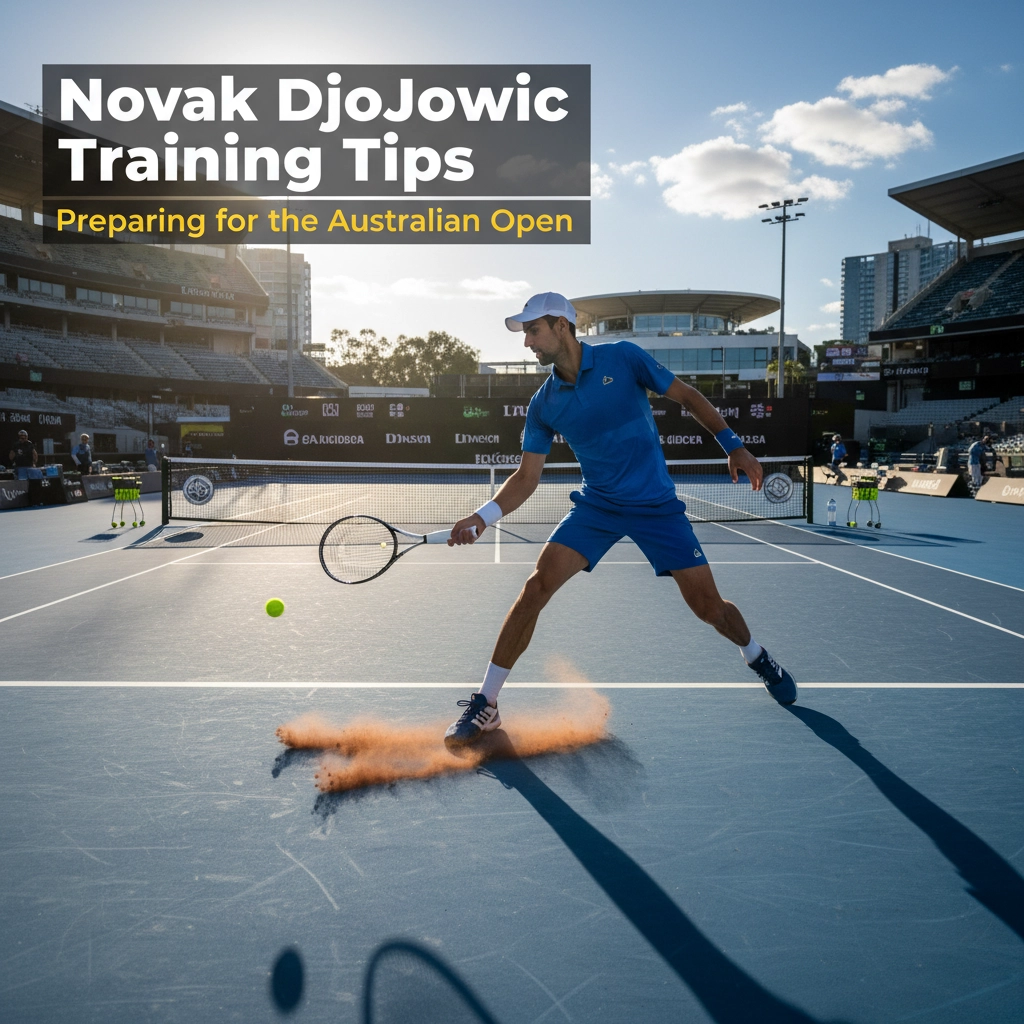

Why Djokovic and Nadal loom largest in Australian Open history
When you think of the Australian Open, you should picture high-stakes night sessions, relentless baseline battles and dramatic five-set epics under the lights at Rod Laver Arena. Two names rise above the rest in that setting: Novak Djokovic, who has made Melbourne his most fertile ground, and Rafael Nadal, whose relentless left-handed intensity has repeatedly upended expectations. Understanding their influence helps you appreciate not only individual matches but how the tournament itself evolved into a stage for tactical innovation, physical endurance and psychological warfare.
Djokovic’s record at the Australian Open — a record number of titles at the event — has defined an era of consistency and adaptability on hard courts. Nadal’s appearances, while fewer in number, have produced some of the sweetest rivalries and emotional peaks in the tournament’s modern era. When you watch their matches, you’ll notice contrasts that explain why each meeting attracts global attention: Djokovic’s near-impeccable movement, precision returns and court geometry versus Nadal’s heavy topspin, uncompromising defensive intensity and capacity to extend rallies until an opening appears.
Early encounters and the building blocks of their Melbourne rivalries
The tactical chess that began long before the final point
Before you dive into scorelines, it helps to know the broader tactical story. Early encounters between Djokovic and Nadal at the Australian Open were not only tests of fitness but laboratories for strategy. You’ll see how Djokovic progressively neutralized Nadal’s lefty spin with improved court positioning and deeper, flatter groundstrokes, while Nadal countered by sharpening his angles and shortening points when possible. These adjustments didn’t happen overnight; they were the product of repeated encounters across multiple seasons, each match teaching both players something they carried forward to the next Melbourne clash.
Matches that signaled changing momentum at Melbourne Park
- Look for matches where momentum swung after a single break of serve late in a set — those moments often rewrote tactical plans for both players.
- Pay attention to five-set encounters: physical conditioning, mental resilience and small tactical shifts in decisive sets often separate the winner from the vanquished.
- Observe how court conditions — from session timing to surface speed — influenced point construction and error rates, forcing both players to adapt mid-match.
As you follow this series, you’ll be guided through several of their greatest duels at the Australian Open: the turning points within those contests, the tactical innovations that emerged, and why those matches still matter to fans and players today. In the next section, you’ll get a close analysis of specific classic matches that redefined their rivalry at Melbourne Park.
The 2012 marathon: Djokovic vs Nadal — endurance, adjustments and a final for the ages
When people cite the Australian Open as the theatre of endurance, they point to the 2012 final between Novak Djokovic and Rafael Nadal. It was, quite simply, a match that tested everything the modern game demands: movement, shot tolerance, tactical elasticity and a mental grit that outlasts physical exhaustion. Djokovic’s 5–7, 6–4, 6–2, 6–7(5), 7–5 victory is remembered not just for the scoreline but for how each set outlined the evolving contest between two contrasting philosophies.
Early on Nadal employed the template that had troubled Djokovic across surfaces — heavy, high-bouncing forehands to open the court, relentless depth and a refusal to let rallies be shortened. He took the first set and looked capable of imposing a grinding rhythm. But Djokovic’s game-plan adjustments arrived in stages: he began to take the ball earlier, flattening his groundstrokes to reduce the effect of Nadal’s topspin; his backhand return — one of the great equalizers in tennis — increasingly neutralized Nadal’s serve-and-rally chances; and his court positioning became imperceptibly closer to the baseline, turning defence into immediate offense.
The fourth-set tiebreak was an emotional crucible. Nadal, who twice clawed back momentum in the match, edged that tiebreak and forced a decider, proving the psychological seesaw that had defined their rivalry. What separated Djokovic in the final set was marginal gains accumulating into decisive advantage: a sharper first-serve percentage at critical moments, fewer unforced errors when Nadal pushed the court position, and the sheer economy of movement that allowed Djokovic to retrieve, reset and attack without expending fatal energy.
Beyond tactics and statistics, the match reframed what a Grand Slam final could be. It extended the narrative of their rivalry into a marathon of minute adaptations — a lesson in how two all-time greats trade and learn in real time. The 2012 final became a blueprint: to beat Nadal at his most relentless you needed exceptional return depth, an ability to redirect pace, and the mental stamina to convert a late opportunity when both bodies were fraying.
Five-set patterns at Melbourne: what their duels taught a generation
If the 2012 final is the archetype, the broader corpus of Djokovic–Nadal matches at Melbourne Park reveals recurring patterns that influenced how players prepare for Australian Open five-setters.
– Momentum is granular, not binary. Breaks late in sets — often a single mis-hit or a tactical tweak — change not only the scoreboard but the risk calculus. Djokovic’s propensity to shorten rallies with flatter winners after absorbing Nadal’s early pressure frequently came a few games after a momentum swing, not instantly when the swing occurred. Understanding that delay allowed him to manage his energy and pick the exact moment to step on the gas.
– The return game is the decisive weapon on AO hard courts. Both men live and die by returns; Djokovic’s return depth consistently opened the court for winners, while Nadal’s ability to rough up second serves forced opponents into defensive stances. Matches where one player controlled the return exchange tended to finish in their favor.
– Tactical mini-evolutions matter more than wholesale overhauls. Unlike clay battles where entirely different patterns might be employed, Melbourne duels showed both players making tiny, surgical changes: a marginally higher first serve, a few more inside-out forehands, a repositioned backhand step-in. Those small edits, deployed repeatedly under pressure, swung tight sets.
– The mental contour of night sessions amplifies everything. Night matches at Rod Laver Arena turned tight moments into dramatic tests. Crowd energy, cooler conditions and longer recovery windows favored players who could translate adrenaline into controlled aggression — a skill Djokovic has repeatedly demonstrated.
Taken together, these patterns explain why Djokovic and Nadal produced not just great lines on a scoresheet but educational contests for coaches and competitors. Their Melbourne battles didn’t simply determine titles; they forced a reappraisal of preparation, recovery and point construction in five-set tennis, leaving lessons that continue to ripple through the tour.
Beyond tactics and statistics, the Djokovic–Nadal duels at the Australian Open have become part of the tournament’s living mythology. They have shaped how players, coaches and fans think about endurance, adaptation and the aesthetic of a five-set battle. More than headline finals or ticked boxes on a resume, those matches altered preparation methods, influenced younger competitors and enriched the sport’s culture — and Melbourne Park remains the place where such high-stakes storytelling feels most possible.
Legacy on the hard courts of Melbourne
What endures from these encounters is not a tidy list of winners but the standard they set: for tactical nuance, physical preparation and the temperament required to prevail when margins are wafer-thin. Those qualities — refinement under pressure, incremental adjustments and an appetite for long-term learning — are the truest monuments to Djokovic and Nadal’s contributions to the Australian Open. As new generations take the court, the bar they set will continue to shape what we call greatness at Melbourne Park.
Frequently Asked Questions
Why is the 2012 Djokovic vs Nadal final often called a turning point in modern Grand Slam tennis?
Because it showcased how marginal tactical changes, elite return depth and superior energy management can decide a five-set final. The match illustrated that winning at the highest level increasingly depends on in-match adaptation and recovery as much as on raw shot-making.
How did Djokovic and Nadal’s AO matches influence coaching and preparation across the tour?
Their matches emphasized the importance of return-of-serve quality, efficient movement and pacing for five-set encounters. Coaches incorporated more hard-court-specific endurance work, return drills and tactical scenarios into training, reflecting the tiny adjustments that proved decisive in Melbourne duels.
Are night sessions at the Australian Open a significant factor in these historic matches?
Yes. Night sessions alter court conditions, crowd energy and player recovery, often amplifying pressure moments. Both Djokovic and Nadal demonstrated an ability to translate that atmosphere into focused aggression or controlled defence, making night matches a distinct and influential part of their Melbourne narratives.