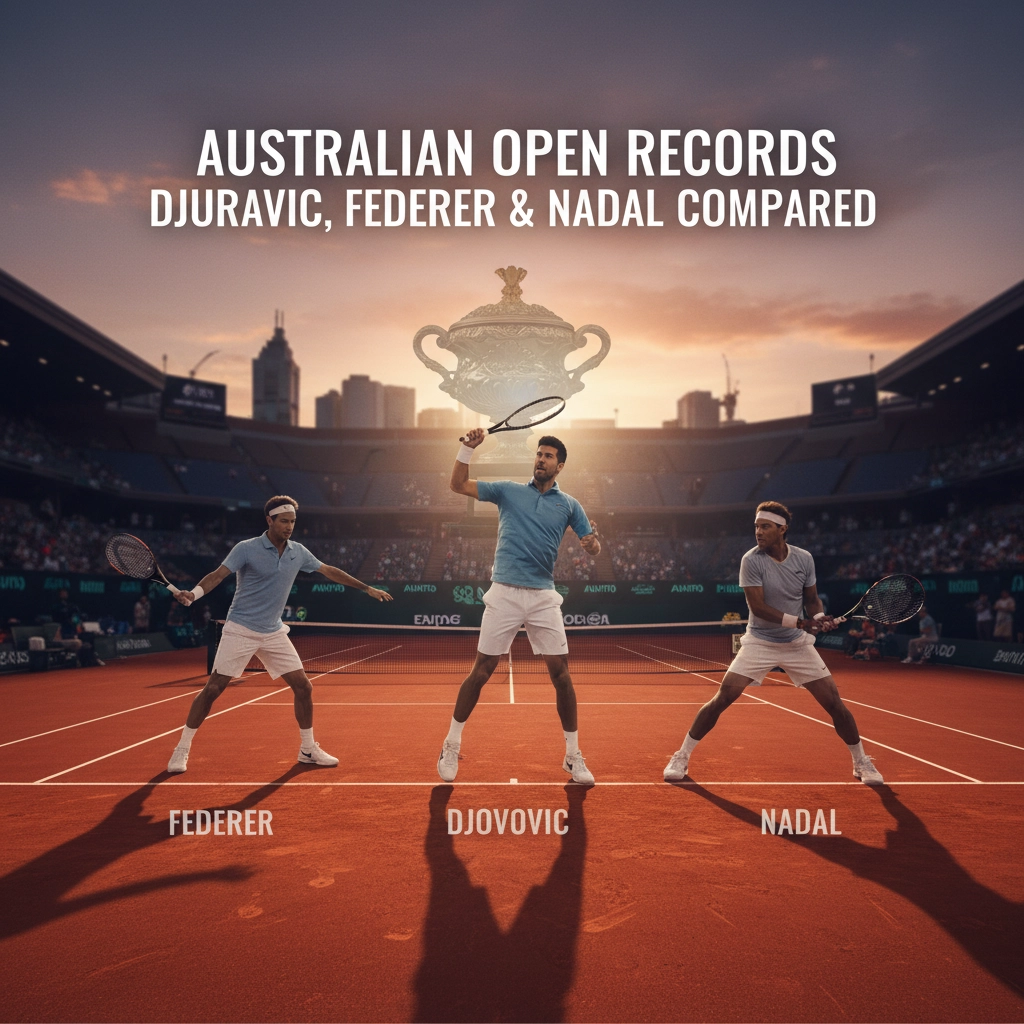
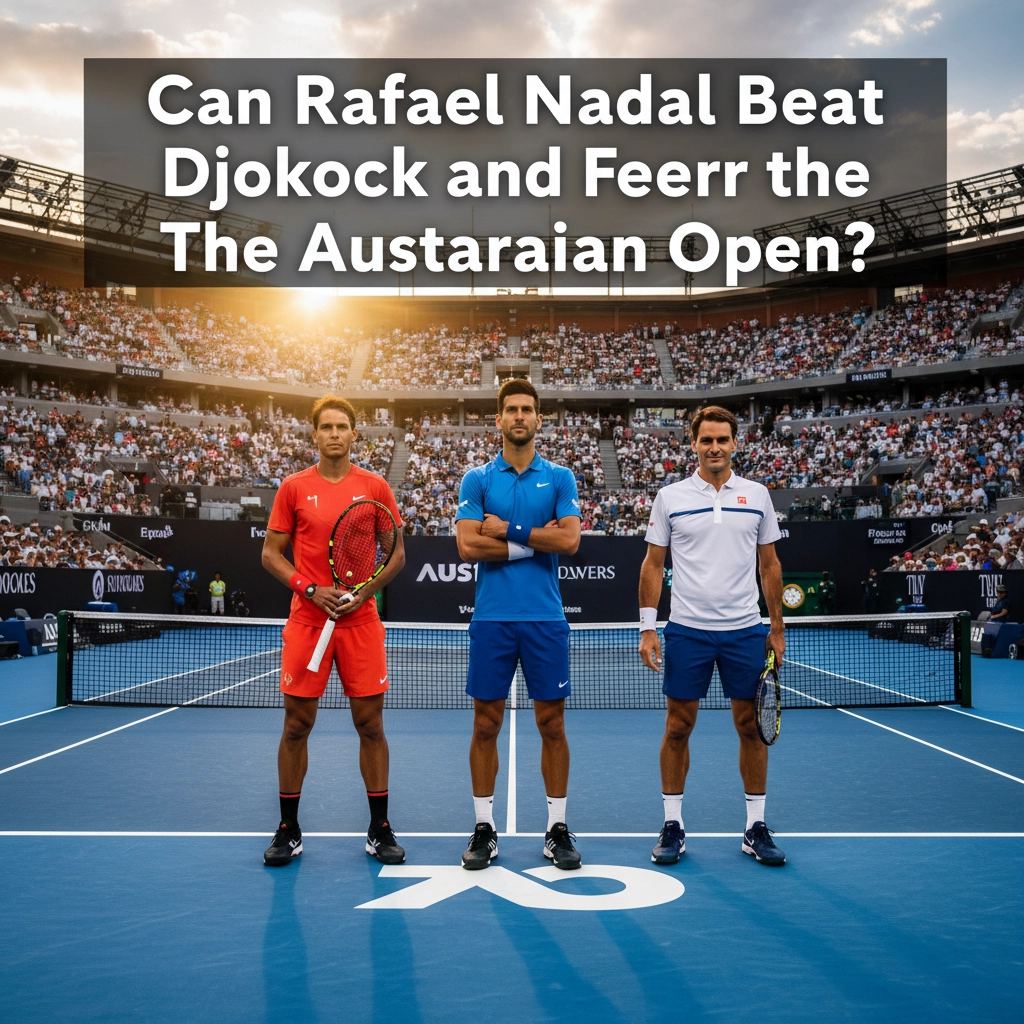
Why the Australian Open is a different kind of challenge for Nadal
You already know Rafael Nadal as the king of clay, but the Australian Open forces you to rethink his strengths on a fast hard court. Melbourne’s conditions — heat, surface speed, and slow-to-fast court variations across years — change the advantage calculus. Where Nadal’s heavy topspin and relentless defense dominate on clay, you must ask how those weapons translate against Novak Djokovic’s balance and Roger Federer’s aggressive timing on hard courts.
When you evaluate Nadal at the Australian Open, consider three interlocking factors: physical readiness after a long season, adaptability to hard-court bounce and pace, and match-ups against Djokovic and Federer specifically. Each factor shifts the probability of success more than headline stats alone.
Assessing Nadal’s form, fitness, and hard-court game
Physical readiness and schedule management
You should track Nadal’s off-season preparation and any injury history because his movement and ability to sustain long rallies are central to his game. Nadal’s high-energy style demands impeccable conditioning; even small niggles can blunt the explosiveness you rely on to recover. If he arrives fresh, you can expect sustained intensity. If not, late-match endurance against Djokovic in five-set affairs becomes less certain.
Translating clay weapons to a hard surface
Technically, Nadal’s heavy forehand topspin and lefty angles remain weapons on hard courts, but you need to see subtle adjustments for them to be maximally effective:
- Serve placement: You’ll want Nadal to use serve patterns that open the court, not simply rely on power. Kicking up a high second serve can still push opponents back.
- Return depth: On faster bounces you must take the ball earlier and flatter occasionally to prevent giving extra time to Djokovic and Federer.
- Net forays: Mixing in selective approaches can shorten rallies and reward Nadal’s sharp passing shots, but timing is essential.
Mental edge and match rhythm
Nadal’s competitive intensity is a psychological asset you can count on; he raises his level in big matches. However, you should note that both Djokovic and Federer (when healthy) have long stretches of technical consistency that can frustrate Nadal into riskier play. Your focus should be on how Nadal constructs points: patience to open angles, disciplined shot selection against aggressive baseline players, and the willingness to use short-angle backhands rather than overhitting.
With these early-stage assessments—physical state, surface adjustments, and mental approach—you are prepared to examine the direct tactical matchups. Next, you’ll get a detailed breakdown of how Nadal’s strengths and vulnerabilities match up specifically with Djokovic’s counterpunching and Federer’s offensive timing, and what tactical tweaks could swing key matches in Melbourne.
Nadal vs. Djokovic: how to unsettle the retrieval machine
When you map Nadal onto Djokovic, you’re dealing with arguably the best neutralizer of heavy spin in the game. Djokovic absorbs pace, redirects with depth, and punishes short balls. That means your baseline-by-baseline war with high topspin becomes a double-edged sword — effective when Djokovic is forced to move, dangerous when he finds rhythm. Your plan should be to change the rhythm and shorten the points at key moments.
Tactical tweaks to prioritize:
– Take the ball earlier and flatter through the court. If you let Djokovic set his feet and slide into long rallies, he will slowly grind you down. Step in behind your forehand, hit with depth and a lower trajectory to deny him time to counterpunch.
– Use serve patterns that create openings rather than outright aces. A well-placed wide serve to Djokovic’s backhand or a body serve that slightly jams him will create a weaker return or open the court for your inside-out forehand.
– Vary height and pace. Mix high-kicking second serves and heavy topspin forehands with low-slicing backhands and occasional short-angle punch shots. Djokovic reads patterns quickly; unpredictability forces him to take the ball on the back foot more often.
– Shorten rallies selectively. You don’t need to convert every point into a marathon. When you get a short ball, step in and finish — either with a deep penetrating groundstroke or a timely approach to the net. Chip-and-charge on a well-placed return can also flip momentum.
– Exploit Djokovic’s occasional discomfort on abrupt changes of direction. Use sharp crosscourt angles to open up the court, then come inside the baseline to punish the next ball.
Mentally, you must accept that Djokovic will neutralize many of your primary weapons — that’s part of the match flow. Your edge comes from forcing him out of comfort zones, seizing short-ball opportunities, and maintaining the physical intensity to make every point costly. The margin for error is tiny, so selective aggression and tactical variety win more points than raw topspin alone.
Against Federer: taking the timing away and shortening points
Versus Federer, your primary objective is to remove his timing and rhythm. Federer’s strength on faster hard courts is creating one-strike winners when he’s allowed time to set up. You should force him to take uncomfortable, lower-percentage swings by changing pace and position.
Practical approaches to employ:
– Attack Federer’s backhand with low, biting slices as well as heavy high-bouncing forehands. The slice stays low and gives Federer less room to free-swing, while the occasional high-kicking forehand disrupts his timing.
– Step into the court. If you let Federer stand back and dictate with his forehand, you relinquish control. Taking the ball early pushes him on the defensive and reduces his ability to execute clean winners.
– Use the serve intelligently. Aim first serves wide to open Federer’s forehand or body serves that prevent him from stepping around. On second serves, be prepared to take the return early and hit through the corridor.
– Force Federer into longer points on your terms. He is less comfortable grinding out long, physical exchanges on hard courts than you are. Build points to create short finishers — approach after well-placed deep shots, then finish at the net.
– Vary attack patterns. Federer thrives on predictable rhythms; mixing short-angle attacks, drops, and sudden flattening drives keeps him guessing.
Federer’s timing is his currency. Your job is to devalue it by changing the pace, taking time away, and shortening points when it benefits you. When you combine that with disciplined serving and an aggressive stance on short balls, you create a template that can consistently trouble him in Melbourne conditions.
Match-day checklist for Nadal
- Prioritize serve placement over sheer pace; create angles to open the court.
- Take the ball early on key rallies and mix flatter drives with heavy topspin.
- Use slices and abrupt changes of direction to disrupt timing, then be ready to finish short points.
- Conserve energy through selective aggression — pick the right moments to shorten points.
- Have a clear mental plan for handling Djokovic’s retrieval and Federer’s timing — adaptability matters more than a single perfect tactic.
Final thoughts for Melbourne
The Australian Open will always test physical resilience, tactical imagination, and the smallest margins of decision-making. Nadal’s best path against Djokovic and Federer-like opponents isn’t a one-size-fits-all blueprint but a flexible game plan that blends early ball-striking, intelligent serving, and ruthless conversion of short-ball opportunities. Match-ups, court speed and conditions will tilt the balance on any given day — for specifics on how Melbourne’s courts behave, see Australian Open conditions. Ultimately, the contest becomes less about who has the single best shot and more about who forces the other to play uncomfortable tennis when it counts.
Frequently Asked Questions
Can Nadal realistically beat Novak Djokovic at the Australian Open?
Yes — but it requires Nadal to change rhythm, take the ball earlier, and convert short-ball chances. Djokovic’s strengths lie in neutralizing prolonged topspin rallies, so selective aggression and tactical variety are essential to create openings.
What tactical adjustments matter most versus Roger Federer-style opponents?
Disrupting timing is crucial: low slices to the backhand, early ball-striking, well-placed serves to remove Federer’s free-swinging opportunities, and a readiness to shorten points with approaches or drop shots all reduce his ability to unleash winners.
How important is conditioning and mental readiness in these matchups?
Extremely important. Against Djokovic and Federer-like players, physical endurance lets you maintain pressure across long matches, while mental discipline ensures you pick the right moments to attack rather than trading baseline attrition point-for-point.