Why the Australian Open is a unique measuring stick for the Big Three
You might think Grand Slam comparisons focus only on total majors, but the Australian Open offers a distinct lens. Played at the start of the season, with hard courts and often extreme heat, Melbourne tests preparation, recovery and adaptability. For Djokovic, Federer and Nadal, success at the Australian Open has meant not only collecting trophies but also demonstrating how they respond to calendar resets, changes in form and evolving rivals.
When you compare their Australian Open records, pay attention to timing as much as totals: who dominated early in their career, who peaked later, and who returned to form after injuries. The surface and scheduling also reward consistency—match-win streaks, consecutive finals, and the ability to maintain fitness week after week are all part of the narrative. Your understanding of their relative greatness improves when you look beyond simple title counts to patterns and milestones at Melbourne Park.
How early Australian Open results shaped each champion’s trajectory
Early results in Melbourne had outsized effects on each player’s confidence and calendar planning. You’ll notice different career arcs:
- Roger Federer: Early semifinal and final appearances in the mid-2000s established Federer as the grass-to-hard-court all-rounder. His wins at the Australian Open reinforced a season-opening rhythm that powered long runs on other surfaces.
- Rafael Nadal: Though Nadal built his reputation on clay, his Australian Open performances—especially his 2009 final and later hard-court successes—signaled an expanding versatility. When he won in Melbourne, it often marked a turning point in a season.
- Novak Djokovic: Melbourne has been Djokovic’s most consistent Grand Slam stage. Early breakthroughs and subsequent dominant runs there were often precursors to years in which he controlled the rankings. His Australian Open results frequently mirror his physical conditioning and strategic evolution.
Key early milestones and head-to-head dynamics at Melbourne Park
To compare their Australian Open records effectively, you should track milestones and direct encounters. Here are the early-career markers and matchup patterns that matter most:
- First deep runs (semifinals/finals) that signaled Grand Slam readiness for each player.
- Initial Grand Slam victories at Melbourne and how they affected subsequent seasons.
- Head-to-head matches at the Australian Open: which contests shifted momentum between the trio.
- Consecutive appearances and match-win streaks that demonstrate sustained dominance at one venue.
By focusing on these milestones and matchups you’ll see how each player’s Melbourne narrative formed—whether through steady accumulation of wins, dramatic breakthrough finals, or reclaiming form after setbacks. Next, you’ll get a detailed, side-by-side statistical comparison of their Australian Open achievements—titles, finals, match wins, sets won and other records that quantify their Melbourne Park legacies.
Statistical comparison: titles, finals and match wins
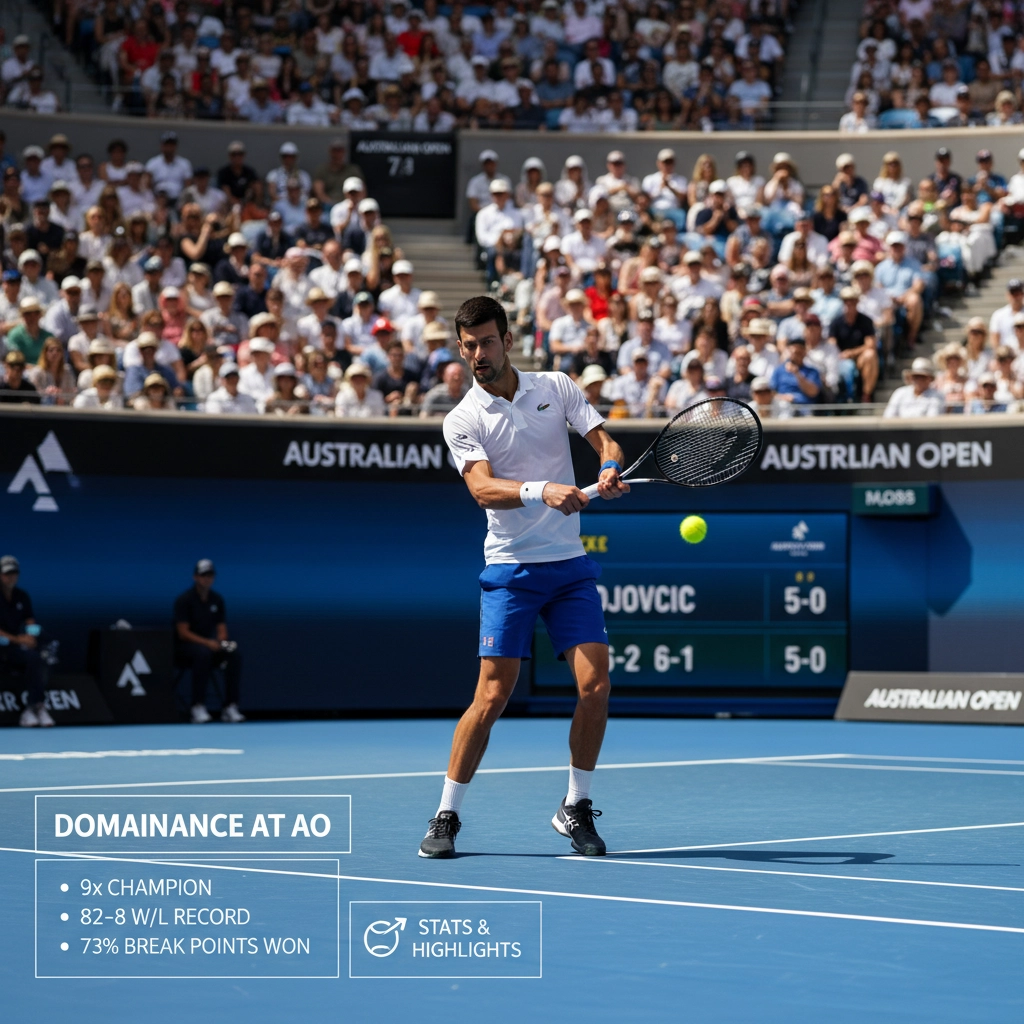
When you line their Australian Open resumes up side by side, one clear pattern emerges: Novak Djokovic has converted sustained excellence at Melbourne Park into statistical dominance. He holds the record for the most Australian Open titles in the Open Era — a double‑digit haul that outstrips the other two and underpins many of the era-defining narratives about his career. Beyond trophies, Djokovic leads in the categories that measure sustained success at a single Slam: most match wins, the greatest number of finals reached at Melbourne, and the longest winning runs across consecutive tournaments there.
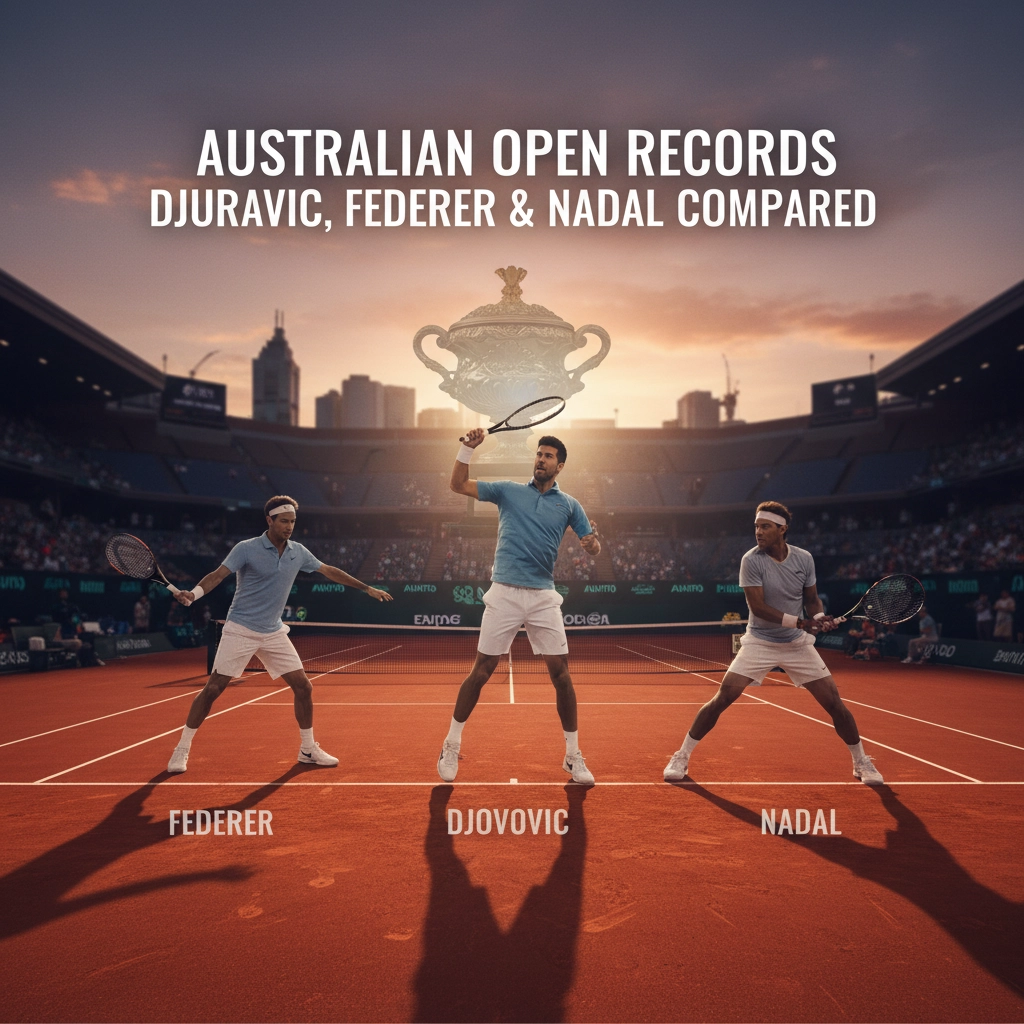
Roger Federer and Rafael Nadal sit behind Djokovic in cumulative Melbourne numbers, but in contrasting ways. Federer’s Australian Open record is characterized by early‑to‑mid‑career consistency and a high conversion rate in the periods when he was at peak form; his titles are clustered in windows where he used Melbourne as a springboard for a dominant season. Nadal’s Australian Open résumé is smaller in raw totals, but his wins and deep runs often carry outsized narrative weight — they frequently coincide with either a stylistic expansion away from clay or a season-redefining comeback after injury.
Win percentage and finals conversion are useful lenses here. Djokovic combines volume (most matches won) with an ability to convert deep runs into titles. Federer’s finals conversion during his best years was formidable, reflecting clinical big‑match play when fully fit. Nadal’s Melbourne finals and title matches, though fewer, highlight his adaptability under adverse conditions and his knack for turning hard‑court runs into career momentum.
Head‑to‑head encounters at the Australian Open further sharpen the difference: Djokovic’s matchups with Federer and Nadal in Melbourne often decided not just individual trophies but psychological control of seasons. While raw numbers privilege Djokovic, the distribution of Federer’s and Nadal’s triumphs shows efficiency and momentous timing that are also critical to evaluating greatness.
Distinct Melbourne records and defining moments
Beyond cumulative statistics, each player’s Melbourne legacy is defined by particular records and signature matches that tell different stories.
– Djokovic: Melbourne is the place of records and resilience for Novak. He has multiple runs of consecutive titles and finals appearances, and he has produced a high proportion of five‑set victories and decisive tie‑break showings there. His ability to peak at the season’s start — physically prepared and tactically sharp — turns the Australian Open into a platform for calendar‑long domination.
– Federer: For Roger, Melbourne symbolized mastery across surfaces and seasons. His Australian Open achievements came in clusters that reflected periods of technical refinement and peak confidence. Federer’s AO moments are notable for quick, efficient matches where he used his serve and forehand to shorten rallies and neutralize opponents, converting early‑tournament momentum into deep runs.
– Nadal: Rafael’s Australian Open highlights emphasize adaptability and comeback narrative. Many of his Melbourne successes arrived when he reinvented elements of his game for hard courts or when victory in Melbourne marked a return to form after injury. Nadal’s AO repertoire includes some of his most physical, grinding wins — matches that demonstrated endurance, tactical adjustments and mental tenacity.
Taken together, these statistical contours and milestone moments show why Melbourne Park is more than one more stop on the Grand Slam calendar: it’s where patterns form, careers reset, and the subtle differences in each champion’s approach to dominance become measurable.
Legacy and the Melbourne mirror
Melbourne Park has become a lens through which the careers of Djokovic, Federer and Nadal are refracted — not simply by what they won there, but by how those moments shaped perception, momentum and the arc of modern tennis. The Australian Open’s early‑season timing strips away excuses and privileges preparation, mental sharpness and the ability to seize an immediate spotlight. For each of the three, Melbourne distilled a different strength: Djokovic’s relentless baseline control and clutch resilience, Federer’s elegant efficiency and shotmaking clarity, and Nadal’s physicality and refusal to yield under pressure.
That mix of style and circumstance means Melbourne will continue to be a place where records are challenged and narratives reset. Fans and historians alike can follow current draws, historical stats and upcoming storylines through the Australian Open official site as new chapters are written and old ones are reinterpreted.
Frequently Asked Questions
Who holds the most Australian Open titles among Djokovic, Federer and Nadal?
Novak Djokovic holds the most Australian Open titles of the three. His success at Melbourne Park is notable for both frequency and consistency across many seasons.
How do their playing styles affect success at the Australian Open?
The surface and conditions in Melbourne reward movement, defensive retrieval and clean ball‑striking. Djokovic’s exceptional return and court coverage suit the hard courts; Federer’s serve, timing and ability to shorten points benefited him during peak periods; Nadal’s intensity, shot tolerance and tactical adjustments have allowed him to convert hard‑court form into decisive runs when fit.
Is it realistic for Federer or Nadal to match Djokovic’s Australian Open records in the future?
Matching Djokovic’s Melbourne records would require sustained participation and peak performance over multiple seasons. Federer has retired from regular tour play, and Nadal’s ongoing fitness and scheduling are major factors. In short, while one or two additional deep runs are possible, equalling Djokovic’s cumulative Australian Open achievements is unlikely without prolonged, consistent campaigns at the event.